
Loading, please wait...
LOT 0465
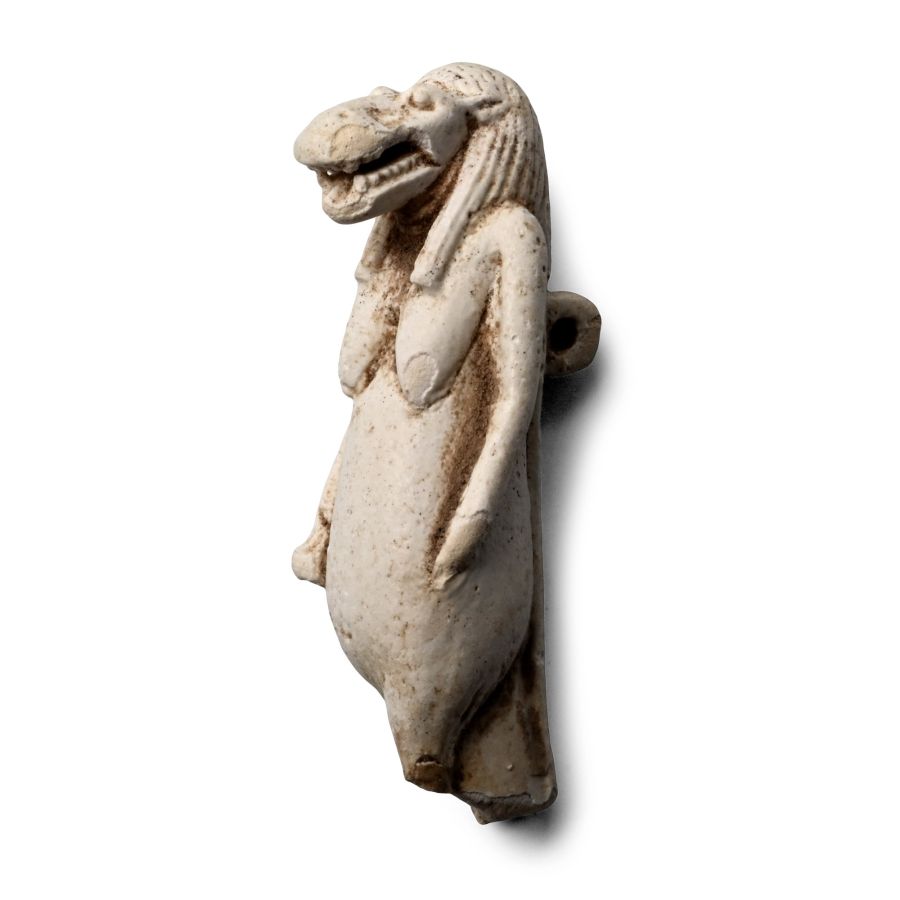
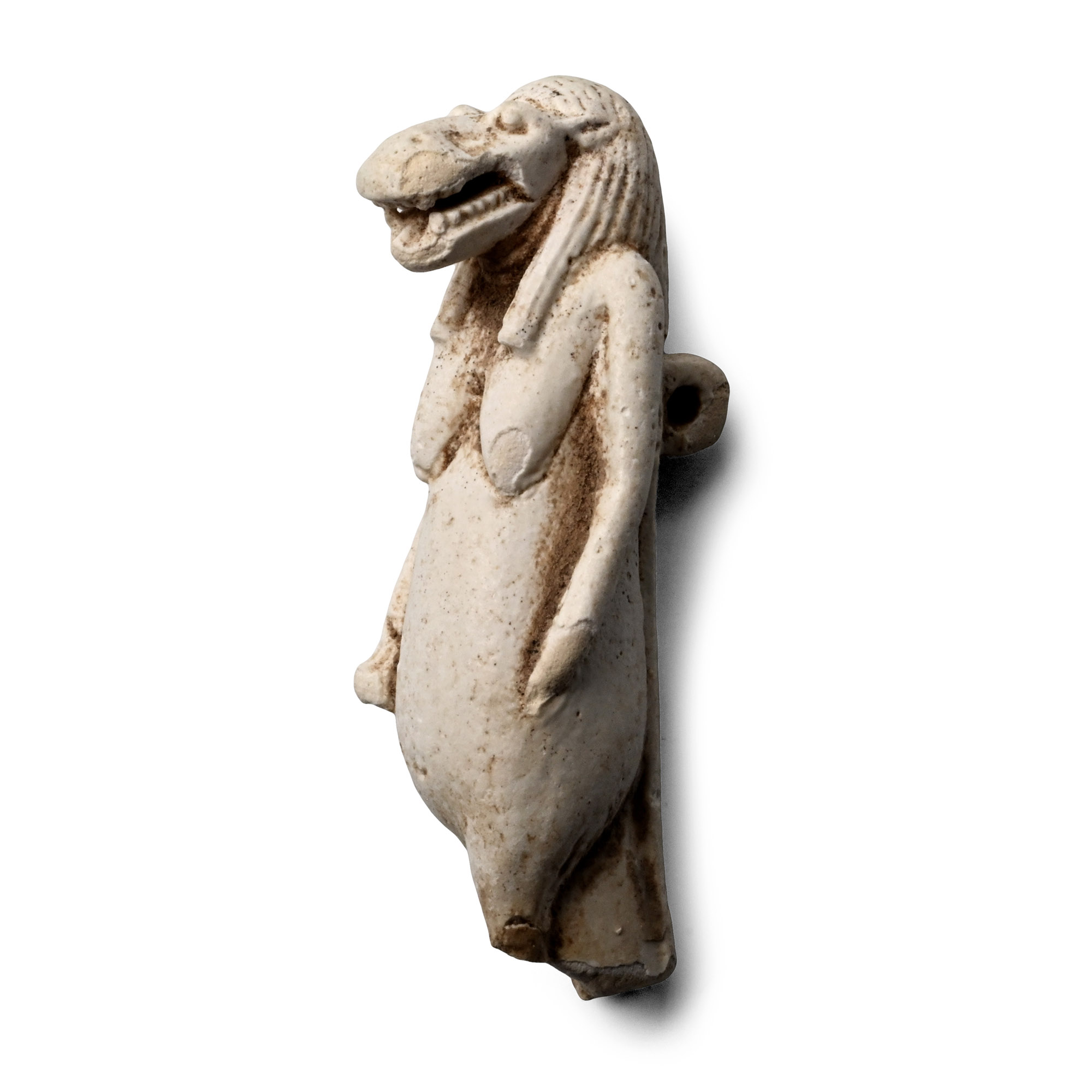
Egyptian Faience Amulet of Taweret
664-332 B.C.
2 in. (7.9 grams, 50 mm).
Modelled in the round with dorsal pillar and loop at the shoulder, the goddess in hippopotamus form with human torso and arms.
ProvenanceCollection of an amateur, Carouge, Switzerland, assembled in the 1980s-1990s.
Thence by descent to the collection of Mr S.P., since 2020.
This lot is accompanied by an illustrated lot declaration signed by the Head of the Antiquities Department, Dr Raffaele D'Amato.
Cf. Andrews, C., Amulets of Ancient Egypt, London, 1994, item 31b.
CONDITIONTimeLine Auctions follows a vetting process to ensure the authenticity and legality of all items, reinforcing our commitment to integrity and responsible trading. Each antiquity, antique, and coin lot undergoes thorough examination by a vetting committee of at least ten external specialists, professional trade association members, scientists, and archaeologists: Our Vetting Process
AUCTIONS:
TimeLine is a leading auction house specialising in antiquities, ancient art, collectables, natural history, coins, medals, and books. Our auctions offer museums, collectors, historians, and enthusiasts the opportunity to acquire unique and historically significant pieces.
LOT 0465
Egyptian Faience Amulet of Taweret
Estimate £400 - 600€460 - 700 (for guidance only)$540 - 810 (for guidance only)
-
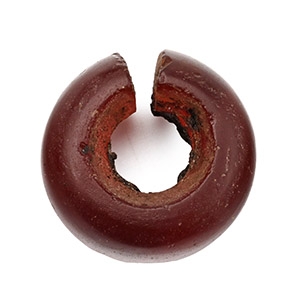
Egyptian Hardstone Hair Ring
New Kingdom, 1550-1070 B.C.Estimate: £200 - 300 (+bp*)
Opening Bid: £100
Circular with a semi-circular profile and an opening on one side. 3.57 grams, 17 mm
From an early 20th century collection. This lot is accompanied by an illustrated lot declaration signed by the Head of the Antiquities Department, Dr Raffaele D'Amato. -
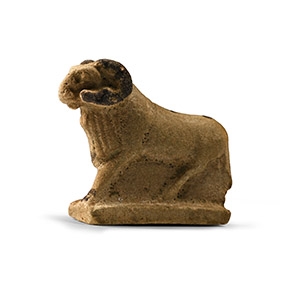
Egyptian Faience Ram Statuette
Late Period, 664-332 B.C.Sold for (Inc. bp): £468
Modelled in a dynamic pose on a rectangular base, muscular body and striated dewlap, curving horns decorated with black glaze framing the face, three large black dots on the back with further black detailing to the front hooves and tail. 44.2 grams, 64 mm
Private collection of Mr K.A., acquired in the 1990s-early 2000s. Accompanied by a copy of an Art Loss Register certificate no.2922.WW, dated 5 June 2007. This lot is accompanied by an illustrated lot declaration signed by the Head of the Antiquities Department, Dr Raffaele D'Amato.
Various gods were depicted as rams. The downturned horns on this amulet indicate that the ram represents Amun. The ram was symbolically linked to ideas of revival and fertility, which, over time, became associated with Osiris and was also viewed as the god's soul or ba. -
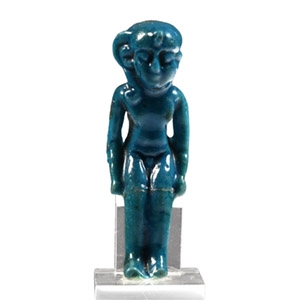
Egyptian Turquoise Glazed Seated Harpocrates
Late Period, 26th Dynasty, circa 664-525 B.C.Estimate: £400 - 600 (+bp*)
Opening Bid: £200
The god in a semi-seated pose with sidelock and uraeus; mounted on a custom-made stand. 10 grams total, 52 mm including stand
Collection de Son Excellence Mandou Riaz (1895-1963). Archéologie, François de Ricqlès, Paris, 11-12 November 2001, no.186. Private collection, London, UK, acquired from the above sale. Accompanied by a copy of the François de Ricqlès invoice. This lot is accompanied by an illustrated lot declaration signed by the Head of the Antiquities Department, Dr Raffaele D'Amato.
While the semi-seated pose of the figurine may imply that it was part of a composite statuette, possibly featuring a separately modelled throne or seated on the lap of his mother, Isis, independent amulets with suspension loops depicting the god in this pose are also prevalent. Harpocrates is the Greek rendering of the Egyptian Hor-pa-khered, which translates as ‘Horus the Child’. This designation refers to Horus as the divine infant of Isis and Osiris. Wearing the amulet of Harpocrates could grant the wearer the same protection that Isis provided to her beloved son.
