
Loading, please wait...
LOT 0452
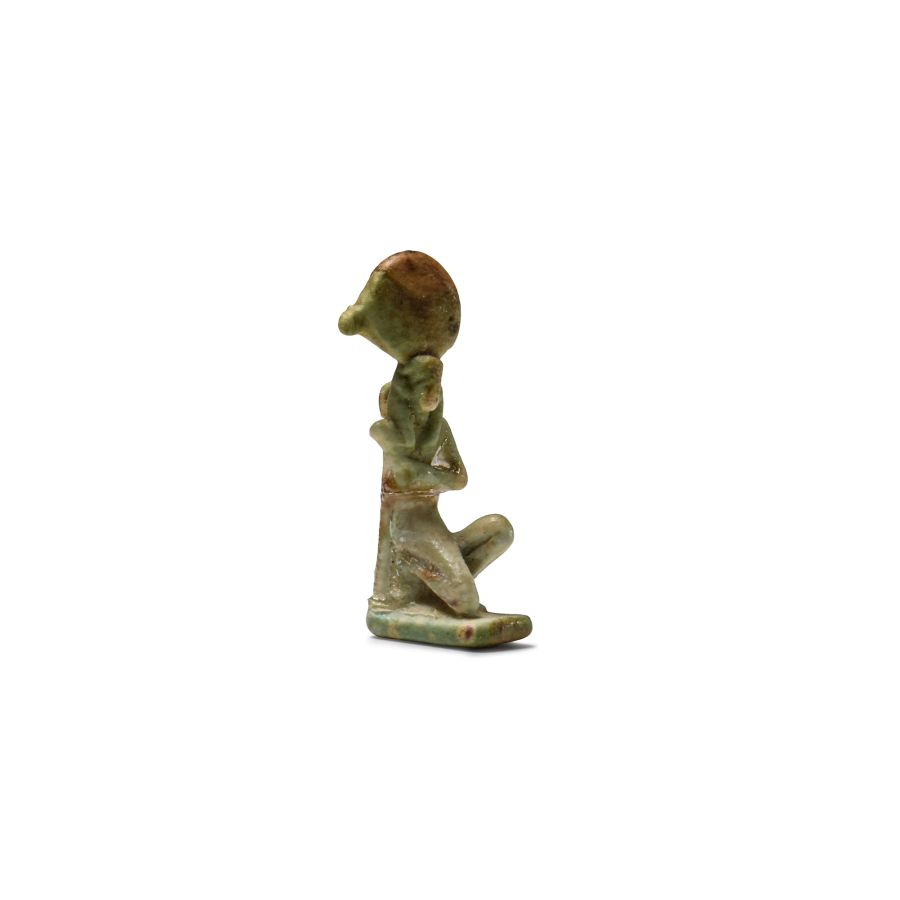
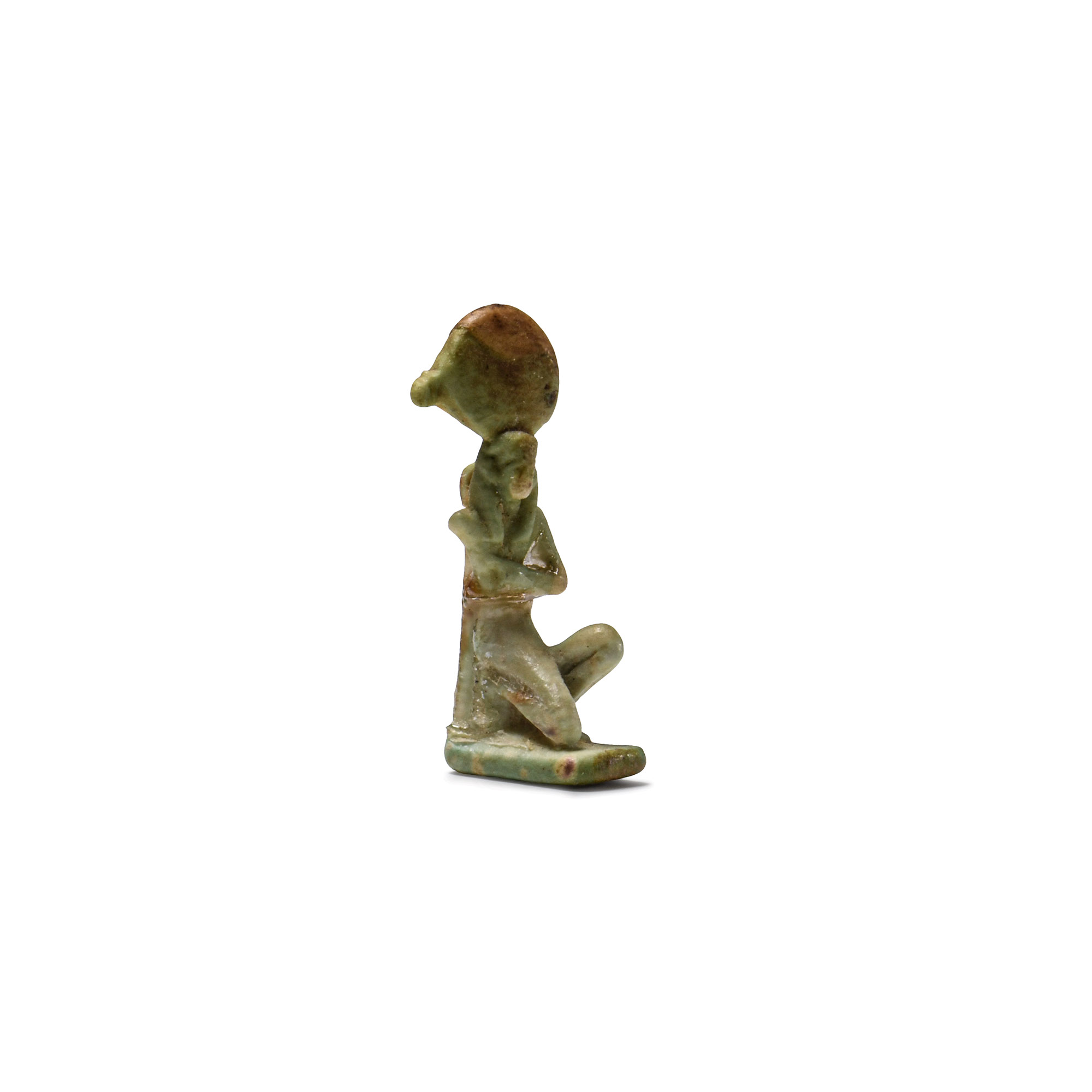
Egyptian Faience Amulet of Souls of Pe and Nekhem
LATE PERIOD, 664-332 B.C.
3/4 in. (0.52 grams, 20 mm).
Glazed composition amuletic pendant depicting a kneeling pharaoh embodying the souls of Pé and Nekhen, spirits of the predynastic rulers.
ProvenanceFrom an early 20th century collection.
Ex Ancient Art, London N14, UK.
Private collection of Mr T.H., Norfolk, UK.
Accompanied by a previous dealer's certificate of authenticity.
See Gardiner, A., Egypt of the Pharaohs, Oxford, 1961, for discussion.
CONDITIONTimeLine Auctions follows a vetting process to ensure the authenticity and legality of all items, reinforcing our commitment to integrity and responsible trading. Each antiquity, antique, and coin lot undergoes thorough examination by a vetting committee of at least ten external specialists, professional trade association members, scientists, and archaeologists: Our Vetting Process
AUCTIONS:
TimeLine is a leading auction house specialising in antiquities, ancient art, collectables, natural history, coins, medals, and books. Our auctions offer museums, collectors, historians, and enthusiasts the opportunity to acquire unique and historically significant pieces.
-
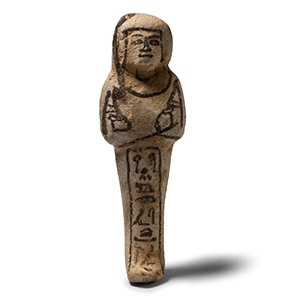
Egyptian White Faience Shabti for Khaemwaset
Ramesside Period, 19th-20th Dynasty, 1305-1080 B.C.Estimate: £1,500 - 2,000 (+bp*)
Opening Bid: £800
With black applied detailing to the face, arms, tools and block of hieroglyphic text to the lower body giving the dedication 'The illuminated one, the Osiris, Sem-(priest), Khaemwaset, true of voice.' 87 grams, 13.3 cm high
Acquired from Alex Malloy, New York, U.S.A., 1970-1980s. Ex U.S.A. collection. Accompanied by an old certificate of authenticity ($2900.00).
Although lacking the title 'King's son', this shabti is probably for Prince Khaemwaset, offspring of Ramesses II, who was Sem-priest in the temple of Ptah at Memphis. -
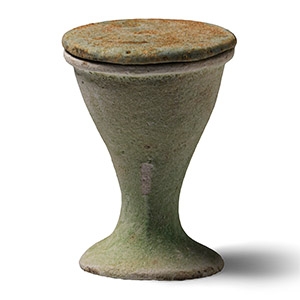
Egyptian Faience Offering Cup with Lid
Ptolemaic Period, 332-30 B.C.Sold for (Inc. bp): £195
Glazed composition cup with stemmed foot and thick rim, separate discoid lid with panel to the underside, possibly not belonging. 18.8 grams, 43 mm
Ex Den of Antiquity, Cambridgeshire, UK. Private collection of Mr T.H., Norfolk, UK. Accompanied by a previous dealer's certificate of authenticity. -
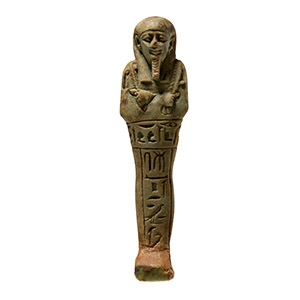
Egyptian Green Faience Shabti with Hieroglyphic Inscription
Late Period, 664-332 B.C.Sold for (Inc. bp): £650
Olive-green glazed composition with detailed facial features, hands, tools, seed bag, dorsal pillar; T-shaped hieroglyphic text: 'sḥḏ wsir nb pḥ.ty ..ns(?) mꜢʾ ḫrw ms n ipt-wrt(?)' ‘The illuminated, the Osiris, Lord of Strength ..ns(?), true of voice’ born to Ipet-weret(?)’; mounted on a custom-made stand. 169 grams total, 15 cm high including stand
Part of an old collection dating back to the 19th century. Ex property of a gentleman, acquired before the 1980s. Private collection of Mr T.H., Norfolk, UK.
