
Loading, please wait...

LOT 0415
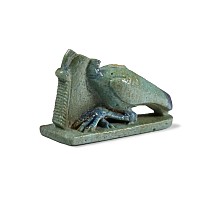
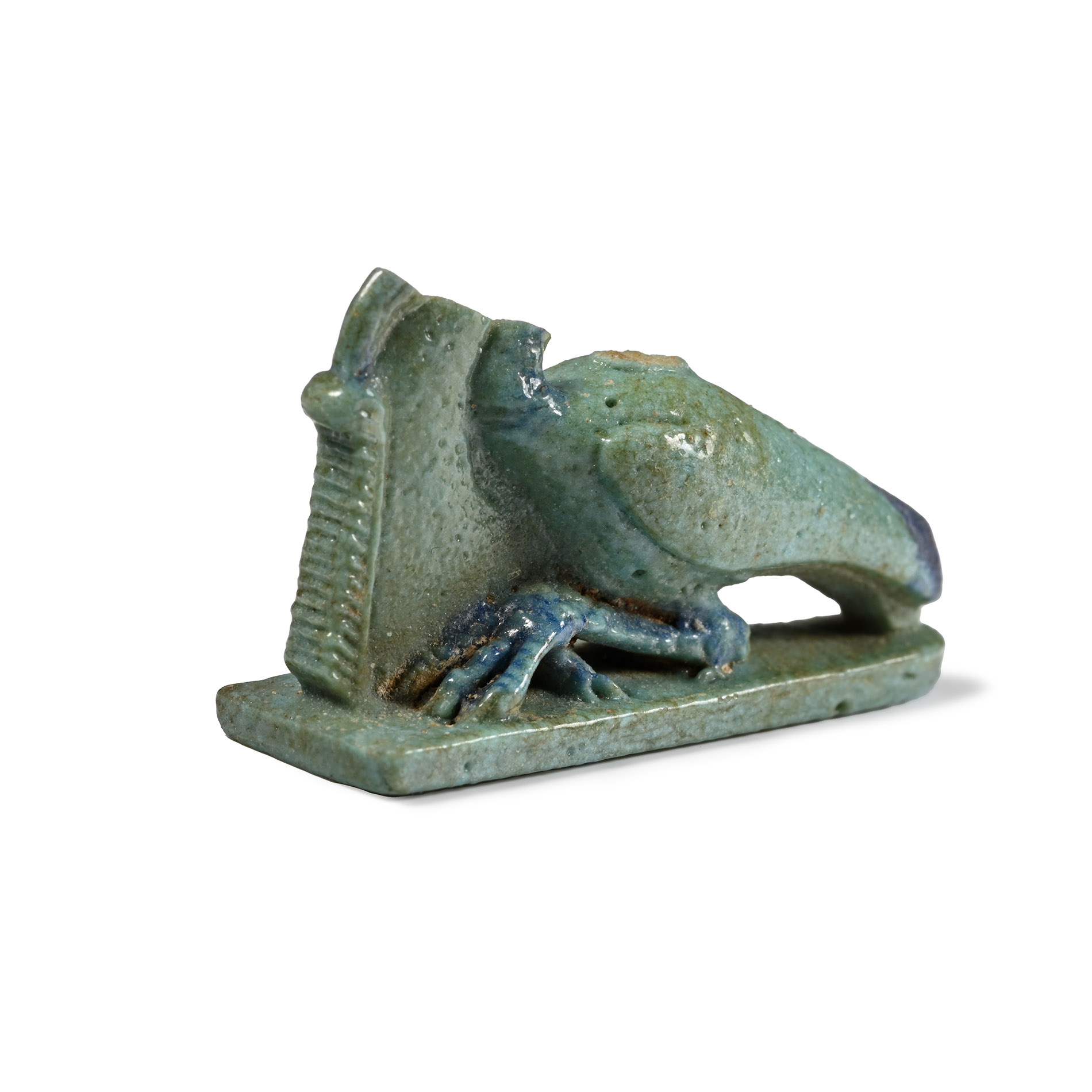
Egyptian Faience Amulet of an Ibis
LATE PERIOD, 664-332 B.C.
1 1/4 in. (3.54 grams, 31 mm).
An exquisitely modelled figure of a seated ibis on a trapezoidal-shaped plinth, with its beak resting on the slender feather of Maat; light turquoise glaze for the body, plinth, and feather; blue glaze for the tail feathers, feet and neck; head absent.
Provenancewith Bonhams, Knightsbridge, 3 October 2000, no.413.
Private collection, Europe.
This lot is accompanied by an illustrated lot declaration signed by the Head of the Antiquities Department, Dr Raffaele D’Amato.
Cf. Andrews, C., Amulets of Ancient Egypt, London, 1994, p.25, no.21f, for a similar example.
FootnotesThe ibis was considered sacred to the god Thoth. It is likely that the popularity of amulets depicting an ibis resting its beak on the feather of Maat in the funerary sphere is connected to Thoth's role as the recorder of the final judgment of the deceased by the divine tribunal. This tribunal determined if the deceased had lived a virtuous life and could enter the Underworld. This was visually represented by the deceased's heart placed on scales with the feather of Maat; if the heart and feather balanced, eternity was assured.
CONDITIONTimeLine Auctions follows a vetting process to ensure the authenticity and legality of all items, reinforcing our commitment to integrity and responsible trading. Each antiquity, antique, and coin lot undergoes thorough examination by a vetting committee of at least ten external specialists, professional trade association members, scientists, and archaeologists: Our Vetting Process
AUCTIONS:
TimeLine is a leading auction house specialising in antiquities, ancient art, collectables, natural history, coins, medals, and books. Our auctions offer museums, collectors, historians, and enthusiasts the opportunity to acquire unique and historically significant pieces.
-
Egyptian Faience Amulet of an Ibis
Late Period, 664-332 B.C.Sold for (Inc. bp): £650
An exquisitely modelled figure of a seated ibis on a trapezoidal-shaped plinth, with its beak resting on the slender feather of Maat; light turquoise glaze for the body, plinth, and feather; blue glaze for the tail feathers, feet and neck; head absent. 3.54 grams, 31 mm
with Bonhams, Knightsbridge, 3 October 2000, no.413. Private collection, Europe. This lot is accompanied by an illustrated lot declaration signed by the Head of the Antiquities Department, Dr Raffaele D’Amato.
The ibis was considered sacred to the god Thoth. It is likely that the popularity of amulets depicting an ibis resting its beak on the feather of Maat in the funerary sphere is connected to Thoth's role as the recorder of the final judgment of the deceased by the divine tribunal. This tribunal determined if the deceased had lived a virtuous life and could enter the Underworld. This was visually represented by the deceased's heart placed on scales with the feather of Maat; if the heart and feather balanced, eternity was assured. -
Coptic Textile Fragment Collection
4th-6th century A.D.Sold for (Inc. bp): £494
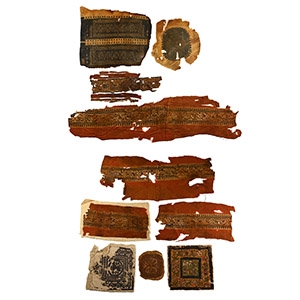
Mixed group, mainly decorative elements (clavi, orbiculi, tabulae) from various tunics made in late Antiquity; decoration partly figural (animals and mythical hybrid creatures, mostly in a separate tondo or panel) and partly ornamental (interlace patterns, lozenges, pomegranate borders, chevrons, heart-shaped leaves). 450 grams total, 12.5-65.5 cm
with Christie's London, 27 April 1976, no.91 & 92. Accompanied by a copy of an Art Loss Register certificate no.S00136676. This lot is accompanied by an illustrated lot declaration signed by the Head of the Antiquities Department, Dr Raffaele D’Amato. -
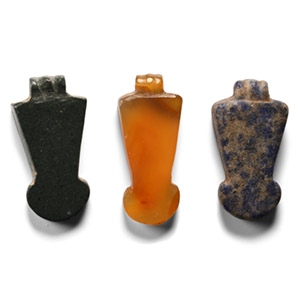
Egyptian Hardstone Menat Amulet Group
Ptolemaic Period, 332-30 B.C.Sold for (Inc. bp): £364
Lapis lazuli, carnelian, and schist (?) menat amulets, each with a distinctive keyhole shape and broad ribbed bale. 5.38 grams total, 20-22 mm
From a private collection acquired by the previous owner's father in the 1950s. Ex TimesAncient, Bristol, UK. Accompanied by a copy of a previous catalogue entry. This lot is accompanied by an illustrated lot declaration signed by the Head of the Antiquities Department, Dr Raffaele D’Amato.
The menat was a counterpoise that hung at the back of a heavy ornamental collar and was closely associated with the goddess Hathor. Amulets representing the counterpoise were thought to bring good luck, protect against evil spirits, and safeguard the wearer in the afterlife. Their Hathoric connection symbolised fertility and good health for women while representing virility for men.
