
Loading, please wait...
LOT 0401
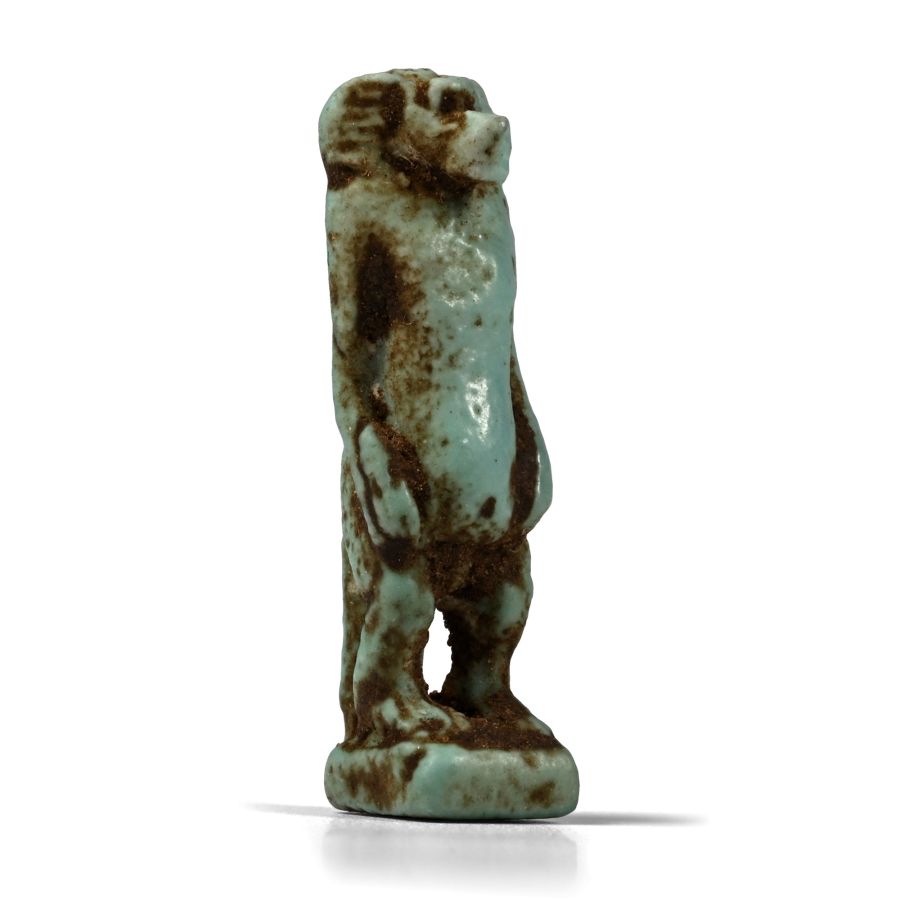
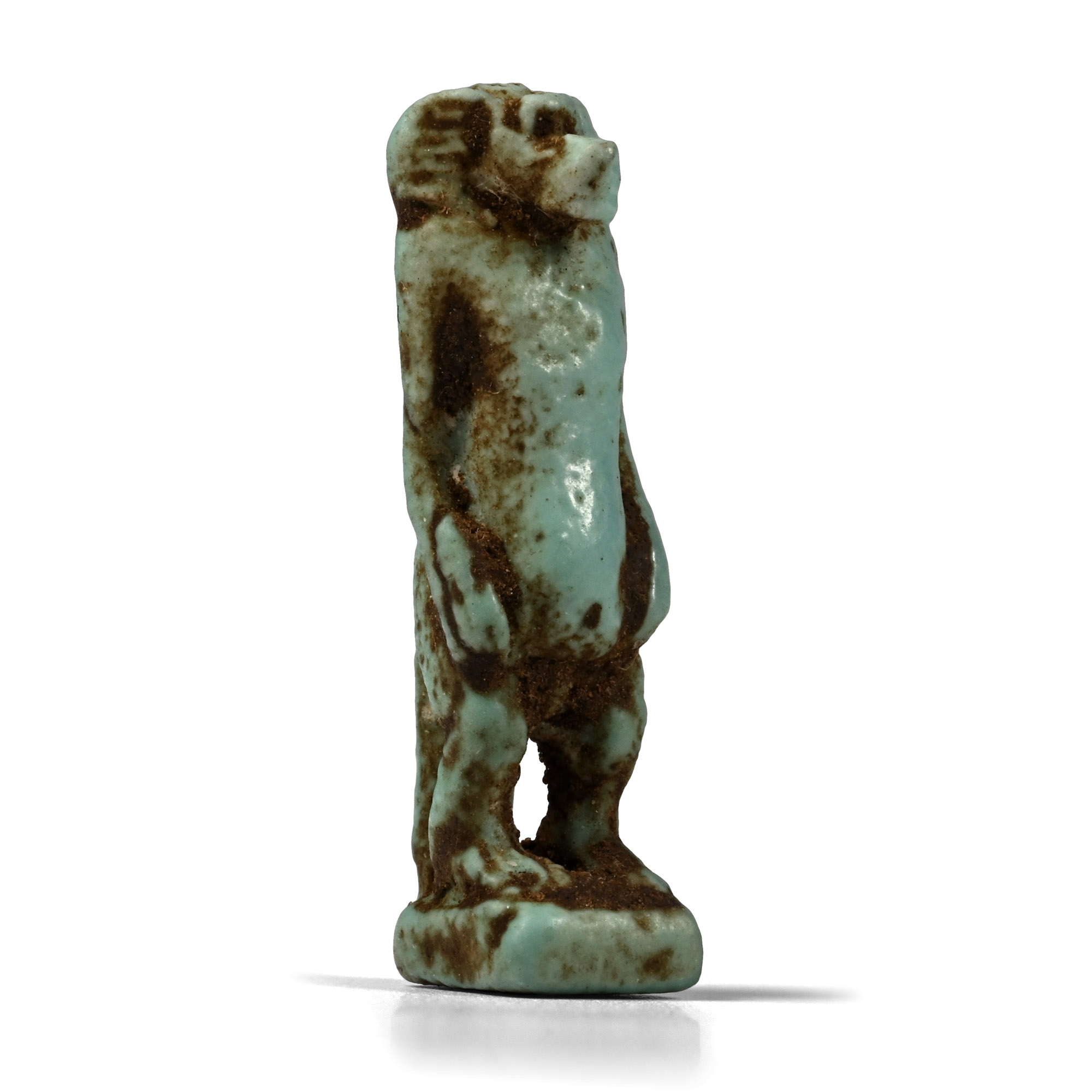
Egyptian Faience Amulet of a Vervet Monkey
LATE-PTOLEMAIC PERIOD, 664-30 B.C.
1 in. (1.52 grams, 27 mm).
Turquoise-blue faience amulet of a vervet monkey standing with its long arms extended to the hips, supported on an integral base by its tail; suspension loop at the back. [No Reserve]
ProvenanceFrom a private collection acquired by the previous owner's father in the 1950s.
Ex TimesAncient, Bristol, UK.
Accompanied by a copy of a previous catalogue entry.
This lot is accompanied by an illustrated lot declaration signed by the Head of the Antiquities Department, Dr Raffaele D’Amato.
Cf. Andrews, C., Amulets of Ancient Egypt, London, 1994, fig. 71c, for similar.
FootnotesAmulets featuring the vervet monkey were believed to serve as magical sexual aids for the living and the dead, ensuring these benefits in life and the afterlife.
CONDITIONTimeLine Auctions follows a vetting process to ensure the authenticity and legality of all items, reinforcing our commitment to integrity and responsible trading. Each antiquity, antique, and coin lot undergoes thorough examination by a vetting committee of at least ten external specialists, professional trade association members, scientists, and archaeologists: Our Vetting Process
AUCTIONS:
TimeLine is a leading auction house specialising in antiquities, ancient art, collectables, natural history, coins, medals, and books. Our auctions offer museums, collectors, historians, and enthusiasts the opportunity to acquire unique and historically significant pieces.
-

Egyptian Faience Beads and Other Fragments
Late Period, 664-332 B.C.Sold for (Inc. bp): £338
Including seed and tubular beads, and other items. 48 grams total, 1-15 mm
From an old English collection. Acquired from Brigantia, York, 1990s. Ian Wilkinson collection, Nottinghamshire, UK, formed since 1985. This lot is accompanied by an illustrated lot declaration signed by the Head of the Antiquities Department, Dr Raffaele D’Amato. -
.jpg)
Egyptian Thoth as Ibis and Maat Faience Amulet
Ptolemaic Period, 332-30 B.C.Sold for (Inc. bp): £780
On a wedge-shaped base and decorated in turquoise glaze; the ibis's beak resting on a diminutive figure of the goddess Maat; suspension loop on the neck of the bird; collector's inventory number E509' on the underside; accompanied by a custom-made display base. 22 grams total, 43 mm wide including stand
Ex Reine Margot, 1973. Ex R. Liechti (1934-2010) Geneva, Switzerland, collection between 1950-1990s. This lot is accompanied by an illustrated lot declaration signed by the Head of the Antiquities Department, Dr Raffaele D’Amato.
In the judgment of the dead (Book of the Dead, saying 125), Thoth, who is often represented in ibis form, records the result of weighing the heart of the deceased. The god is therefore mostly depicted in connection with the goddess Maat, whose feather was used as a counterbalance to the purity of the heart; such amulets were thus aimed at protecting the deceased from failing in the decision of the court of the dead. -
Egyptian Faience Amulet of a Vervet Monkey
Late-Ptolemaic Period, 664-30 B.C.Sold for (Inc. bp): £156
Turquoise-blue faience amulet of a vervet monkey standing with its long arms extended to the hips, supported on an integral base by its tail; suspension loop at the back. 1.52 grams, 27 mm
From a private collection acquired by the previous owner's father in the 1950s. Ex TimesAncient, Bristol, UK. Accompanied by a copy of a previous catalogue entry. This lot is accompanied by an illustrated lot declaration signed by the Head of the Antiquities Department, Dr Raffaele D’Amato.
Amulets featuring the vervet monkey were believed to serve as magical sexual aids for the living and the dead, ensuring these benefits in life and the afterlife.
