
Loading, please wait...
LOT 0675
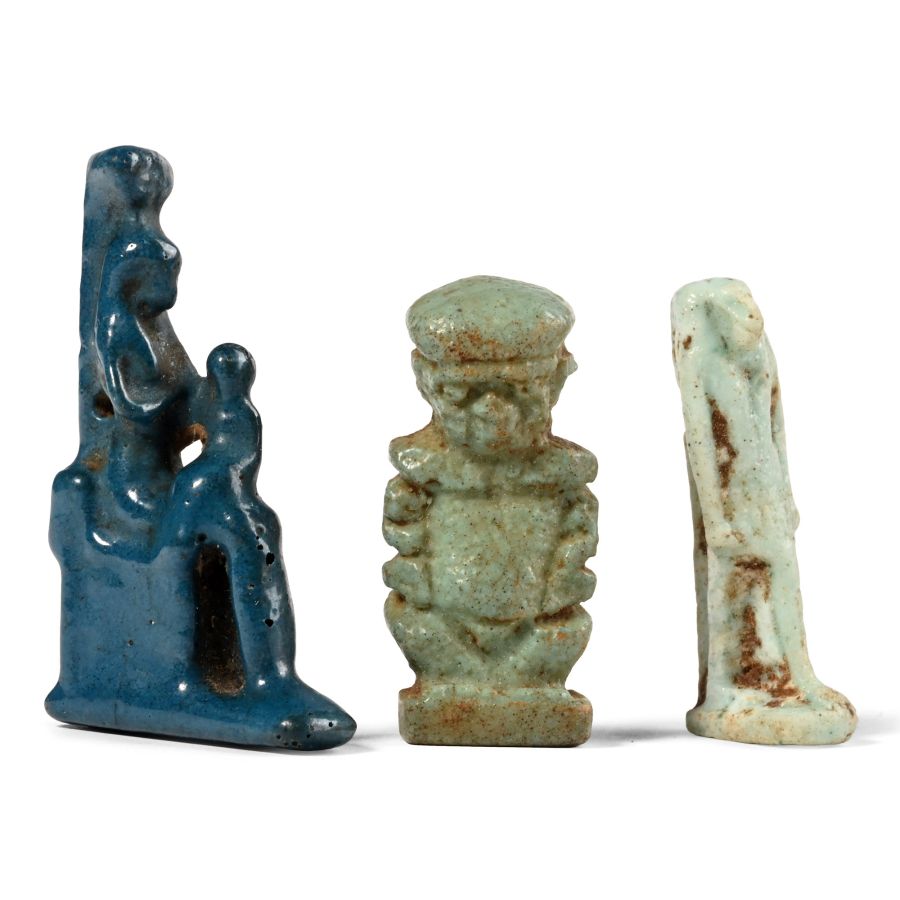
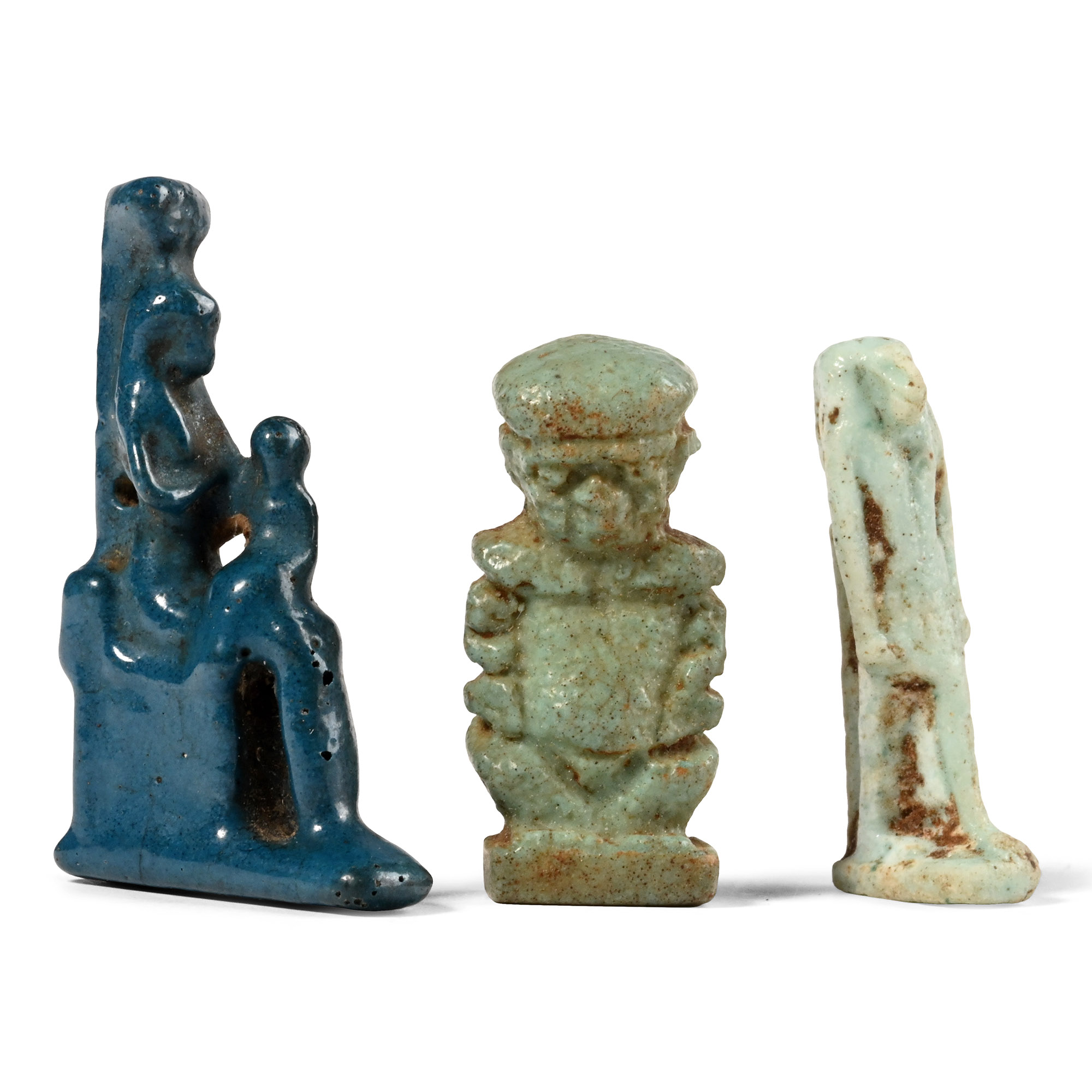
Egyptian Faience Amulet Group
LATE-PTOLEMAIC PERIOD, CIRCA 664-30 B.C. AND LATER
1 - 1 1/4 in. (6.59 grams total, 25-32 mm).
Comprising a glassy faience Isis Lactans, depicted with Nephthys's headdress; a bandy-legged nude Pataikos; and a striding anthropomorphic Thoth. [3]
ProvenanceEx Chris Belton Artefacts, 1980s.
LiteratureCf. Petrie, W.M.F., Amulets. Illustrated by the Egyptian Collection in University College, London, 1914, pl. XXXI l, for Pataikos.
CONDITIONTimeLine Auctions follows a vetting process to ensure the authenticity and legality of all items, reinforcing our commitment to integrity and responsible trading. Each antiquity, antique, and coin lot undergoes thorough examination by a vetting committee of at least ten external specialists, professional trade association members, scientists, and archaeologists: Our Vetting Process
AUCTIONS:
TimeLine is a leading auction house specialising in antiquities, ancient art, collectables, natural history, coins, medals, and books. Our auctions offer museums, collectors, historians, and enthusiasts the opportunity to acquire unique and historically significant pieces.
LOT 0675
Egyptian Faience Amulet Group
Estimate £300 - 400€350 - 460 (for guidance only)$410 - 540 (for guidance only)
-
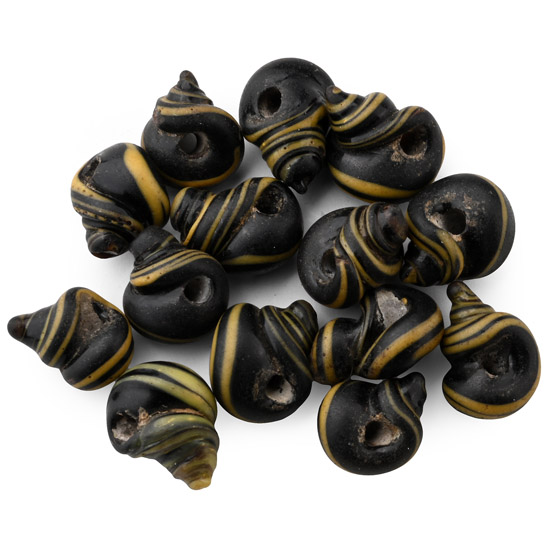
Egyptian Snail-Shaped Ribbon Mosaic Glass Bead Group
Roman Period, 30 B.C.-323 A.D.Estimate: £100 - 140 (+bp*)
Bids: 2 | Current Bid: £10
Comprising black-and-yellow mosaic glass beads shaped like snails. 10.4 grams total, 10-11 mm
Excavated from Egypt in 1914. From the private collection of Mr David Sams and his wife Elizabeth Kate Sams, gentry and amateur archaeologists who travelled to Egypt in 1914 with their daughter Ethel. Mr Sams and his wife led digging expeditions from which these items come from the family estate of Mr and Mrs Sams, by direct descent to their granddaughter. -
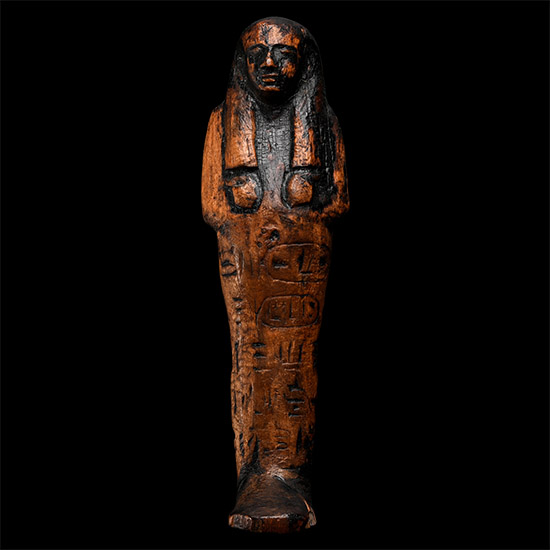
Egyptian Wooden Shabti of Pharaoh Seti I
New Kingdom, 19th Dynasty, circa 1291-1278 B.C.Estimate: £2,000 - 3,000 (+bp*)
Bids: 9 | Current Bid: £1,100
Mummiform shape with a long lappet wig and crossed arms, the hands modelled in relief, bearing six rows of hieroglyphic inscription arranged around the lower half of the body, presenting a version of Chapter 6 from the Book of the Dead, including the cartouches containing his throne name Men-Maat-Re ('Eternal is the justice of Re') and his birth name Seti-mery-en-Ptah ('Seti beloved of Ptah'); traces of black varnish visible, particularly between the lappets and on either side of the head. 82.7 grams, 18.5 cm
Acquired in London from an antiques market in 1960s for £20.00. From the private collection of Peter Clayton, FCILIP, Dip, Arch, FSA, FRNS, Hemel Hempstead, Hertfordshire, UK; formed since the late 1950s. This lot has been checked against the Interpol Database of stolen works of art and is accompanied by search certificate no.13497-263004.
Seti I was buried at Thebes in a large, lavishly decorated tomb in the Valley of the Kings (KV 17). His funerary equipment included about 700 shabtis, some made of faience and stone, but most were made of wood. Although carving finesse and overall finish varied, Seti I's wooden shabtis comprised at least two main types: those, like this example, in which the crossed arms are unmodelled and indicated only by the swell of the elbows, while the hands are boldly carved, and those in which both the arms and hands are more plastically rendered. Both forms could be uninscribed or bear both of Seti I's cartouches and a version of the shabti spell (Chapter 6 from the Book of the Dead). Analysis of one of Seti I's wooden shabtis identified the timber species as juniper. -
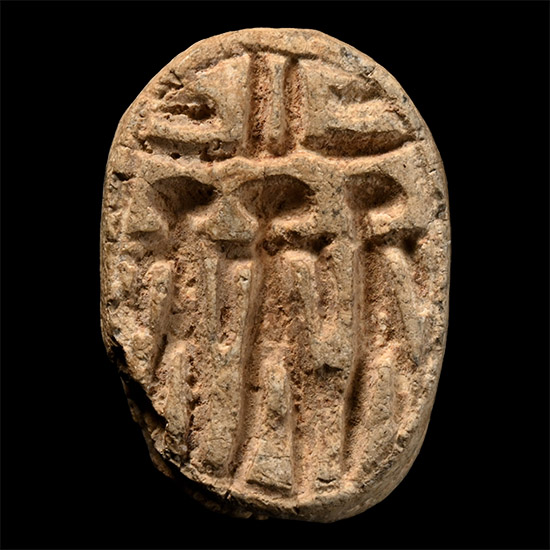
Egyptian Steatite Scarab with Three Figures
Second Intermediate Period, circa 1782-1550 B.C.Estimate: £50 - 70 (+bp*)
Bids: 1 | Current Bid: £5
With incised anatomical detailing on the body and legs, underside with three standing figures. 4.26 grams, 20 mm
Acquired from various London-based UK, antiquity dealers. From a Derbyshire gentleman's private museum, formed from the late 1970s-early 1980s.
