
Loading, please wait...
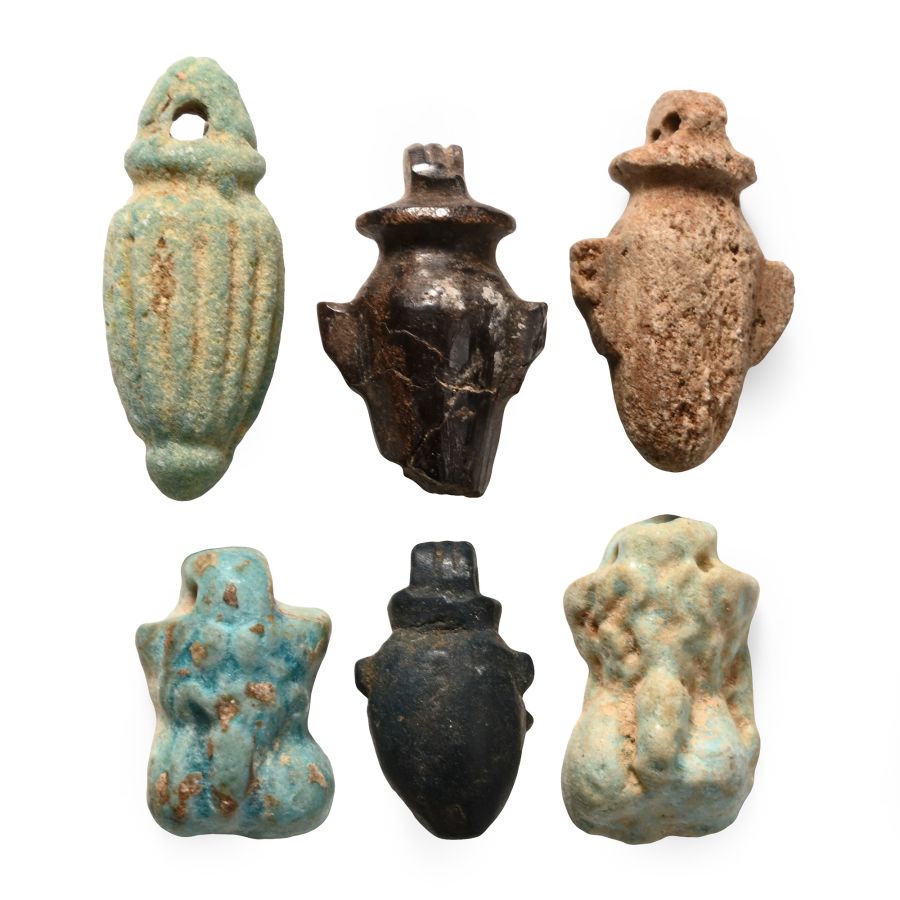
LOT 0508
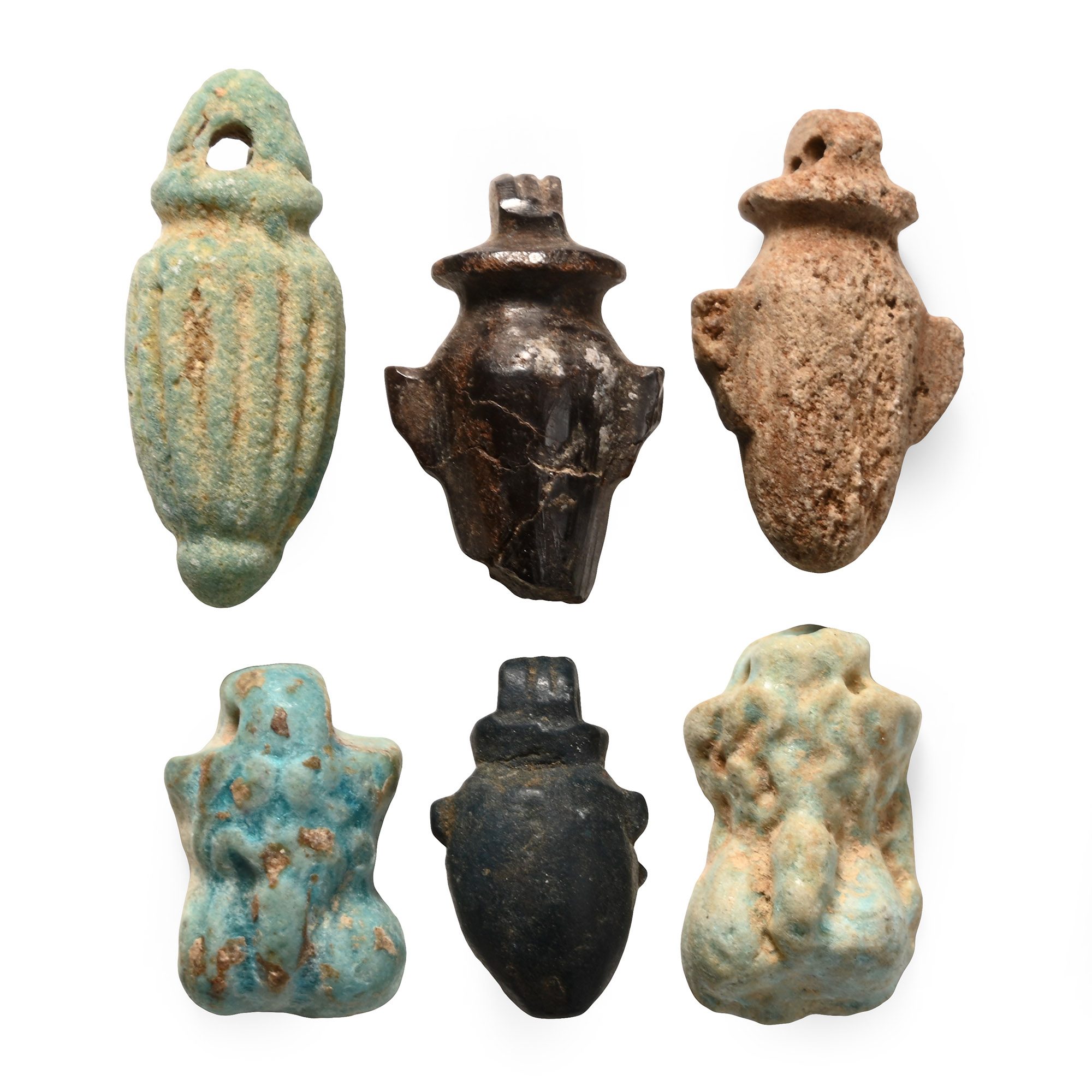
Egyptian Faience Amulet Group
LATE PERIOD, 664-332 B.C.
5/8 - 1 in. (11.6 grams total, 16-25 mm).
Comprising three heart amulets, two phallic amulets, and a ribbed fruit amulet. [6]
ProvenanceFrom the collection of a gentleman, acquired on the London art market in the 1990s.
CONDITIONTimeLine Auctions follows a vetting process to ensure the authenticity and legality of all items, reinforcing our commitment to integrity and responsible trading. Each antiquity, antique, and coin lot undergoes thorough examination by a vetting committee of at least ten external specialists, professional trade association members, scientists, and archaeologists: Our Vetting Process
AUCTIONS:
TimeLine is a leading auction house specialising in antiquities, ancient art, collectables, natural history, coins, medals, and books. Our auctions offer museums, collectors, historians, and enthusiasts the opportunity to acquire unique and historically significant pieces.
-
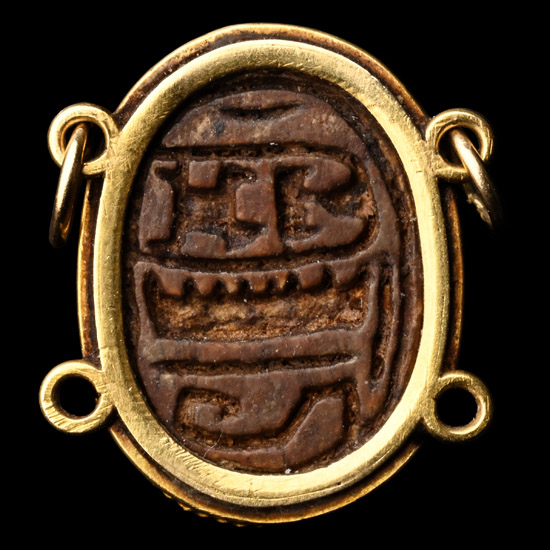
Egyptian Steatite Scarab in Antique Pendant Mount
Late Period, 664-332 B.C. and laterSold for (Inc. bp): £195
The scarab with anatomical detailing on the body, underside with a cartouche for Tuthmoses III and other hieroglyphs; set in a gold filigree mount with four lateral loops. 3.68 grams, 18.3 mm
From the private collection of a European gentleman (1942-2024), formed since the 1970s. -
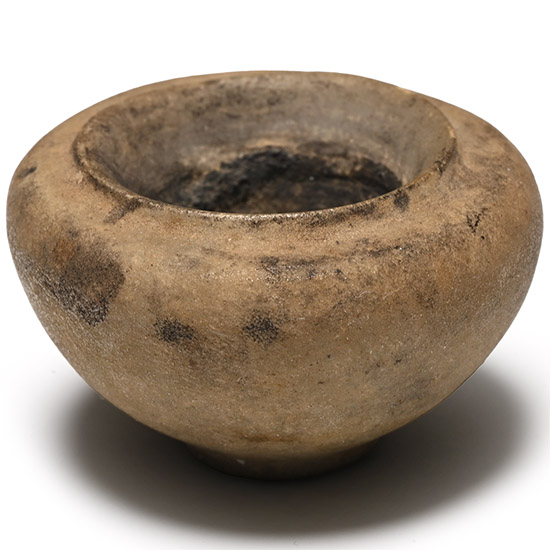
Egyptian Stone Bowl
1st millennium B.C.Sold for (Inc. bp): £111
Miniature bowl with raised rim and disc base. 28.8 grams, 33 mm
Collection of Julien Bessonneau (1842–1916), France, thence by descent. Jean-Pierre Léveilley, Angers, acquired from the beneficiaries of the above collection in the 1970s–1980s. -
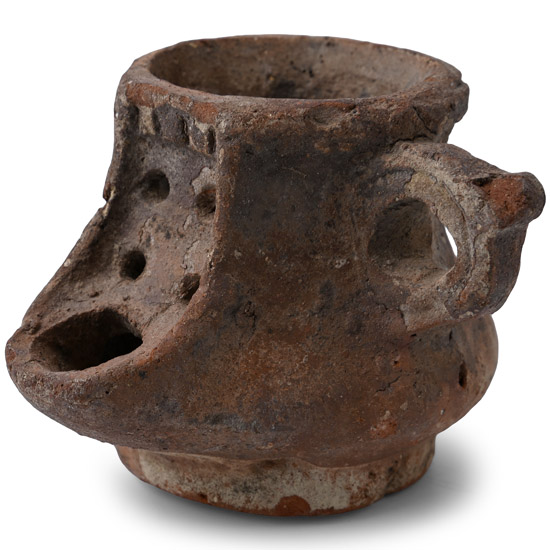
Egyptian Terracotta Handled Oil Lamp
Ptolemaic Period, circa 3rd-1st century B.C.Sold for (Inc. bp): £117
Biconical body with tubular neck and thickened rim, short spout with four piercings above, and handle to the side. 94 grams, 74.6 mm wide
From the private collection of Mr Brian Edwards, New Malden, Surrey, UK, formed from the late 1970s-early 1980s; thence by descent. Accompanied by the original collector's data sheet with reference no.A116.
