
Loading, please wait...
LOT 0501
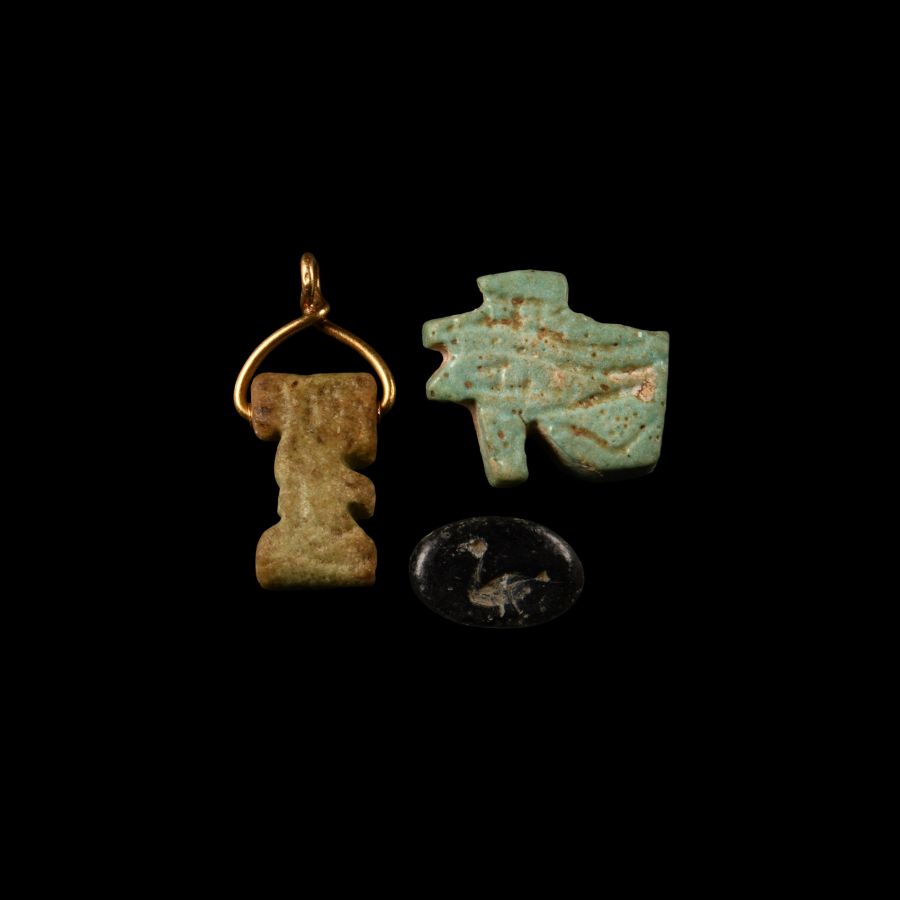
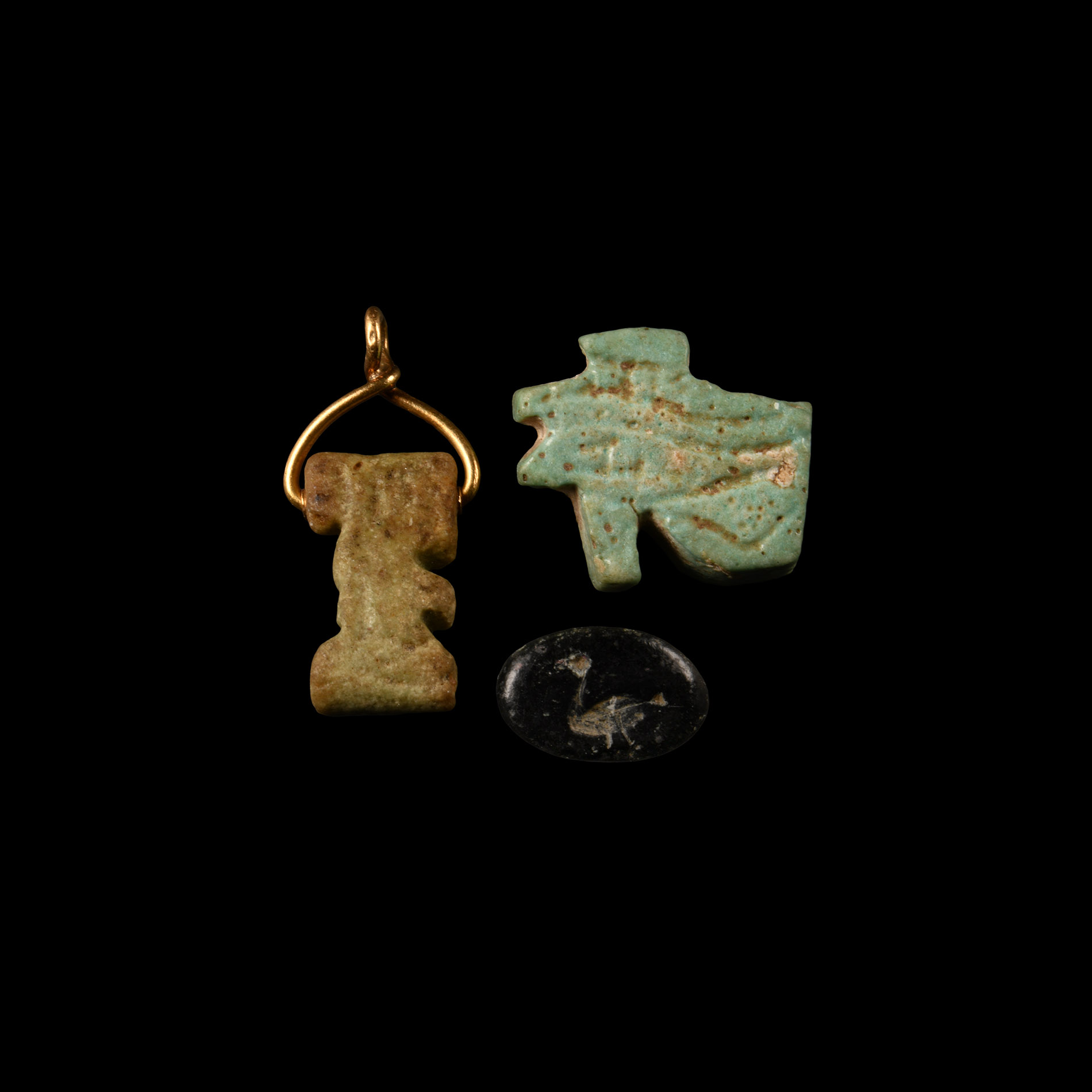
Egyptian Faience Amulet Collection
MOSTLY LATE PERIOD, 664-332 B.C.
1/2 - 1 in. (5.06 grams total, 13-26 mm).
Comprising: a blue-glazed eye of Horus amulet with bifacial detailing, pierced for suspension; a glazed Shu amulet, suspended on a slender gold bar and pendant hoop; offered with a black stone stamp seal engraved with a bird standing left, pierced for suspension. [3, No Reserve]
ProvenanceCollected since the 1970s.
Ex Everitt collection, acquired by descent 2017.
TimeLine Auctions follows a vetting process to ensure the authenticity and legality of all items, reinforcing our commitment to integrity and responsible trading. Each antiquity, antique, and coin lot undergoes thorough examination by a vetting committee of at least ten external specialists, professional trade association members, scientists, and archaeologists: Our Vetting Process
AUCTIONS:
TimeLine is a leading auction house specialising in antiquities, ancient art, collectables, natural history, coins, medals, and books. Our auctions offer museums, collectors, historians, and enthusiasts the opportunity to acquire unique and historically significant pieces.
-
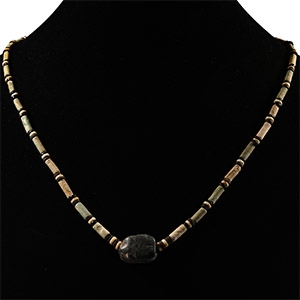
Egyptian Bead Necklace with Hardstone Scarab
Late Period, 664-332 B.C.Sold for (Inc. bp): £286
Restrung designer necklace with modern clasp; composed mainly of tubular and annular beads with a central scarab bead. 19.7 grams, 55 cm long
Acquired 1990s. From the H.N. collection, Milton Keynes, Bedfordshire, UK. -
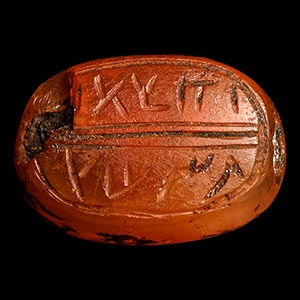
Phoenician Carnelian Scaraboid with Semitic Inscription
8th-7th century B.C.Sold for (Inc. bp): £520
With a domed upper face and bevelled side edge; base inscribed over two lines or columns separated by three lines; pierced for suspension; chip to base. 1.9 grams, 15 mm
From an old French collection, formed in the 1980s-1990s. Property of a North London antiquary. -
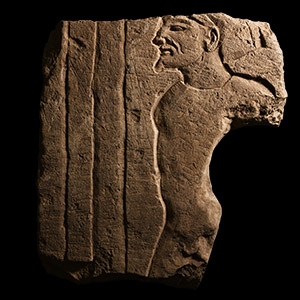
Egyptian Limestone Relief with Bound Asiatic Captive
New Kingdom, 19th Dynasty, circa 1250 B.C.Estimate: £7,000 - 9,000 (+bp*)
Opening Bid: £3,500
Sub-rectangular with keyhole-shaped aperture to the lower right edge; low-relief figure in profile wearing a tunic with circular neckline, bobbed hair swept behind the ears, sharp facial features with short goatee beard; bands of vertical fluting. 14.5 kg, 37.5 cm high
Acquired 1970s-1996. Property of a North American collector. London collection, 2016. This lot has been checked against the Interpol Database of stolen works of art and is accompanied by search certificate number no. 11830-207550.
The features and hairstyle of the figure resemble closely those of Asiatic captives shown on the outer wall of the temple of Ramesses II at Abu Simbel, Egypt. It is likely that the Egyptian artists from the time of Thutmose III onwards had frequent opportunities to observe the foreigners who came, or were brought into Egypt. It is likely that the Egyptian artists were interested in differentiating the various peoples encountered by the armies on their campaigns northward during the New Kingdom. The remains of a circular aperture behind the figure probably indicates that the slab was re-used as a grindstone or a door pivot in ancient times.
