
Loading, please wait...


LOT 0481
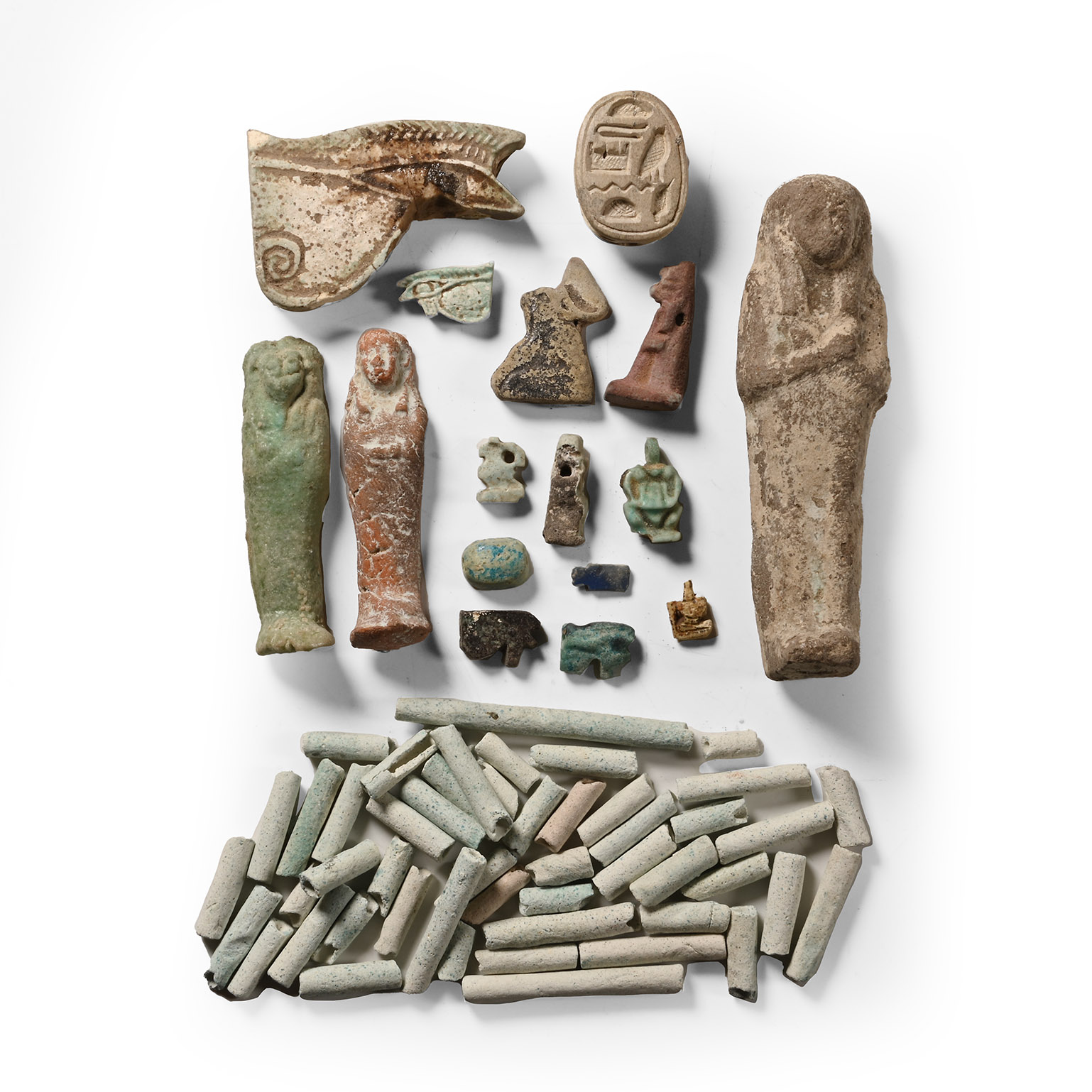
Egyptian Faience Amulet and Bead Group
MAINLY LATE PERIOD, 664-332 B.C.
1/4 - 2 3/4 in. (57 grams total, 8-71 mm).
Comprising tubular beads, wedjat-eye amulets, shabtis, scarabs, and other items. [76, No Reserve]
ProvenanceFrom the private collection of H. Norry, 1980s-1990s.
CONDITIONTimeLine Auctions follows a vetting process to ensure the authenticity and legality of all items, reinforcing our commitment to integrity and responsible trading. Each antiquity, antique, and coin lot undergoes thorough examination by a vetting committee of at least ten external specialists, professional trade association members, scientists, and archaeologists: Our Vetting Process
AUCTIONS:
TimeLine is a leading auction house specialising in antiquities, ancient art, collectables, natural history, coins, medals, and books. Our auctions offer museums, collectors, historians, and enthusiasts the opportunity to acquire unique and historically significant pieces.
-
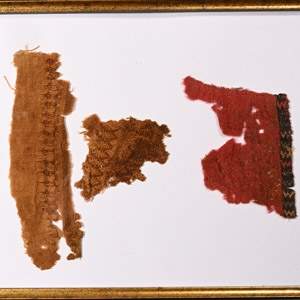
Egyptian Framed Coptic Fabric Collection
Circa 5th-7th century A.D.Sold for (Inc. bp): £85
Three fragments of tabby-weave linen fabric, two with embroidered ornament, one with a woven polychrome border; mounted in a glazed wooden frame with gilt inner border. 578 grams total, fragments: 6.5-15.5 cm (frame: 26 x 31 cm)
From the private collection of H. Norry, 1980s-1990s. -
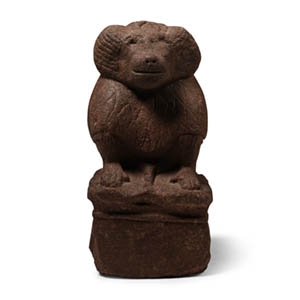
Egyptian Brown Quartzite Baboon Animal Figurine
New Kingdom, circa 1550-1070 B.C.Estimate: £6,000 - 8,000 (‡+bp*)
Opening Bid: £3,000
Carved in a typical pose, sitting on its haunches with its tail curving around the right side, its front paws resting on its knees and protruding beneath its thick furry pelt, with incised detailing, its feet either side of the phallus, the head with bulbous, striated hair on either side, chipped, snout restored; seated on a high shrine-shaped plinth with squared front and rounded back, featuring a cavetto cornice and roll detailing on the upper part. 1.15 kg, 15 cm
From a deceased American estate, 1970-1989. with Bonham's, London, 28 October 2009, no.35. Accompanied by copies of the relevant Bonham's catalogue pages. This lot has been checked against the Interpol Database of stolen works of art and is accompanied by a search certificate number no.12368-226706.
The baboon was an animal manifestation of the god Thoth, who was revered for his association with knowledge, writing, and healing. -
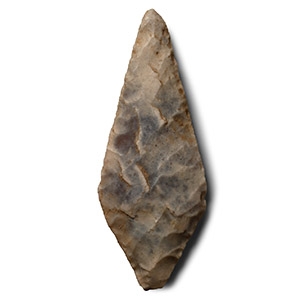
Egyptian Flaked Arrowhead
4th-2nd millennium B.C.Sold for (Inc. bp): £59
Lentoid in section and lozengiform in plan with two cutting edges. 1.48 grams, 35 mm
From the collection of Mr S.M., London, UK, formed from 1979-1999.
