
Loading, please wait...
LOT 0018
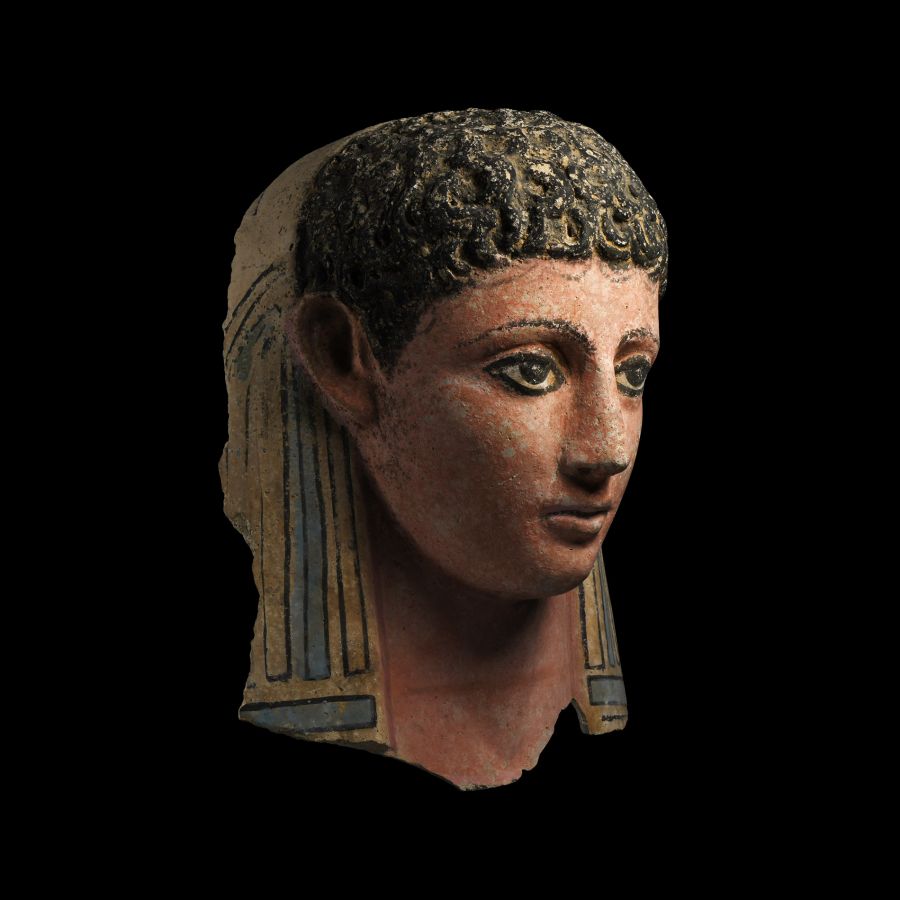
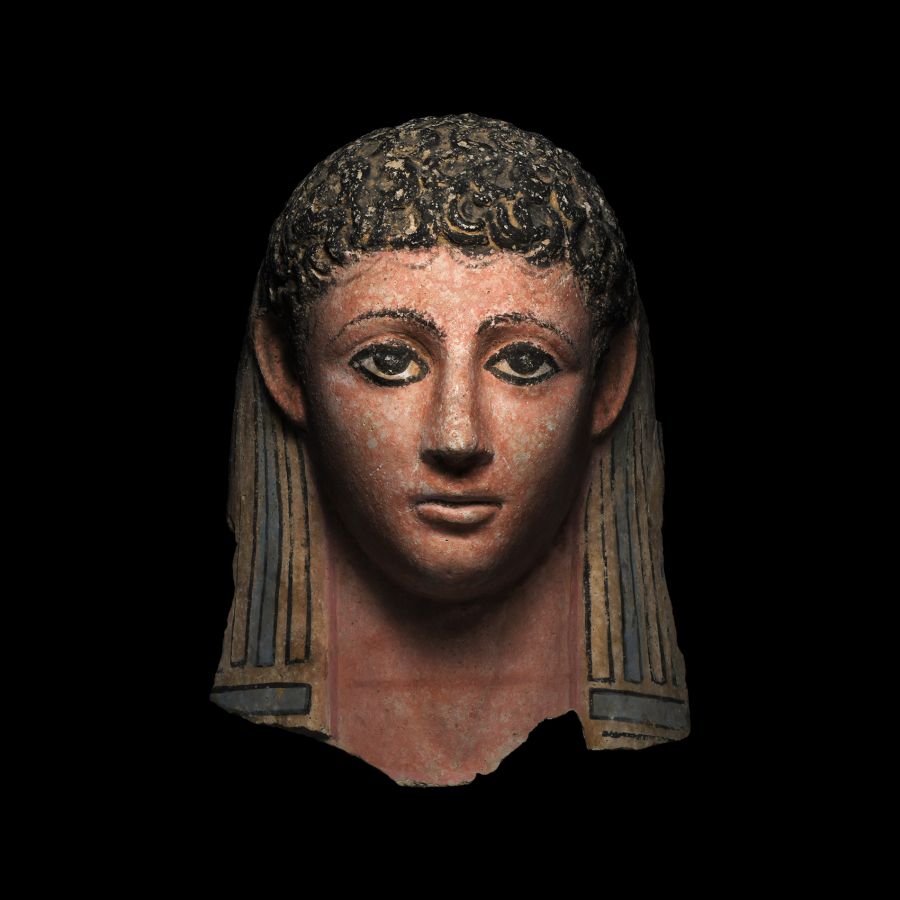
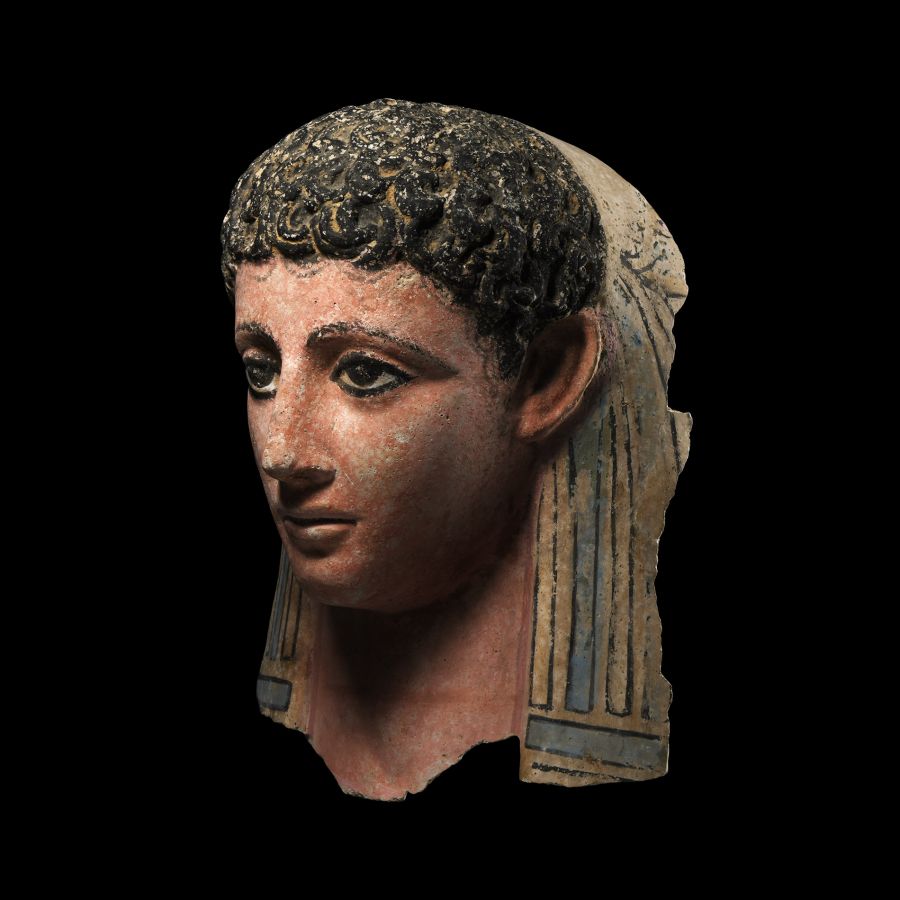
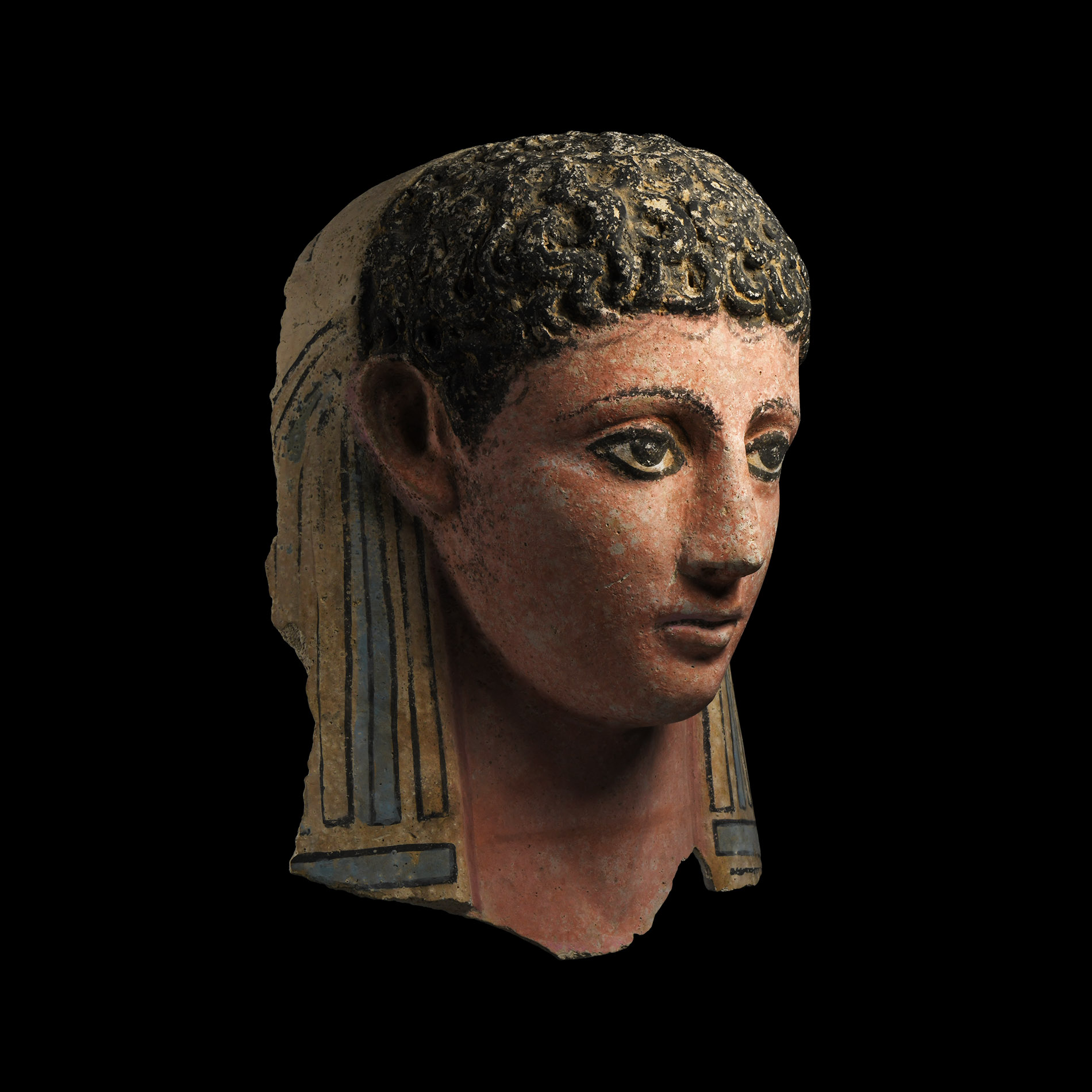
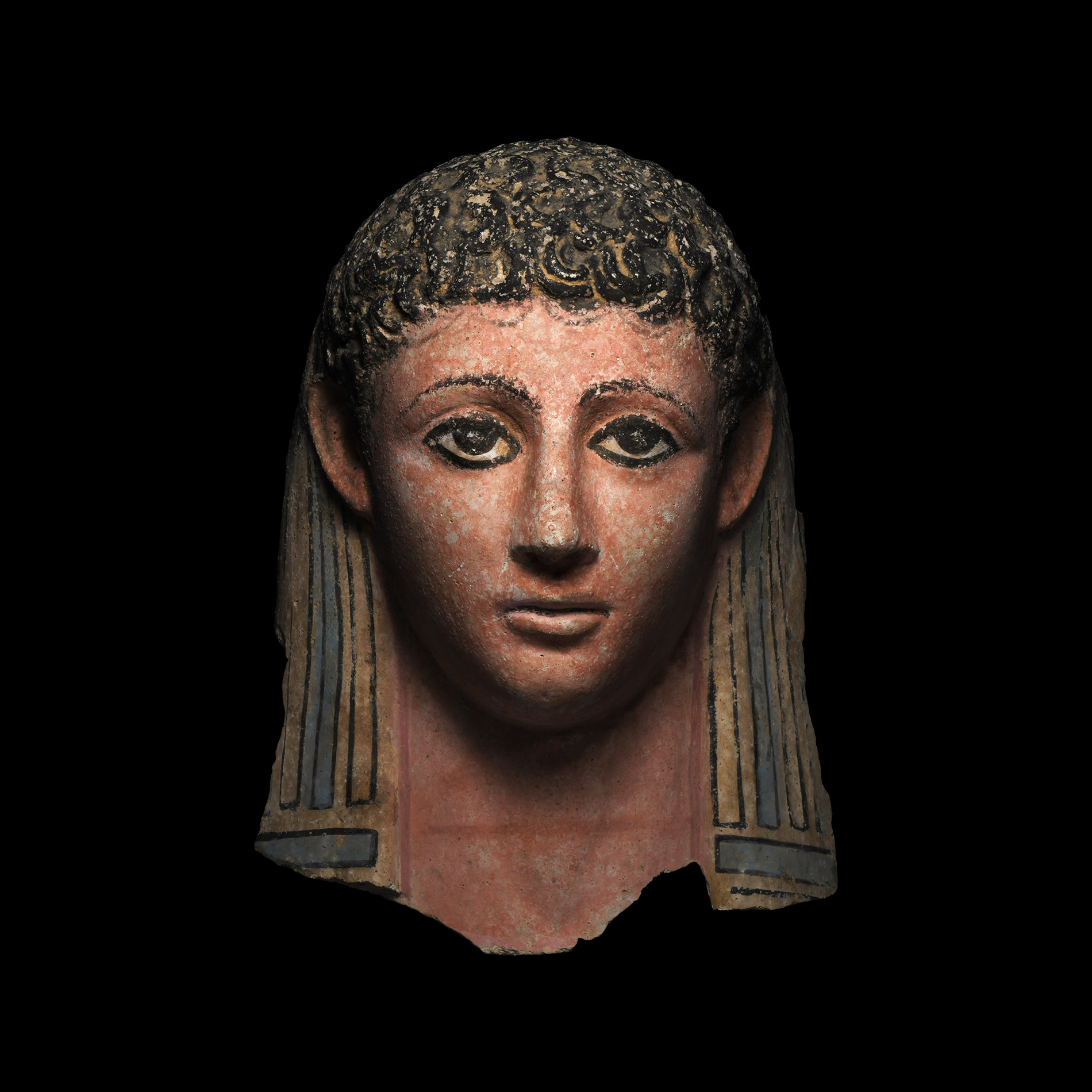
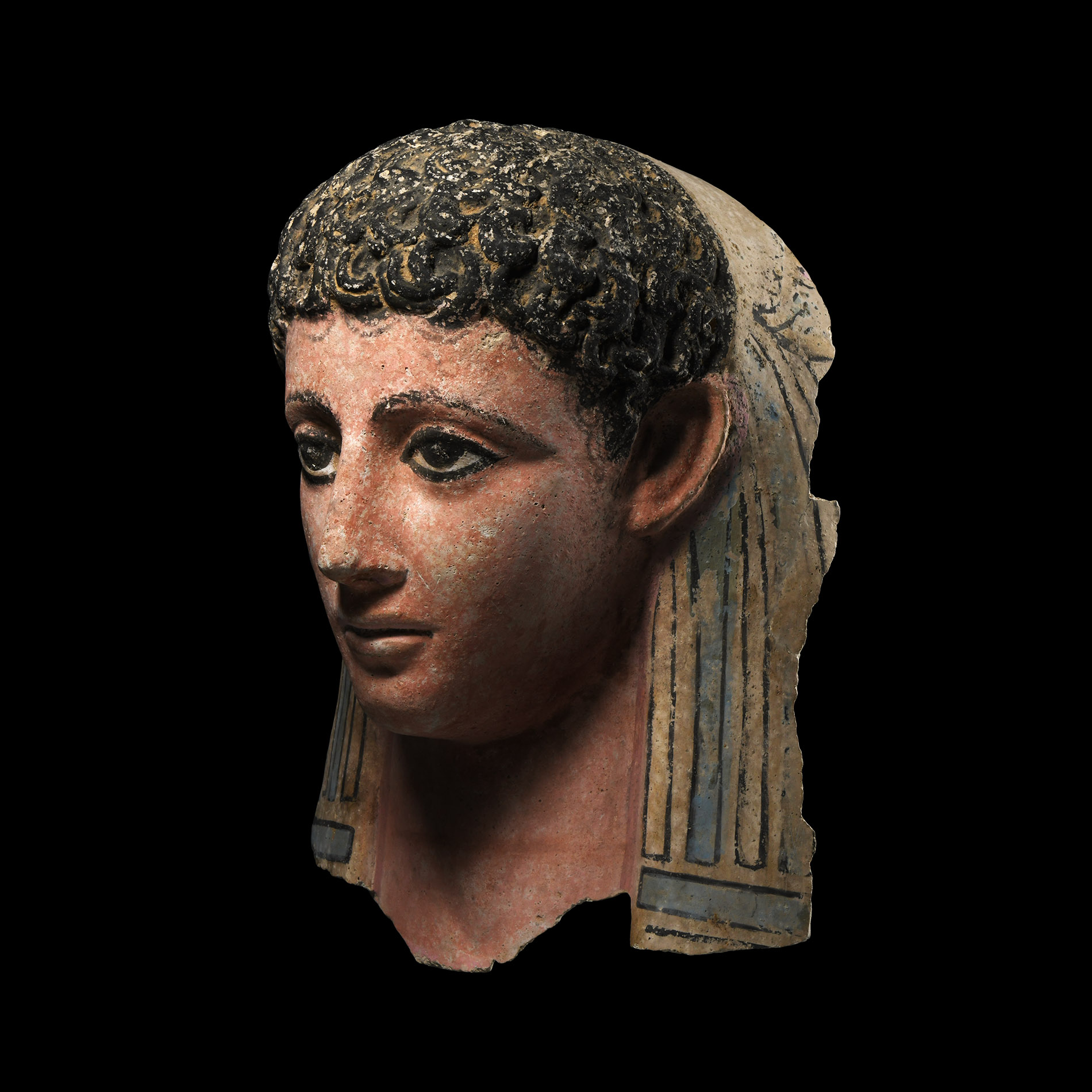
Egyptian Face Mask of a Young Male
ROMAN PERIOD, MID 2ND CENTURY AD
11 1/2" (2 kg, 29cm).
A polychrome plaster mask of a curly-headed young male, with additional curls painted to the forehead in a carefully arranged band; thick black pigment outlining the eyes; pink pigment to face with lighter pink to the mouth; either side of the face lappets of a striped tripartite wig falling to the shoulders, decorated with vertical pale blue panels.
ProvenanceFrom an important London W1, collection; with Koutoulakis, Geneva, 1983; this lot has been checked against the Interpol Database of stolen works of art and is accompanied by AIAD certificate number no. 10741-177377.
PublishedExhibited: Les corps evanoui, les images subites, Musée de l'Elysée, Lausanne, Switzerland, 19 November 1999-23 January 2000, catalogue p.119; and Euphrosyne Doxiadi, Apo de portraita tou Fayou, Heraklion, Athens, Salonic, 1998-1999, catalogue p.108.
LiteratureCf. Parlasca, K., Sailor, H., Moments, Mummy Portraits and Egyptian Funerary Art from Roman Times, Frankfurt, 1999, no.210; and see Roberts, P., Mummy Portraits from Roman Egypt, London, 2008, for discussion; and for a similar example in The British Museum accession, see number EA 24779.
FootnotesThe use of face coverings for the dead continued in Egypt for as long as mummification was practiced. Regional preferences included cartonnage and plaster masks, both of equal popularity during the Ptolemaic period. During the Roman period, plaster masks exhibit Graeco-Roman influence only in their coiffures, which were patterned from styles current at the imperial court. This included both beards and moustaches for males, and elaborate styles for women, all highly moulded in relief.
The mask would have formed part of the lid to the coffin, which would have depicted the deceased as if they were reclining on a wooden bier, the hands folded on the chest and the head slightly raised. The painted plaster masks derived from Pharaonic traditions, in the sense that the mask served as a substitute for the head of the deceased and a means of elevating the individual to the status of an immortal. This can be seen on this mask with the addition of the tripartite wig, often seen being worn by Ptah-Sokar-Osiris, the god of death and resurrection.
Painted plaster masks date from the earliest years of Roman occupation in Egypt and continued in use well into the third century; the hair and facial features of this piece are consistent with Hadrianic and early Antonine portraiture. Like the Faiyum portraits, they depict the deceased in a youthful, almost idealised manner, but with a sense of individualism verging on portraiture; they are shown wearing their best clothes and costly jewellery. The mummy was often kept within the home for a specified period of time, partaking in daily life and rituals until the day that they were transferred to a cemetery on the fringes of the town. Through this the dead were seen to act as a constant presence with the living; indeed, after the mummy was buried, often in a communal vault, the living would regularly visit the deceased to partake of banquets in their honour. Many of the funerary vaults had special dining rooms or funerary gardens associated with them, for the living to use on days associated with the dead relative.
TimeLine Auctions follows a vetting process to ensure the authenticity and legality of all items, reinforcing our commitment to integrity and responsible trading. Each antiquity, antique, and coin lot undergoes thorough examination by a vetting committee of at least ten external specialists, professional trade association members, scientists, and archaeologists: Our Vetting Process
AUCTIONS:
TimeLine is a leading auction house specialising in antiquities, ancient art, collectables, natural history, coins, medals, and books. Our auctions offer museums, collectors, historians, and enthusiasts the opportunity to acquire unique and historically significant pieces.

Late Period, 664-332 BC
Lot No. 0024
Sold for (Inc. premium): £48,578

Third Intermediate Period, 1069-702 BC
Lot No. 0027
Sold for (Inc. premium): £699
New Kingdom-Ptolemaic Period, 1550-30 BC
Lot No. 0658
Sold for (Inc. premium): £432
