
Loading, please wait...


LOT 0456
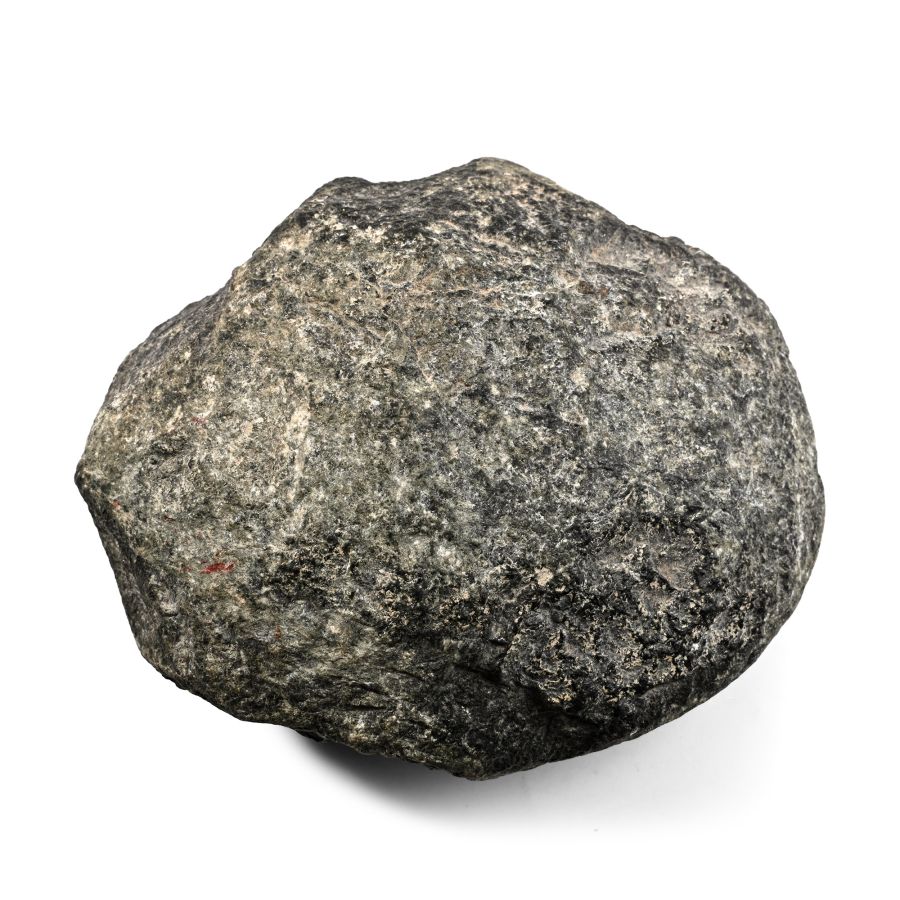
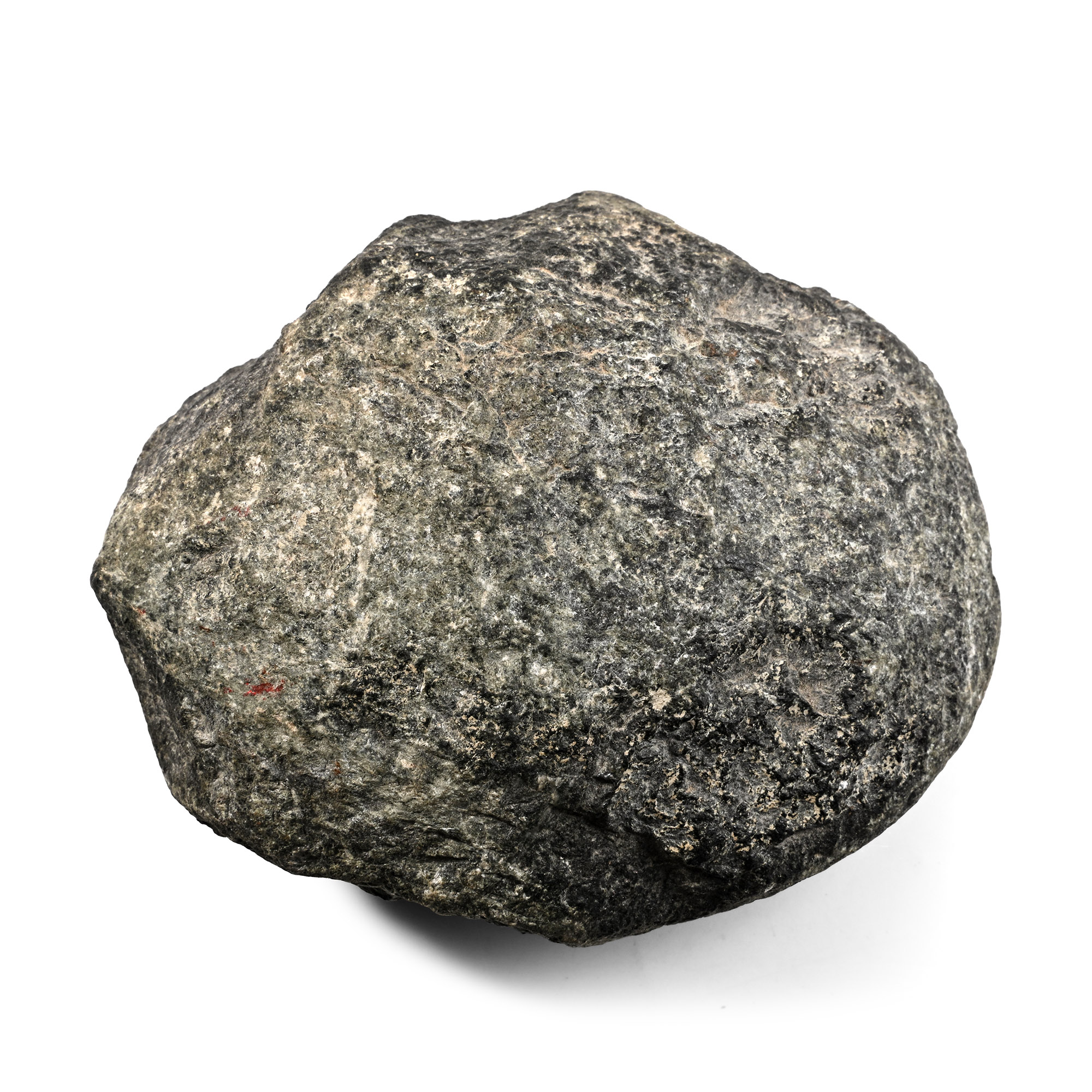
Egyptian Dolerite Pounder Tool
3RD-LATE 1ST MILLENNIUM B.C.
4 1/4 in. (660 grams, 10.9 cm).
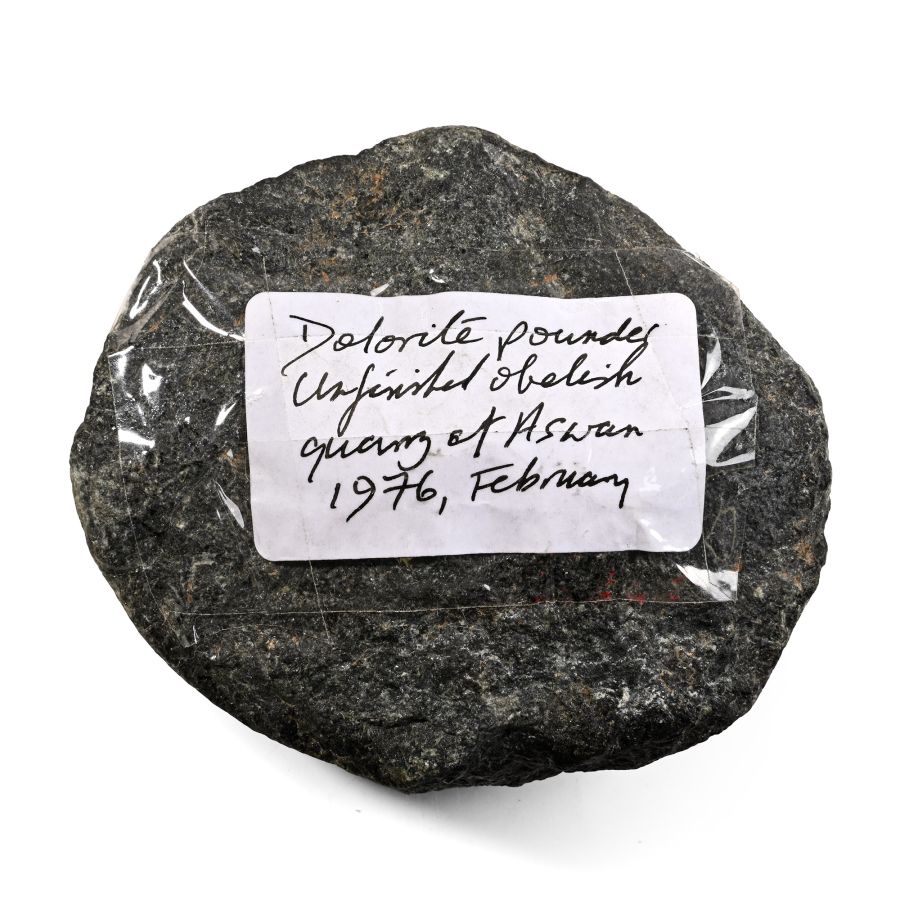
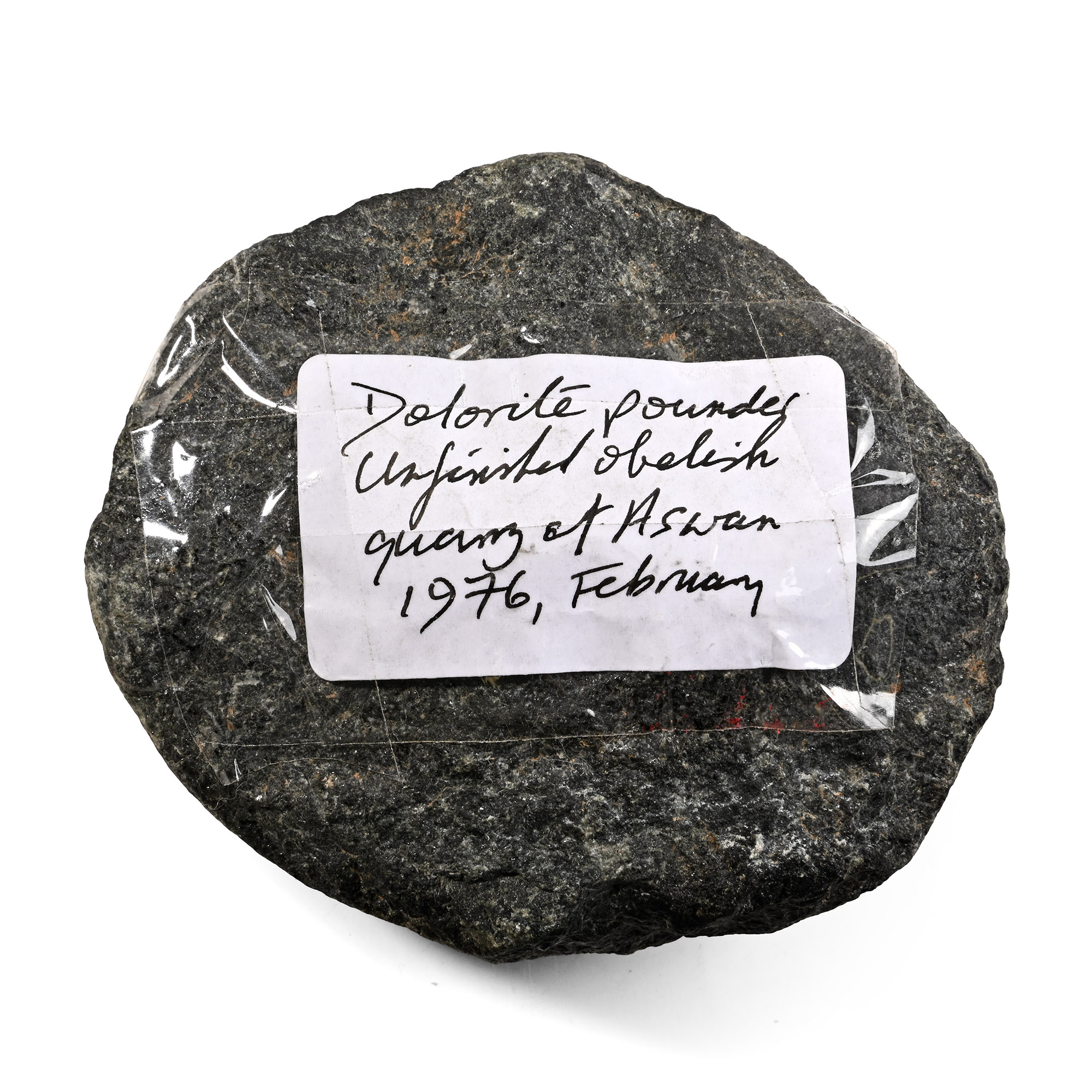
Plano-convex in section with smoothed upper face; collector's findspot note to underside 'Dolorite pounder. Unfinished obelisk quarry at Aswan. 1976, February'. [No Reserve]
ProvenanceFound at the unfinished obelisk quarry at Aswan, 1976.
From the private collection of Peter Clayton, FCILIP, Dip, Arch, FSA, FRNS, Hemel Hempstead, Hertfordshire, UK; formed since the late 1950s.
Dolerite pounders are hand-held stone tools, widely used in Egypt for quarrying and dressing granite and other hard rocks.
CONDITIONTimeLine Auctions follows a vetting process to ensure the authenticity and legality of all items, reinforcing our commitment to integrity and responsible trading. Each antiquity, antique, and coin lot undergoes thorough examination by a vetting committee of at least ten external specialists, professional trade association members, scientists, and archaeologists: Our Vetting Process
AUCTIONS:
TimeLine is a leading auction house specialising in antiquities, ancient art, collectables, natural history, coins, medals, and books. Our auctions offer museums, collectors, historians, and enthusiasts the opportunity to acquire unique and historically significant pieces.
LOT 0456
Egyptian Dolerite Pounder Tool
Estimate £50 - 70€58 - 81 (for guidance only)$68 - 95 (for guidance only)
Opening Bid
£5 (EUR 6; USD 7) +BP*
-
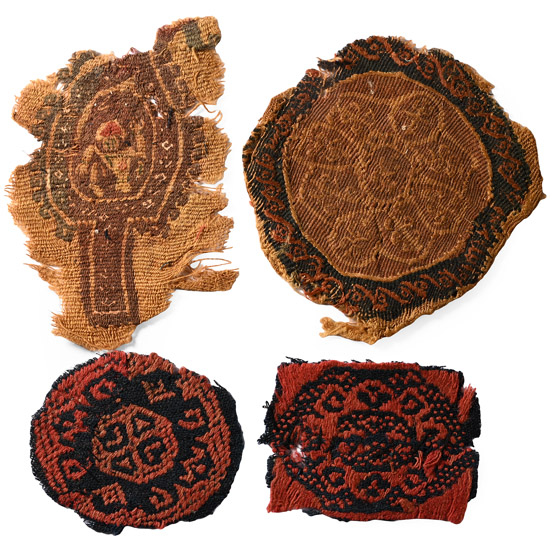
Egyptian Coptic Tunic Textile Fragments of Orbiculi with Vegetation, Figures and Geometric Ornament
Circa 6th-7th century A.D.Estimate: £80 - 100 (+bp*)
Opening Bid: £5
Comprising a tablion and an orbiculus featuring floral and geometric decoration in black and red wool (Z-twist); an orbiculus with floral and geometric decoration in yellow, brown, red, and black wool; and a heart-shaped bud in green, red, and yellow wool featuring a human figure at the centre. 11.1 grams total, 8.1-12.5 cm
Acquired 1970s-1996. Property of a North American collector. London collection, 2016.
The fragments are decorative parts of tunics. These are fabrics of great decorative finesse, with some elements displaying an unusual and extremely well-preserved colour palette. -
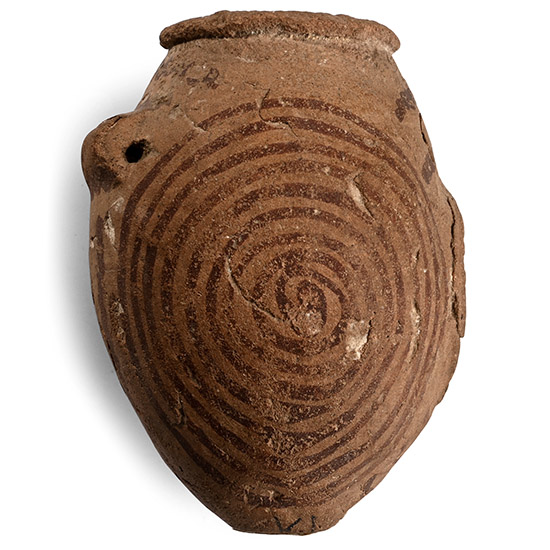
Egyptian Terracotta Pot with Painted Decoration
Predynastic Period, circa 3,500-3000 B.C.Estimate: £300 - 400 (+bp*)
Bids: 3 | Current Bid: £65
One half of a buff-coloured double-ovoid vessel, originally joined on one side to another identical pot, with a single pierced lug handle and a bold design of radiating circles. 68.4 grams, 75 mm
Ex Puys-Aubert collection in Alexandria, March 1963, paid 18 shillings. From the private collection of Peter Clayton, FCILIP, Dip, Arch, FSA, FRNS, Hemel Hempstead, Hertfordshire, UK; formed since the late 1950s. Accompanied by an old handwritten information card by Peter Clayton, collection no.99.
This small pot was originally attached to an identical vessel. Intact examples of which were found by the famous archaeologist Flinders Petrie during his excavations at the predynastic cemetery at Naqada, the site that gave its name to the chronology of the periods before Egyptian dynastic history. -
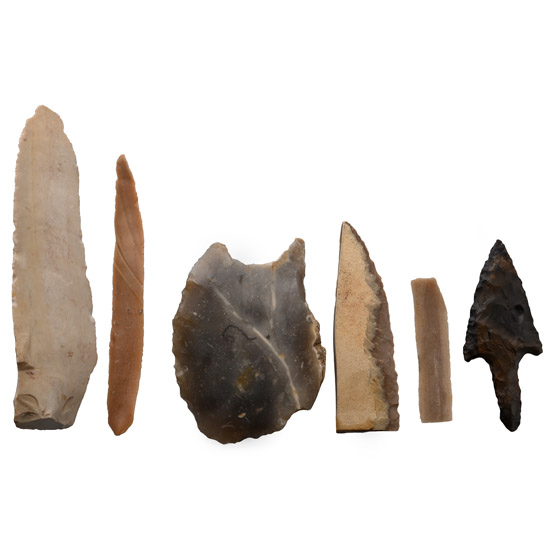
Egyptian Stone Age Knapped Tool and Arrowhead Collection
Neolithic Period, 11,000-5,200 B.P.Estimate: £60 - 80 (+bp*)
Bids: 1 | Current Bid: £5
Comprising a tanged arrowhead, three leaf-shaped tools, a tongue-shaped with a fading inked inscription, one triangular-shaped with knapped edge. 97 grams total, 45-98 mm
From the collection of A.D. Passmore (1879-1958), his collection of flints from the area of Stonehenge was donated to the Ashmolean Museum in the 1950s. From the private collection of Peter Clayton, FCILIP, Dip, Arch, FSA, FRNS, Hemel Hempstead, Hertfordshire, UK; formed since the late 1950s. Accompanied by a copy of an old handwritten information card by Peter Clayton.
