
Loading, please wait...
LOT 0620
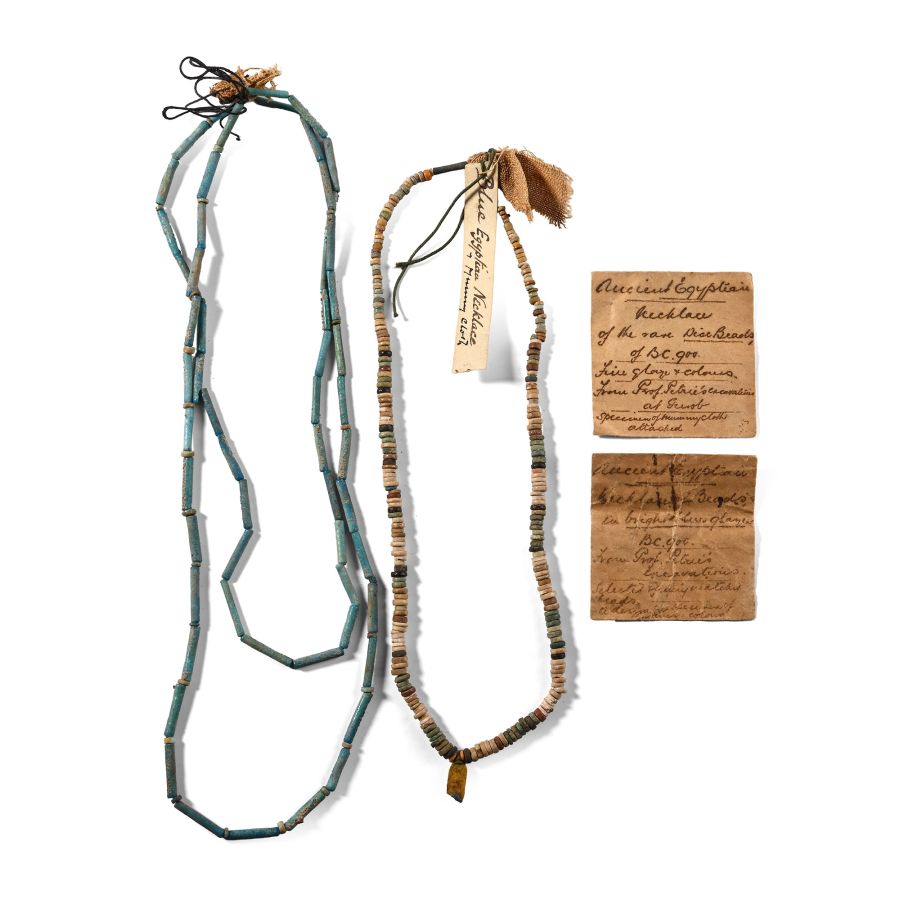
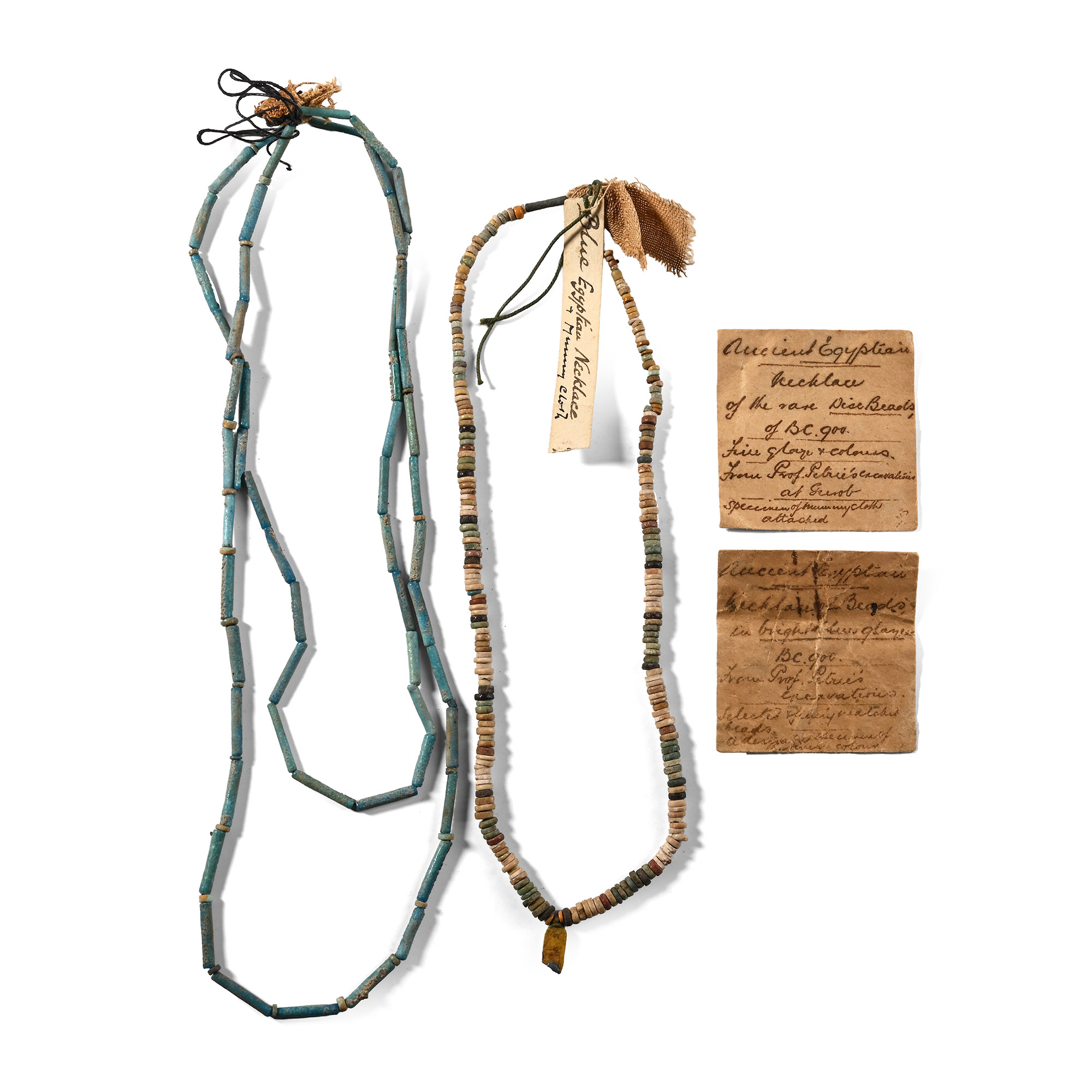
Egyptian Disc Necklace Beads and Mummy Cloth
LATE PERIOD, 664-332 B.C.
18 1/8 - 39 3/8 in. (20 grams total, 46-100 cm).
Comprising: restrung necklace of mainly white annular beads and a pendant with a fragment of original mummy cloth and an old card label: 'Ancient Egyptian Necklace of Beads in bright blue glaze B.C. 900 From Prof. Petrie's excavations. Selected & finely matched beads ...specimens of ... colour' and old card label 'Blue Egyptian Necklace and Mummy Cloth'; restrung necklace of blue tubular beads with fragment of original mummy cloth and old card label 'Ancient Egyptian Necklace of the rare disc beads of B.C. 900. Fine glaze and colours. From Prof. Petrie's excavations at Gurob. Specimen of mummy cloth attached'. [2, No Reserve]
ProvenanceEx Petrie excavations early 20th century.
From the estate of a deceased Sussex private collector since the early 20th century.
Accompanied by two old handwritten labels.
TimeLine Auctions follows a vetting process to ensure the authenticity and legality of all items, reinforcing our commitment to integrity and responsible trading. Each antiquity, antique, and coin lot undergoes thorough examination by a vetting committee of at least ten external specialists, professional trade association members, scientists, and archaeologists: Our Vetting Process
AUCTIONS:
TimeLine is a leading auction house specialising in antiquities, ancient art, collectables, natural history, coins, medals, and books. Our auctions offer museums, collectors, historians, and enthusiasts the opportunity to acquire unique and historically significant pieces.
LOT 0620
Egyptian Disc Necklace Beads and Mummy Cloth
Estimate £80 - 100€93 - 116 (for guidance only)$108 - 135 (for guidance only)
Opening Bid
£5 (EUR 6; USD 7) +BP*
-
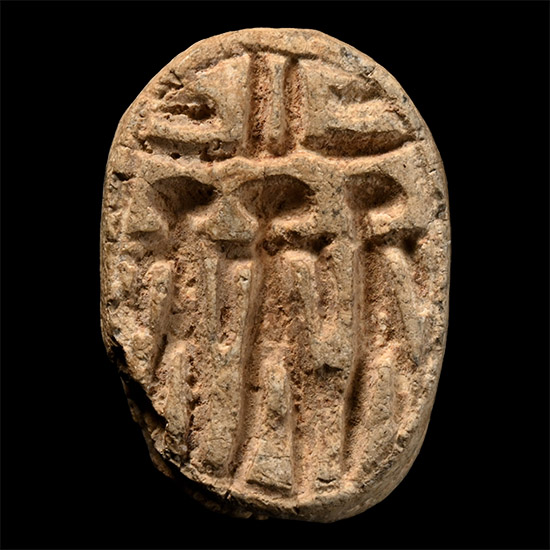
Egyptian Steatite Scarab with Three Figures
Second Intermediate Period, circa 1782-1550 B.C.Estimate: £50 - 70 (+bp*)
Opening Bid: £5
With incised anatomical detailing on the body and legs, underside with three standing figures. 4.26 grams, 20 mm
Acquired from various London-based UK, antiquity dealers. From a Derbyshire gentleman's private museum, formed from the late 1970s-early 1980s. -
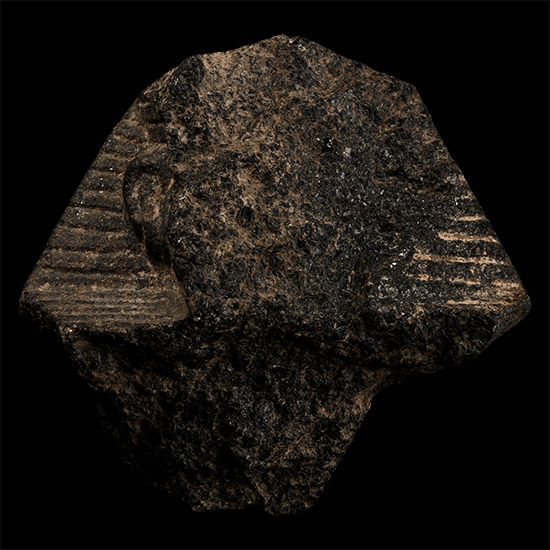
Egyptian Fragmentary Granite Head of a Pharaoh
Middle Kingdom, circa late 12th-13th Dynasty, circa 1860-1649 B.C.Estimate: £400 - 600 (+bp*)
Opening Bid: £5
With nemes ribbed headdress, large forward-facing ears, and a largely absent face. 406 grams, 96 mm
Acquired March 1965. From the private collection of Peter Clayton, FCILIP, Dip, Arch, FSA, FRNS, Hemel Hempstead, Hertfordshire, UK; formed since the late 1950s. Accompanied by an old handwritten information card by Peter Clayton, collection no.110.
Dark, hard stones were favoured for royal statuary in the late Middle Kingdom. The internal treatment of the forward-facing ears and the markings of the nemes are comparable to those of more complete royal heads from this period (cf. Bourriau, J., Pharaohs and Mortals. Egyptian art in the Middle Kingdom, Cambridge, 1988, p. 38, no. 32, for a portrait head of Amenemhat III). -
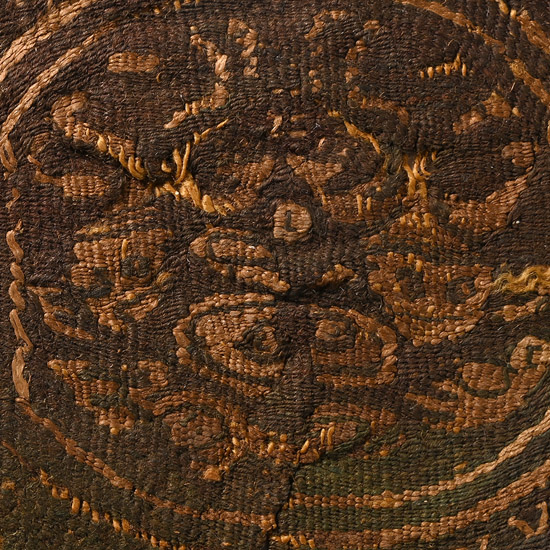
Egyptian Coptic Tunic Textile Fragment of an Orbiculus with Facing Military Horsemen
Circa 7th century A.D.Estimate: £70 - 90 (+bp*)
Opening Bid: £5
Featuring a large central floral motif, divided into sections containing rhomboid patterns and bordered by meander designs, executed in a tapestry weave using raw wool in reddish-purple, yellow, and dark brown, with an S-twist. 4.15 grams, 10.7 cm
Acquired 1970s-1996. Property of a North American collector. London collection, 2016.
In the Late Roman Period, round orbiculi decorated the shoulders and the lower part of tunics and inner tunics. These fabrics were of great decorative finesse, displaying an unusual and extremely well-preserved colour palette. When the tunic came to the end of its life, these embroideries could be recycled and patched onto another garment. The motif of the opposed horsemen could be related to a military tunic.
