
Loading, please wait...
LOT 0463
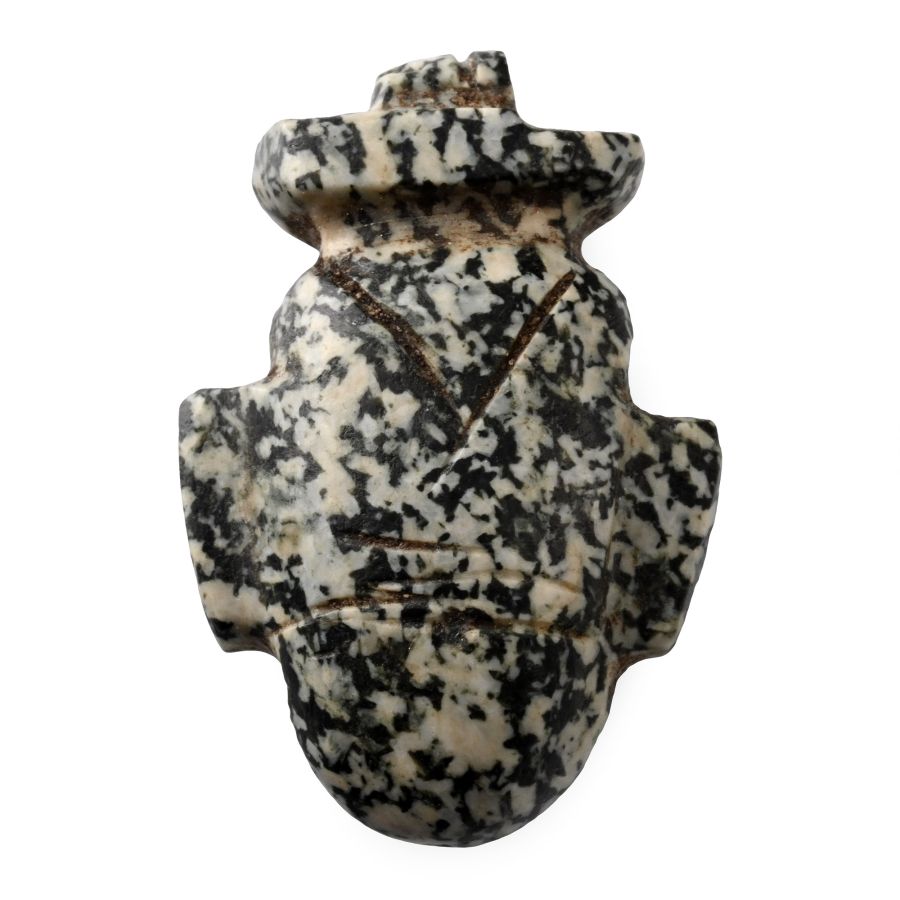
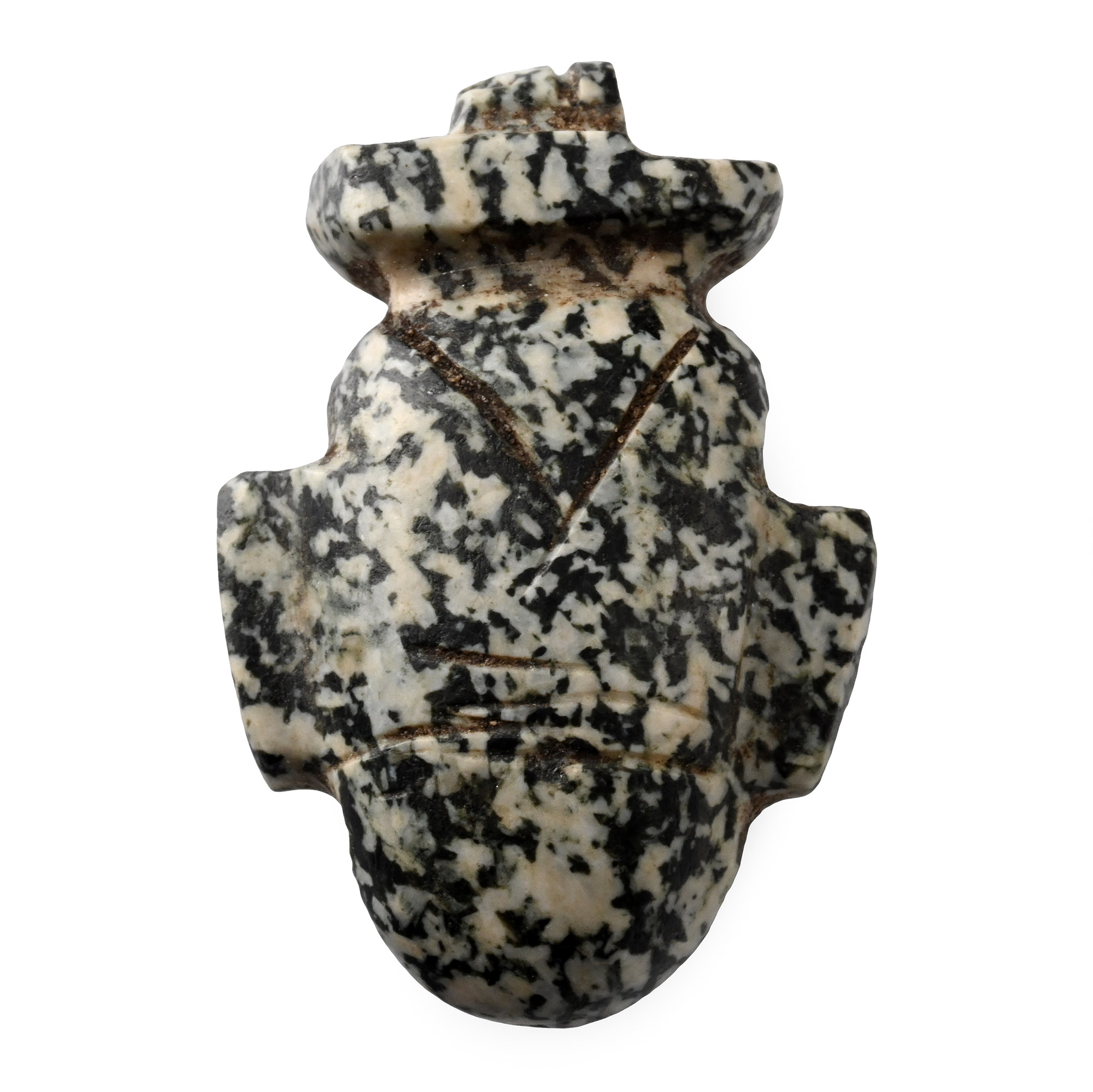
Egyptian Diorite Heart Amulet
LATE PERIOD, 664-332 B.C.
1 1/4 in. (10.7 grams, 31 mm).
A large heart, ib, amulet of classic egg-form with shallow lugs on either side, with flared top and incised lines to one side.
ProvenanceFrom an early 20th century collection.
Ex London, UK, gallery.
From a private UK collection
This lot is accompanied by an illustrated lot declaration signed by the Head of the Antiquities Department, Dr Raffaele D'Amato.
According to ancient Egyptian beliefs, the heart (ib) was considered the centre of intelligence, emotions, and behaviour. It was also believed to store an individual's memories. During the Weighing of the Heart ceremony in the afterlife, the heart could speak on behalf of the deceased and account for their lifetime of actions before Osiris. For this reason, heart amulets were placed on the mummy to safeguard the organ and ensure a favourable outcome during judgment.
CONDITIONTimeLine Auctions follows a vetting process to ensure the authenticity and legality of all items, reinforcing our commitment to integrity and responsible trading. Each antiquity, antique, and coin lot undergoes thorough examination by a vetting committee of at least ten external specialists, professional trade association members, scientists, and archaeologists: Our Vetting Process
AUCTIONS:
TimeLine is a leading auction house specialising in antiquities, ancient art, collectables, natural history, coins, medals, and books. Our auctions offer museums, collectors, historians, and enthusiasts the opportunity to acquire unique and historically significant pieces.
-
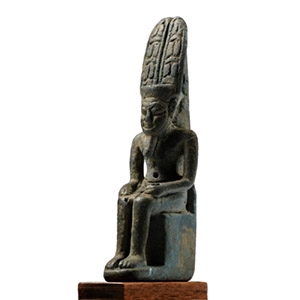
Egyptian Blue Amulet of Amun
Late Period, 26th Dynasty, circa 664-525 B.C.Sold for (Inc. bp): £1,690
The god modelled seated on a throne with a dorsal pillar, hands resting on his knees, wearing a short kilt and a two-plume feather crown; mounted on a wooden stand. 15.75 grams total, 71 mm including stand
with Charles Ede Ltd, London, UK. Private collection, London, UK, acquired from the above on 12 July 1994. Accompanied by a copy of the Charles Ede invoice. This lot has been checked against the Interpol Database of stolen works of art and is accompanied by a search certificate number no.12632-235078. This lot has been cleared against the Art Loss Register database, and is accompanied by an illustrated lot declaration signed by the Head of the Antiquities Department, Dr Raffaele D'Amato.
The amulet of the god Amun served both religious and protective purposes in ancient Egypt. Amun was a major deity associated with creation, kingship, and hidden power. Wearing an amulet bearing his image or name was believed to invoke his divine protection, grant strength, and confer favour or legitimacy. Such amulets were also placed among burial goods to ensure the deceased was protected and guided in the afterlife. -
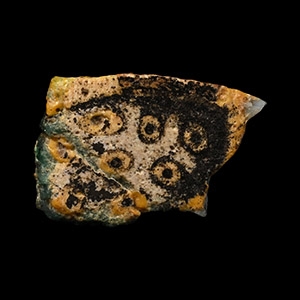
Egyptian Glass Panel with Eyes
Late Period, 664-332 B.C.Estimate: £250 - 350 (+bp*)
Opening Bid: £125
Irregular glass panel fragment with mosaic eye motifs inlaid; repaired. 1.57 grams, 18 mm
From the collection of a gentleman, acquired on the London art market in the 1990s. This lot is accompanied by an illustrated lot declaration signed by the Head of the Antiquities Department, Dr Raffaele D'Amato. -
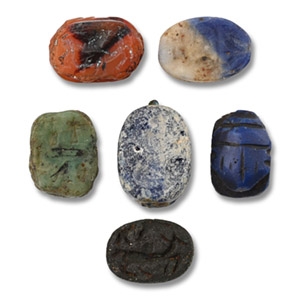
Egyptian Hardstone Scarab Group
Mainly Late Period, 664-332 B.C.Sold for (Inc. bp): £468
Most with an incuse design to the underside including cartouche of Thutmose III, lion attacking a deer, hieroglyphic text and others. 11.5 grams total, 14-18 mm
Acquired on the European art market in the early 2000s. with Galerie Rhéa, Zurich, Switzerland. This lot is accompanied by an illustrated lot declaration signed by the Head of the Antiquities Department, Dr Raffaele D'Amato.
