
Loading, please wait...

LOT 0420
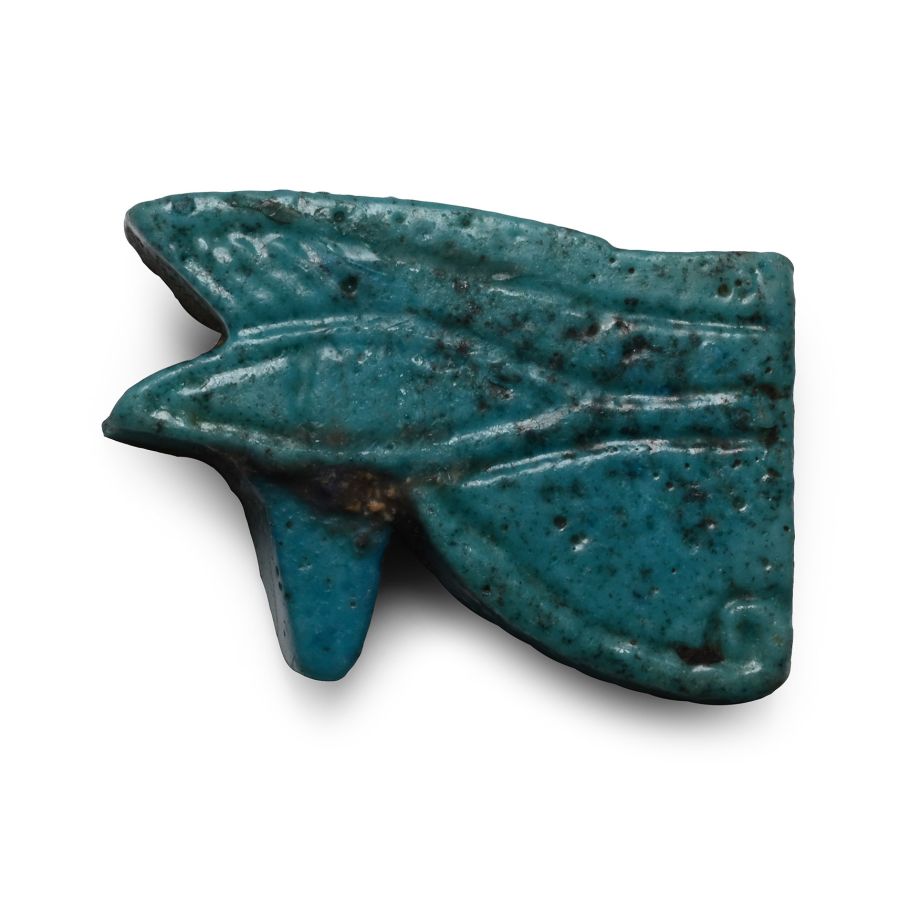
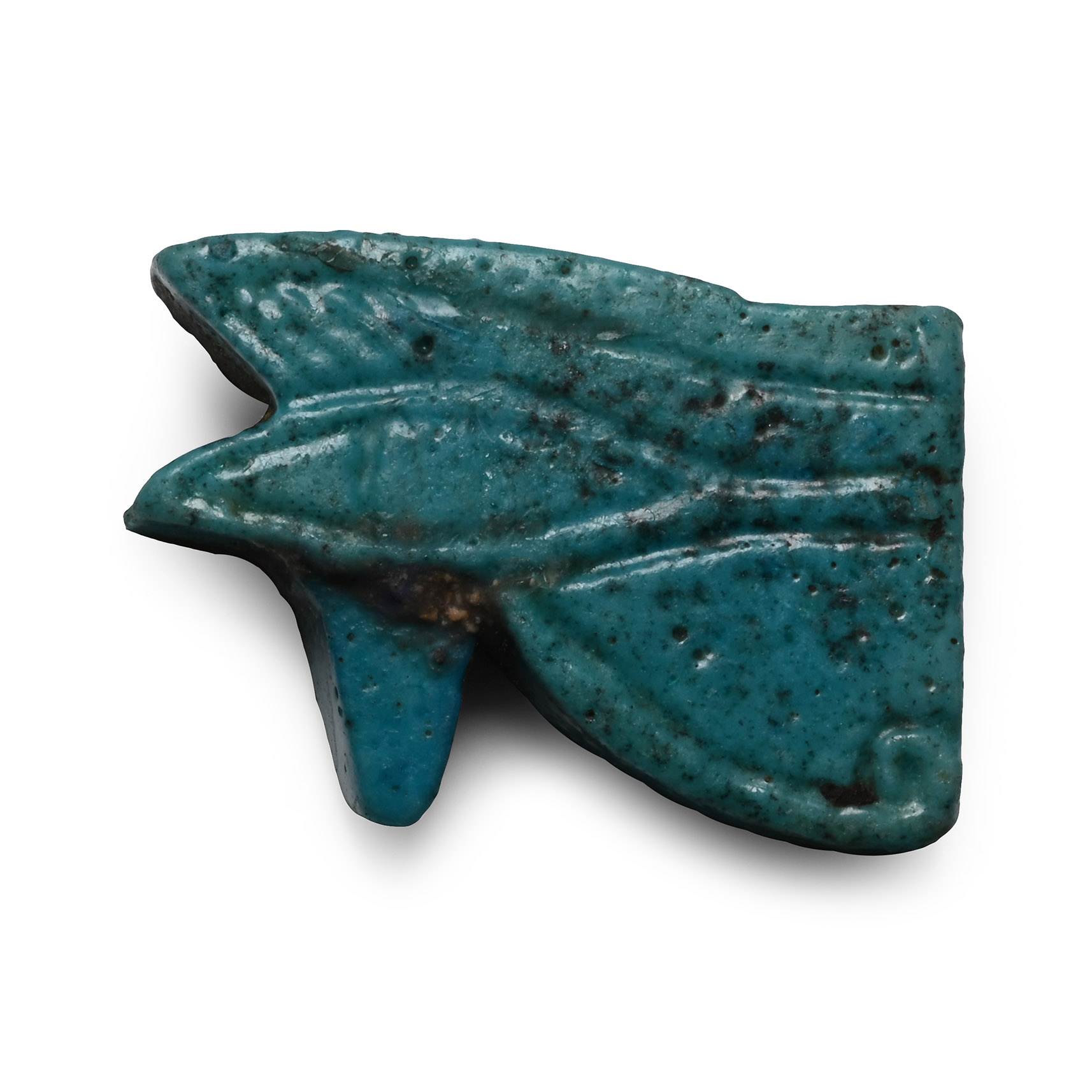
Egyptian Deep Blue Glazed Faience Eye of Horus Amulet
LATE PERIOD, 664-332 B.C.
1 1/2 in. (11.7 grams, 38 mm).
Large wedjat-eye amulet with incised human and falcon elements.
ProvenanceFrom the private collection of the late Mrs Belinda Ellison, a long time member of the Egyptian Exploration Society, c.1940-2020.
This lot is accompanied by an illustrated lot declaration signed by the Head of the Antiquities Department, Dr Raffaele D’Amato.
Cf. Tinius, I., Altägypten in Braunschweig. Die Sammlungen des Herzog Anton Ulrich-Museums und des Städtischen Museums, Wiesbaden, 2011, p. 161, no. 304, for a similar example.
FootnotesThe wedjat-eye amulet is a representation of the healed eye of the god Horus, featuring both human and falcon elements. The name wedjat in ancient Egyptian means ‘the one that is sound.’ According to Egyptian mythology, Horus' eye was wounded or taken by the god Seth and restored by Thoth. The wedjat-eye amulet was thought to protect its wearer and bestow the power of recovery and regeneration onto them. It was very popular and used by both the living and the dead.
CONDITIONTimeLine Auctions follows a vetting process to ensure the authenticity and legality of all items, reinforcing our commitment to integrity and responsible trading. Each antiquity, antique, and coin lot undergoes thorough examination by a vetting committee of at least ten external specialists, professional trade association members, scientists, and archaeologists: Our Vetting Process
AUCTIONS:
TimeLine is a leading auction house specialising in antiquities, ancient art, collectables, natural history, coins, medals, and books. Our auctions offer museums, collectors, historians, and enthusiasts the opportunity to acquire unique and historically significant pieces.
-
Egyptian Carnelian Fly Amulet
Late Period, 664-332 B.C.Sold for (Inc. bp): £182
Carved with simple body and eye detailing and polished; drilled through the eyes for suspension. 0.41 grams, 13 mm
From an early 20th century collection. This lot is accompanied by an illustrated lot declaration signed by the Head of the Antiquities Department, Dr Raffaele D’Amato.
Small fly amulets first appeared in burials during the Naqada II Period, c. 3200 B.C. These amulets grew in popularity and the materials used to make them expanded during the New Kingdom. They are crafted from a variety of materials such as gold, silver, lapis lazuli, carnelian, amethyst, faience, and bone. These amulets were thought to protect against insect bites and to ward off troublesome flying creatures through apotropaic magic. Some believe they may have even been intended to symbolise the fly’s fecundity. Additionally, pharaohs would bestow gold fly-shaped pendants as military awards to honour the bravery and fly-like persistence of soldiers in battle. -
.jpg)
Monumental Levantine-Egyptian Stone Head of a Pharaoh
Ptolemaic Period, 332-30 B.C. or laterSold for (Inc. bp): £46,800
An over-life-size head of a pharaoh, likely from a monumental sphinx, wearing the royal nemes headdress with a prominent headband and the remains of a rearing uraeus on the brow with a single coil of the body on either side of the cobra’s hood, its tail extending towards the back of the headdress; the large, almond-shaped eyes prominently outlined, and unlike on some portraits, the cosmetic lines do not extend beyond the outer corner; the fragmentary nose almost spanning the width of the small mouth modelled with straight and somewhat pursed lips; mounted on a custom-made display stand. 45.15 kg, 43 cm
Private collection, Germany, 1975. European collection, 1980s-late 1990s. By descent from the above to the present owner. Accompanied by an academic report by Egyptologist Paul Whelan. This lot has been checked against the Interpol Database of stolen works of art and is accompanied by search certificate number no.12201-218142. This lot has been cleared against the Art Loss Register database, and is accompanied by an illustrated lot declaration signed by the Head of the Antiquities Department, Dr Raffaele D’Amato.
The presence of tool marks around the neck and sides of the head, contrasting the smooth surface of the face and front part of the headdress, suggests that the sculpture is an unfinished piece. The noticeably heavy brow line is a feature of the 30th Dynasty style, which then influenced Ptolemaic royal portraiture (cf. Tomoum, N., The Sculptors' Models of the Late and Ptolemaic Periods, Cairo, 2006, pl.17, for a finished portrait assigned to the 30th Dynasty). -
Egyptian Silver Goddess Bastet Cat Amulet
Late-Ptolemaic Period, 664-30 B.C.Sold for (Inc. bp): £234
Seated figure of a cat with pointed ears mounted on a rectangular base with a rounded end; suspension loop on the back. 1.58 grams, 12 mm
From an early 20th century collection. This lot is accompanied by an illustrated lot declaration signed by the Head of the Antiquities Department, Dr Raffaele D’Amato.
