
Loading, please wait...
LOT 0450
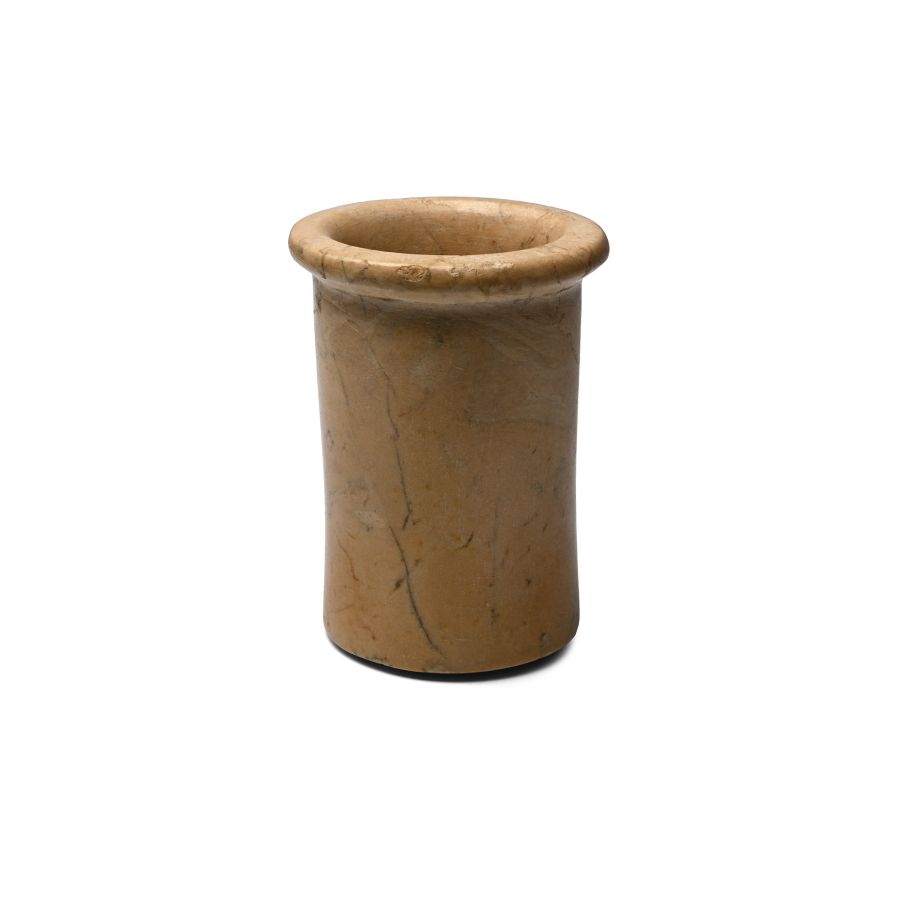
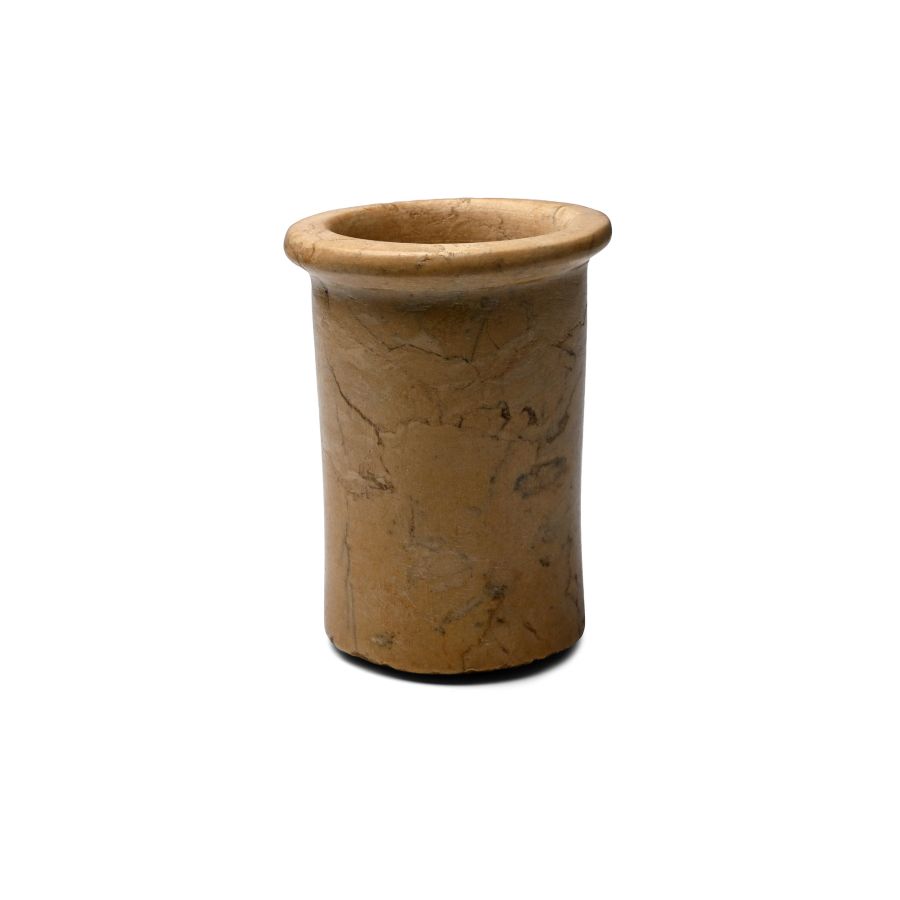
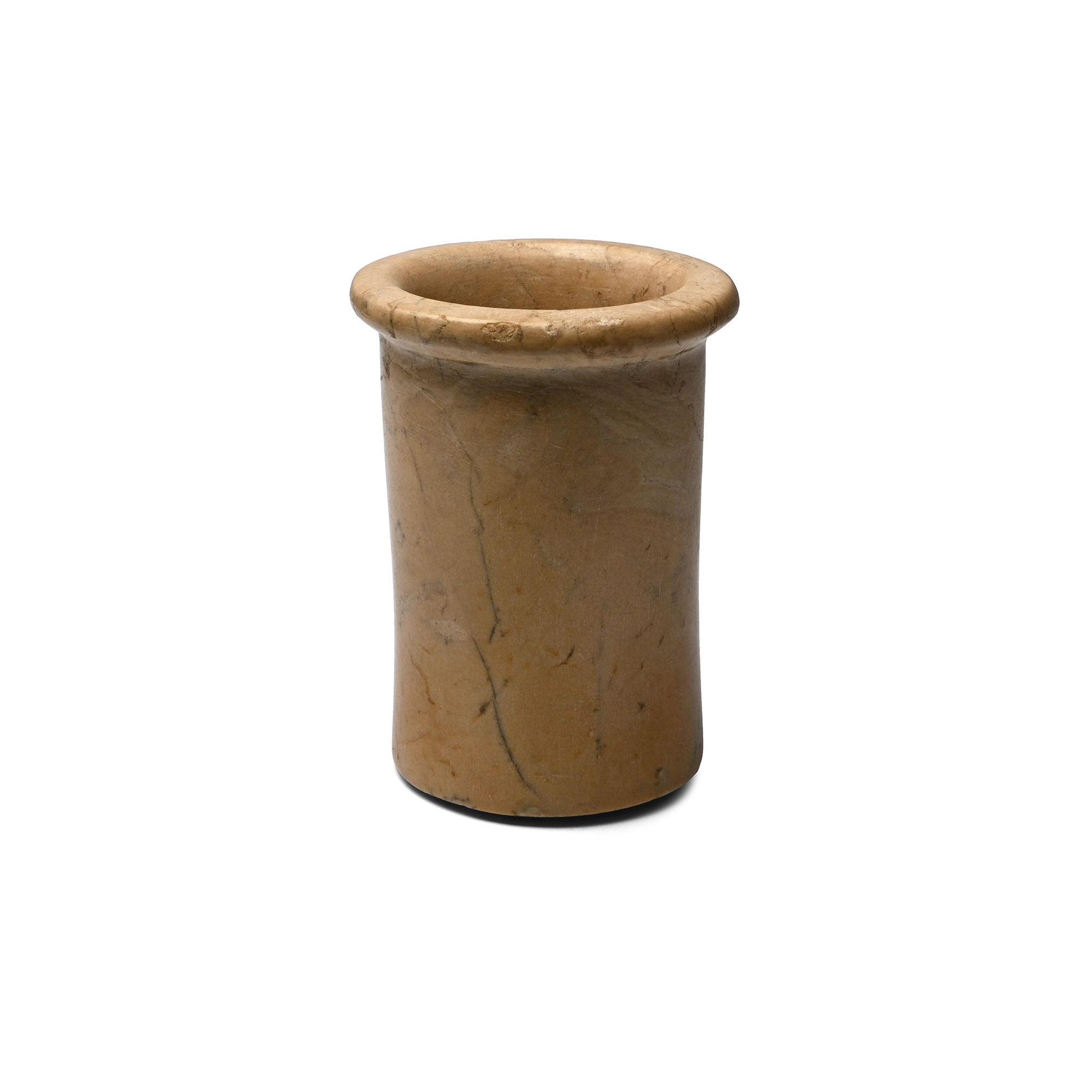
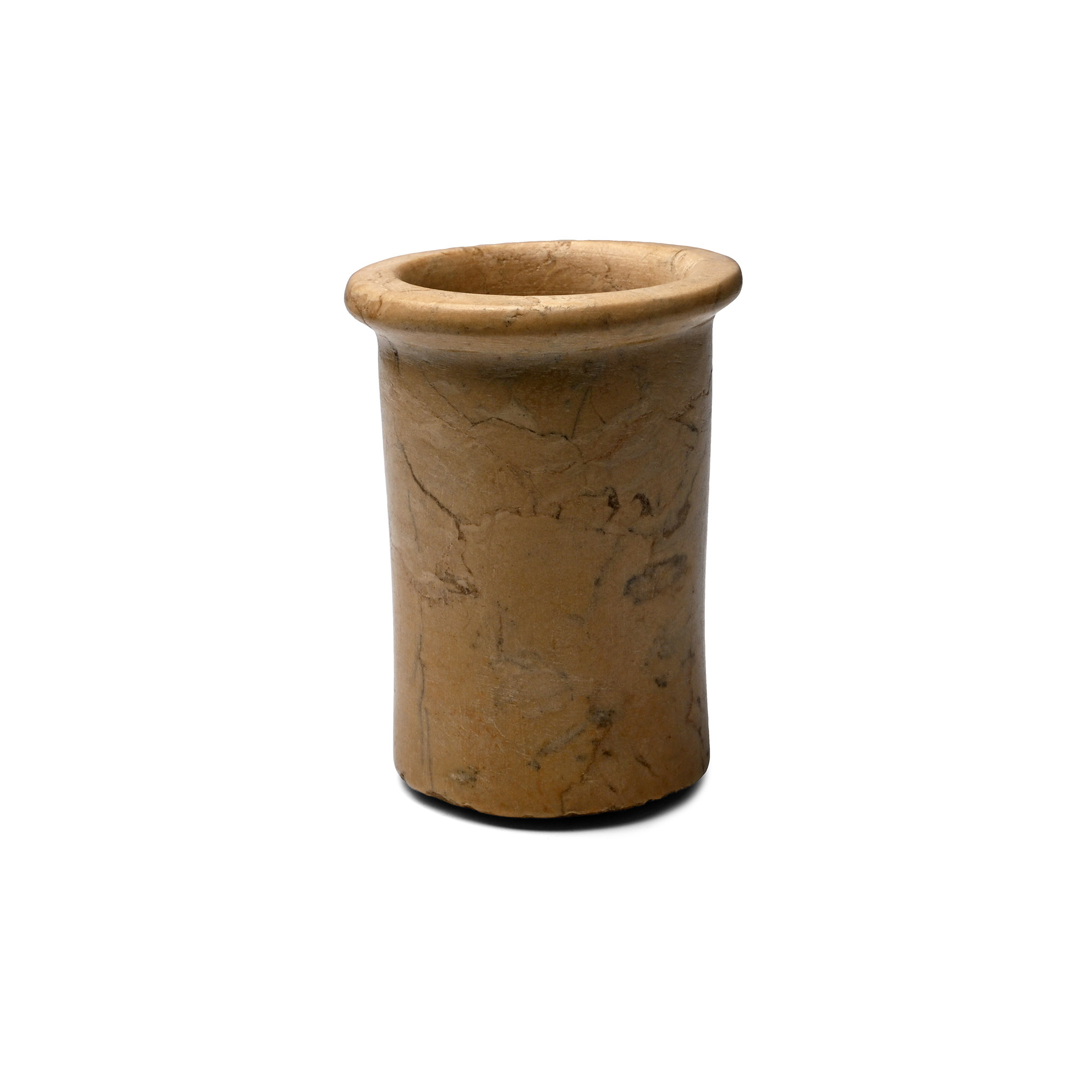
Egyptian Cylindrical Breccia Vase
EARLY DYNASTIC PERIOD-OLD KINGDOM, 3050-2181 B.C.
4 1/4 in. (534 grams, 10.7 cm).
Columnar in form with thick everted rim, slightly domed underside. [No Reserve]
ProvenanceFrom the private collection of a Canadian gentleman living in Essex, UK, formed since the 1920s-circa 1990.
Property of an Essex lady until the late 1990s; thence by descent.
From the private collection of an Essex gentleman since the late 1990s.
This lot is accompanied by an illustrated lot declaration signed by the Head of the Antiquities Department, Dr Raffaele D'Amato.
Cf. Aston, B.G., Ancient Egyptian Stone Vessels: Materials and Forms, SAGA 5, Heidelberg, 1994, 103, type 32, for similar examples dating from the 1st-4th Dynasties.
CONDITIONTimeLine Auctions follows a vetting process to ensure the authenticity and legality of all items, reinforcing our commitment to integrity and responsible trading. Each antiquity, antique, and coin lot undergoes thorough examination by a vetting committee of at least ten external specialists, professional trade association members, scientists, and archaeologists: Our Vetting Process
AUCTIONS:
TimeLine is a leading auction house specialising in antiquities, ancient art, collectables, natural history, coins, medals, and books. Our auctions offer museums, collectors, historians, and enthusiasts the opportunity to acquire unique and historically significant pieces.
-
Egyptian Coptic Bone Doll's Head
4th-6th century A.D.Sold for (Inc. bp): £130
A carved face and chest from a figurine or doll, with incised eyes, mouth and brow, reserved ears and nose. 7.47 grams, 55 mm
Very fine condition.
Property of a London gentleman; acquired in the 1970s. From the private collection of John Meredith, acquired since the 1990s; thence by descent. This lot is accompanied by an illustrated lot declaration signed by the Head of the Antiquities Department, Dr Raffaele D'Amato. -
Egyptian Silver Fly Amulet
Late-Ptolemaic Period, 664-30 B.C.Sold for (Inc. bp): £85
With detailing to wings and eyes, loop for suspension above the head. 0.91 grams, 20 mm
Ex London, UK, gentleman 1980-1990s. This lot is accompanied by an illustrated lot declaration signed by the Head of the Antiquities Department, Dr Raffaele D'Amato.
Considering that Egyptian artists often depicted fly whisks in the hands of pharaohs and high officials, one might assume that flies were merely a nuisance. However, the Egyptians held flies in high regard for their speed, quick reactions, and persistence. Small fly amulets first appeared in burials during the Naqada II Period, around 3200 B.C. These amulets gained popularity, and the materials used to make them varied during the New Kingdom. They were crafted from various materials such as gold, silver, lapis lazuli, carnelian, amethyst, faience, and bone. These amulets were believed to protect against insect bites and to ward off troublesome flying creatures through apotropaic magic. Some believe they may have even symbolised the fly’s fecundity. Additionally, pharaohs would bestow gold fly-shaped pendants as military awards to honour the bravery and persistence of soldiers in battle. -
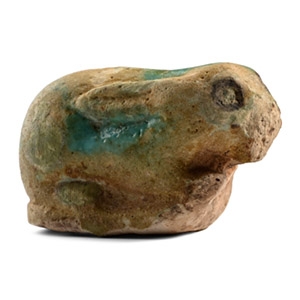
Egyptian Faience Hare Statuette
Ptolemaic Period, 332-30 B.C.Sold for (Inc. bp): £130
Modelled in the round in crouching position with its ears pulled back and resting along the body, black detailing to the eyes. 25 grams, 44 mm
Private collection of Mr K.A., acquired in the 1990s-early 2000s. This lot is accompanied by an illustrated lot declaration signed by the Head of the Antiquities Department, Dr Raffaele D'Amato.
The desert hare was one of the most common wild animals in Egypt. The female hare was sacred to Wenut, goddess of the 15th Upper Egyptian nome, though no specific hare cults are known. The purpose of hare figurines remains uncertain. According to Plutarch, Egyptians regarded the hare’s speed and keen senses—reflected in its open eyes—as divine.
