
Loading, please wait...
LOT 0513
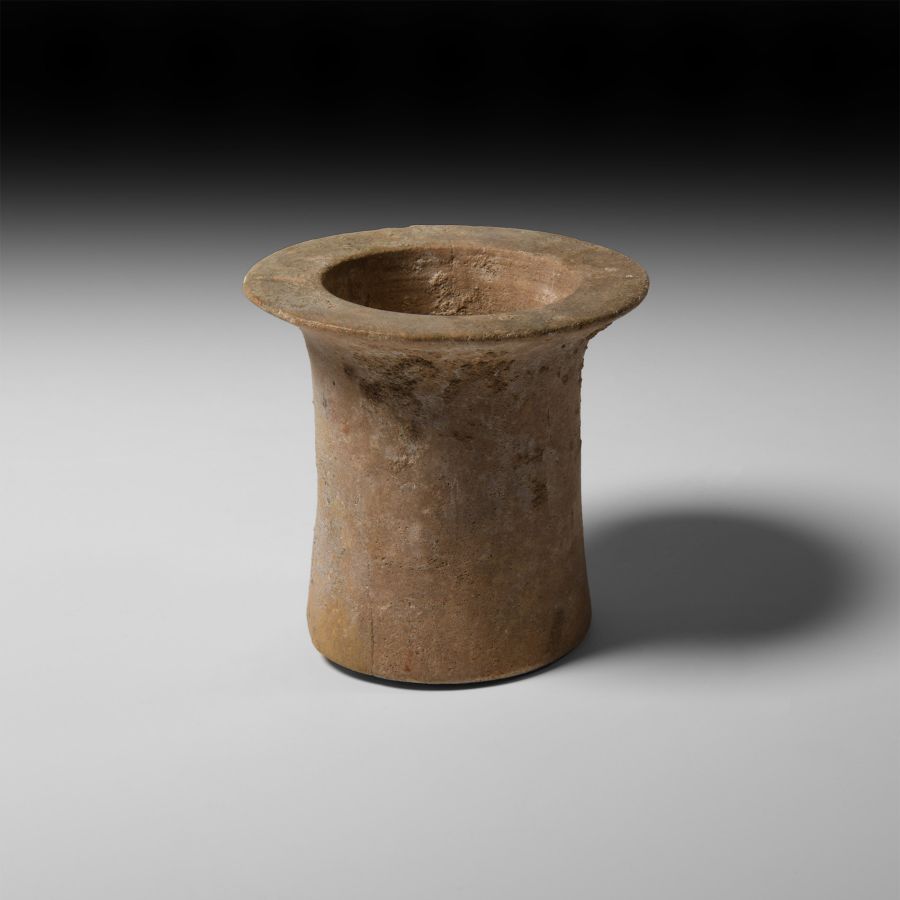
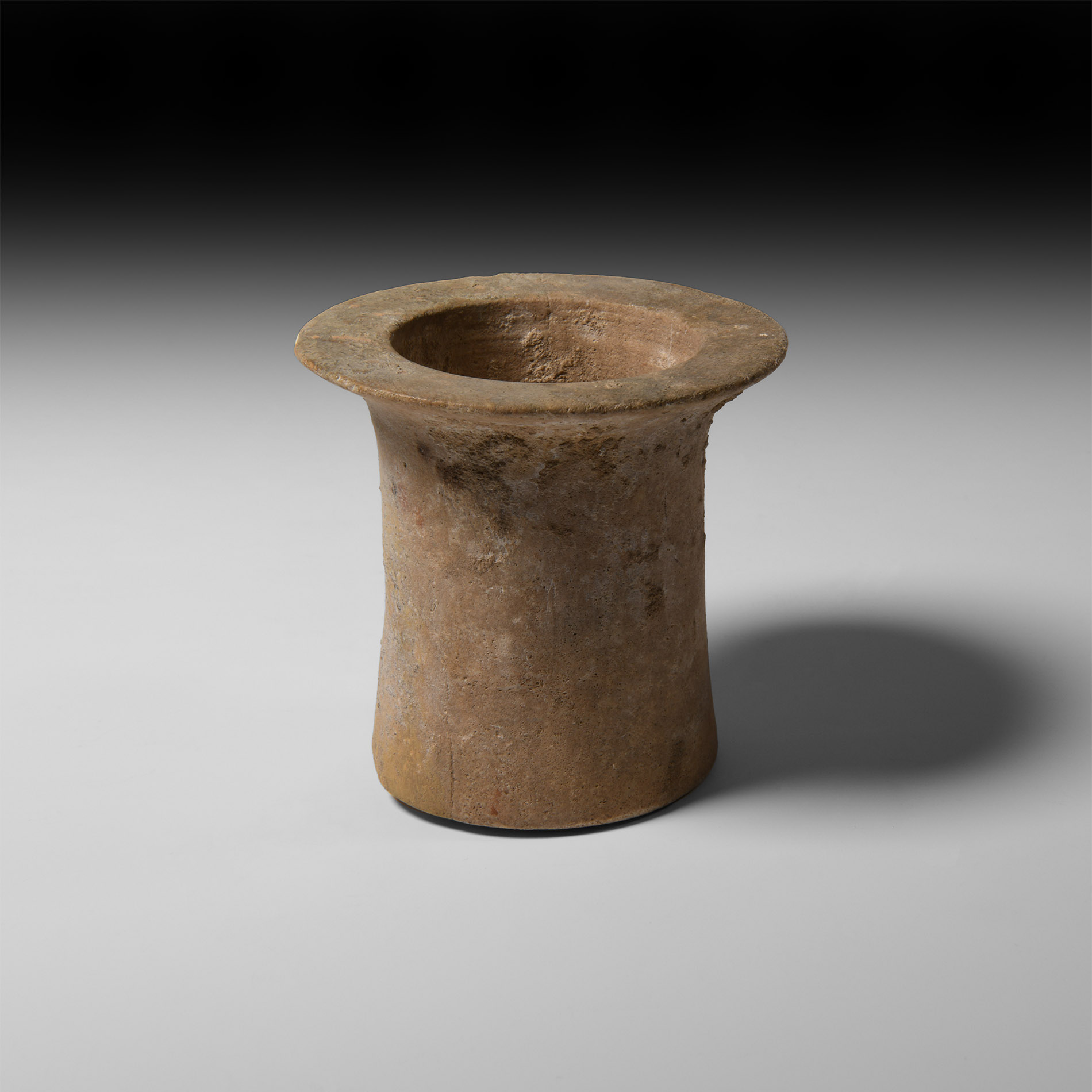
Egyptian Cylindrical Alabaster Vessel
NEW KINGDOM, 1550-1070 B.C. OR LATER
3 1/8 in. (177 grams, 81 mm wide).
A carved alabaster jar with slightly tapering sides and everted rim.
ProvenanceFrom an early 20th century collection.
Accompanied by an old illustrated catalogue card.
TimeLine Auctions follows a vetting process to ensure the authenticity and legality of all items, reinforcing our commitment to integrity and responsible trading. Each antiquity, antique, and coin lot undergoes thorough examination by a vetting committee of at least ten external specialists, professional trade association members, scientists, and archaeologists: Our Vetting Process
AUCTIONS:
TimeLine is a leading auction house specialising in antiquities, ancient art, collectables, natural history, coins, medals, and books. Our auctions offer museums, collectors, historians, and enthusiasts the opportunity to acquire unique and historically significant pieces.
-
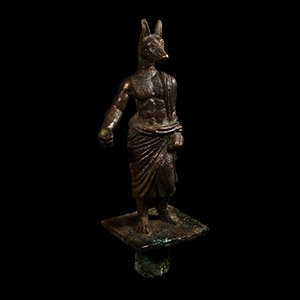
Egyptian Anubis Staff Terminal
1st century B.C.- 2nd century A.D.Sold for (Inc. bp): £7,150
A bronze staff or sceptre terminal formed as a priest of Anubis with jackal's head and human body, standing and wearing a tightly-draped toga with right hand extended in a fist; square base and socket to the underside. 223 grams, 12.7 cm high
Private collection, since 1989. This lot has been checked against the Interpol Database of stolen works of art and is accompanied by search certificate no.11604-199678.
Anubis was the ancient Egyptian god of the dead - represented in jackal form or in the form of a jackal-headed man - and one of ancient Egypt's most iconic deities. Originally god of the underworld, he was eventually associated more specifically with the embalming process and funerary rites. His fur was generally depicted as black owing to the association of that colour with fertility and beliefs regarding rebirth in the afterlife. -
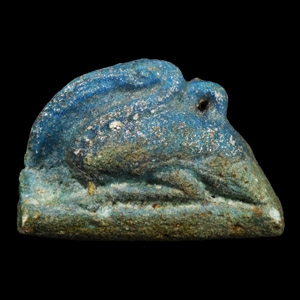
Egyptian Blue Faience Ibis Amulet
Ptolemaic Period, 1550-1070 B.C.Sold for (Inc. bp): £156
A glazed composition amuletic pendant of an ibis standing on a rectangular base, its curved beak resting on its chest. 4.25 grams, 28 mm
From a UK private collection, 1975-1978. -
.jpg)
Egyptian Blue Faience Shabti Group
Late Period-Ptolemaic Period, 664-30 B.C.Sold for (Inc. bp): £208
A group of four blue-glazed faience shabtis. 18.2 grams total, 43-46 mm
Fair condition.
Acquired 1930s-1950s. Ex Ciapara collection.
