
Loading, please wait...
LOT 0670
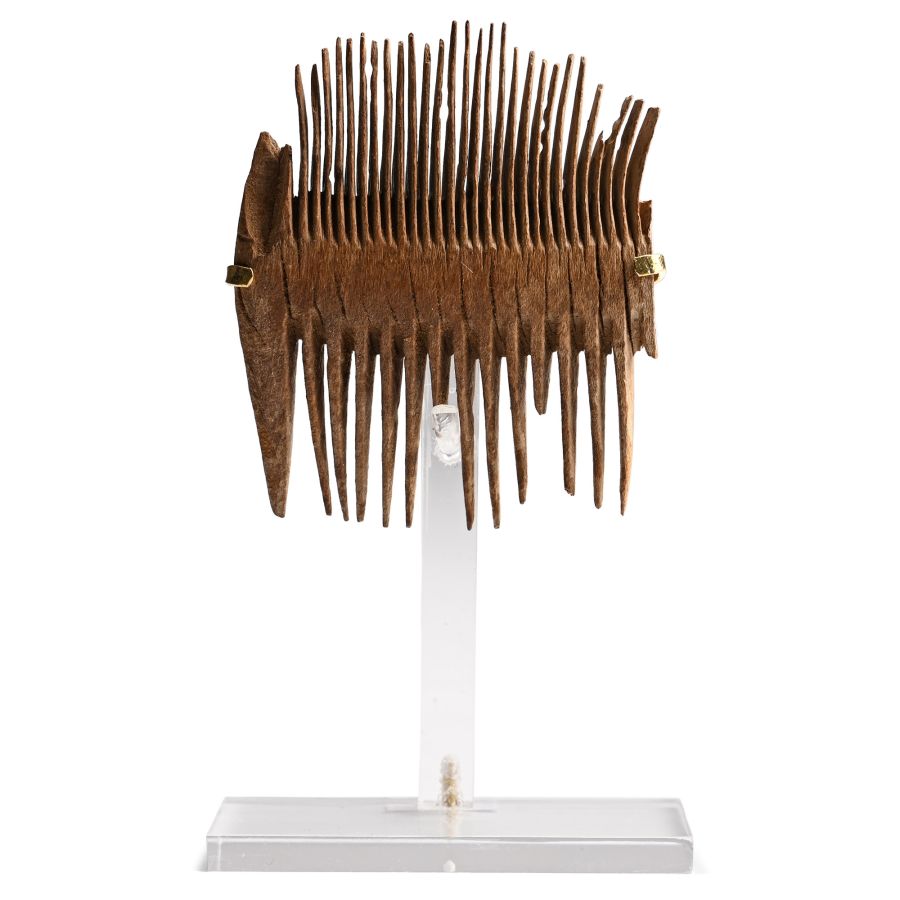
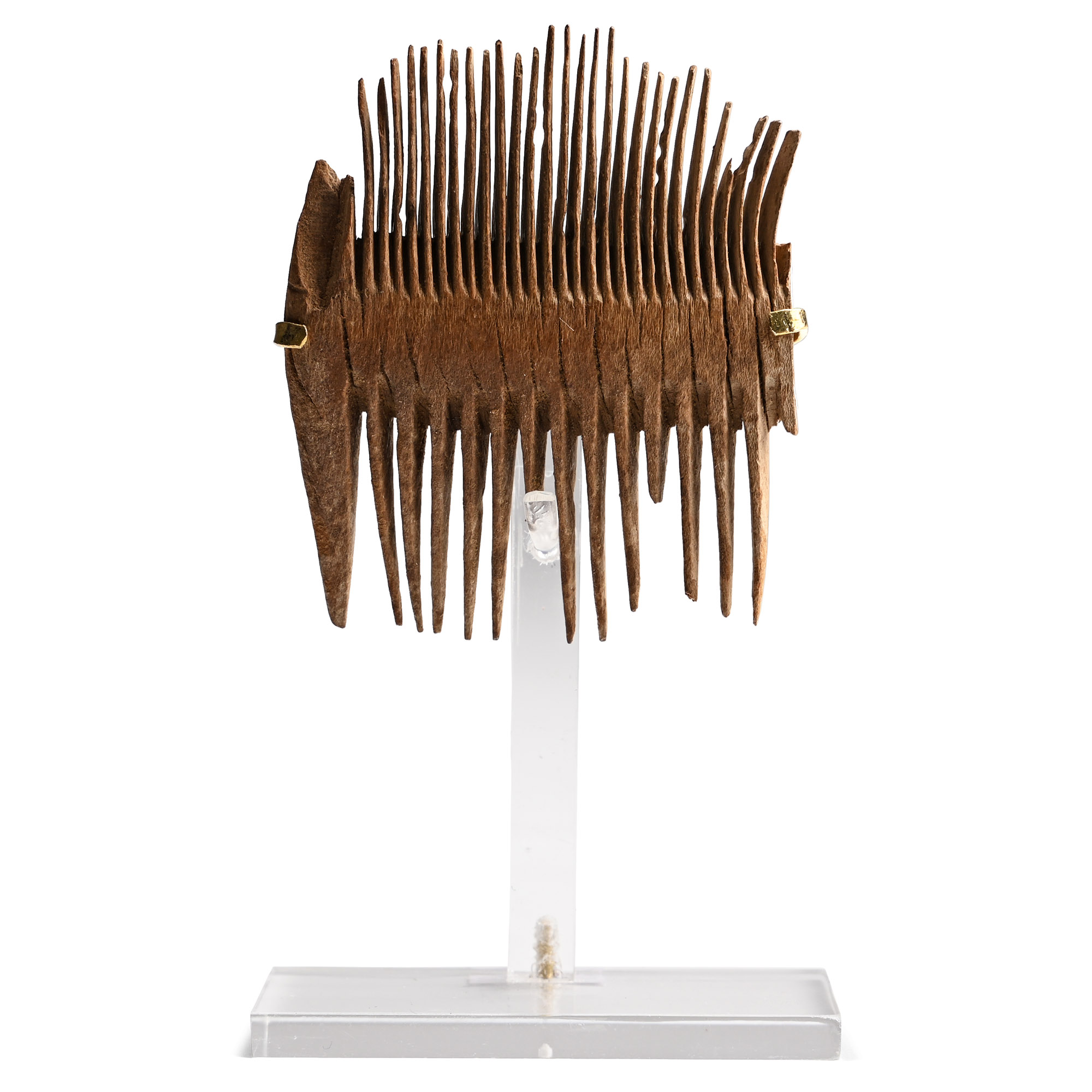
Egyptian Coptic Wooden Comb
CIRCA 4TH-7TH CENTURY A.D.
2 in. (3 3/8 in.) (12.62 grams total, comb: 51 mm, 85 mm high including stand).
With fine teeth cut on one side and coarser teeth on the other; some absent; mounted on a custom-made stand.
ProvenanceEx Carl Leonhard Burckhardt-Reinhard (1902-1965), formed since 1922, Egypt.
Inherited by his son Christopher Burckhardt in 1966, Switzerland.
Since then in the possession of his wife, Switzerland.
Cf. Vandier d’Abbadie, J., Les objets de toilette égyptiens au Musée du Louvre, Paris, 1972, pp. 144-145, nos. 618-619, for similar double combs.
FootnotesThe type is attested in Egypt, where it is particularly well documented in the Coptic Period. The lack of decoration makes a more precise chronological classification difficult. As evidenced by a wooden comb of the same type from Antinoë, the fine-toothed side was also used for removing head lice. In the present example, the comb continued on one side for an indeterminate length.
CONDITIONTimeLine Auctions follows a vetting process to ensure the authenticity and legality of all items, reinforcing our commitment to integrity and responsible trading. Each antiquity, antique, and coin lot undergoes thorough examination by a vetting committee of at least ten external specialists, professional trade association members, scientists, and archaeologists: Our Vetting Process
AUCTIONS:
TimeLine is a leading auction house specialising in antiquities, ancient art, collectables, natural history, coins, medals, and books. Our auctions offer museums, collectors, historians, and enthusiasts the opportunity to acquire unique and historically significant pieces.
LOT 0670
Egyptian Coptic Wooden Comb
Estimate £500 - 700€580 - 810 (for guidance only)$680 - 950 (for guidance only)
Opening Bid
£230 (EUR 267; USD 311) ‡+BP*
-
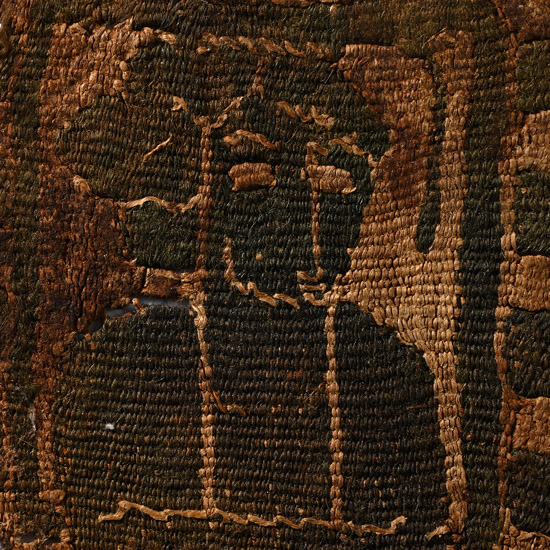
Egyptian Coptic Textile Fragment of a Tablion from a Tunic with Facing Bust
Circa 5th century A.D.Estimate: £60 - 80 (+bp*)
Bids: 1 | Current Bid: £5
In linen and wool, showing the half-bust of a man clad in tunica paragaudata, borders with geometric decorations. 4.68 grams, 10 cm
Acquired 1970s-1996. Property of a North American collector. London collection, 2016.
The tabula, or tablion, was a square embroidery used to decorate tunics or mantles. This one, interestingly, shows a man dressed in the typical late Roman tunic, featuring the image of a soldier or military servant. -
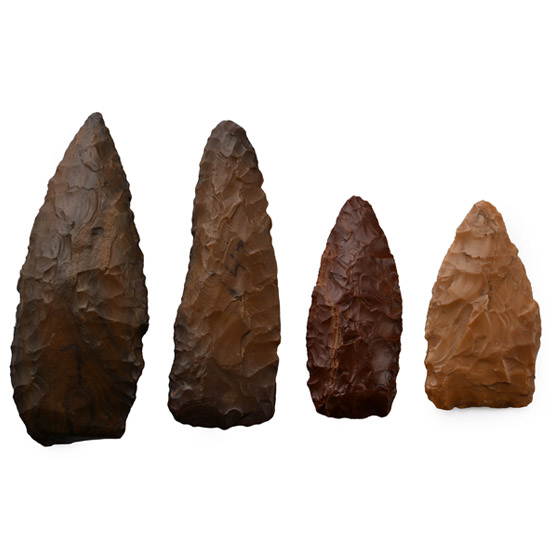
Egyptian Stone Age Knapped Lance Point Group from Luxor
Neolithic Period, 11,000-5,200 B.P.Estimate: £150 - 200 (+bp*)
Bids: 1 | Current Bid: £5
Comprising three leaf-shaped with tapering sharp points, one tongue-shaped with a rounded point; one with an inked note 'Luxor 1912'; with an old handwritten label reading 'Weapon points- possible lance points - Neolithic'. 60.7 grams total, 53-84 mm
Found Luxor. From the collection of A.D. Passmore (1879-1958), his collection of flints from the area of Stonehenge was donated to the Ashmolean Museum in the 1950s. From the private collection of Peter Clayton, FCILIP, Dip, Arch, FSA, FRNS, Hemel Hempstead, Hertfordshire, UK; formed since the late 1950s. Accompanied by a copy of an old handwritten information card by Peter Clayton. -
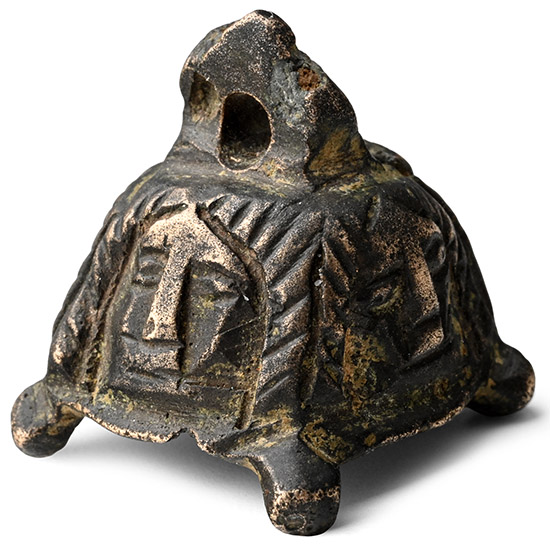
Egyptian Bronze Bell with Faces
Late-Ptolemaic Period, 664-30 B.C.Estimate: £100 - 140 (+bp*)
Opening Bid: £50
Hollow-formed miniature bell with integral loop handle, four radiating female faces to the sidewall - possibly depicting the goddess Hathor. 14 grams, 20 mm
London gentleman's collection, 1970-1990s, by descent.
The bell may have been part of a musical instrument. Many musical rituals centred on Hathor, often accompanied by musicians playing sistrums.
