
Loading, please wait...
LOT 0444
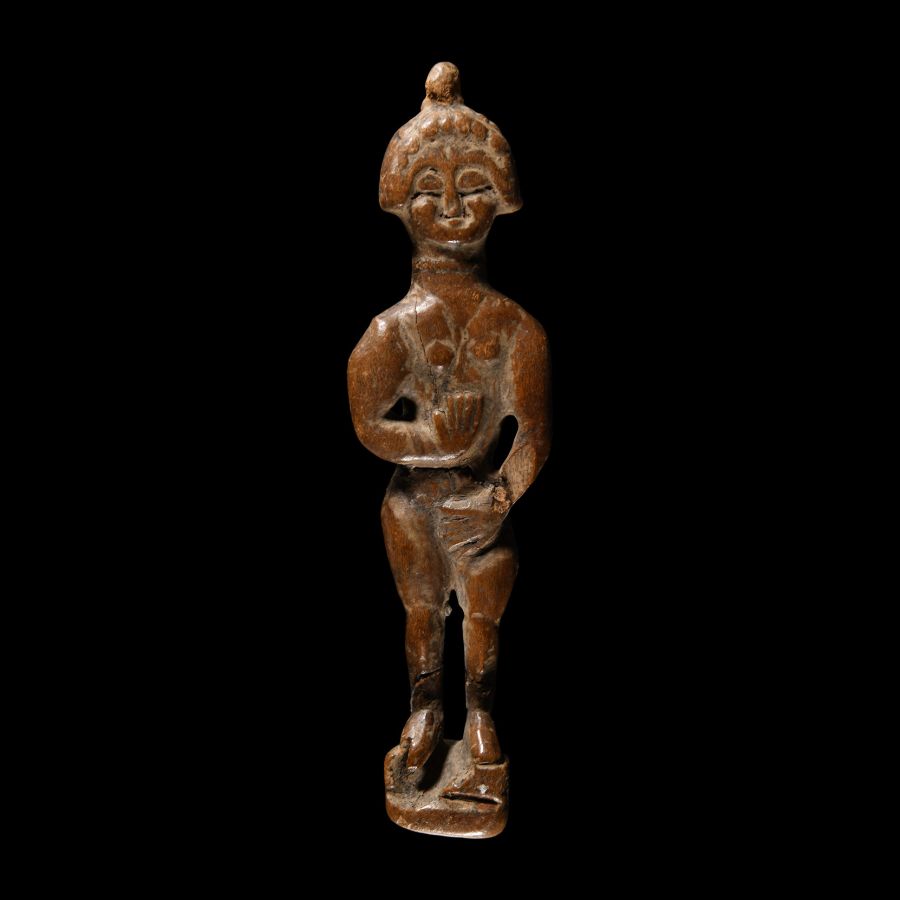
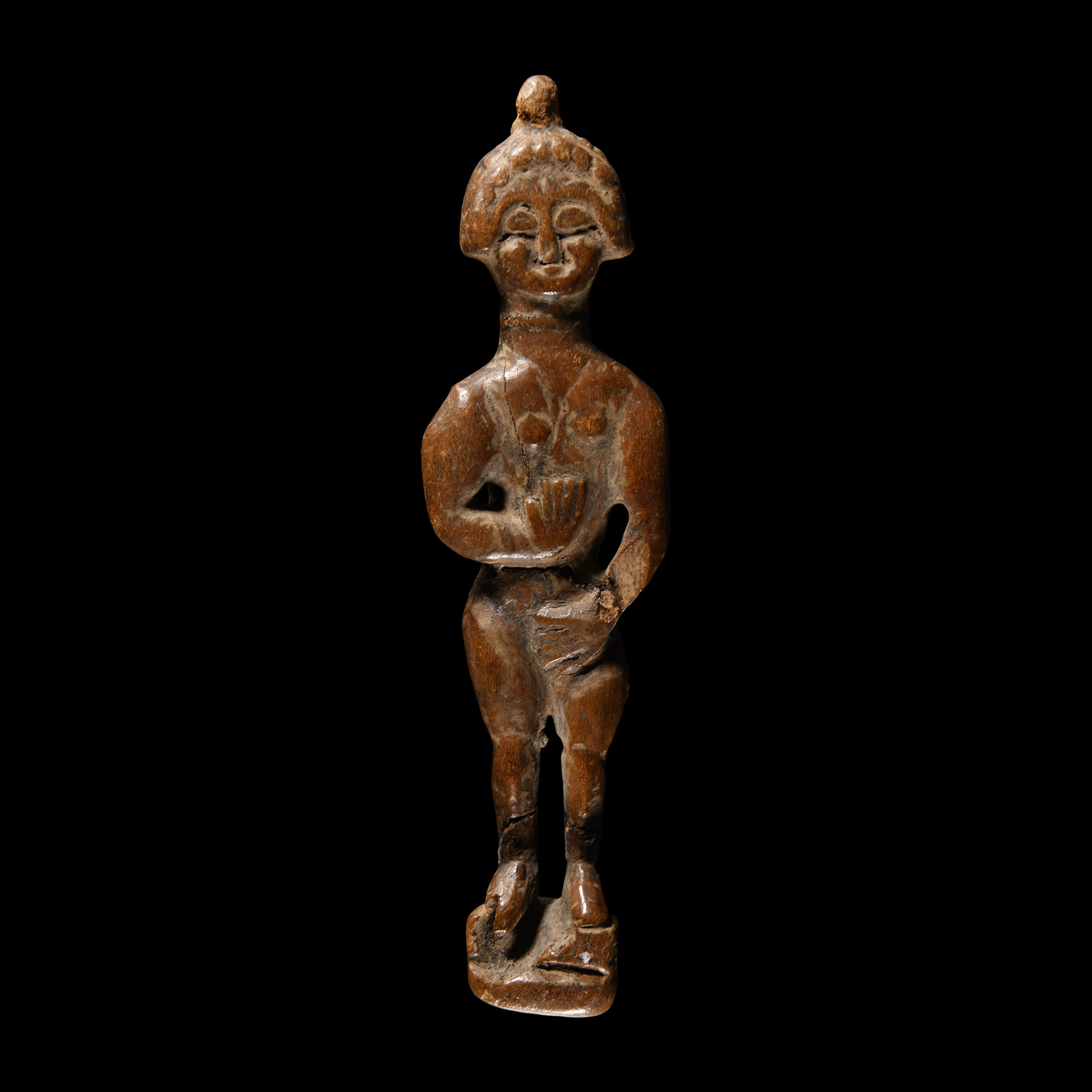
Egyptian Coptic Wood Female Figure
CIRCA 6TH-7TH CENTURY A.D.
7 5/8 in. (72 grams, 19.5 cm).
Carved in the round, standing and with a bobbed hairstyle with ribbed bands and crest, extended hands covering stomach and pudenda; on a rectangular base; repaired. [No Reserve]
ProvenanceAcquired 1970s-1996.
Property of a North American collector.
London collection, 2016.
Cf. similar in the collection of the British Museum under accession no. OA+.14107.
CONDITIONTimeLine Auctions follows a vetting process to ensure the authenticity and legality of all items, reinforcing our commitment to integrity and responsible trading. Each antiquity, antique, and coin lot undergoes thorough examination by a vetting committee of at least ten external specialists, professional trade association members, scientists, and archaeologists: Our Vetting Process
AUCTIONS:
TimeLine is a leading auction house specialising in antiquities, ancient art, collectables, natural history, coins, medals, and books. Our auctions offer museums, collectors, historians, and enthusiasts the opportunity to acquire unique and historically significant pieces.
-
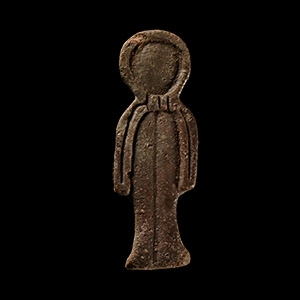
Egyptian Brown Faience Tyet Amulet
Late Period, 664-323 B.C.Sold for (Inc. bp): £104
Also known as tit, or the knot of Isis; with pillar to reverse, pierced for suspension. 3.52 grams, 40 mm
From an early 20th century collection, Caernarfon, North Wales, UK. -
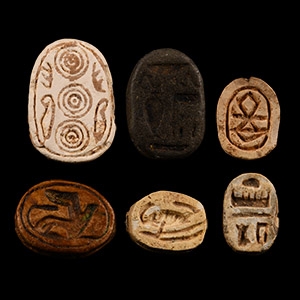
Egyptian Stone Scarab Collection
Mostly Late Period, 664-332 B.C.Sold for (Inc. bp): £156
Comprising six scarabs carved with simple anatomical detailing, each pierced for suspension and displaying an engraved motif to the base: a griffin; hieroglyphs; geometric designs and additional forms, possibly a galloping quadruped and an insect. 4.1 grams total, 9-15 mm
Collected since the 1970s. Ex Everitt collection, acquired by descent 2017. -
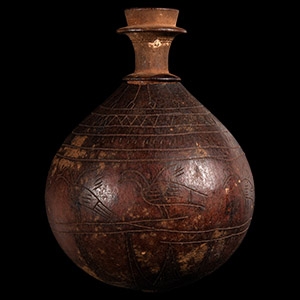
Egyptian Decorated Wooden Vessel with Stopper
Late Period, 664-332 B.C.Sold for (Inc. bp): £494
Spheroid wooden flask and stopper; the outer face with incised alternating bands of radiating triangles and hatching, the equator with frieze of perching birds and a hatched sunburst to the underside; turned hollow wooden stopper with carinated profile and flanges. 11 grams, 74 mm
Ex family collection since the 1950s. Property of an East Sussex, UK, teacher.
The vessel is a version in lathe-turned wood of a type known to have been produced in glass.
