
Loading, please wait...
LOT 0676
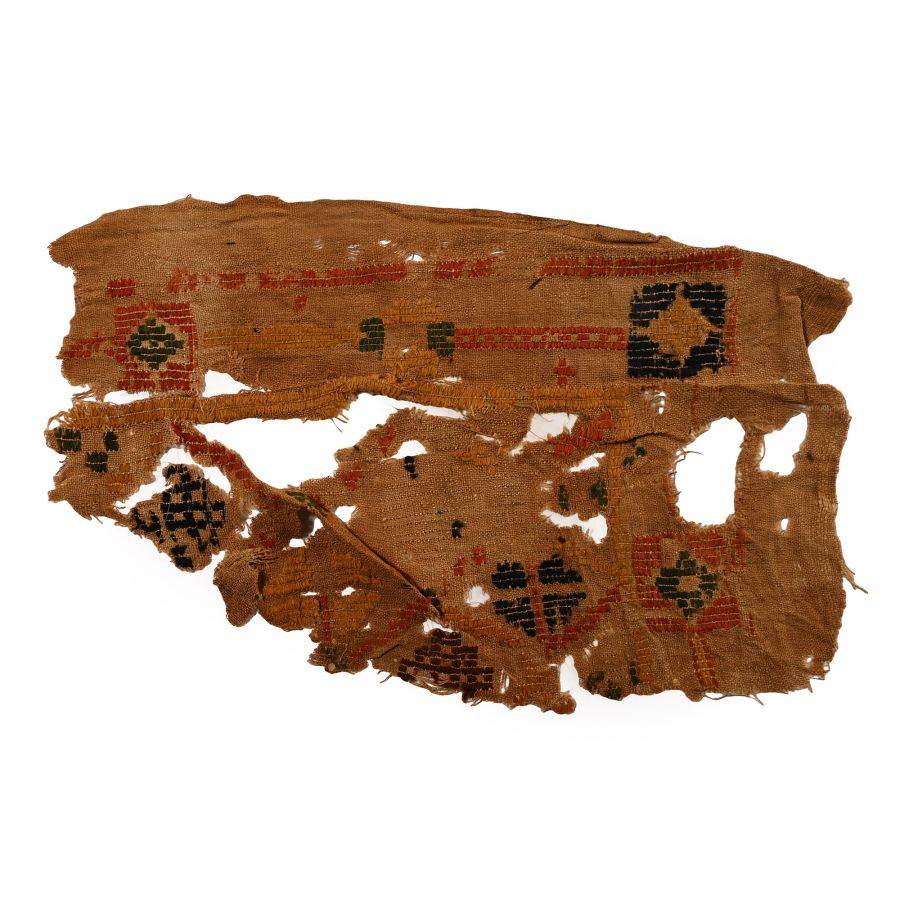
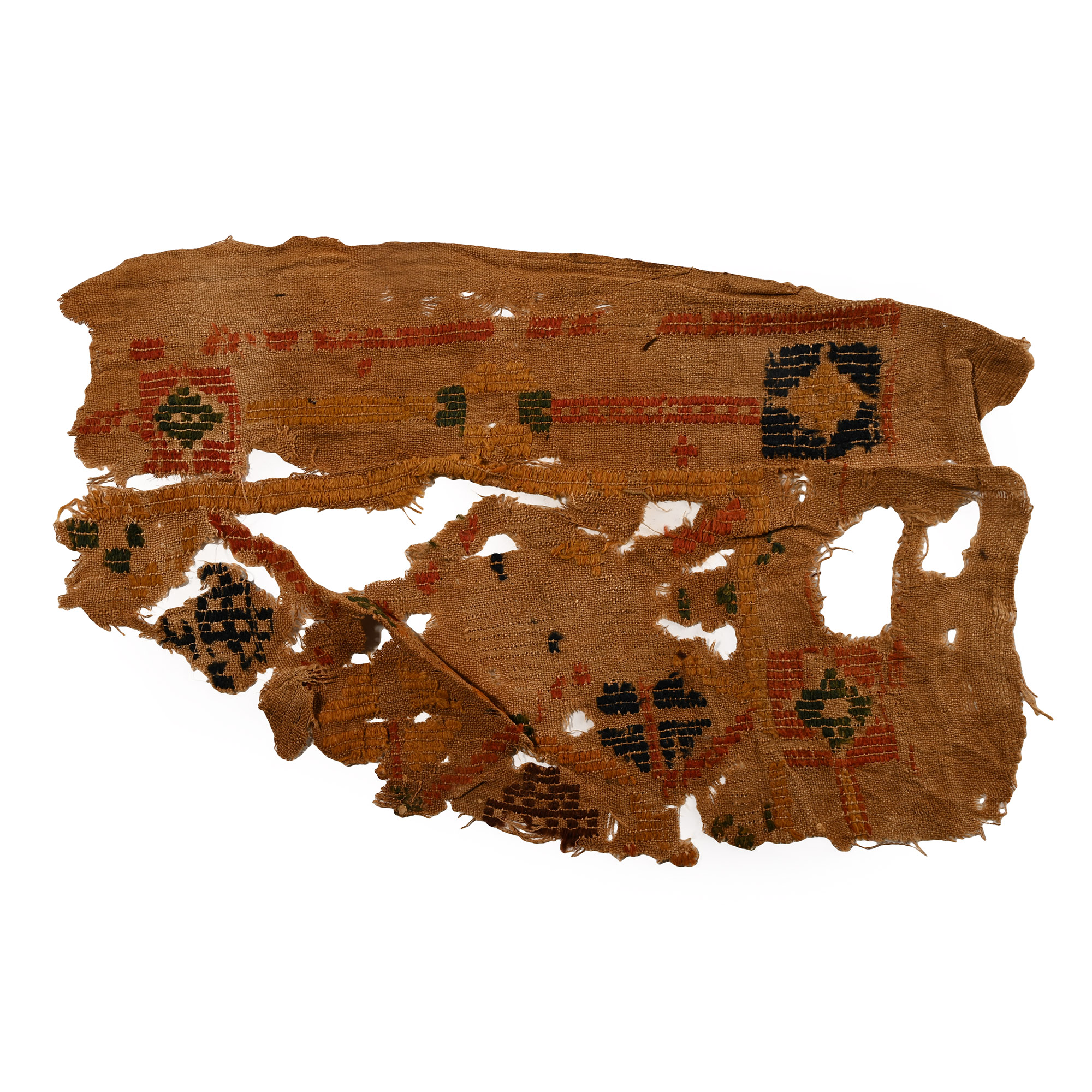
Egyptian Coptic Wall Tapestry Textile Fragment with Geometric Ornament
CIRCA 6TH CENTURY A.D.
14 1/2 in. (37 grams total including paper folder, 37 cm).
Fragment of tapestry or a cloak in light fabric, S-twist tapestry, embroidered with red, green, yellow, blue geometric ornaments in wool and linen. [No Reserve]
ProvenanceAcquired 1970s-1996.
Property of a North American collector.
London collection, 2016.
Cf. Calament, F., Durand, M., Antinoé, á la vie, á la mode, visions d’élégance dans les solitudes, Lyon, 2013, cat.25, for similar.
FootnotesMost of the linen or wool garments found by A. Gayet in the Antinoe necropolis were woven in a specific pattern, in a single piece, on a horizontal warp. Another relatively common pattern for linen garments consisted of assembling three pieces woven on a single warp and forming the upper part of the garment, with the collar and sleeves.
CONDITIONTimeLine Auctions follows a vetting process to ensure the authenticity and legality of all items, reinforcing our commitment to integrity and responsible trading. Each antiquity, antique, and coin lot undergoes thorough examination by a vetting committee of at least ten external specialists, professional trade association members, scientists, and archaeologists: Our Vetting Process
AUCTIONS:
TimeLine is a leading auction house specialising in antiquities, ancient art, collectables, natural history, coins, medals, and books. Our auctions offer museums, collectors, historians, and enthusiasts the opportunity to acquire unique and historically significant pieces.
LOT 0676
Egyptian Coptic Wall Tapestry Textile Fragment with Geometric Ornament
Estimate £60 - 80€70 - 93 (for guidance only)$81 - 108 (for guidance only)
Opening Bid
£5 (EUR 6; USD 7) +BP*
-
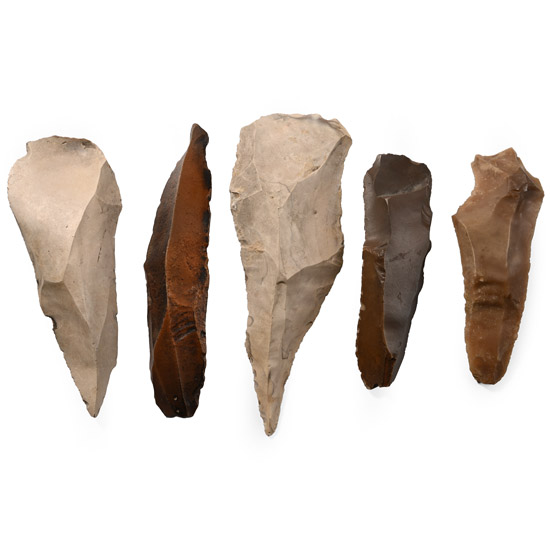
Egyptian Stone Age Knapped Knife Blades from Thebes
Neolithic Period, 11,000-5,200 B.P.Estimate: £300 - 400 (+bp*)
Opening Bid: £5
Each of curved profile with broad cutting edge; old inked findspots 'Desert W. of Thebes 1912' (2 examples), 'W. of Thebes 1912' (2 examples), 'W. Thebes 1912'. 279 grams total, 10.6-14.3 cm
Found in the desert west of Thebes, Egypt, 1912. From the private collection of Peter Clayton, FCILIP, Dip, Arch, FSA, FRNS, Hemel Hempstead, Hertfordshire, UK; formed since the late 1950s. -
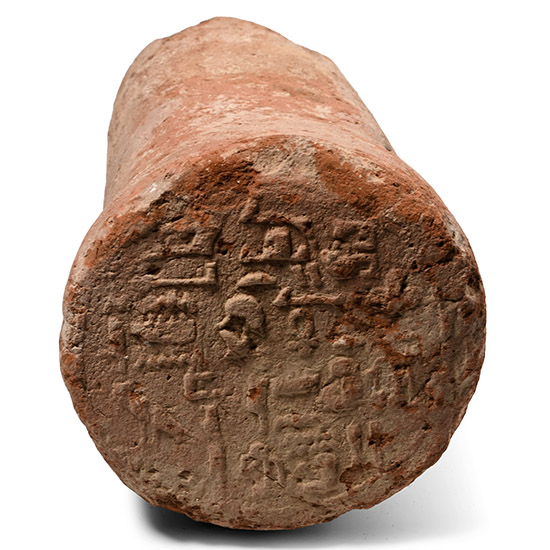
Egyptian Terracotta Funerary Cone of Ineni
New Kingdom, 18th Dynasty, circa 1514-1458 B.C.Estimate: £400 - 600 (+bp*)
Opening Bid: £5
Large portion of a tapering cone with the circular flat end impressed with four horizontal lines of hieroglyphic text reading: 'Count, overseer of the (double) granary of Amun, overseer of all the sealed things in the domain of Amun, scribe, Inen(i), true of voice'. 755 grams, 13.8 cm
Acquired from Abdoul Rassoul on the West Bank at Luxor, 1974-1980 when a guest lecturer. From the private collection of Peter Clayton, FCILIP, Dip, Arch, FSA, FRNS, Hemel Hempstead, Hertfordshire, UK; formed since the late 1950s.
Ineni enjoyed a long and highly successful career, serving under five pharaohs (Amenhotep I, Thutmosis I, Thutmosis II, Hatshepsut, and Thutmosis III). His large rock-cut tomb (TT 81) is at Sheikh Abd el-Qurna, Thebes. -
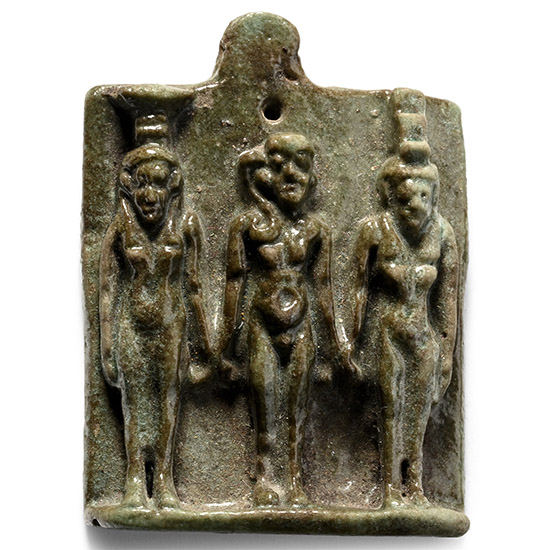
Large Egyptian Green Glazed Faience Triad Amulet
Late Period-Ptolemaic Period, 664-30 B.C.Estimate: £1,500 - 2,000 (+bp*)
Opening Bid: £750
Depicting the youthful Horus with a long, curling sidelock, flanked by the goddess Nephthys on the left and Isis on the right, standing on an integral plinth against a flat back slab with a suspension loop above; Isis wearing a stepped throne headdress, and Nephthys and Isis wearing headdresses comprising the hieroglyphs spelling their names, the trio clasping hands demonstrating the women's protection and guardianship. 19.7 grams, 52 mm
Ex mid-20th-century collection. Ex London, UK, collection. From a Cambridgeshire, UK, dealership. Accompanied by a previous catalogue information page.
Nephthys and Isis were sisters, while Horus is the son of Isis and Osiris, making Nephthys his aunt and the secondary maternal figure in this triad.
