
Loading, please wait...
LOT 0712
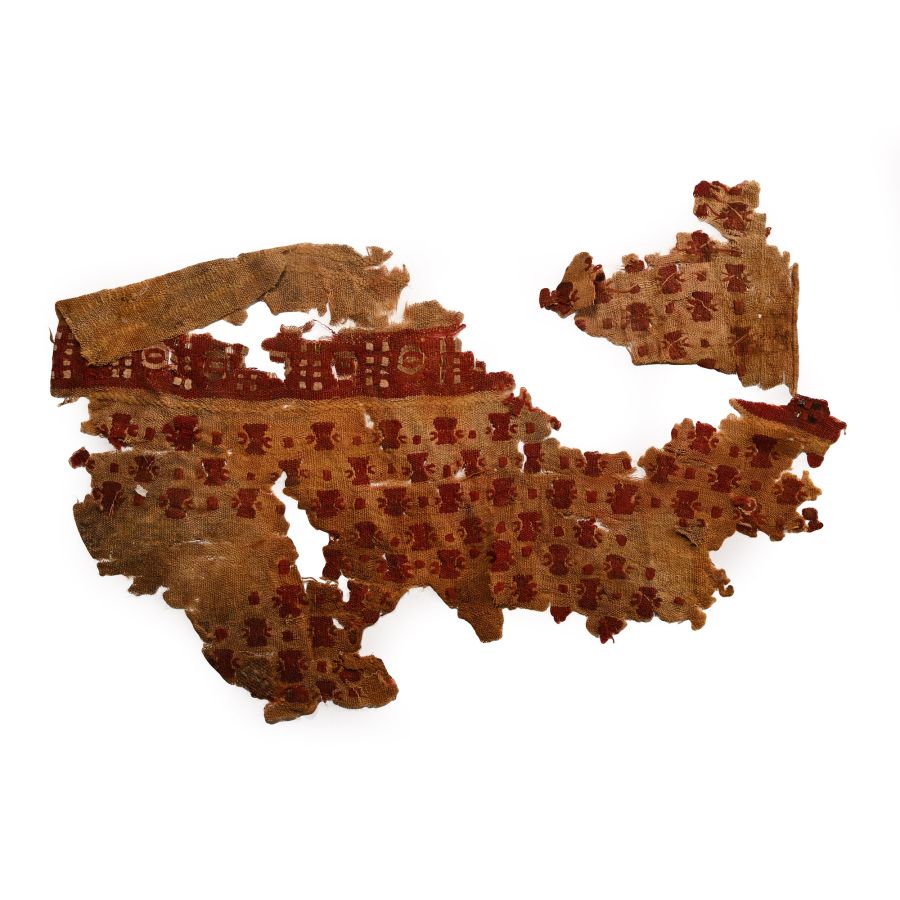
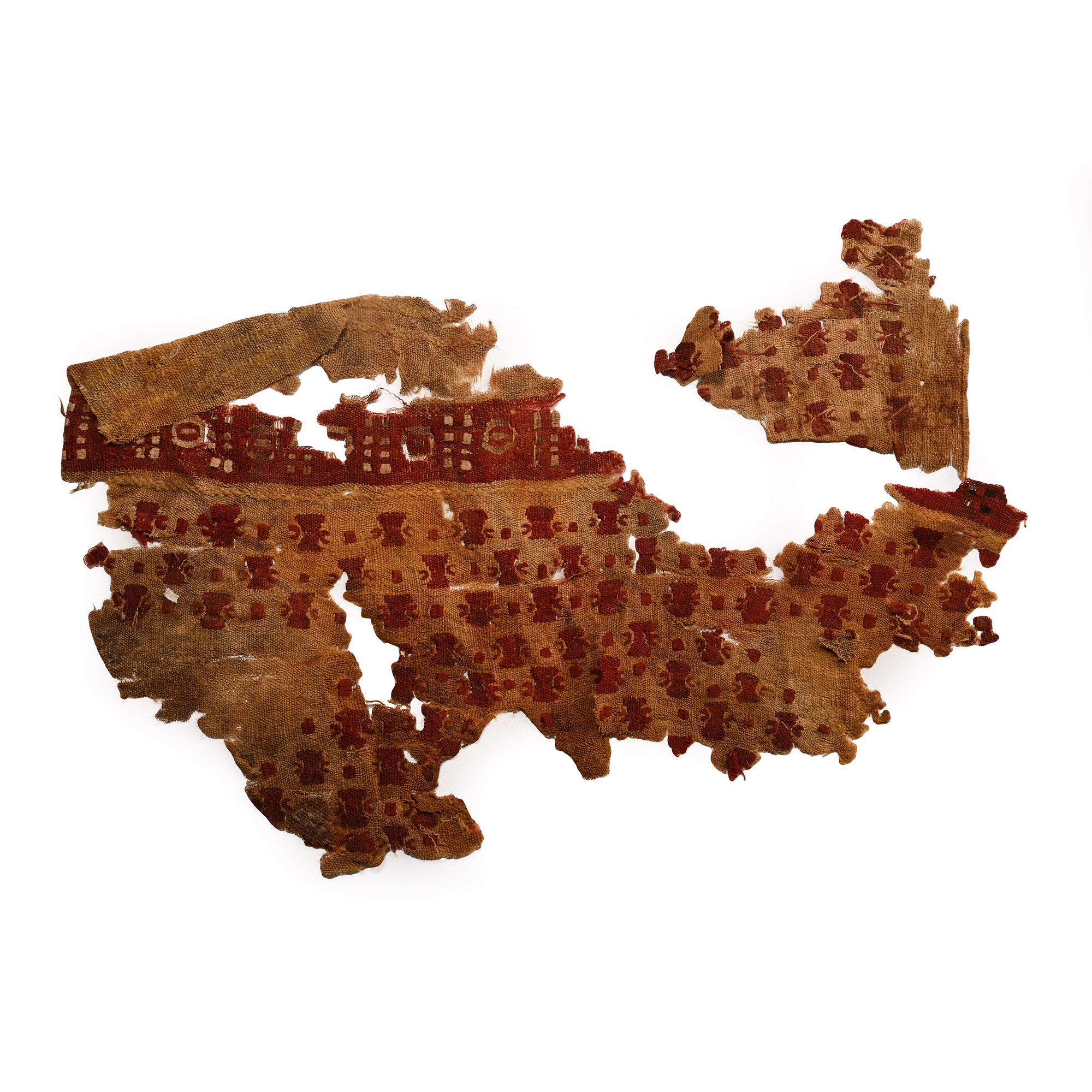
Egyptian Coptic Wall Tapestry Textile Fragment with Geometric Ornament
CIRCA 6TH CENTURY A.D.
14 3/8 in. (24 grams total including paper folder, 36.5 cm).
Striped linen fabric, embellished with red wool and linen tapestry featuring butterfly-like motifs; side clavus decorated with alternating dots and geometric bands; S-twist. [No Reserve]
ProvenanceAcquired 1970s-1996.
Property of a North American collector.
London collection, 2016.
Cf. Calament, F., Durand, M., Antinoé, á la vie, á la mode, visions d’élégance dans les solitudes, Lyon, 2013, cat.125, for a similar textile.
FootnotesThe fragment might have belonged to a wall hanging, but its resemblance to the fabric from Antinoe and its lightness do not rule out the possibility that it was part of a scarf.
CONDITIONTimeLine Auctions follows a vetting process to ensure the authenticity and legality of all items, reinforcing our commitment to integrity and responsible trading. Each antiquity, antique, and coin lot undergoes thorough examination by a vetting committee of at least ten external specialists, professional trade association members, scientists, and archaeologists: Our Vetting Process
AUCTIONS:
TimeLine is a leading auction house specialising in antiquities, ancient art, collectables, natural history, coins, medals, and books. Our auctions offer museums, collectors, historians, and enthusiasts the opportunity to acquire unique and historically significant pieces.
LOT 0712
Egyptian Coptic Wall Tapestry Textile Fragment with Geometric Ornament
Estimate £50 - 70€58 - 81 (for guidance only)$68 - 95 (for guidance only)
Opening Bid
£5 (EUR 6; USD 7) +BP*
-
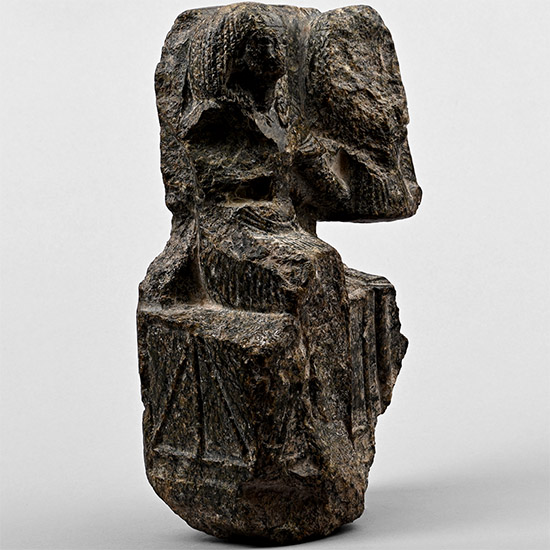
Egyptian Serpentine Statuette of a Seated Couple
New Kingdom, 19th Dynasty, 1290-1279 B.C.Estimate: £15,000 - 20,000 (‡+bp*)
Opening Bid: £8,200
Depicting a husband and wife seated side-by-side on chairs, each with an arm around the spouse's waist as a sign of intimacy; both wearing richly pleated robes, the man sporting a duplex wig and earrings, the woman with a longer wig with tassel ends, both composed of long rows of tight curls; the back slab with low-relief depictions of a standing man and woman facing each other, with traces of a hieroglyphic inscription; the surface slightly worn and abraded in places; reassembled from two parts. 3.89 kg, 24.5 cm
From the estate of the artist Margo Veillon (1907-2003), Lausanne, Switzerland.
The statuette is delicately sculpted and of high quality. The fine facial features of the official, the individual strands of the wigs and the pleats of the robes exhibit exquisite craftsmanship. Remarkably, the reverse of the sculpture is decorated with a fragmentarily preserved scene, most likely of the couple, with traces of inscription. -
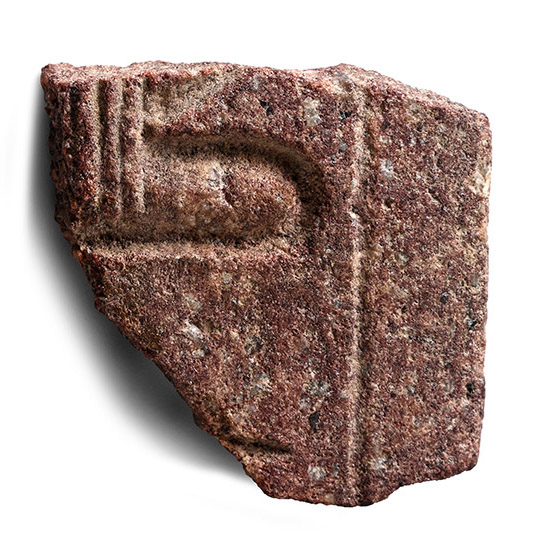
Egyptian Red Quartzite Granite Fragment with Part of Cartouche
New Kingdom, 18th Dynasty, Amarna Period, 1379-1362 B.C.Estimate: £60 - 80 (+bp*)
Opening Bid: £5
Dressed stone fragment with a vertical border and the lower portion of a cartouche with rope bands. 70 grams, 58 mm
Acquired in April 1980. From the private collection of Peter Clayton, FCILIP, Dip, Arch, FSA, FRNS, Hemel Hempstead, Hertfordshire, UK; formed since the late 1950s. Accompanied by an old handwritten information card by Peter Clayton, collection no.146.
After Akhenaten's reign, his monuments and statuary were systematically smashed. As a result, most evidence of the Amarna period's sculptural and architectural output survives only in fragments (for examples of stone fragments from statues and other objects recovered from Akhenaten's capital city, Akhetaten, see Seyfried, F. (ed.), In the Light of Amarna: 100 Years of the Nefertiti Discovery, Berlin, 2012, pp. 164-169; 230-231; 390-391). -
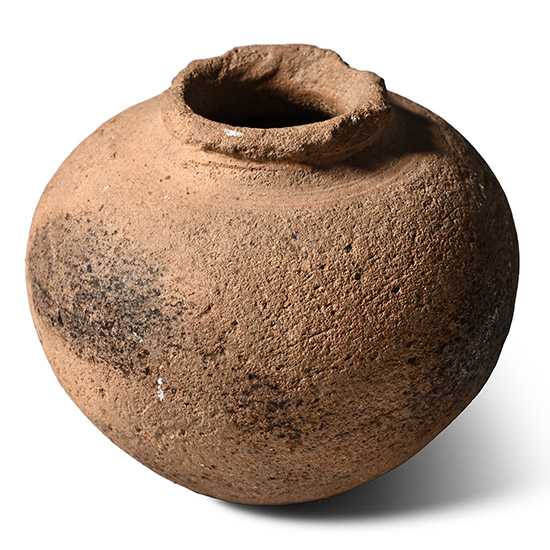
Romano-Egyptian Terracotta Pot
Roman Period, 30 B.C.-323 A.D.Estimate: £40 - 60 (+bp*)
Opening Bid: £5
Squat in profile with low rim to the mouth; old collector's label 'Roman pot found at Aswan'. 75.8 grams, 63 mm wide
Found at Aswan, Egypt. From the private collection of Peter Clayton, FCILIP, Dip, Arch, FSA, FRNS, Hemel Hempstead, Hertfordshire, UK; formed since the late 1950s.
