
Loading, please wait...
LOT 0682
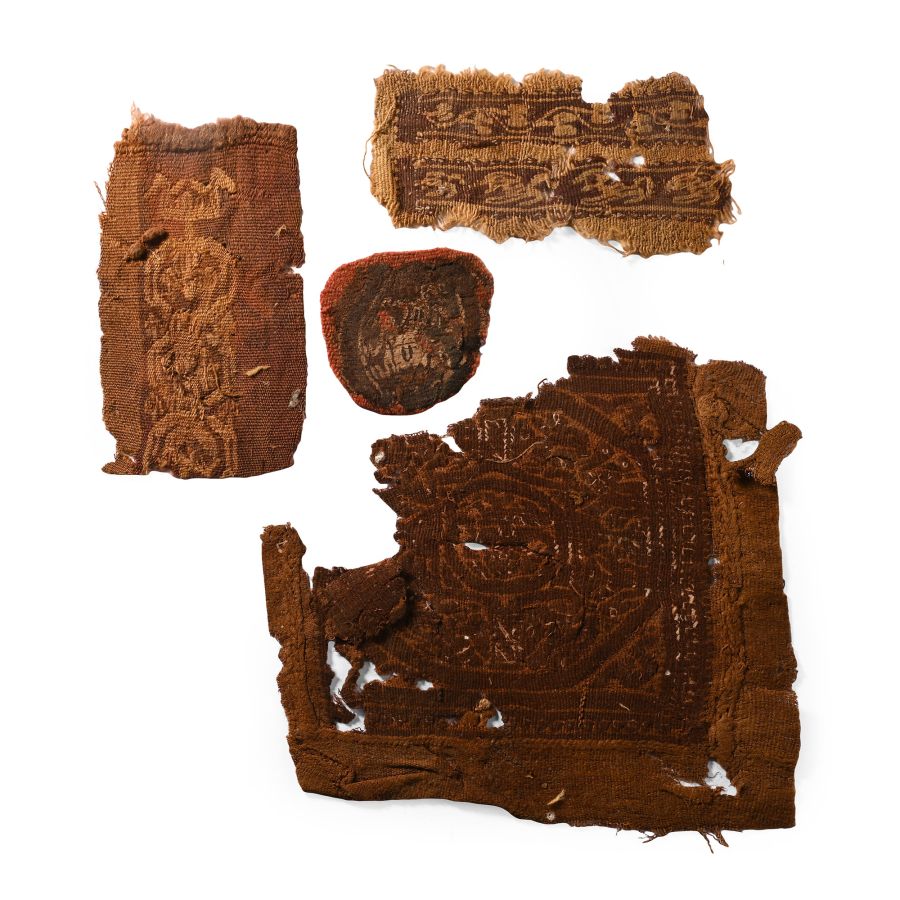
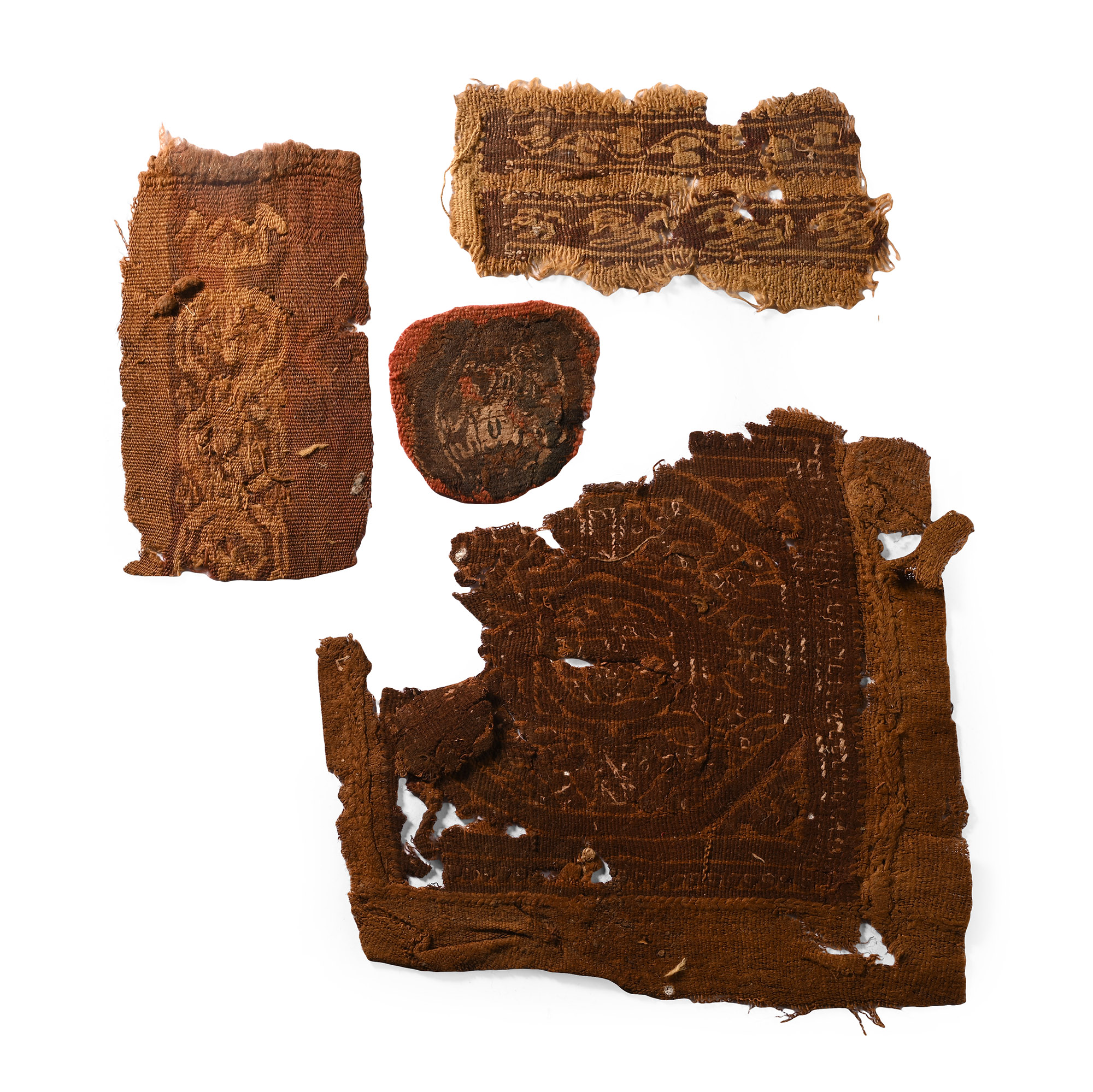
Egyptian Coptic Tunics Textile Fragments of Orbiculus, Segmenta and Tablion with Animals and Geometric Decoration
CIRCA 6TH-7TH CENTURY A.D.
2 3/4 - 7 5/8 in. (18 grams total, 6.9-19.5 cm).
Comprising: a double decorative tunic stripe (clavus) in purple wool over coarse linen, S-twist tapestry, embroidered with stylised plants, from the cuff of a tunic; a large tablion, with floral ornamentation, borders decorated with meanders; a small orbiculus, with a flying putto and a horse; a large part of another clavus, ornamented with a succession of medallions filled with birds. [4, No Reserve]
ProvenanceAcquired 1970s-1996.
Property of a North American collector.
London collection, 2016.
Cf. Del Francia Barocas, L., Museo dell'Alto Medioevo, Roma, I materiali Copti, pp.162-163, nos.39A-B, for a similar textile.
FootnotesThe fragments are decorative parts of tunics. These are fabrics of great decorative finesse, with some elements displaying an unusual and extremely well-preserved colour palette. The plant designs are related to the so-called Nilotic decorative pattern. The motif of the winged putto is common in Coptic textiles.
CONDITIONTimeLine Auctions follows a vetting process to ensure the authenticity and legality of all items, reinforcing our commitment to integrity and responsible trading. Each antiquity, antique, and coin lot undergoes thorough examination by a vetting committee of at least ten external specialists, professional trade association members, scientists, and archaeologists: Our Vetting Process
AUCTIONS:
TimeLine is a leading auction house specialising in antiquities, ancient art, collectables, natural history, coins, medals, and books. Our auctions offer museums, collectors, historians, and enthusiasts the opportunity to acquire unique and historically significant pieces.
LOT 0682
Egyptian Coptic Tunics Textile Fragments of Orbiculus, Segmenta and Tablion with Animals and Geometric Decoration
Estimate £70 - 90€81 - 104 (for guidance only)$95 - 122 (for guidance only)
-
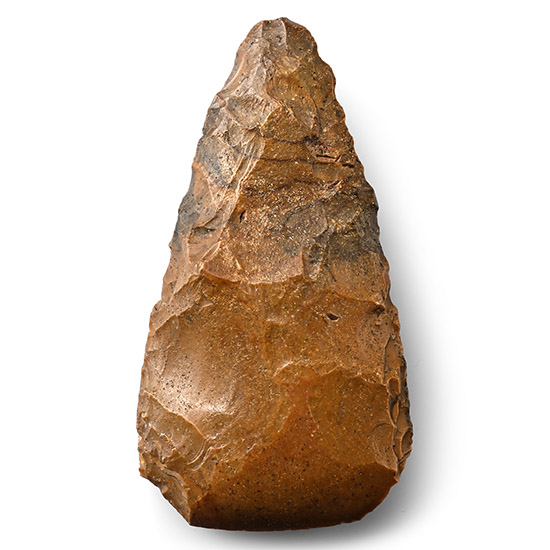
Egyptian Stone Age Polished Knapped Axehead
Neolithic Period, 11,000-5,200 B.P.Estimate: £100 - 140 (+bp*)
Bids: 3 | Current Bid: £15
Teardrop-shaped flint, featuring a classic, symmetrical lanceolate plan, tapering to a point at one end and a wider basal end. 58.3 grams, 86 mm
Found at Fayum North. From the collection of A.D. Passmore (1879-1958), his collection of flints from the area of Stonehenge was donated to the Ashmolean Museum in the 1950s. From the private collection of Peter Clayton, FCILIP, Dip, Arch, FSA, FRNS, Hemel Hempstead, Hertfordshire, UK; formed since the late 1950s. Accompanied by a copy of an old handwritten information card by Peter Clayton. -
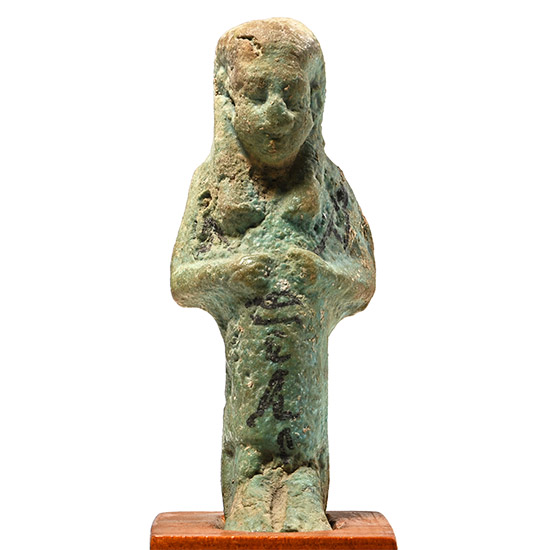
Egyptian Green Glazed Faience Shabti of the Osiris Hori
Third Intermediate Period, 1069-860 B.C.Estimate: £400 - 600 (+bp*)
Bids: 6 | Current Bid: £45
Mummiform figure wearing a lappet wig, hands placed knuckle-to-knuckle at the chest, holding black-painted hoes and a rudimentary seed bag on the back; a column of hieroglyphic inscription on the lower body: 'The Osiris. Hori(?)'; feet modelled in detail; mounted on a custom-made stand. 102 grams total, 12 cm including stand
Acquired from the Egyptian Exploration Society, 30th June 1965, for 2 shillings and sixpence. From the private collection of Peter Clayton, FCILIP, Dip, Arch, FSA, FRNS, Hemel Hempstead, Hertfordshire, UK; formed since the late 1950s. Accompanied by an old handwritten information card by Peter Clayton, collection no.117. -
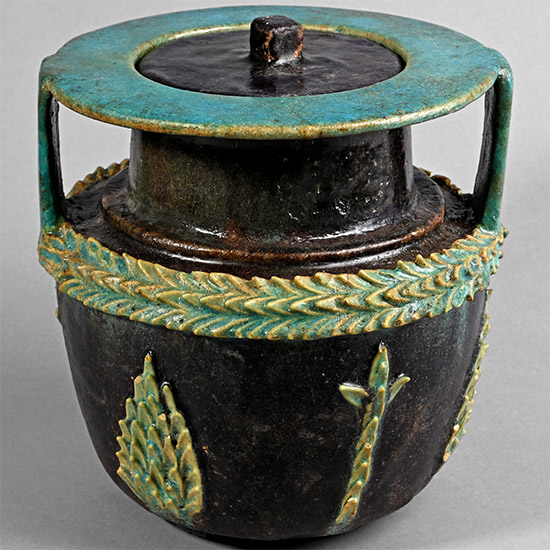
Egyptian Turquoise and Cobalt Blue Faience Amphora
Roman Period, circa 2nd century A.D.Estimate: £8,000 - 10,000 (+bp*)
Opening Bid: £4,000
Barrel-shaped in profile, with a stepped shoulder, wide neck, and broad, flared flange rim at the mouth, supported by two lateral strap handles; applied wreath decoration to the outer edge of the shoulder and vertical fronds to the lower body; restored. 1.48 kg, 17.8 cm high
Stift Neuberg (Neuberg Abbey) collection, Heidelberg, Germany, by 1893 and into the 20th century. Anonymous sale; Münzen und Medaillen, Auktion 41, 1972, no.151. Fiorella Cottier-Angeli collection, Geneva, 1981-2007. Herbert A. Cahn, acquired from the above. With Galerie Günter Puhze, Freiburg, 2007. Private collection, Midwest USA, acquired in 2007. This lot has been checked against the Interpol Database of stolen works of art and is accompanied by search certificate no.13477-262436.
Stift Neuberg was privately owned from 1798 until 1926. By 1893, a collection of antiquities had been assembled there, and its Greek and Roman holdings were published. It is believed that the amphora was acquired as part of this collection by Friedrich Alexander von Bernus (1838–1908), who inherited Stift Neuberg from his relative Johann Friedrich Schlosser (1780-1851), a nephew of Goethe. In 1926, the abbey was sold to the Benedictines and has remained a religious establishment ever since.
