
Loading, please wait...
LOT 0628
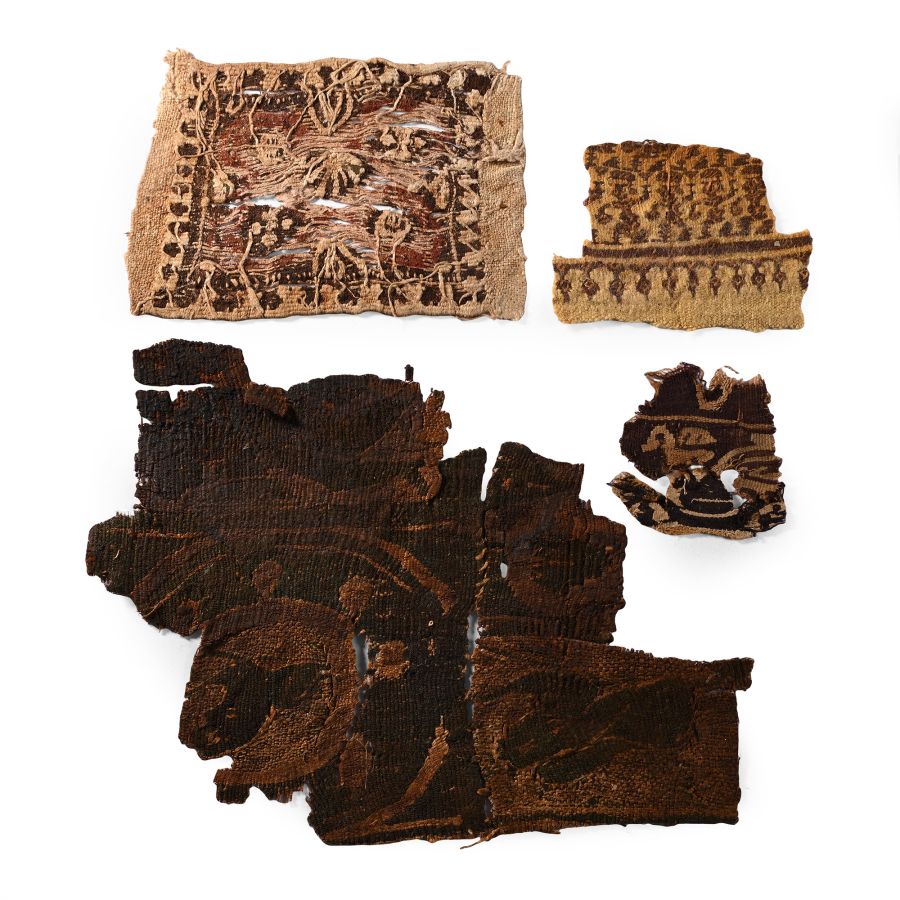
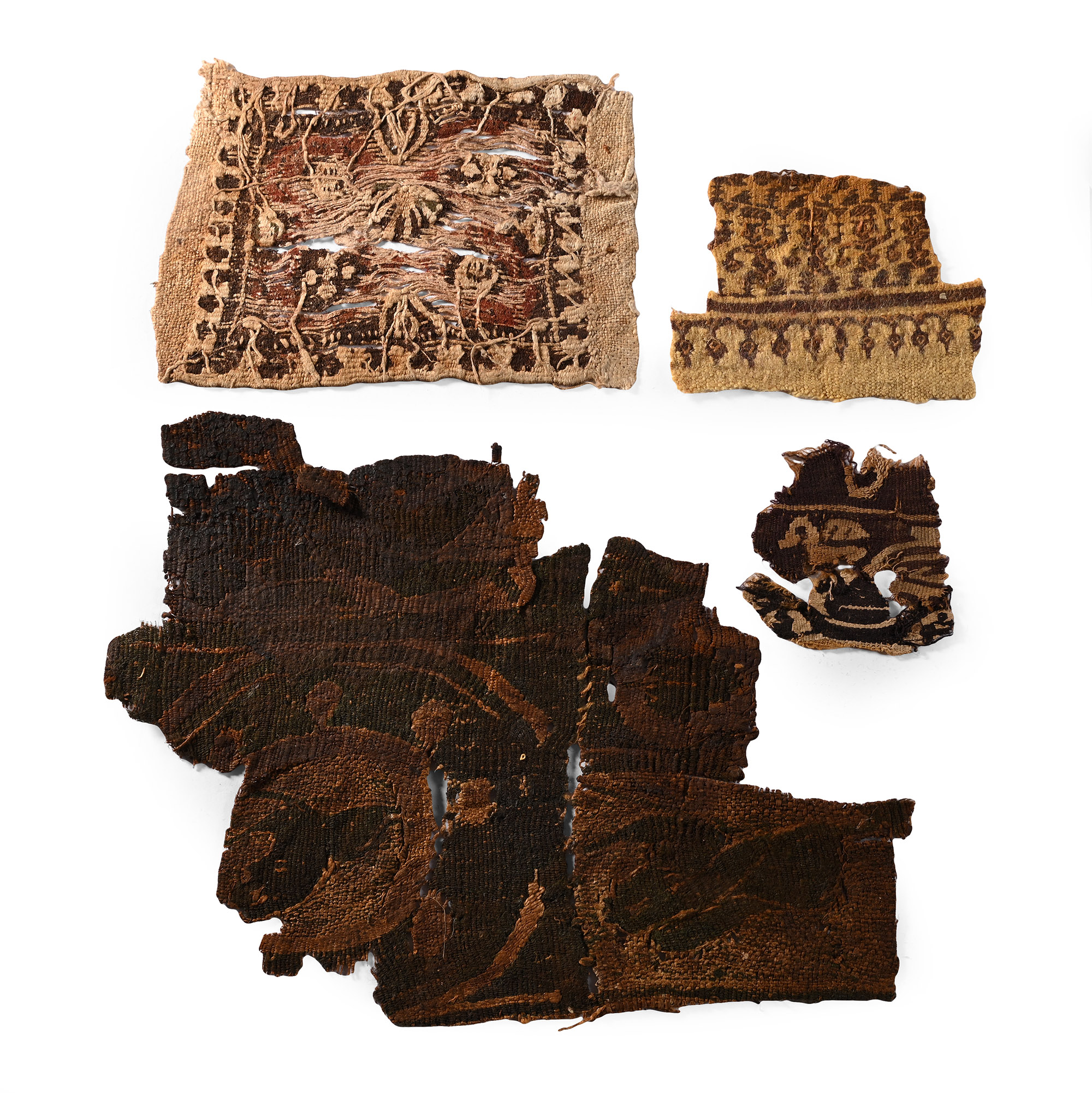
Egyptian Coptic Tunic Textile Fragments of Segmenta and Tablia with Figures, Animals and Geometric Decoration
CIRCA 5TH-7TH CENTURY A.D.
2 1/8 - 9 1/2 in. (27 grams total, 5.4-24.2 cm).
Comprising: a large segmentum in linen and wool, with hares and lions, hunters with shields, purple wool on linen, S-torsion; fragment of a tabula with borders in dentellid decoration; a complete tabula in red, white and purple; small parts of a clavus with floral and animal embroidery. [5, No Reserve]
ProvenanceAcquired 1970s-1996.
Property of a North American collector.
London collection, 2016.
Cf. Rutschowscaya, M.H., Tissus Coptes, Paris, 1990, p.9, for a tablion in similar style; Del Francia Barocas, L., Antinoe, Cent’anni dopo,catalogo della mostra, Firenze, Palazzo Medici Riccardi, 10 Luglio – 1 novembre 1998, p.83, for similar textiles.
FootnotesThe fragments are decorative parts of tunics. These are fabrics of great decorative finesse, with some elements displaying an unusual and extremely well-preserved colour palette.
CONDITIONTimeLine Auctions follows a vetting process to ensure the authenticity and legality of all items, reinforcing our commitment to integrity and responsible trading. Each antiquity, antique, and coin lot undergoes thorough examination by a vetting committee of at least ten external specialists, professional trade association members, scientists, and archaeologists: Our Vetting Process
AUCTIONS:
TimeLine is a leading auction house specialising in antiquities, ancient art, collectables, natural history, coins, medals, and books. Our auctions offer museums, collectors, historians, and enthusiasts the opportunity to acquire unique and historically significant pieces.
LOT 0628
Egyptian Coptic Tunic Textile Fragments of Segmenta and Tablia with Figures, Animals and Geometric Decoration
Estimate £70 - 90€81 - 104 (for guidance only)$95 - 122 (for guidance only)
Opening Bid
£5 (EUR 6; USD 7) +BP*
-
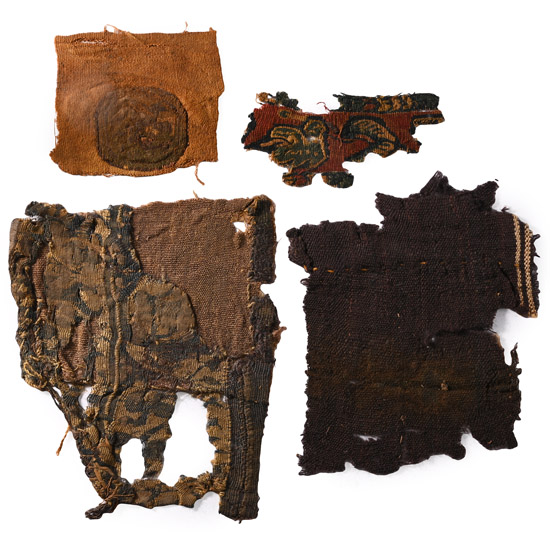
Egyptian Coptic Tunic Textile Fragments of Segmenta and Orbiculus with Geometric Decoration
Circa 4h-8th century A.D.Estimate: £60 - 80 (+bp*)
Opening Bid: £5
Comprising: a fragment of a tapestry or a fabric in brown linen; a small orbiculus, with vegetal decoration; fragment of a clavus, in red, yellow, green wool, s-torsion, with plant ornaments; a large fragment of cloak or tapestry, with slingers inside orbiculi, sewn edges and wide border with vegetal ornaments. 27 grams total, 9.8-19 cm
Acquired 1970s-1996. Property of a North American collector. London collection, 2016.
The fragments are decorative parts of tunics. These are fabrics of great decorative finesse, with some elements displaying an unusual and extremely well-preserved colour palette. Some designs recall Iranian motifs. -
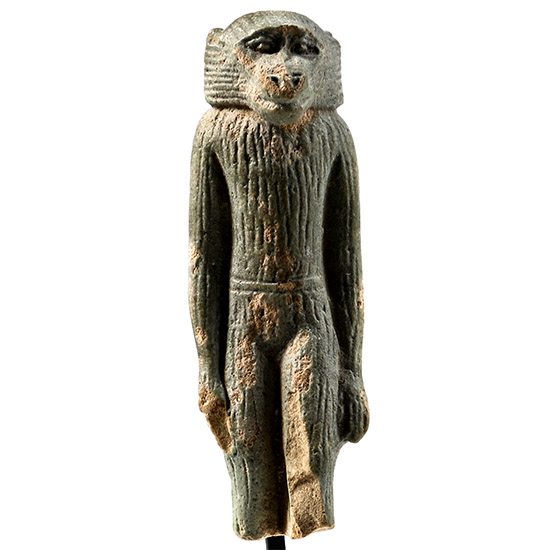
Egyptian Faience Amulet in the Shape of a Striding Monkey
Late Period, 664-332 B.C.Estimate: £1,200 - 1,700 (‡+bp*)
Opening Bid: £675
Formed as a striding African savannah monkey (Chlorocebus aethiops), or grivet, with human proportions but monkey hair texture; long arms hanging close to the body, hands extended downward; an incised belt at the waist; a suspension loop at the reverse (repaired); with a custom-made stand. 68.9 grams total, amulet: 57 mm, 13.5 cm high including stand
Private collection of an English amateur archaeologist (1849-1927), thence by descent. with Bonhams Auction, 5 October 2011, no.360. Thereafter, private collection of Erika (1934-2025) and Jakob (1927-2025) Binkert, Binningen, Switzerland; acquired in 2012 from Jean-David Cahn AG, exhibition Aegyptiaca, Basel. Thence by descent.
In the minds of the ancient Egyptians, male monkeys' behaviour may have linked them to masculinity, suggesting that, when worn as an amulet, they could have served a magical role in the reproductive cycle, facilitating birth in this life and rebirth in the afterlife. Alternatively, the prolonged care that females provide for their offspring may have linked the monkey with maternal protection and fertility. These associations may have been reinforced here by the monkey’s greenish faience, which symbolised renewal. -
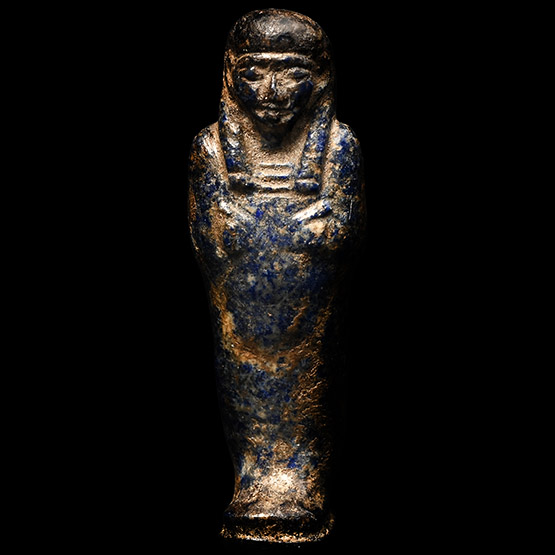
Egyptian Lapis Lazuli Shabti Amulet
New Kingdom, 1550-1070 B.C.Estimate: £1,200 - 1,700 (‡+bp*)
Opening Bid: £600
Carved in the round as a mummiform figure, with a multi-row collar and tripartite wig; rear suspension loop. 3.12 grams, 31 mm
Private collection, acquired on the Swiss art market in 1992; thence by descent.
