
Loading, please wait...

LOT 0569
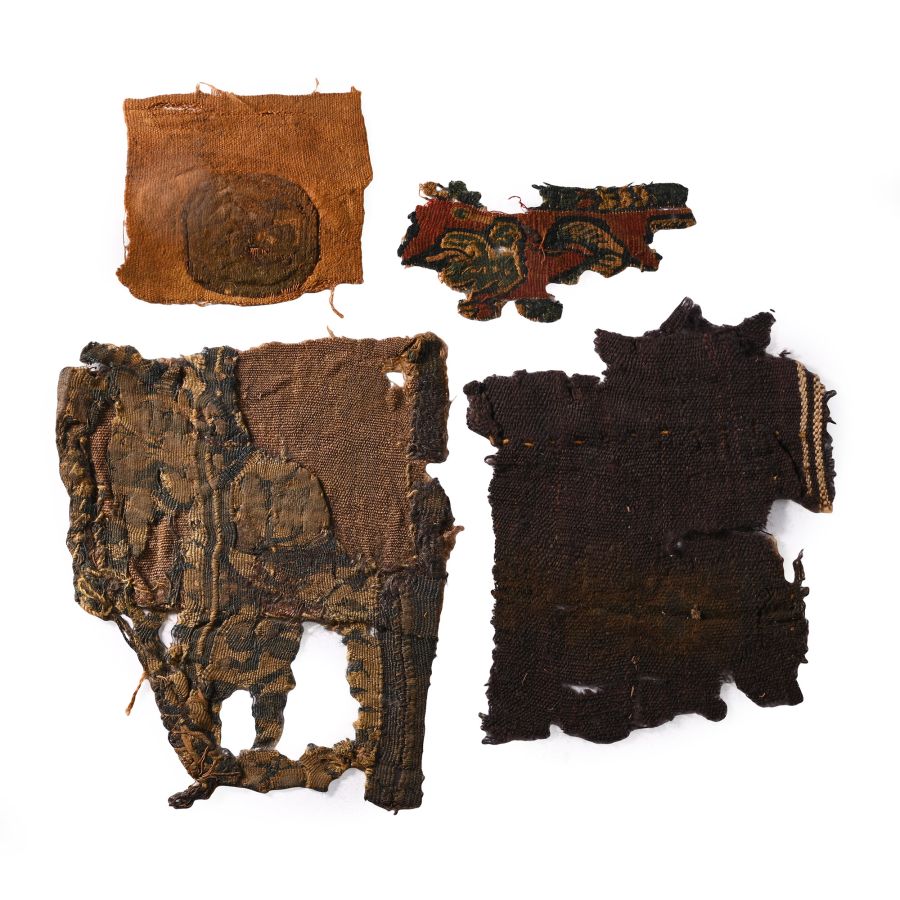
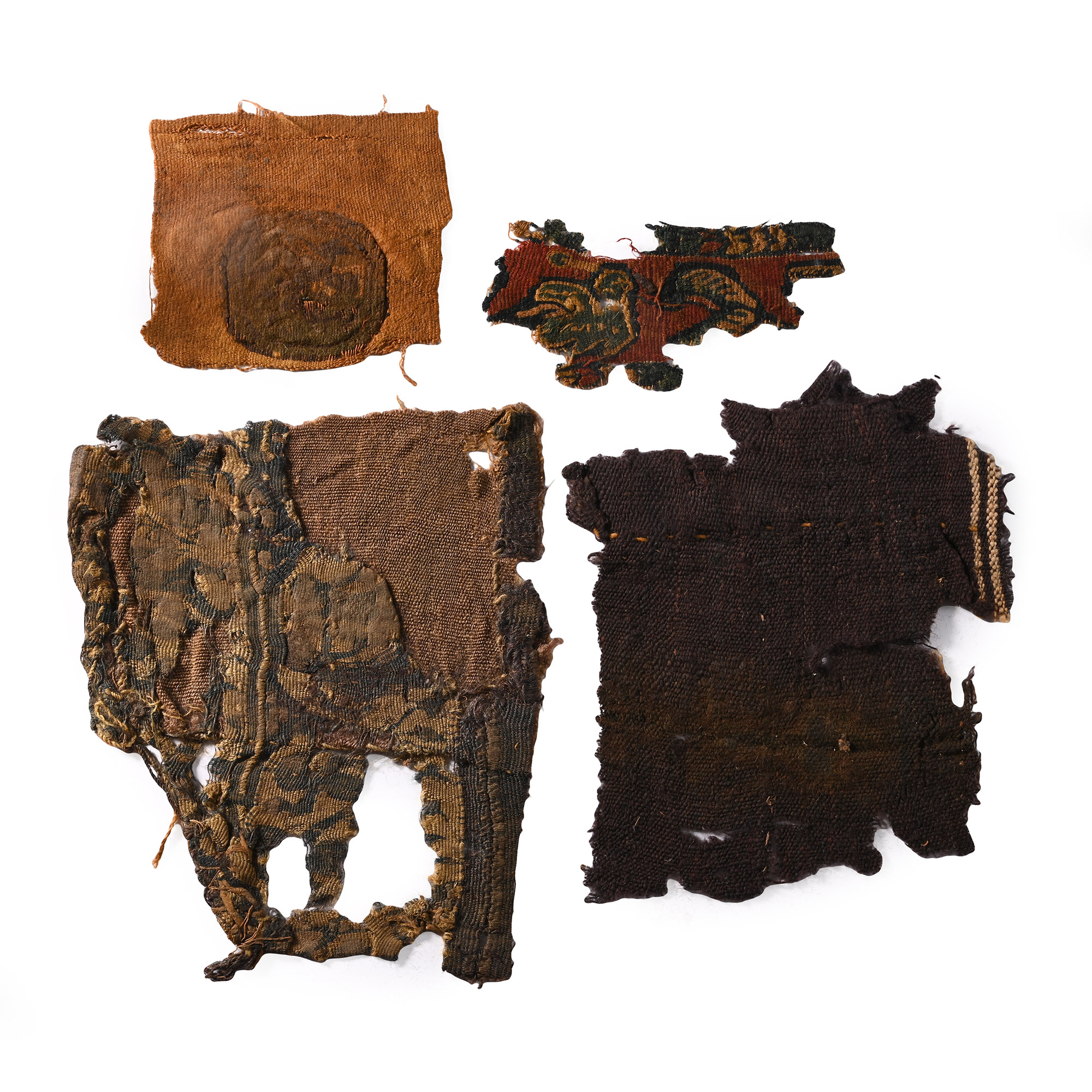
Egyptian Coptic Tunic Textile Fragments of Segmenta and Orbiculus with Geometric Decoration
CIRCA 4H-8TH CENTURY A.D.
3 7/8 - 7 1/2 in. (27 grams total, 9.8-19 cm).
Comprising: a fragment of a tapestry or a fabric in brown linen; a small orbiculus, with vegetal decoration; fragment of a clavus, in red, yellow, green wool, s-torsion, with plant ornaments; a large fragment of cloak or tapestry, with slingers inside orbiculi, sewn edges and wide border with vegetal ornaments. [4, No Reserve]
ProvenanceAcquired 1970s-1996.
Property of a North American collector.
London collection, 2016.
Cf. Del Francia Barocas, L., Antinoe, Cent’anni dopo,catalogo della mostra, Firenze, Palazzo Medici Riccardi, 10 Luglio – 1 novembre 1998 p.83, Firenze, 1998, figs. 7-8, 62, 222, 226, for similar textiles.
FootnotesThe fragments are decorative parts of tunics. These are fabrics of great decorative finesse, with some elements displaying an unusual and extremely well-preserved colour palette. Some designs recall Iranian motifs.
CONDITIONTimeLine Auctions follows a vetting process to ensure the authenticity and legality of all items, reinforcing our commitment to integrity and responsible trading. Each antiquity, antique, and coin lot undergoes thorough examination by a vetting committee of at least ten external specialists, professional trade association members, scientists, and archaeologists: Our Vetting Process
AUCTIONS:
TimeLine is a leading auction house specialising in antiquities, ancient art, collectables, natural history, coins, medals, and books. Our auctions offer museums, collectors, historians, and enthusiasts the opportunity to acquire unique and historically significant pieces.
LOT 0569
Egyptian Coptic Tunic Textile Fragments of Segmenta and Orbiculus with Geometric Decoration
Estimate £60 - 80€70 - 93 (for guidance only)$81 - 108 (for guidance only)
Opening Bid
£5 (EUR 6; USD 7) +BP*
-
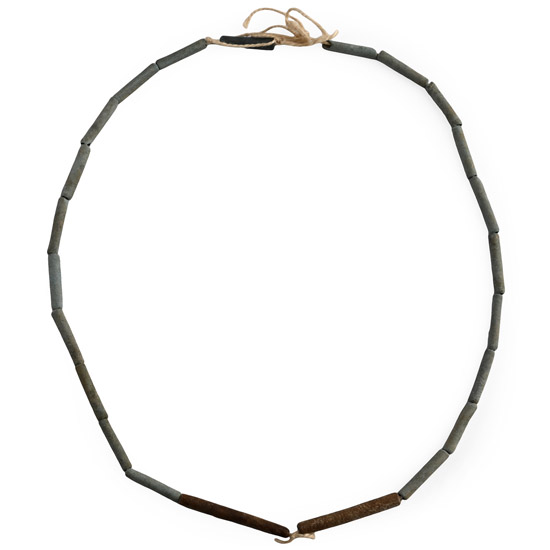
Egyptian Tubular Faience Mummy Bead String
Late Period-Ptolemaic Period, circa 664-30 B.C.Estimate: £30 - 40 (+bp*)
Opening Bid: £5
Comprising mostly green-glazed tubular beads, restrung. 2.63 grams, 36 cm
Excavated from Egypt in 1914. From the private collection of Mr David Sams and his wife Elizabeth Kate Sams, gentry and amateur archaeologists who travelled to Egypt in 1914 with their daughter Ethel. Mr Sams and his wife led digging expeditions from which these items come from the family estate of Mr and Mrs Sams, by direct descent to their granddaughter. -
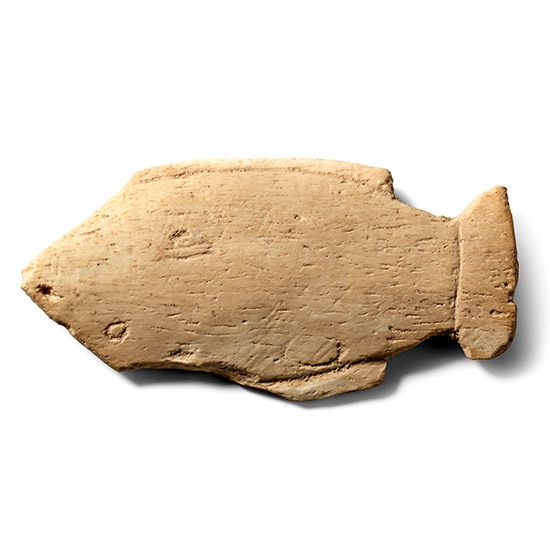
Egyptian Bone Fish Amulet
New Kingdom, circa 1400–1292 B.C.Estimate: £60 - 80 (+bp*)
Opening Bid: £5
Carved as a fish in profile with tail and fins, circular eye detail; chipped to the top. 2.5 grams, 39 mm
London, UK, art market, 1980s. Private collection, London, UK. -
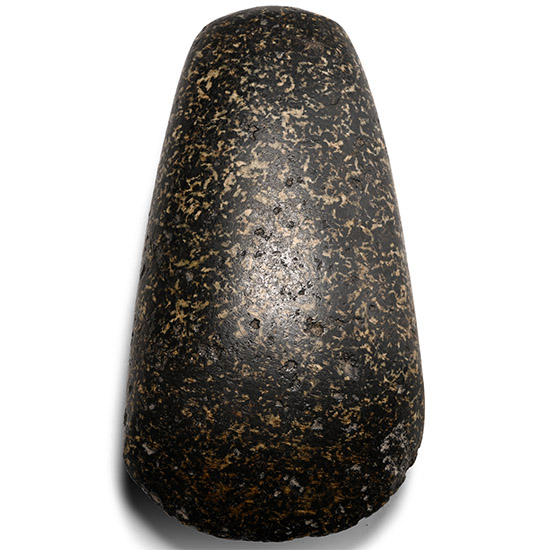
Egyptian Stone Age Diorite Polished Axehead
Early Dynastic Period, circa 3,000 B.C.Estimate: £400 - 600 (+bp*)
Bids: 1 | Current Bid: £5
Polished to a high standard with curved cutting edge. 551 grams, 12.7 cm
Acquired Glyn Antiques, Portabello Road, 26 November 1960, for £2.00. From the private collection of Peter Clayton, FCILIP, Dip, Arch, FSA, FRNS, Hemel Hempstead, Hertfordshire, UK; formed since the late 1950s. Accompanied by an old handwritten information card by Peter Clayton, collection no.78.
The great British Egyptologist Flinders Petrie recovered numerous polished stone axes from various sites in Egypt. Flint was rarely used, though it was popular for other tools. Instead, other hardstones were favoured (Petrie, W.M.F., Prehistoric Egypt, London, 1920, p. 24, for a brief discussion; pl. XXVII, for illustrated examples).
