
Loading, please wait...
LOT 0597
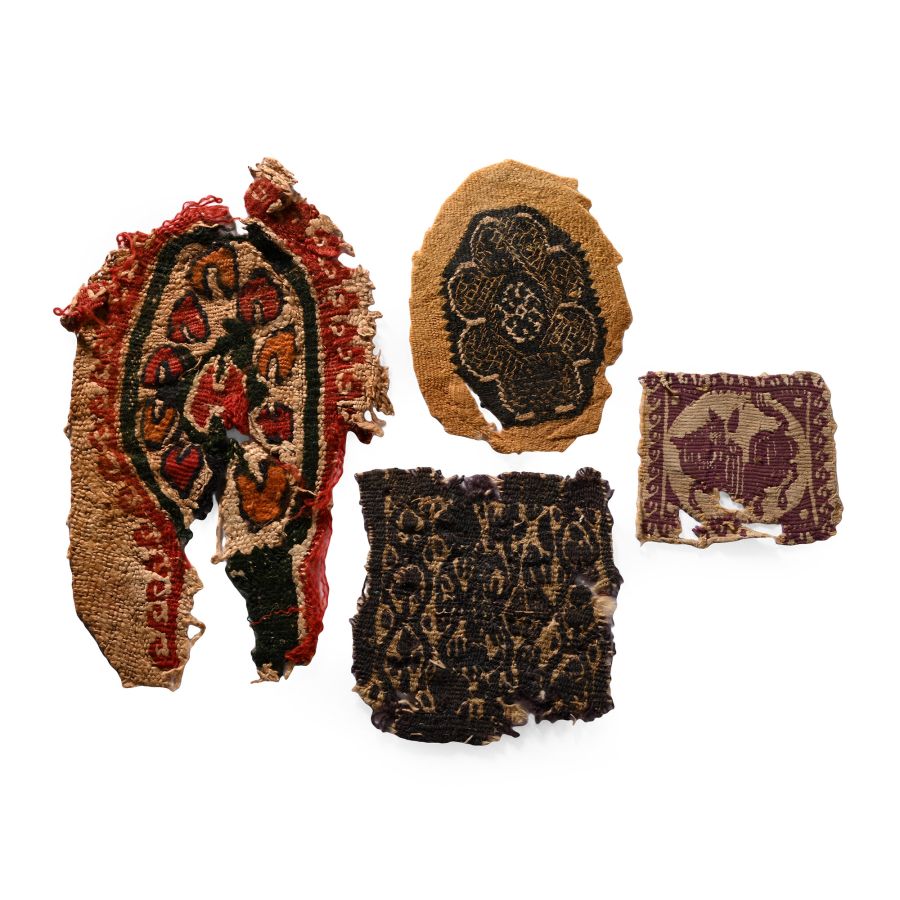
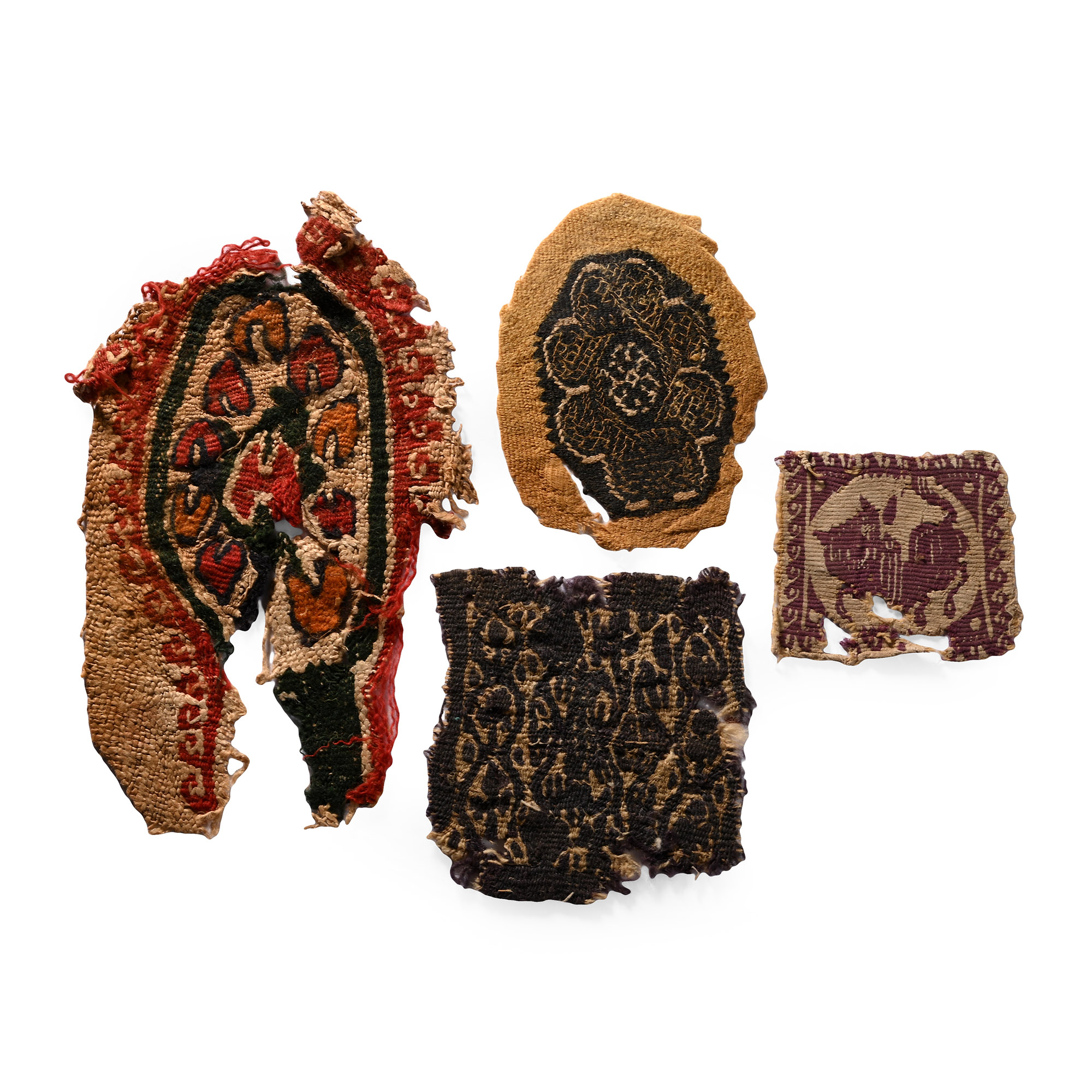
Egyptian Coptic Tunic Textile Fragments of Orbiculi, Tablia and Segmenta with Vegetation, Animals and Geometric Ornament
CIRCA 6TH-7TH CENTURY A.D.
2 1/4 - 6 1/8 in. (10.56 grams total, 5.8-15.5 cm).
Comprising a tablion in purple and blue wool over white linen, with floral ornaments featuring ivy leaves; another smaller tablion in purple wool over white linen, the borders meander decorated, featuring a bull inside a medallion; an orbiculus with lozenge decoration, featuring a vegetal ornament inscribed in a polilobated flower; and a very large foliate ornament in red, green, yellow, orange and red wool on white linen, with vegetal decoration, the borders meander decorated, tapestry work (S-twist). [4, No Reserve]
ProvenanceAcquired 1970s-1996.
Property of a North American collector.
London collection, 2016.
Cf. Del Francia Barocas, L., Museo dell'Alto Medioevo, Roma, I materiali Copti, pp.166-167, nos.41A-B-C, for a similar textile.
FootnotesThe fragments are decorative parts of tunics. These are fabrics of great decorative finesse, with some elements displaying an unusual and extremely well-preserved colour palette.
CONDITIONTimeLine Auctions follows a vetting process to ensure the authenticity and legality of all items, reinforcing our commitment to integrity and responsible trading. Each antiquity, antique, and coin lot undergoes thorough examination by a vetting committee of at least ten external specialists, professional trade association members, scientists, and archaeologists: Our Vetting Process
AUCTIONS:
TimeLine is a leading auction house specialising in antiquities, ancient art, collectables, natural history, coins, medals, and books. Our auctions offer museums, collectors, historians, and enthusiasts the opportunity to acquire unique and historically significant pieces.
LOT 0597
Egyptian Coptic Tunic Textile Fragments of Orbiculi, Tablia and Segmenta with Vegetation, Animals and Geometric Ornament
Estimate £80 - 100€93 - 116 (for guidance only)$108 - 135 (for guidance only)
Opening Bid
£5 (EUR 6; USD 7) +BP*
-
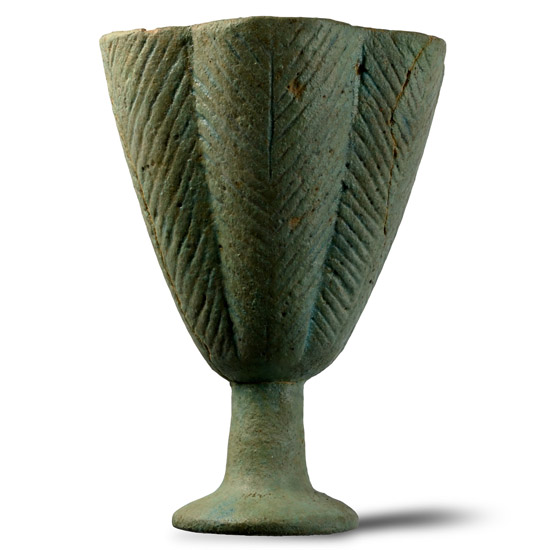
Egyptian Blue-Glazed Faience White Lotus Chalice
New Kingdom-Third Intermediate Period, 1315-945 B.C.Estimate: £3,500 - 4,500 (+bp*)
Opening Bid: £1,750
The lotiform cup modelled as an open lotus flower with incised petal detailing to the outer face, short stem and flared foot; some restoration. 205 grams, 12.1 cm
Acquired 1970s-1996. Property of a North American collector. London collection, 2016. This lot has been checked against the Interpol Database of stolen works of art and is accompanied by search certificate no.12937-243177.
Faience chalices shaped like the flowers of the white lotus (Nymphaea albicans) first appeared in the 18th Dynasty and are believed to be drinking vessels. -
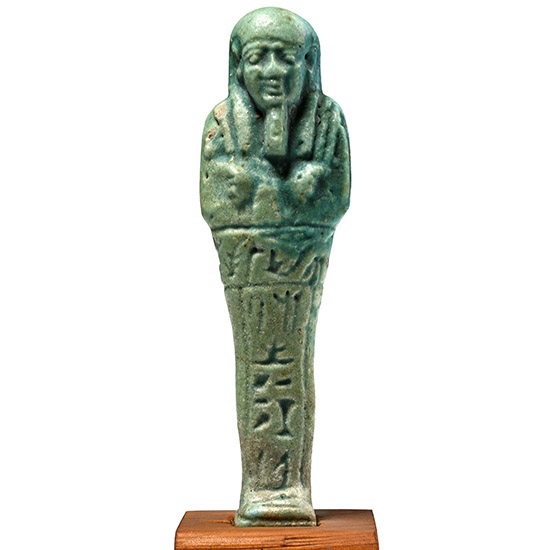
Egyptian Blue Glazed Faience Shabti of the Royal Scribe Aahmes
Persian Period, circa 6th century B.C.Estimate: £500 - 700 (+bp*)
Opening Bid: £5
Mummiform figure wearing a lappet wig and long false beard, arms crossed over the chest; the left hand holds a pick, the right a hoe, and a cord from a small seed bag hangs over the shoulder; plain dorsal pillar; a T-form hieroglyphic text arrangement on the lower body, with the horizontal line reading: 'The illuminated one, the Osiris, the royal scribe Aahmes,' and the central column 'born to Hotep-Bastet, true of voice'; with a wooden display stand bearing the legend 'Ushabi of Aahmes, Royal Scribe, Persian period'. 44.7 grams, 10.7 cm (62.2 grams total, 12.2 cm including stand)
Acquired Herne Bay High Street, circa February 1957, for 2 shillings and sixpence. From the private collection of Peter Clayton, FCILIP, Dip, Arch, FSA, FRNS, Hemel Hempstead, Hertfordshire, UK; formed since the late 1950s. Accompanied by an old handwritten information card by Peter Clayton, collection no.4. -
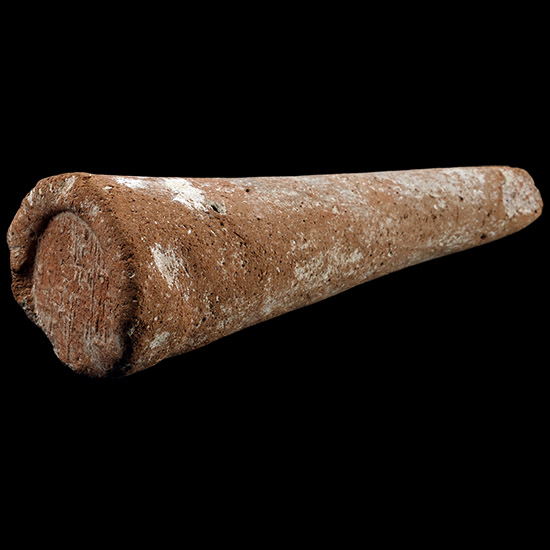
Egyptian Terracotta Funerary Cone of Qenamun
New Kingdom, mid-18th Dynasty, circa 1479-1425 B.C.Estimate: £400 - 600 (+bp*)
Opening Bid: £5
Complete cone, preserving its slender tapering form, with the flat circular end faintly impressed with four horizontal lines of abraded hieroglyphic text reading: 'An offering which the king gives to Osiris, lord of eternity, may he give a voice offering of all good purified things, for the ka of the scribe of documents of the god's wife, Qenamun, true of voice'. 450 grams, 21.4 cm
Acquired from Abdoul Rassoul on the West Bank at Luxor, 1974-1980 when a guest lecturer. From the private collection of Peter Clayton, FCILIP, Dip, Arch, FSA, FRNS, Hemel Hempstead, Hertfordshire, UK; formed since the late 1950s.
Qenamun's title indicates that he was responsible for the legal correspondence, decrees, and official documentation issued by or sent to the institution of the royal priestess of Amun. Although abraded, this cone is clearer in certain areas of the inscription than the one recorded by Davies and Macadam in their 1957 catalogue of funerary cones. Qenamun's tomb in the Theban necropolis has not yet been identified.
