
Loading, please wait...
LOT 0603
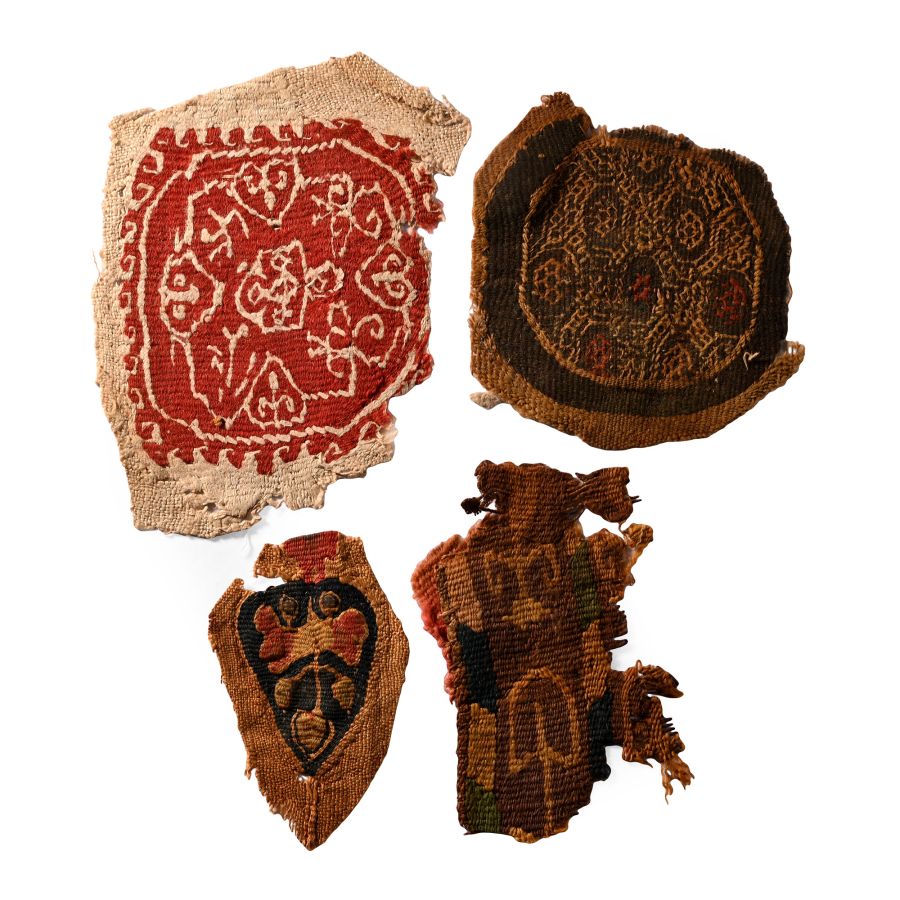
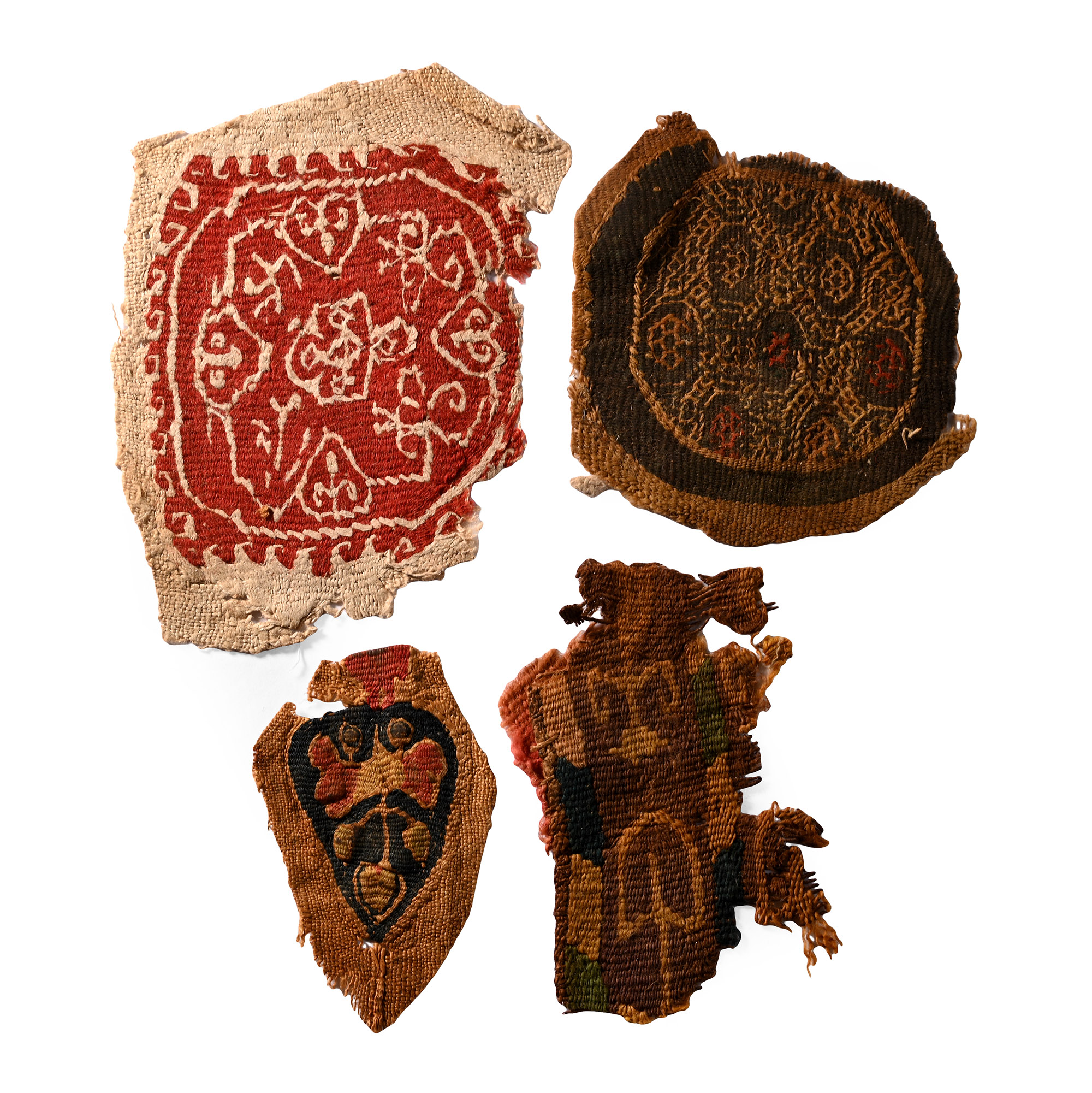
Egyptian Coptic Tunic Textile Fragments of Orbiculi and Segmenta with Geometric Ornament
CIRCA 6TH-7TH CENTURY A.D.
3 - 5 1/4 in. (9.75 grams total, 7.5-13.4 cm).
Comprising: an orbiculus, in red-purple wool and coarse linen, with geometric decoration; a heart-shaped bud in red, dark blue, green, and yellow wool; a fragment of a clavus with plant ornaments, in brown, yellow, green and dark blue purple wool; and a further orbiculus, with a deep blue-violet background and geometric decorative motifs outlined in raw wool, featuring fine honeycomb work and left-hand twist in red, blue, and yellow wool. [4, No Reserve]
ProvenanceAcquired 1970s-1996.
Property of a North American collector.
London collection, 2016.
Cf. Del Francia Barocas, L., Museo dell'Alto Medioevo, Roma, I materiali Copti, no.66, pp.230-231, for similar textiles.
FootnotesThe fragments are decorative parts of tunics. These are fabrics of great decorative finesse, with some elements displaying an unusual and extremely well-preserved colour palette. The plant designs are related to the so-called Nilotic decorative pattern.
CONDITIONTimeLine Auctions follows a vetting process to ensure the authenticity and legality of all items, reinforcing our commitment to integrity and responsible trading. Each antiquity, antique, and coin lot undergoes thorough examination by a vetting committee of at least ten external specialists, professional trade association members, scientists, and archaeologists: Our Vetting Process
AUCTIONS:
TimeLine is a leading auction house specialising in antiquities, ancient art, collectables, natural history, coins, medals, and books. Our auctions offer museums, collectors, historians, and enthusiasts the opportunity to acquire unique and historically significant pieces.
LOT 0603
Egyptian Coptic Tunic Textile Fragments of Orbiculi and Segmenta with Geometric Ornament
Estimate £70 - 90€81 - 104 (for guidance only)$95 - 122 (for guidance only)
Opening Bid
£5 (EUR 6; USD 7) +BP*
-

Egyptian Brown Quartzite Figure of the Baboon God Thoth
New Kingdom, circa 1550-1070 B.C.Estimate: £4,500 - 5,500 (‡+bp*)
Opening Bid: £2,500
Carved in a typical pose, sitting on its haunches with its tail curving around the right side, its front paws resting on its knees and protruding beneath its thick furry pelt, with incised detailing, its feet either side of the phallus, the head with bulbous, striated hair on either side, chipped, snout restored; seated on a high shrine-shaped plinth with squared front and rounded back, featuring a cavetto cornice and roll detailing on the upper part. 1.15 kg, 15 cm
From a deceased American estate, 1970-1989. with Bonhams, London, 28 October 2009, no.35. Accompanied by copies of the relevant Bonhams catalogue pages. This lot has been checked against the Interpol Database of stolen works of art and is accompanied by a search certificate no.12368-226706.
The baboon was an animal manifestation of the god Thoth, the patron deity of Hermopolis Magna, who was revered for his association with knowledge, writing, and healing. -
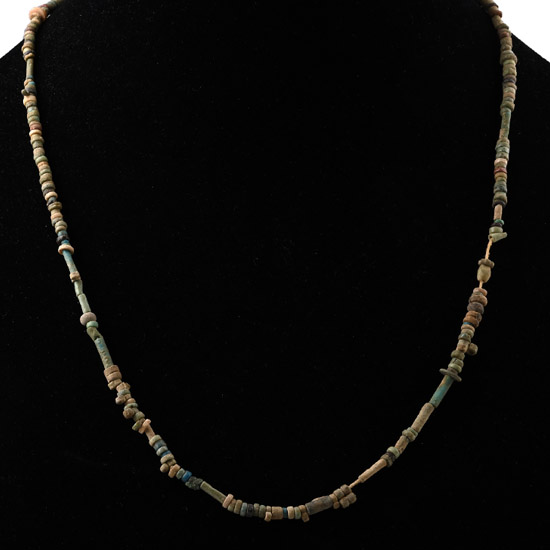
Egyptian Faience Mummy Bead Necklace String
Late Period-Ptolemaic Period, circa 664-30 B.C.Estimate: £60 - 80 (+bp*)
Opening Bid: £5
Composed of green- and blue-glazed disc and tubular beads, restrung. 8.03 grams, 60 cm
Excavated from Egypt in 1914. From the private collection of Mr David Sams and his wife Elizabeth Kate Sams, gentry and amateur archaeologists who travelled to Egypt in 1914 with their daughter Ethel. Mr Sams and his wife led digging expeditions from which these items come from the family estate of Mr and Mrs Sams, by direct descent to their granddaughter. -
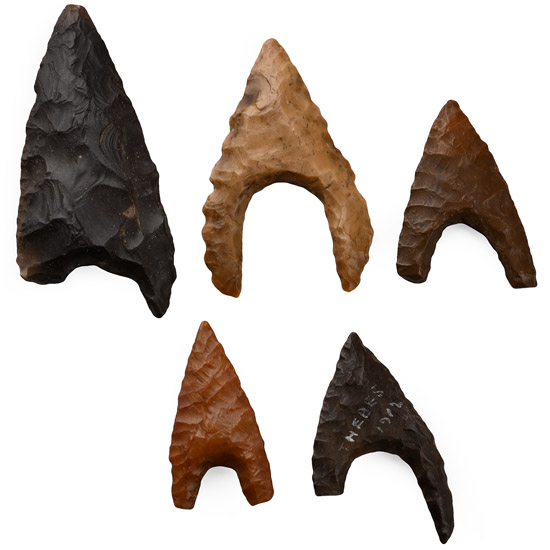
Egyptian Stone Age Knapped Arrowhead Group from Thebes
Neolithic Period, 11,000-5,200 B.P.Estimate: £150 - 200 (+bp*)
Opening Bid: £5
Comprising five barbed types, two with chipped barbs; accompanied with a handwritten tag reading 'Neolithic hollow-based arrowheads. Fayuum type. c.5000 BC'. 24.8 grams total, 33-58 mm
Found Thebes. From the collection of A.D. Passmore (1879-1958), his collection of flints from the area of Stonehenge was donated to the Ashmolean Museum in the 1950s. From the private collection of Peter Clayton, FCILIP, Dip, Arch, FSA, FRNS, Hemel Hempstead, Hertfordshire, UK; formed since the late 1950s. Accompanied by a copy of an old handwritten information card by Peter Clayton.
