
Loading, please wait...
LOT 0570
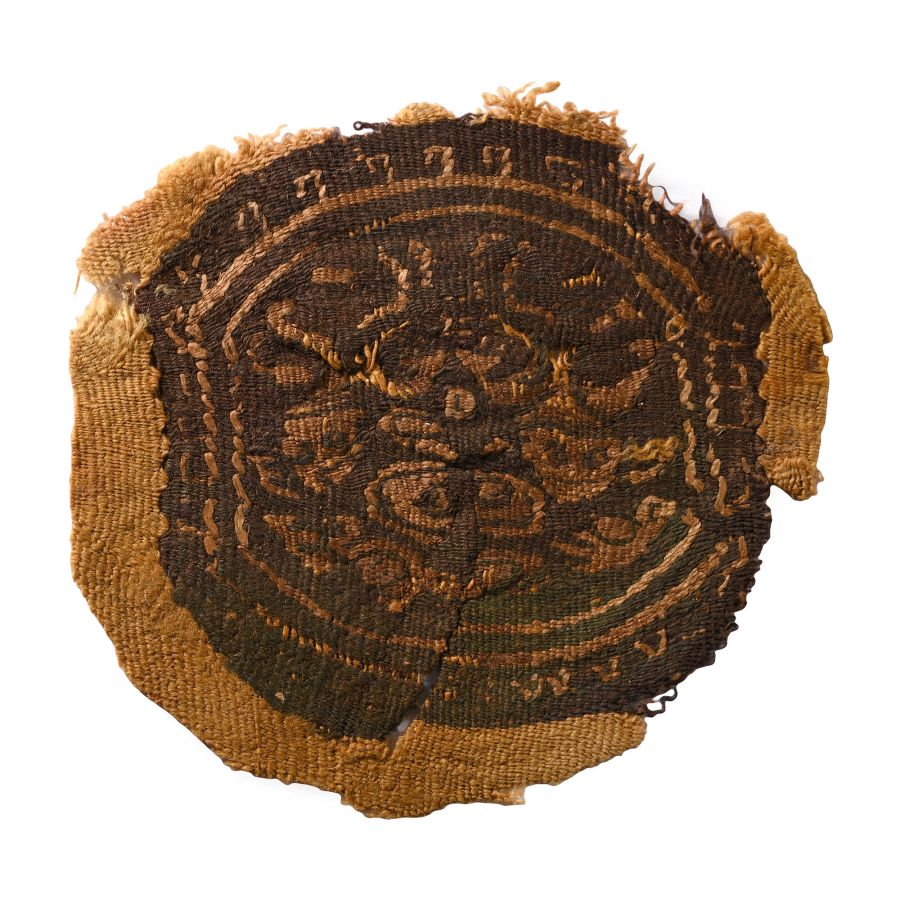
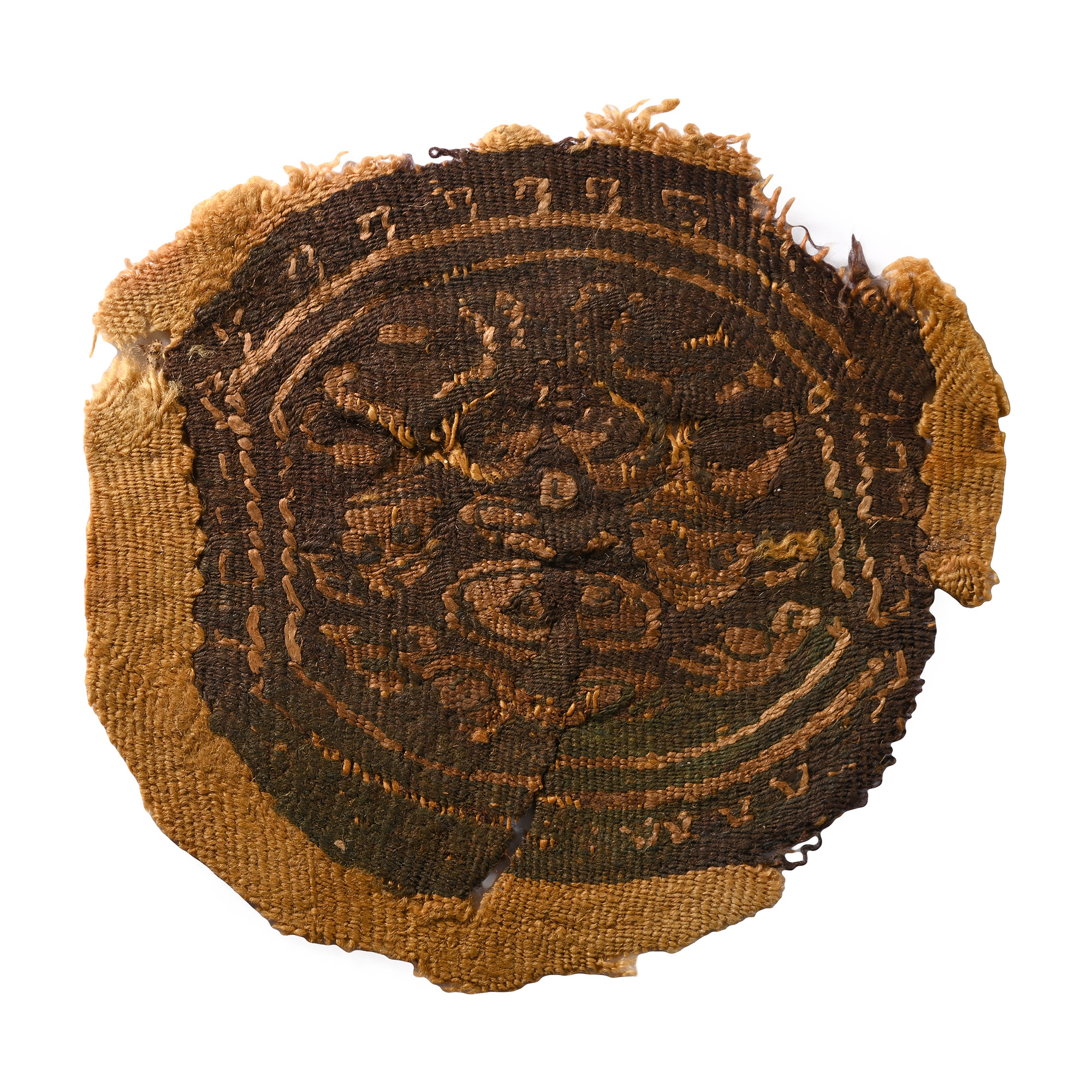
Egyptian Coptic Tunic Textile Fragment of an Orbiculus with Facing Military Horsemen
CIRCA 7TH CENTURY A.D.
4 1/4 in. (4.15 grams, 10.7 cm).
Featuring a large central floral motif, divided into sections containing rhomboid patterns and bordered by meander designs, executed in a tapestry weave using raw wool in reddish-purple, yellow, and dark brown, with an S-twist. [No Reserve]
ProvenanceAcquired 1970s-1996.
Property of a North American collector.
London collection, 2016.
Cf. Del Francia Barocas, L., Museo dell'Alto Medioevo, Roma, I materiali Copti, pp.194-195, no.50, for a similar textile.
FootnotesIn the Late Roman Period, round orbiculi decorated the shoulders and the lower part of tunics and inner tunics. These fabrics were of great decorative finesse, displaying an unusual and extremely well-preserved colour palette. When the tunic came to the end of its life, these embroideries could be recycled and patched onto another garment. The motif of the opposed horsemen could be related to a military tunic.
CONDITIONTimeLine Auctions follows a vetting process to ensure the authenticity and legality of all items, reinforcing our commitment to integrity and responsible trading. Each antiquity, antique, and coin lot undergoes thorough examination by a vetting committee of at least ten external specialists, professional trade association members, scientists, and archaeologists: Our Vetting Process
AUCTIONS:
TimeLine is a leading auction house specialising in antiquities, ancient art, collectables, natural history, coins, medals, and books. Our auctions offer museums, collectors, historians, and enthusiasts the opportunity to acquire unique and historically significant pieces.
LOT 0570
Egyptian Coptic Tunic Textile Fragment of an Orbiculus with Facing Military Horsemen
Estimate £70 - 90€81 - 104 (for guidance only)$95 - 122 (for guidance only)
-
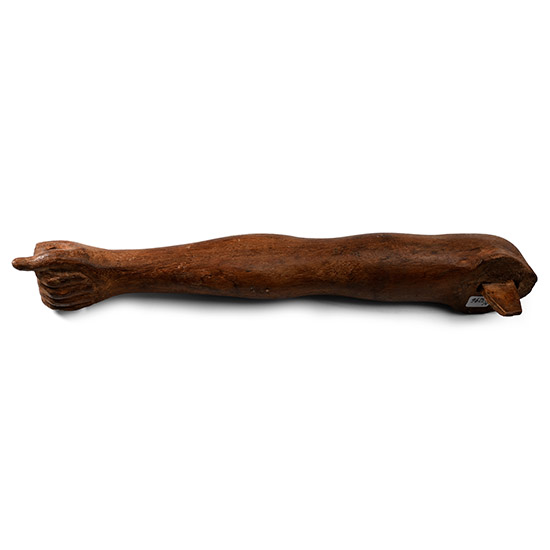
Large Egyptian Wooden Right Arm from Male Statuette
Old Kingdom, 2700-2200 B.C.Estimate: £2,000 - 3,000 (‡+bp*)
Opening Bid: £1,150
Carved in acacia wood and preserved in its entirety, from an under-life-size male statuette; slender fingers forming a fist and originally holding a tool; attachment tenon at the inner shoulder. 160 grams, 27 cm
Natural traces of ageing. Intact.
Ex Galerie Cybele, Paris, acquired in 1999. with Binoche et Giquello auction, Paris, 20 March 2017, no.88. This lot has been checked against the Interpol Database of stolen works of art and is accompanied by search certificate no.13474-263055.
Separately manufactured arms did not need to touch the body's sides or be stabilised by bars. Thus, the figure, which presumably stood upright with one leg advanced, was given a freer and more lifelike appearance. -
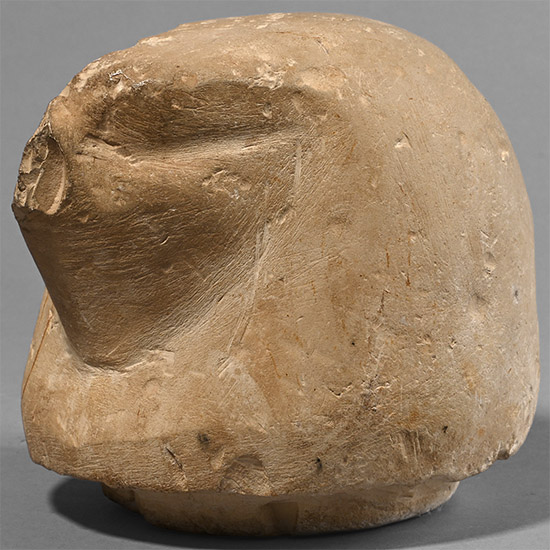
Large Egyptian Limestone Qebehsenuef Canopic Jar Lid
New Kingdom, 18th Dynasty, 1550-1292 B.C.Estimate: £200 - 300 (+bp*)
Bids: 3 | Current Bid: £30
Carved as an avian head with a discoid base to accept the rim of the canopic jar; old handwritten collector's note attached to the back of the head 'Found in rubble, literally tripped over, in tombs on West Bank, March 1963, group with Dr Veronica Seton-Williams'; old collector's card: 'Lid of hawk headed canopic jar. Duamutef (sic), guardian of the lungs and deity of the east in their general arrangement to the cardinal [?]. Made of white limestone, the right hand side much damaged...'; chipped. 2.74 kg, 14.6 cm wide
From the private collection of Peter Clayton, FCILIP, Dip, Arch, FSA, FRNS, Hemel Hempstead, Hertfordshire, UK; formed since the late 1950s. Accompanied by an old handwritten identification card written by Peter Clayton.
The Four Sons of Horus safeguarded the deceased's internal organs. The human-headed Imsety protected the liver; the baboon-headed Hapy, the lungs; the jackal-headed Duamutef, the stomach; and the falcon-headed Qebehsenuef, the intestines. They often placed the viscera in canopic jars with the head of the respective Son of Horus. -
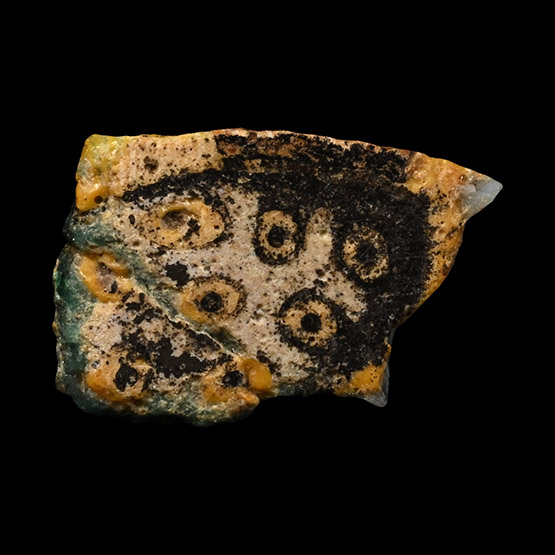
Egyptian Glass Panel with Eyes
Late Period, 664-332 B.C.Estimate: £200 - 300 (+bp*)
Opening Bid: £106
Irregular glass panel fragment with inlaid mosaic eye motifs; repaired. 1.57 grams, 18 mm
From the collection of a gentleman, acquired on the London art market in the 1990s.
