
Loading, please wait...
LOT 0654
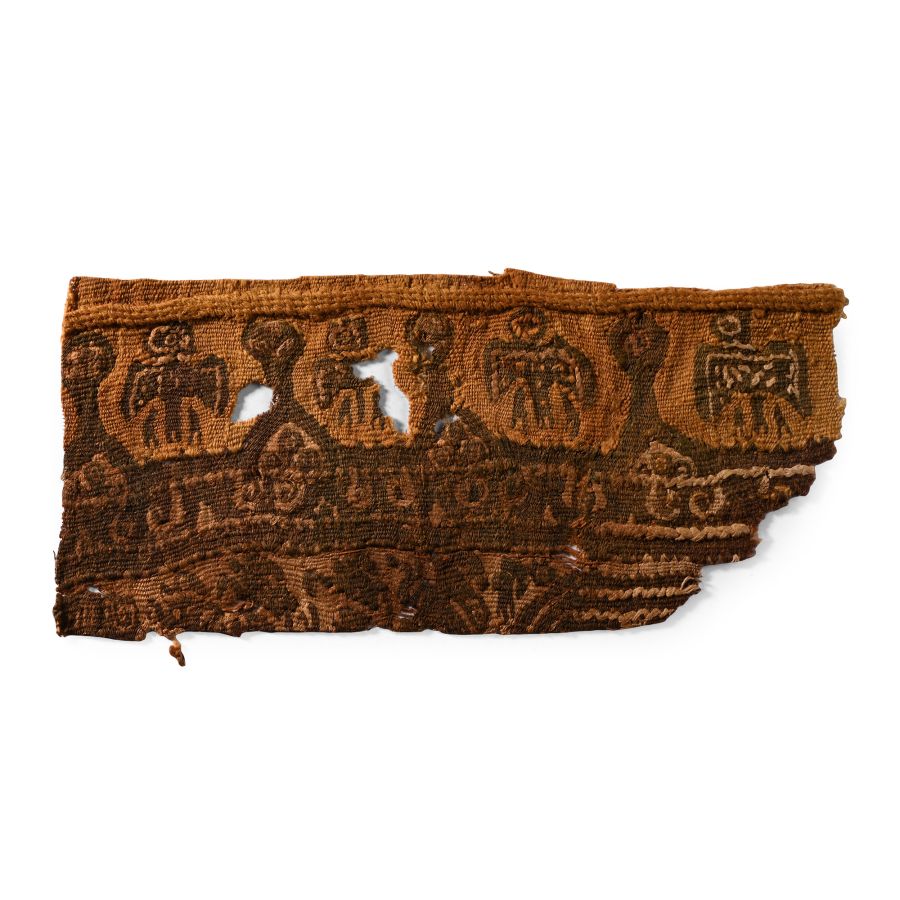
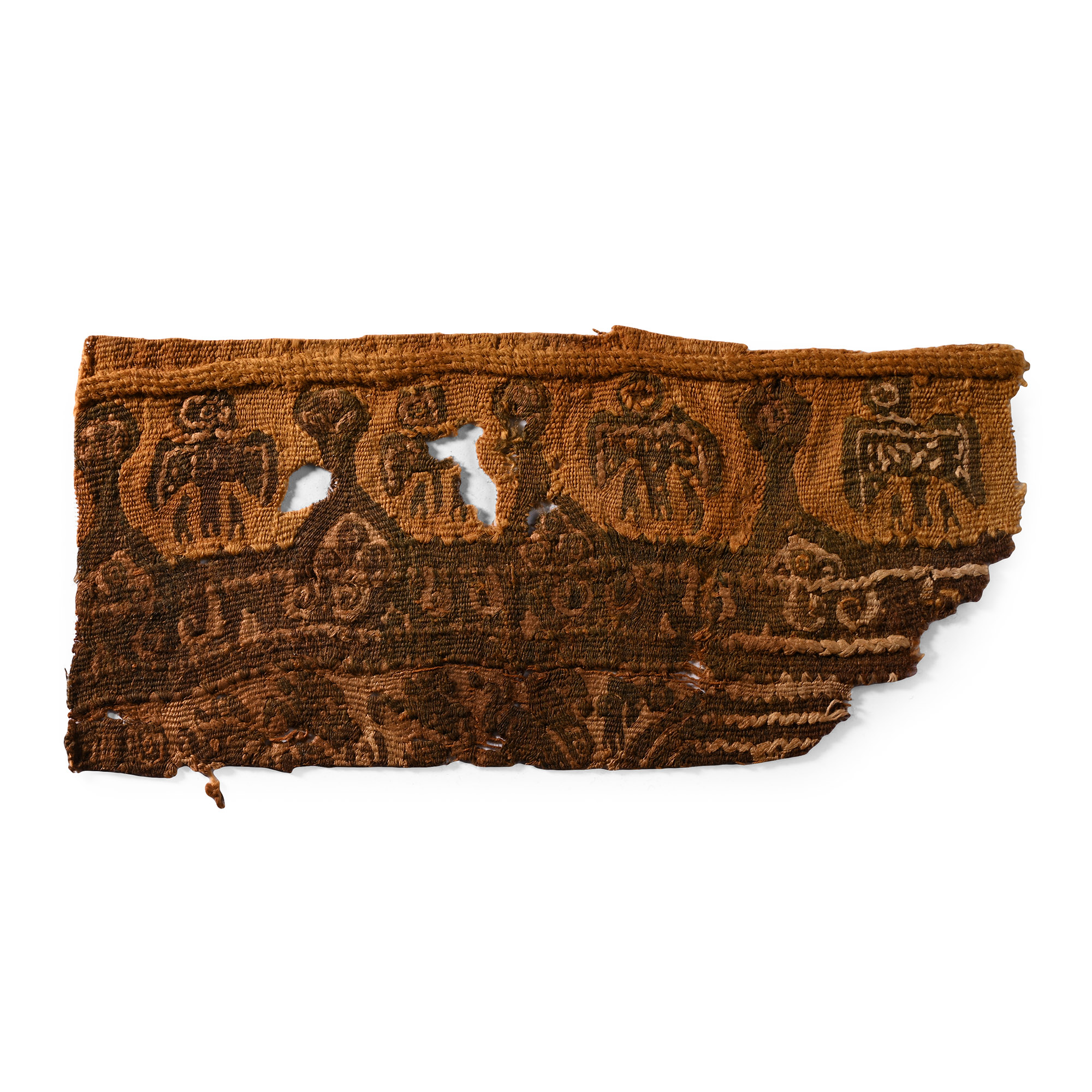
Egyptian Coptic Tunic Textile Fragment of a Segmentum with Eagles and Other Birds
CIRCA 7TH CENTURY A.D.
7 1/2 in. (8 grams, 19 cm).
Fragment of a large segmentum in linen and wool, embroidered with rows of eagles and other birds, the borders with geometric decorations. [No Reserve]
ProvenanceAcquired 1970s-1996.
Property of a North American collector.
London collection, 2016.
Cf. Del Francia Barocas, L., Museo dell'Alto Medioevo, Roma, I materiali Copti, pp.162-163, for similar textiles.
FootnotesThe segment is realised in the tapestry technique. They were part of the decoration of a tunic, and the presence of the Imperial eagle, not a common pattern, could refer to a military tunic.
CONDITIONTimeLine Auctions follows a vetting process to ensure the authenticity and legality of all items, reinforcing our commitment to integrity and responsible trading. Each antiquity, antique, and coin lot undergoes thorough examination by a vetting committee of at least ten external specialists, professional trade association members, scientists, and archaeologists: Our Vetting Process
AUCTIONS:
TimeLine is a leading auction house specialising in antiquities, ancient art, collectables, natural history, coins, medals, and books. Our auctions offer museums, collectors, historians, and enthusiasts the opportunity to acquire unique and historically significant pieces.
LOT 0654
Egyptian Coptic Tunic Textile Fragment of a Segmentum with Eagles and Other Birds
Estimate £50 - 70€58 - 81 (for guidance only)$68 - 95 (for guidance only)
-
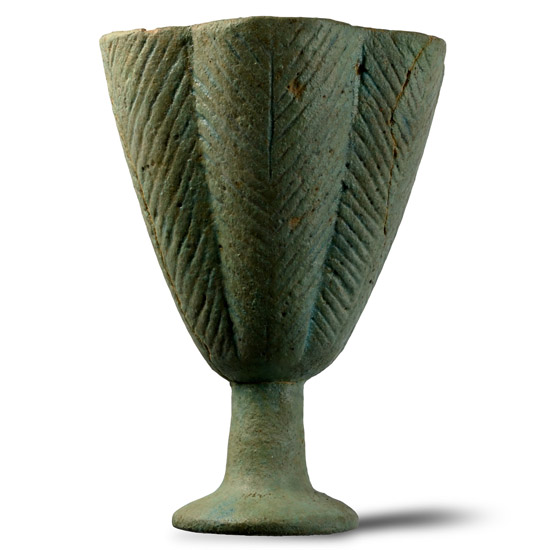
Egyptian Blue-Glazed Faience White Lotus Chalice
New Kingdom-Third Intermediate Period, 1315-945 B.C.Estimate: £3,500 - 4,500 (+bp*)
Opening Bid: £1,750
The lotiform cup modelled as an open lotus flower with incised petal detailing to the outer face, short stem and flared foot; some restoration. 205 grams, 12.1 cm
Acquired 1970s-1996. Property of a North American collector. London collection, 2016. This lot has been checked against the Interpol Database of stolen works of art and is accompanied by search certificate no.12937-243177.
Faience chalices shaped like the flowers of the white lotus (Nymphaea albicans) first appeared in the 18th Dynasty and are believed to be drinking vessels. -
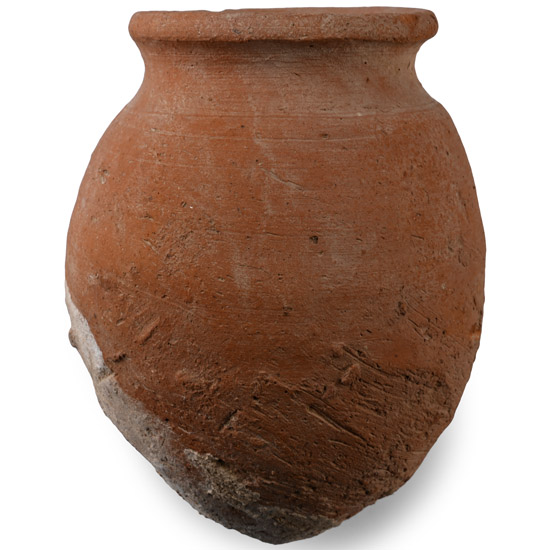
Egyptian Terracotta Jar
New Kingdom, circa 16th-13th century B.C.Estimate: £300 - 400 (+bp*)
Bids: 1 | Current Bid: £5
With pointed foot, bulbous body, carinated shoulder and everted rim. 770 grams, 15.4 cm
Acquired Sunday 11th October 1992. From the private collection of Peter Clayton, FCILIP, Dip, Arch, FSA, FRNS, Hemel Hempstead, Hertfordshire, UK; formed since the late 1950s. Accompanied by an old handwritten information ticket.
Various forms of this vessel were produced during the New Kingdom (see Guidotti, M.C., Vasi dall’epoca protodinastica al Nuovo Regno, Museo Egizio di Firenze, Rome, 1991, pp. 218, nos. 339-340, and p. 227, no. 361). -
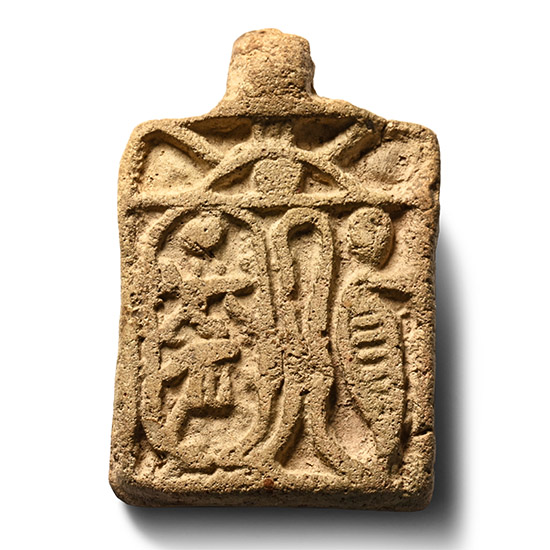
Egyptian Faience Amuletic Plaque with Cartouche of Pharaoh Thutmose III
New Kingdom, circa 1400-1292 B.C.Estimate: £200 - 300 (+bp*)
Bids: 1 | Current Bid: £5
Formed as a rectangular plaque with the cartouche of Thutmosis III and a uraeus; attachment loop to the top. 4.68 grams, 33 mm
London, UK, art market, 1980s. Private collection, London, UK.
