
Loading, please wait...
LOT 0590
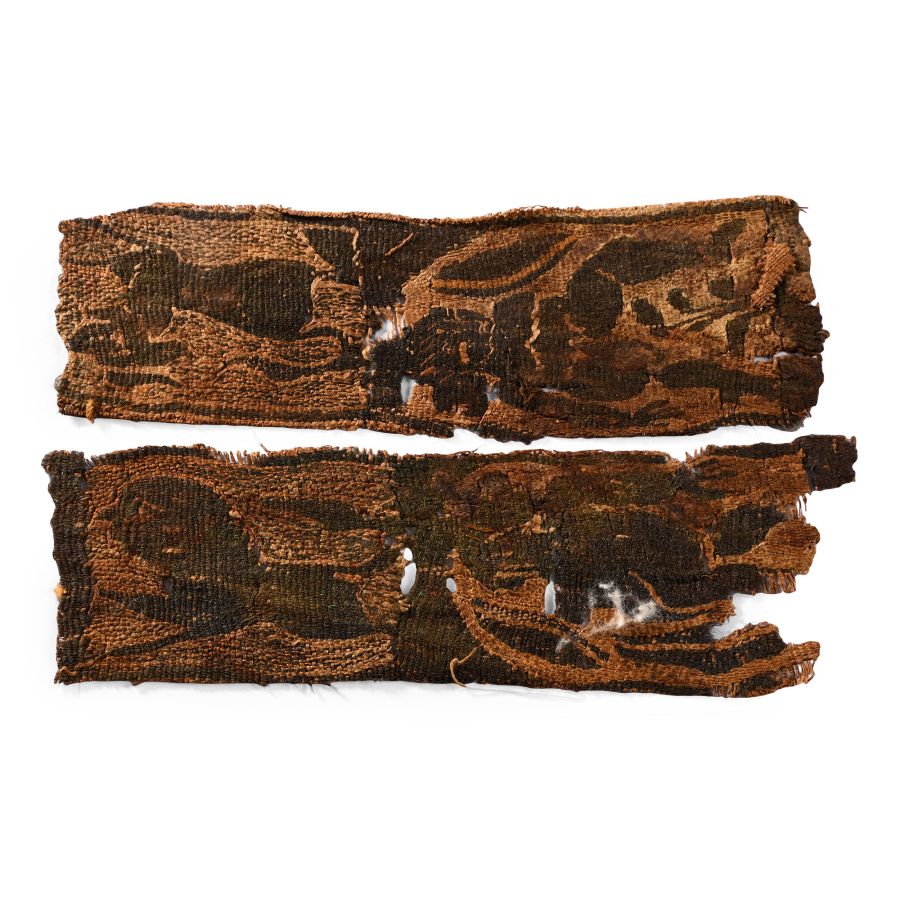
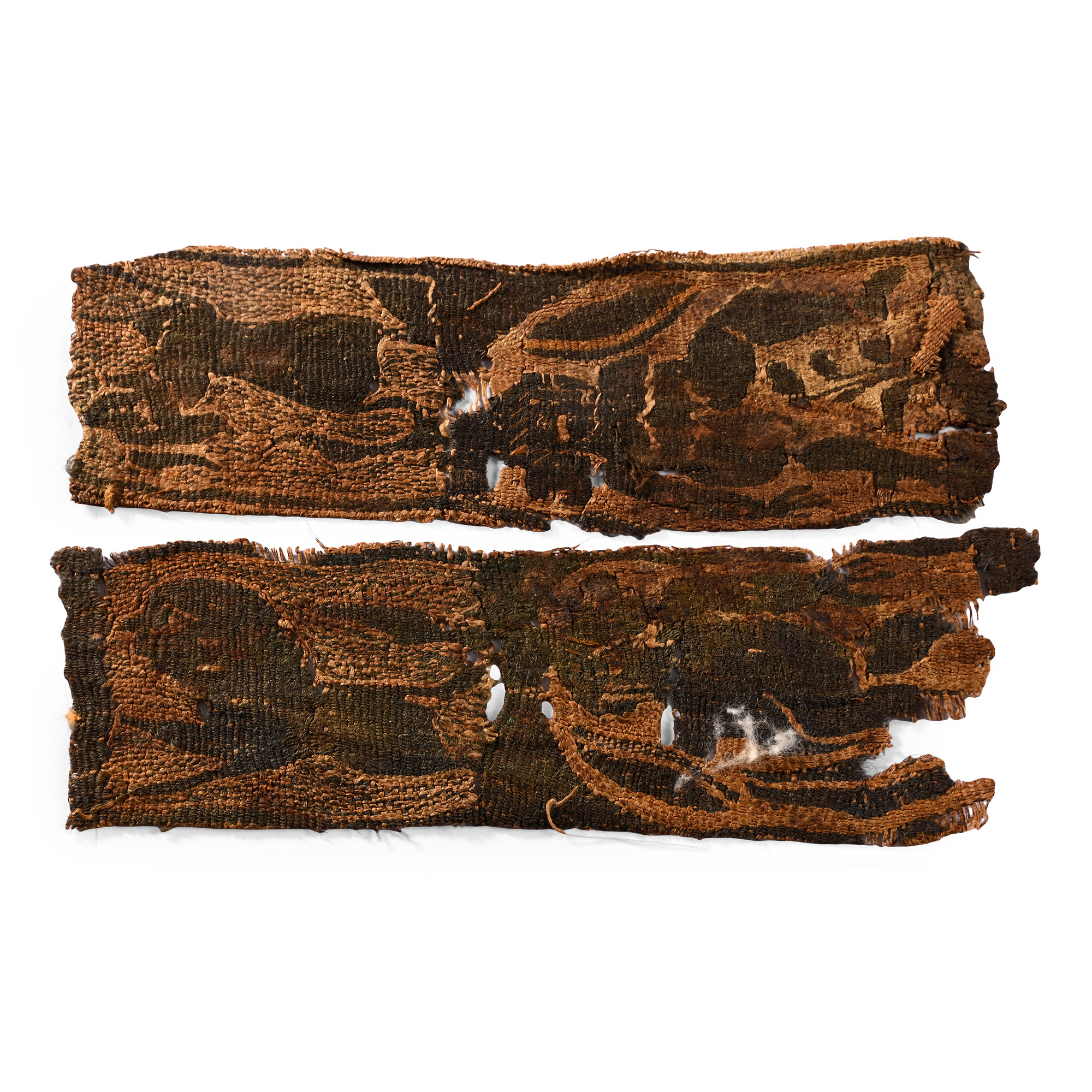
Egyptian Coptic Tunic Clavus Textile Fragments with Armed Puttoes, Lion and Hound
CIRCA 5TH CENTURY A.D.
8 5/8 - 9 in. (16.14 grams total, 22-23 cm).
Comprising two long strips (clavus) with alternating figures of hunting puttoes with shields, hares and lions. [2, No Reserve]
ProvenanceAcquired 1970s-1996.
Property of a North American collector.
London collection, 2016.
Cf. Del Francia Barocas, L., Museo dell'Alto Medioevo, Roma, I materiali Copti, pp.94-101, for a similar segmentum.
FootnotesThe theme of rabbits or hares, in association with other characters and animals of the Dionysian thiasos in a hunting setting, has notable parallels. Such representations are linked to narratives of the Dionysian cycle.
CONDITIONTimeLine Auctions follows a vetting process to ensure the authenticity and legality of all items, reinforcing our commitment to integrity and responsible trading. Each antiquity, antique, and coin lot undergoes thorough examination by a vetting committee of at least ten external specialists, professional trade association members, scientists, and archaeologists: Our Vetting Process
AUCTIONS:
TimeLine is a leading auction house specialising in antiquities, ancient art, collectables, natural history, coins, medals, and books. Our auctions offer museums, collectors, historians, and enthusiasts the opportunity to acquire unique and historically significant pieces.
LOT 0590
Egyptian Coptic Tunic Clavus Textile Fragments with Armed Puttoes, Lion and Hound
Estimate £100 - 140€120 - 160 (for guidance only)$140 - 190 (for guidance only)
-
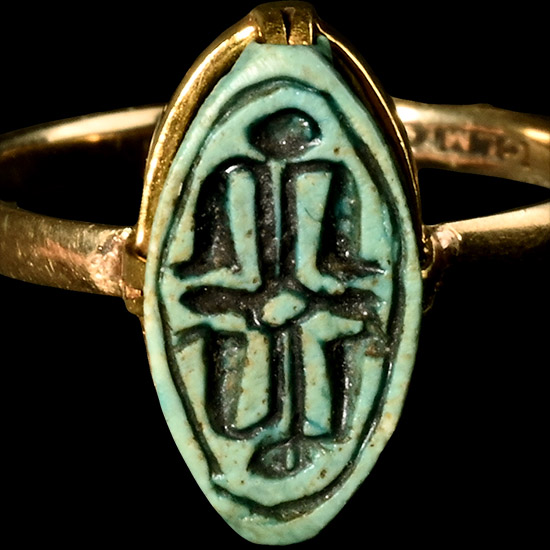
Egyptian Blue Faience Cowroid with Uraei in Gold Ring
Third Intermediate Period, 1069-860 B.C.Estimate: £500 - 700 (+bp*)
Opening Bid: £250
Slender, lentoid form with a finely striated edge design; the main motif comprises four outward-facing uraei, one in each quadrant, with a sun disc at each end, mounted in a modern gold ring. 2.33 grams, 22.62 mm overall, 16.76 mm internal diameter (approximate size British M, USA 6, Europe 12.46, Japan 12)
Private collection, London. -
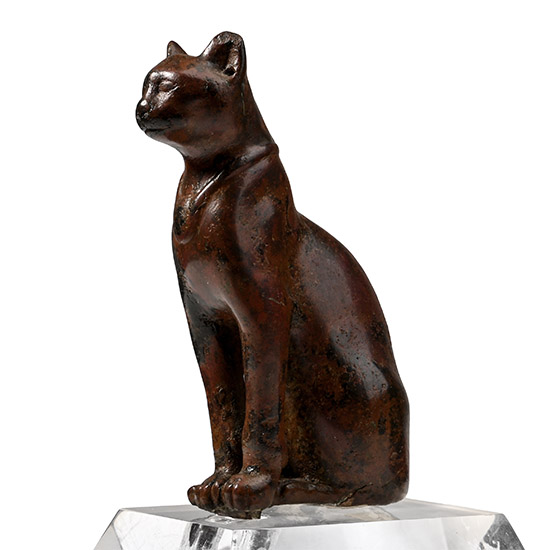
'The Fitzgerald' Egyptian Bronze Statue of the Seated Cat Goddess Bastet
Late Period, 26th-30th Dynasty, circa 664-332 B.C.Estimate: £3,000 - 4,000 (+bp*)
Bids: 10 | Current Bid: £600
Modelled seated, its tail wrapped around one side of its body and resting on a front paw, both ears pierced, wearing a collar featuring a large amuletic pendant, a rectangular tang for attachment to a separate element below; mounted on a 1970s custom-made perspex display stand. 470 grams total including stand, cat: 11.2 cm high
Dr Desmond Fitzgerald collection, no.28. Ex Nick Wright, 1990. From the collection of Charlie Watts (The Rolling Stones drummer). This lot has been checked against the Interpol Database of stolen works of art and is accompanied by search certificate no.13462-261733.
The cat was the most sacred animal in ancient Egypt and associated with the cat-headed goddess Bastet, daughter of Re. When represented in human form as a cat-headed female, she usually holds a sistrum (a musical rattle) in her right hand with a supine cat on its top, and an aegis in her left. Small kittens are often shown at her feet. Her most important cult centre was at Bubastis (Tell Basta) in the north-east Delta. The site today is heavily ruined and the temple destroyed. Sir Flinders Petrie excavated at Bubastis and other nearby Delta sites in the 1880s. Tombs of some of the temple officials have been found nearby, and vast cemeteries of mummified cat burials left as votive offerings; so many thousands were found that they were used locally as fuel. Since Petrie’s investigations, the site has been abandoned and only in recent years have excavations begun to be undertaken. In painted nobles’ tombs at Thebes, a cat is often represented seated beneath the chair of the noble’s wife. In the 5th century BC, the Greek historian Herodotus wrote that the festival of Bastet at Bubastis was the most elaborate of all those in Egypt. The Roman geographer Strabo wrote that the cat was so revered in Egypt that an Egyptian dashed into his burning house to save the cat, then returned to rescue his family. -
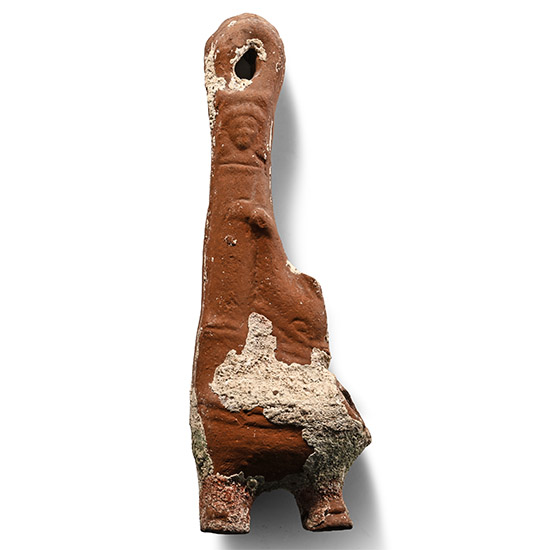
Egyptian Terracotta Alexandrian Figure
Roman Period, 30 B.C.-323 A.D.Estimate: £120 - 170 (+bp*)
Bids: 1 | Current Bid: £5
Hollow-formed vessel with bulbous body and two flared feet below, vertical handle with loop finial and moulded mummy and dolphin motif; marine accretion; inked to underside 'Ex M. Suzanne / Alexandria / 1903-1920'. 178 grams, 19.5 cm
From the collection of David Donlan (1947-2025), a dedicated and lifelong collector with a passion for the ancient world and the natural sciences, forming his collection from 1960s onwards, using many reputable dealers across the United Kingdom, including the well-regarded Coincraft and The Parthenon Gallery.
