
Loading, please wait...

LOT 0546
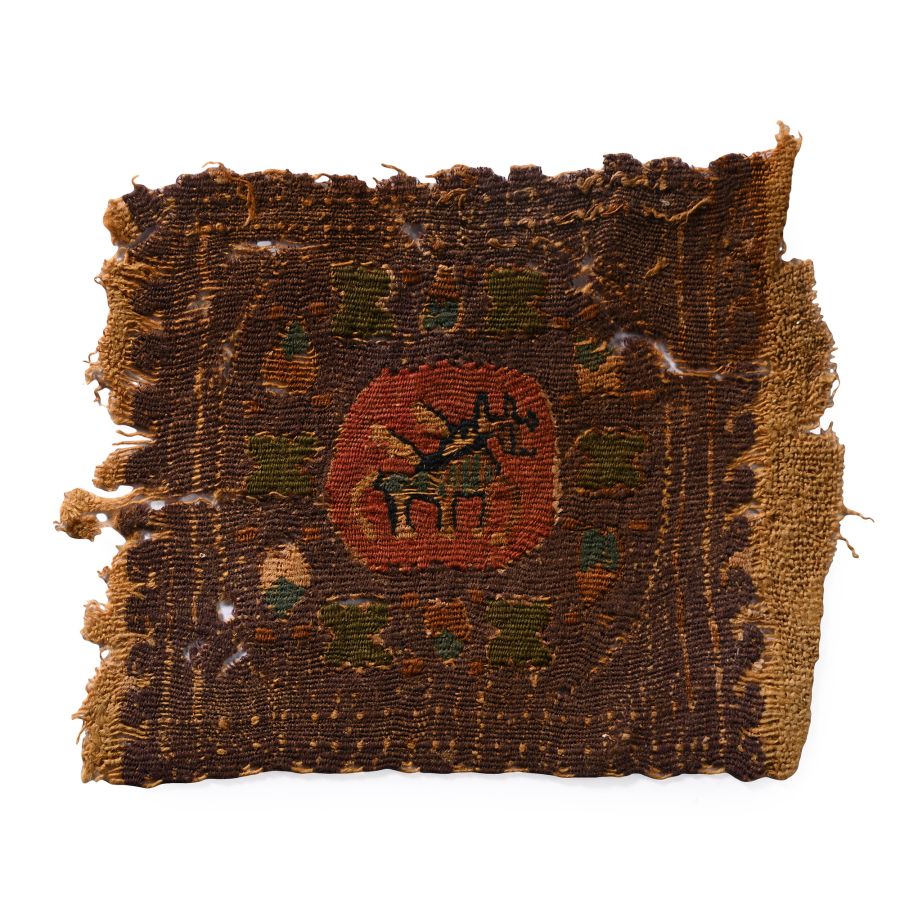
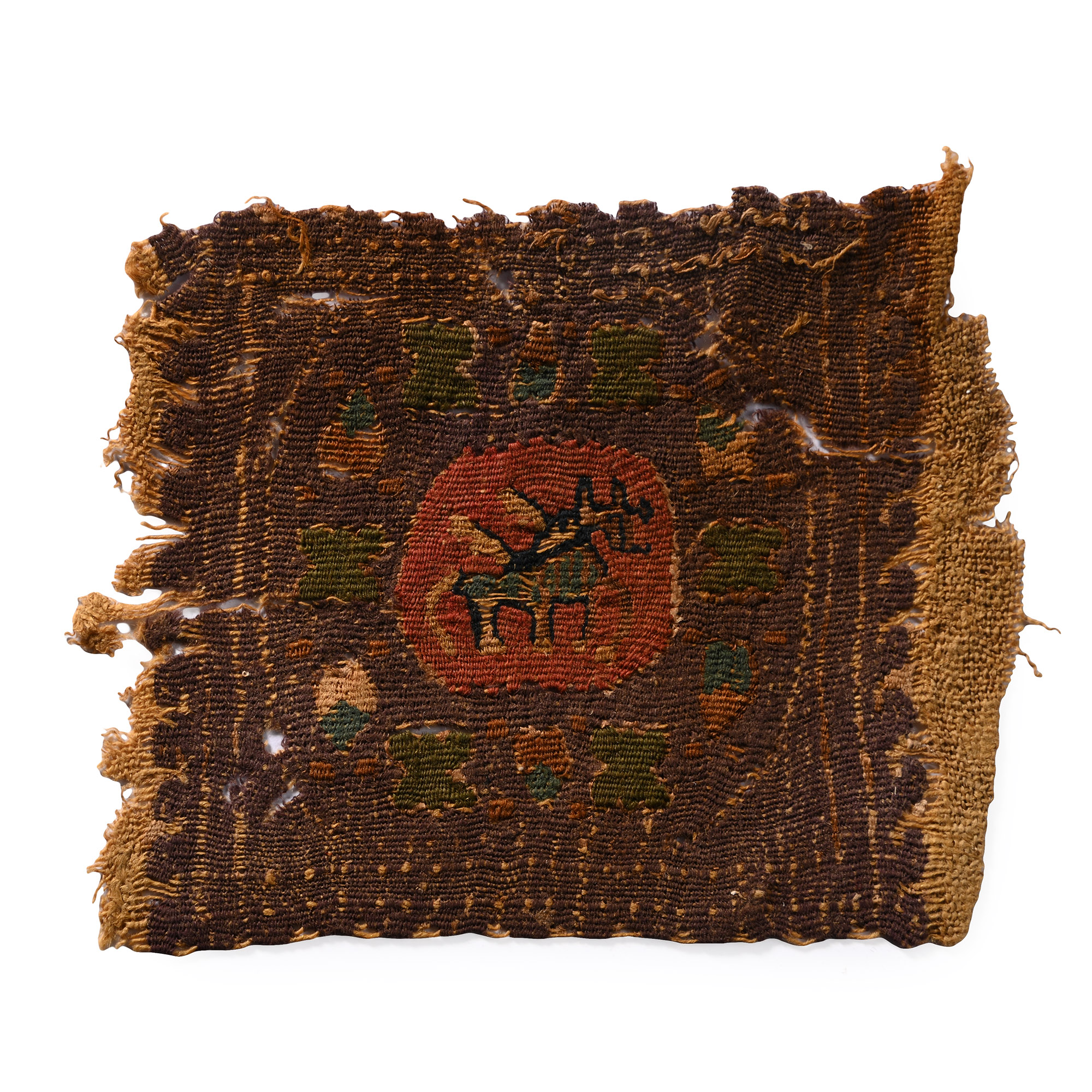
Egyptian Coptic Textile Fragment of a Tunic Tablion with Pegasus
CIRCA 7TH CENTURY A.D.
4 1/8 in. (1.3 grams, 10.5 cm).
In natural wool in shades of light brown, yellow, green, blue, and red with S-twist yarn, depicting the figure of Pegasus within a central medallion, surrounded by geometric and vegetal motifs; borders ornamented with meanders. [No Reserve]
ProvenanceAcquired 1970s-1996.
Property of a North American collector.
London collection, 2016.
Cf. Del Francia Barocas, L., Museo dell'Alto Medioevo, Roma, I materiali Copti, pp.148-149, nos.32 A-B, for a similar textile.
FootnotesThe tabula, or tablion, was a square embroidery used to decorate tunics or mantles. The central figure is a rare representation of the winged horse Pegasus, a motif derived from Greek mythology, showing that classical iconography was still alive among the Christian Graeco-Roman people.
CONDITIONTimeLine Auctions follows a vetting process to ensure the authenticity and legality of all items, reinforcing our commitment to integrity and responsible trading. Each antiquity, antique, and coin lot undergoes thorough examination by a vetting committee of at least ten external specialists, professional trade association members, scientists, and archaeologists: Our Vetting Process
AUCTIONS:
TimeLine is a leading auction house specialising in antiquities, ancient art, collectables, natural history, coins, medals, and books. Our auctions offer museums, collectors, historians, and enthusiasts the opportunity to acquire unique and historically significant pieces.
LOT 0546
Egyptian Coptic Textile Fragment of a Tunic Tablion with Pegasus
Estimate £40 - 60€46 - 70 (for guidance only)$54 - 81 (for guidance only)
-
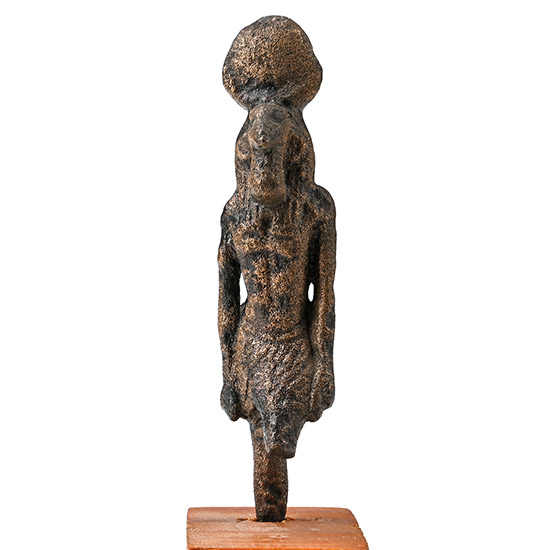
Egyptian Bronze Figure of the God Thoth
Late Period, circa 664-332 B.C.Estimate: £80 - 100 (+bp*)
Bids: 2 | Current Bid: £15
Modelled in the round in advancing pose with ibis head and sun-disc headdress, loop to rear, lower legs absent, display stand; restored in the Institute of Archaeology laboratory. 32.8 grams total, 80 mm including stand
Acquired from Caledonian market, January 1960, for 4 shillings. From the private collection of Peter Clayton, FCILIP, Dip, Arch, FSA, FRNS, Hemel Hempstead, Hertfordshire, UK; formed since the late 1950s. Accompanied by an old handwritten information card by Peter Clayton, collection no.90. -
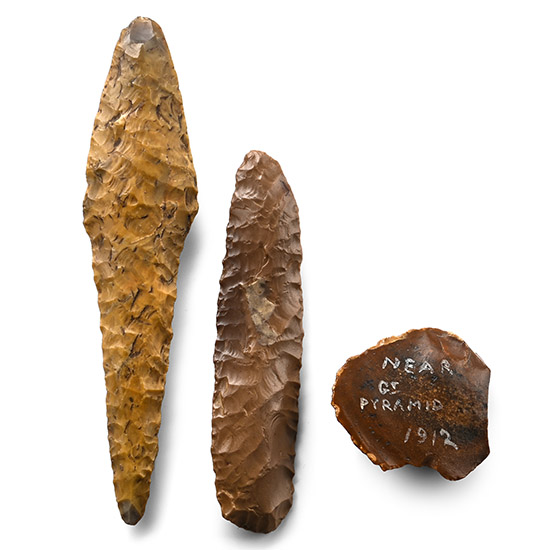
Egyptian Stone Age Knapped Daggers and Scraper
Neolithic Period, 11,000-5,200 B.P.Estimate: £150 - 200 (+bp*)
Bids: 1 | Current Bid: £5
Comprising: an elongated lanceolate blade tapering to a point at each end, a slightly shorter knife or specialised scraper with a rounded end and a gently curved cutting edge, and a tabular flint scraper with an inked collector's note. 67.4 grams total, 4.2-12.2 cm
Found Luxor and near the Great Pyramid. From the collection of A.D. Passmore (1879-1958), his collection of flints from the area of Stonehenge was donated to the Ashmolean Museum in the 1950s. From the private collection of Peter Clayton, FCILIP, Dip, Arch, FSA, FRNS, Hemel Hempstead, Hertfordshire, UK; formed since the late 1950s. Accompanied by a copy of an old handwritten information card by Peter Clayton. -
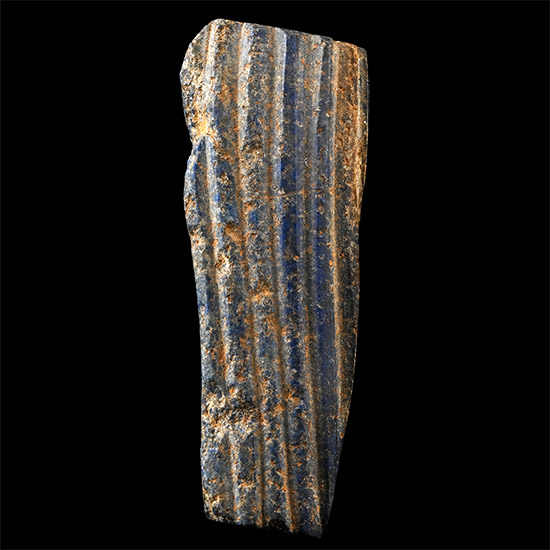
Egyptian Carved Lapis Lazuli Inlay
New Kingdom, 1550-1070 B.C.Estimate: £200 - 300 (+bp*)
Opening Bid: £5
Rectangular-section panel with tapering profile, fluting to the upper face. 23.6 grams, 48 mm
From the private collection of a European gentleman (1942-2024), formed since the 1970s.
This fragment most likely belongs to a striated skirt or wig.
