
Loading, please wait...

LOT 0564
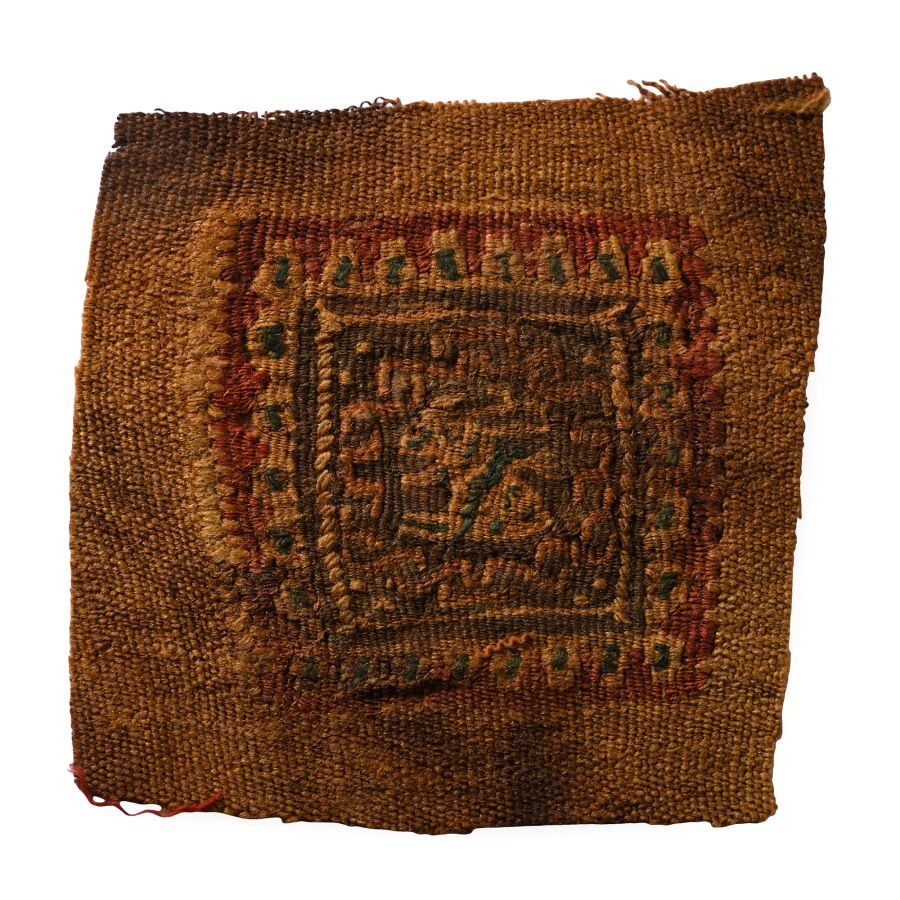
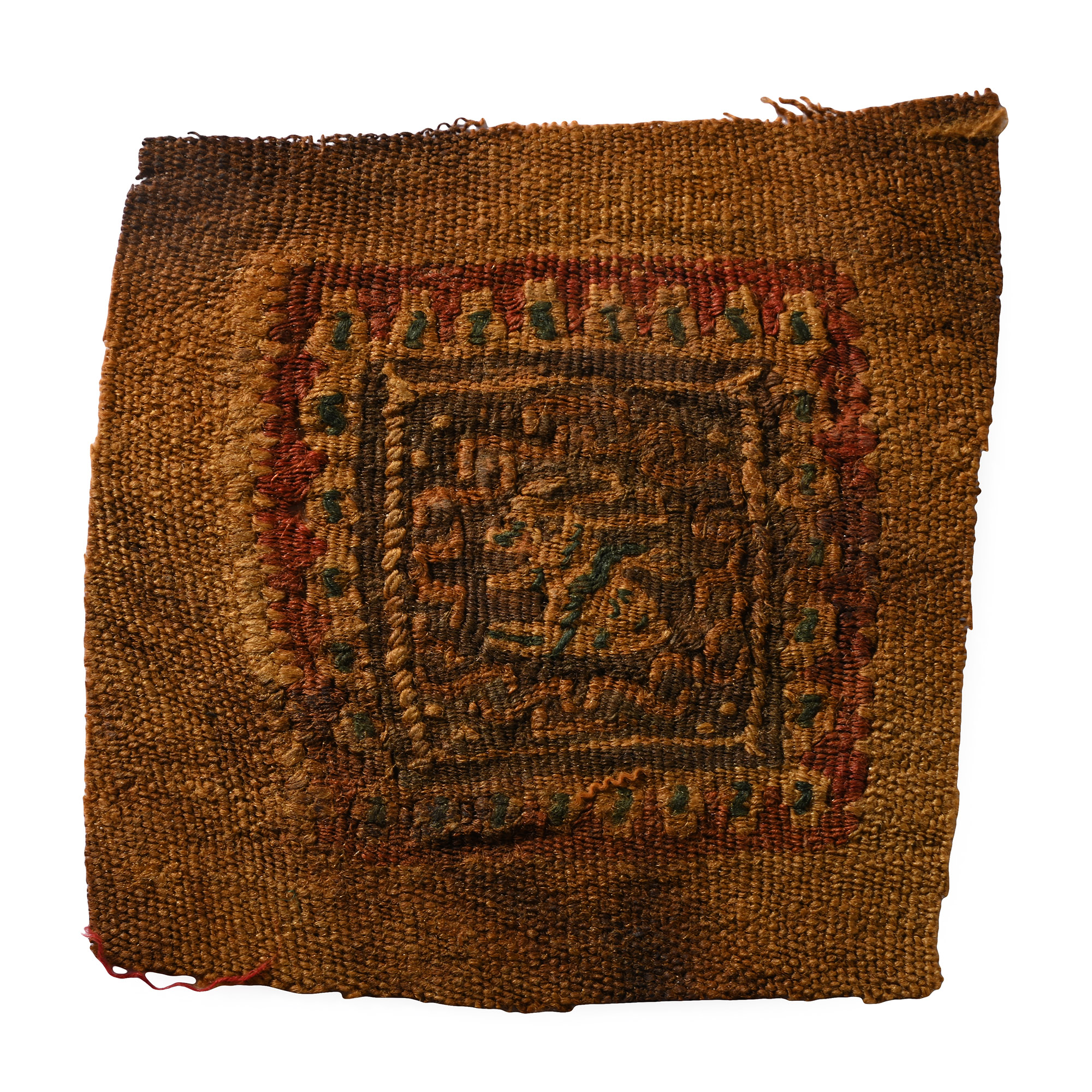
Egyptian Coptic Textile Fragment of a Tunic Tablion with Hare
CIRCA 6TH-7TH CENTURY A.D.
4 1/8 in. (5.59 grams, 10.5 cm).
Comprising a tablion in coarse wool of red, green, yellow, violet and blue over white linen, scalloped borders, tapestry work (S-twist), featuring an animal (hare?) inside a square, surrounded by vegetal ornaments. [No Reserve]
ProvenanceAcquired 1970s-1996.
Property of a North American collector.
London collection, 2016.
Cf. Del Francia Barocas, L., Museo dell'Alto Medioevo, Roma, I materiali Copti, p.191, for a similar tablion.
FootnotesThe tabula, or tablion, was a square embroidery used to decorate tunics or mantles. The theme of rabbits or hares, in association with other characters and animals of the Dionysian Thiasos, has notable parallels. Such representations are linked to narratives of the Dionysian cycle.
CONDITIONTimeLine Auctions follows a vetting process to ensure the authenticity and legality of all items, reinforcing our commitment to integrity and responsible trading. Each antiquity, antique, and coin lot undergoes thorough examination by a vetting committee of at least ten external specialists, professional trade association members, scientists, and archaeologists: Our Vetting Process
AUCTIONS:
TimeLine is a leading auction house specialising in antiquities, ancient art, collectables, natural history, coins, medals, and books. Our auctions offer museums, collectors, historians, and enthusiasts the opportunity to acquire unique and historically significant pieces.
LOT 0564
Egyptian Coptic Textile Fragment of a Tunic Tablion with Hare
Estimate £40 - 60€46 - 70 (for guidance only)$54 - 81 (for guidance only)
-
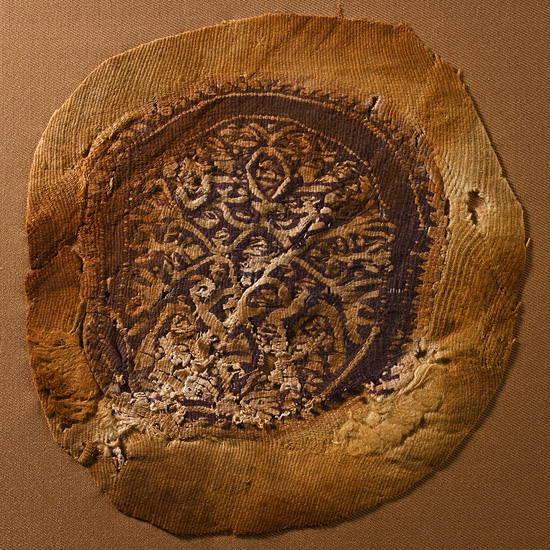
Egyptian Mounted Coptic Orbiculus Textile Fragment
Circa 6th century A.D.Estimate: £40 - 60 (+bp*)
Bids: 1 | Current Bid: £5
Comprising a large circular fragment of an orbiculus in linen and wool, S torsion, scalloped borders, embroidered with vegetal and geometric ornaments, dark purple on linen. 117 grams total, 18.5 cm
Acquired 1970s-1996. Property of a North American collector. London collection, 2016.
Water plant elements are scattered on the orbiculus, which is decorated with vegetal interlaces and possibly fish figures. These abstract decorations show a strong stylisation that gives the marine animals a plant-like appearance. -
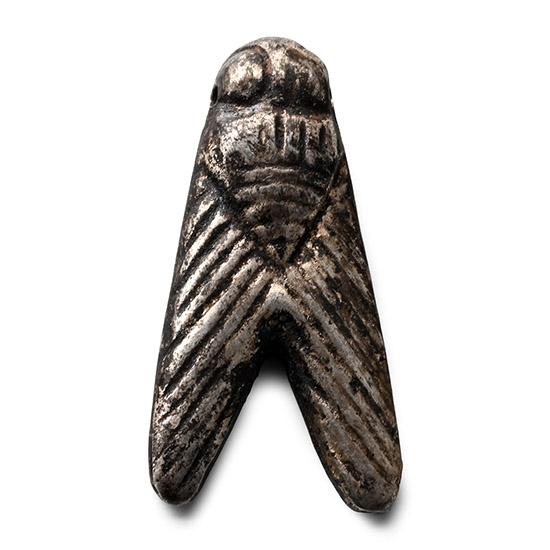
Egyptian Silver Fly Amulet
Late Period, 664-332 B.C.Estimate: £80 - 100 (+bp*)
Bids: 1 | Current Bid: £5
With detailing to the body and head, ribbed suspension loop above the head. 1.09 grams, 17 mm
London, UK, gentleman, 1990s.
Fly amulets were believed to protect against insect bites and to ward off troublesome flying creatures through apotropaic magic. Some believe they may have even symbolised the fly’s fecundity. Additionally, pharaohs bestowed gold fly-shaped pendants as military awards to honour soldiers' bravery and persistence in battle. -
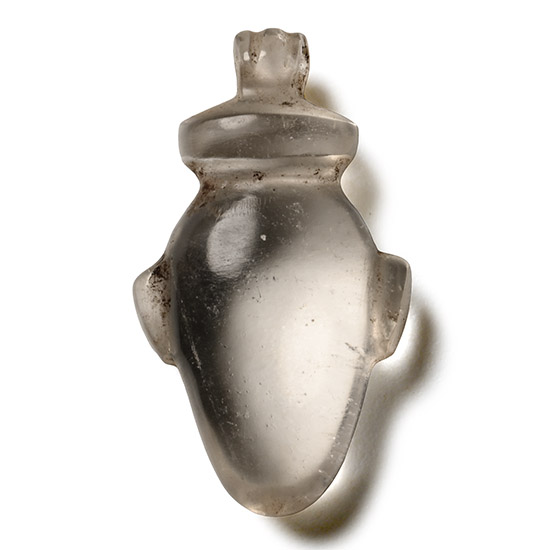
Egyptian Rock Crystal Heart Amulet
Late Period, 664-332 B.C.Estimate: £100 - 140 (+bp*)
Bids: 2 | Current Bid: £90
Carved with lateral lugs, a pronounced rim surmounted by a ribbed suspension loop. 1.05 grams, 18 mm
Ex London collection, 1990s.
Ancient Egyptians regarded the heart (ib) as the seat of intelligence, emotions, behaviour, and memory. During the ‘Weighing of the Heart’ ceremony, the heart spoke for the deceased before Osiris and accounted for their actions. For this reason, Egyptians placed heart amulets on mummies to protect the organ and secure a favourable judgement.
