
Loading, please wait...
LOT 0742
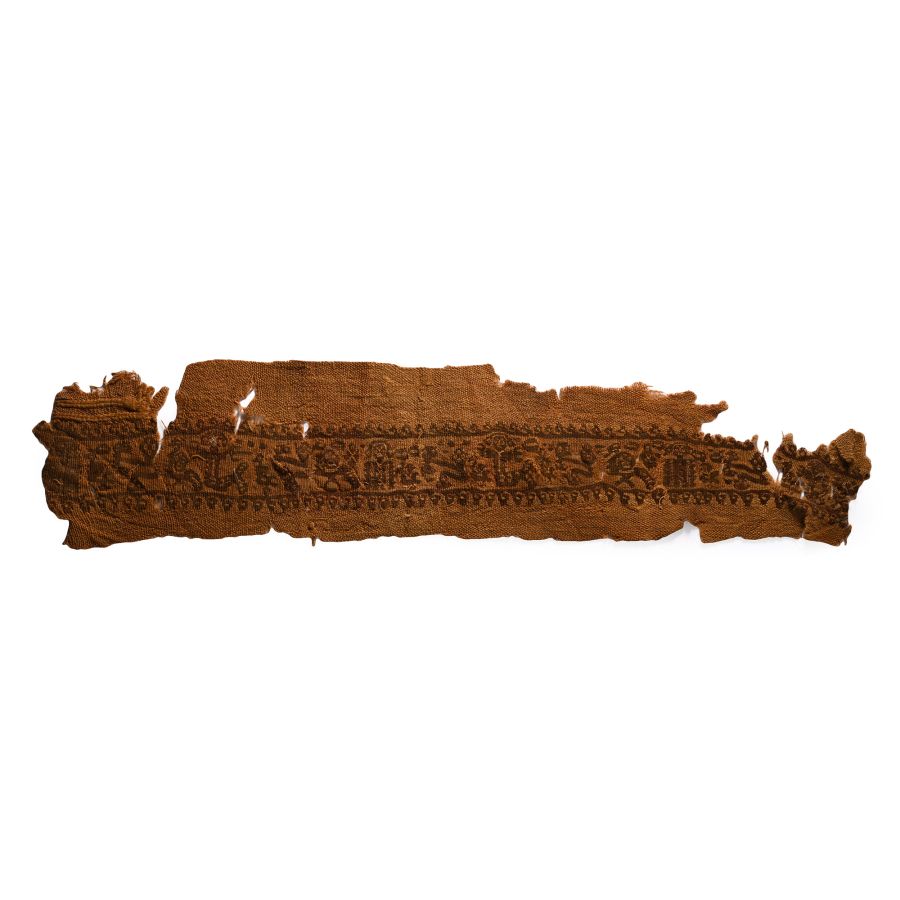
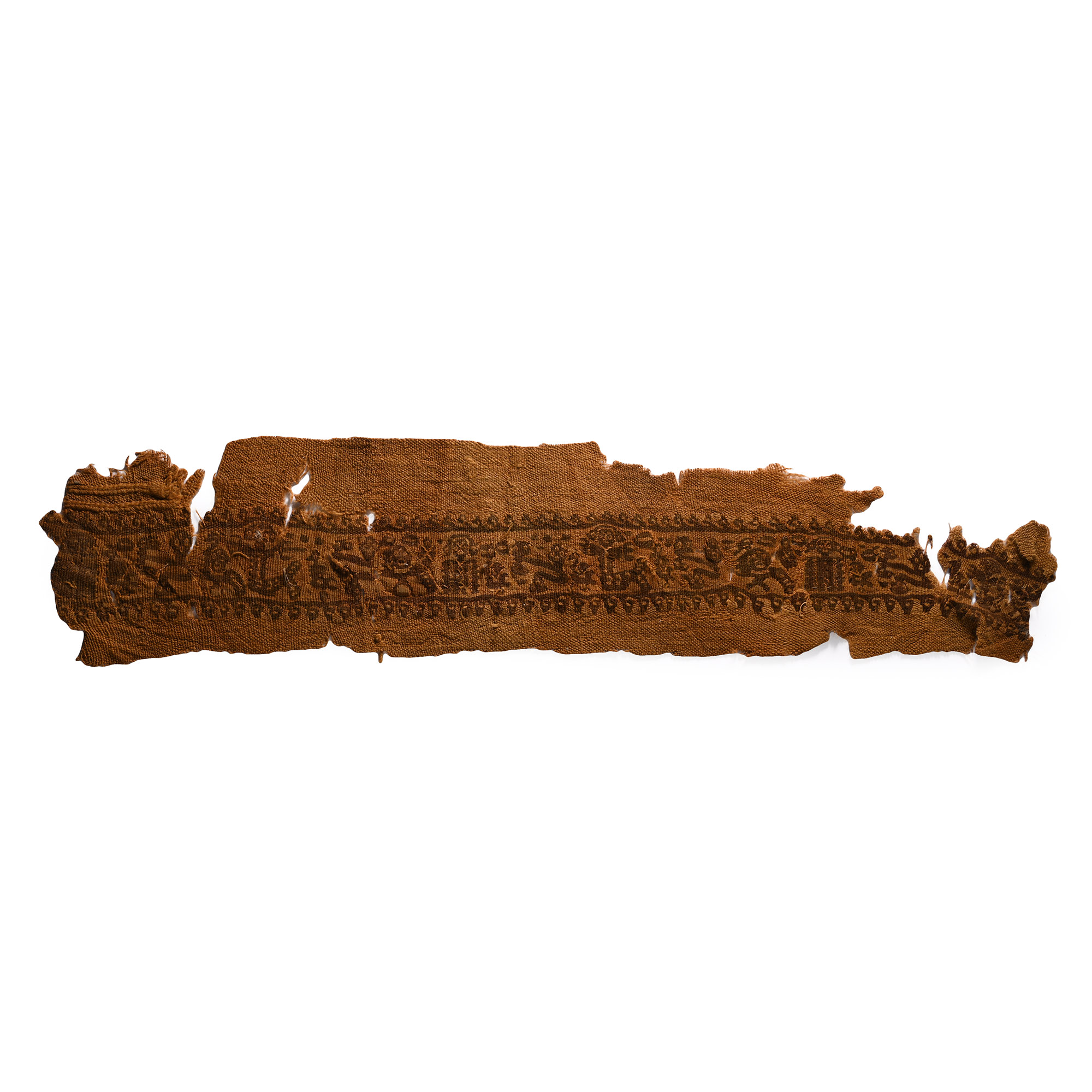
Egyptian Coptic Textile Fragment of a Clavus from a Tunic with Triton, Male Figure and Birds
CIRCA 5TH-6TH CENTURY A.D.
17 1/4 in. (14.5 grams, 44 cm).
Comprising a decorative tunic stripe (clavus) in purple wool over coarse linen, S-twist tapestry, embroidered with stylised plants, male figures, tritons and birds, borders decorated with meanders. [No Reserve]
ProvenanceAcquired 1970s-1996.
Property of a North American collector.
London collection, 2016.
Cf. Gayet, M. Al., Le Costume en Egypte, du IIIe au XIIIe Siecle, Paris, 1900, no. 104, p.134, for a similar style of clavus.
FootnotesAmong the many fragments from wool tunics are several long strips that match to form nearly full-length central pectoral clavi. They are patterned with a profusion of small figures or interlaced abstract designs, birds, plants, and animals, with a contrasting border filled with geometric motifs.
CONDITIONTimeLine Auctions follows a vetting process to ensure the authenticity and legality of all items, reinforcing our commitment to integrity and responsible trading. Each antiquity, antique, and coin lot undergoes thorough examination by a vetting committee of at least ten external specialists, professional trade association members, scientists, and archaeologists: Our Vetting Process
AUCTIONS:
TimeLine is a leading auction house specialising in antiquities, ancient art, collectables, natural history, coins, medals, and books. Our auctions offer museums, collectors, historians, and enthusiasts the opportunity to acquire unique and historically significant pieces.
LOT 0742
Egyptian Coptic Textile Fragment of a Clavus from a Tunic with Triton, Male Figure and Birds
Estimate £60 - 80€70 - 93 (for guidance only)$81 - 108 (for guidance only)
Opening Bid
£5 (EUR 6; USD 7) +BP*
-
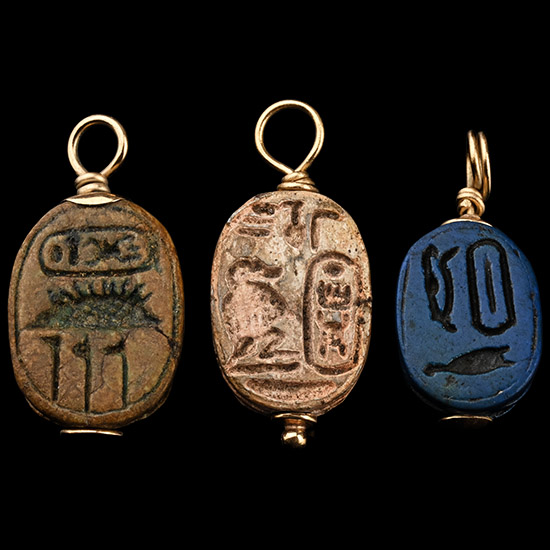
Egyptian Faience Scarabs with Gold Mounts
Late Period, 664-332 B.C. and laterEstimate: £400 - 600 (‡+bp*)
Opening Bid: £200
Comprising: a chestnut-coloured steatite scarab with a Thutmosis III cartouche and hieroglyphs on the underside; a tan-coloured faience scaraboid with a Thutmosis III cartouche on the convex obverse and the same cartouche with hieroglyphs, faced by a seated baboon, on the underside; offered with a modern blue scarab in a gold mount. 6.05 grams total, 22-25 mm
Private collection of Kal Noselson, New York, acquired between 1976 and the late 1990s; thence by descent. Accompanied by the collector's original inked images. -
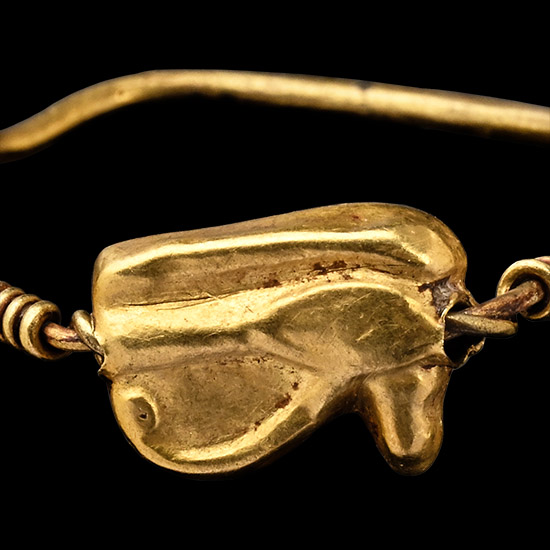
Graeco-Egyptian Gold Swivel Ring with Wedjat-eye
Circa 2nd-1st century B.C.Estimate: £1,000 - 1,400 (‡+bp*)
Opening Bid: £500
Slender wire hoop with ends coiled round the shank; swivel-mounted hollow-formed wedjat-eye forming the bezel. 1.10 grams, 22.15 mm overall, 18.22 x 18.65 mm internal diameter (approximate size British O 1/2, USA 7 1/4, Europe 15.61, Japan 15)
Acquired from Derek Content, 1 October 1983. Private collection of Kal Noselson, New York, acquired between 1976 and the late 1990s; thence by descent. Accompanied by an original invoice from Derek Content, dated 1 October 1983.
The wedjat-eye amulet represents the healed eye of the god Horus and embodies both human and falcon features. The name wedjat in ancient Egyptian means ‘the one that is sound’. According to Egyptian mythology, the god Seth wounded or took Horus' eye, and Thoth later restored it. The wedjat-eye amulet was believed to protect its wearer and bestow healing and regenerative qualities. It was a popular amuletic symbol worn by both the living and the dead and was reproduced in precious metals, stone, and faience. -
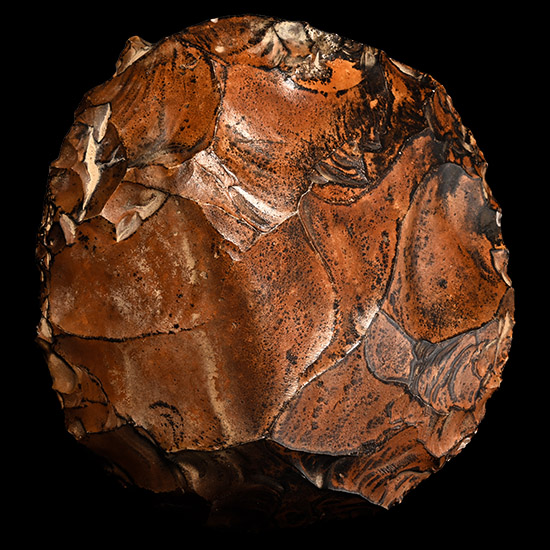
Egyptian Stone Age Knapped Ovate Hand Axe from Thebes
Lower Palaeolithic Period, circa 40,000-35,000 B.P.Estimate: £300 - 400 (+bp*)
Opening Bid: £5
Biconvex in profile with inked findspot to the butt: 'Desert West of Thebes 1912'. 385 grams, 10.4 cm
Found in the desert west of Thebes, Egypt, 1912. Acquired from Sotheby's, 16 June 1959 (part), £4.10. From the private collection of Peter Clayton, FCILIP, Dip, Arch, FSA, FRNS, Hemel Hempstead, Hertfordshire, UK; formed since the late 1950s. Accompanied by a copy of an old handwritten identification card written by Peter Clayton.
