
Loading, please wait...
LOT 0460
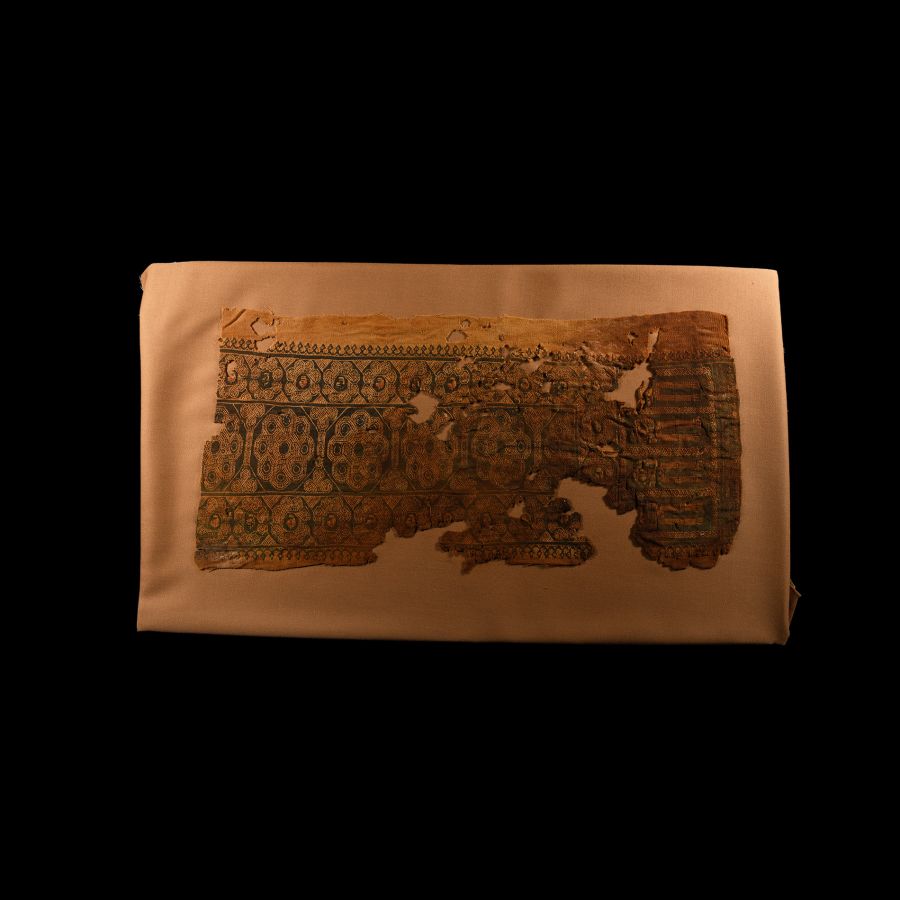
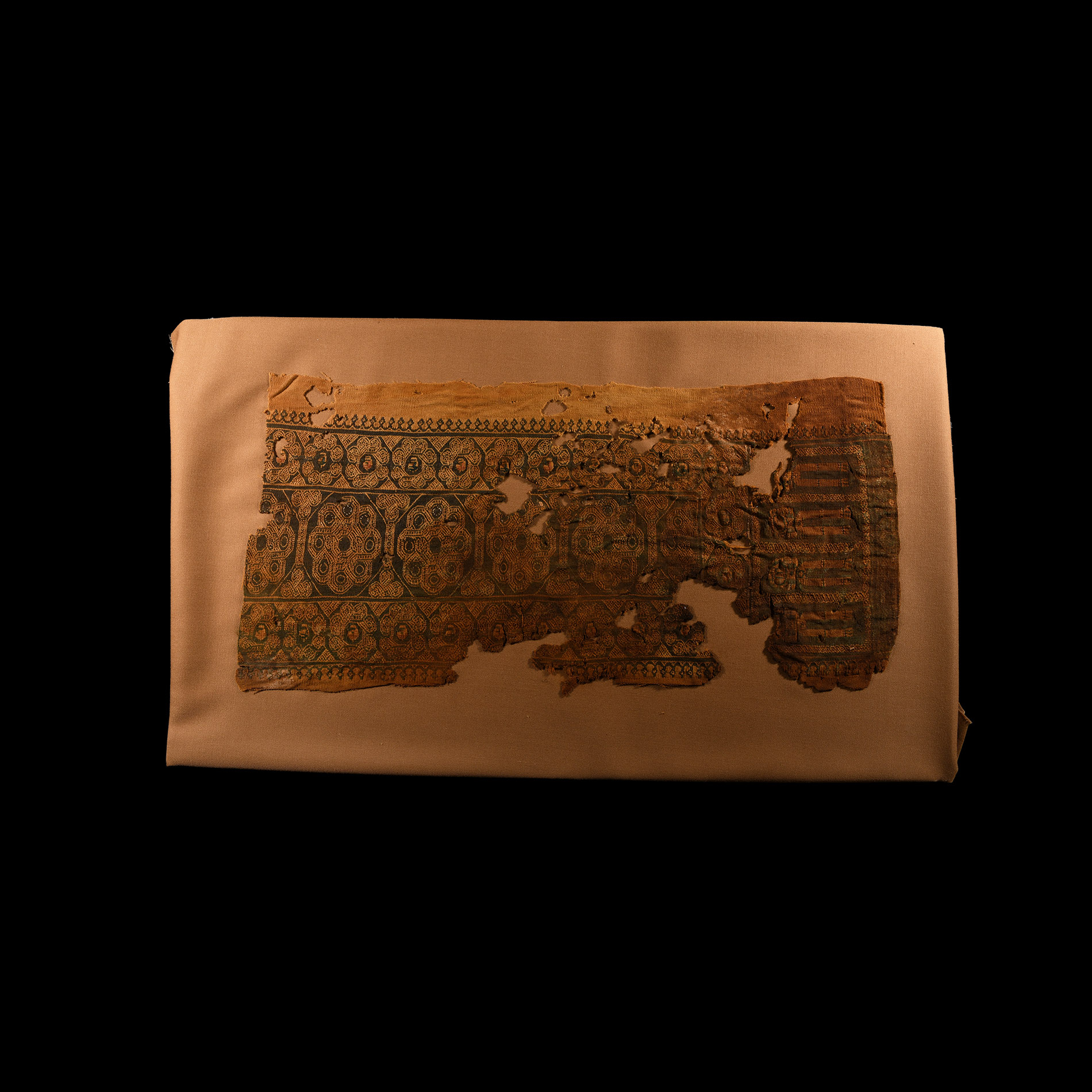
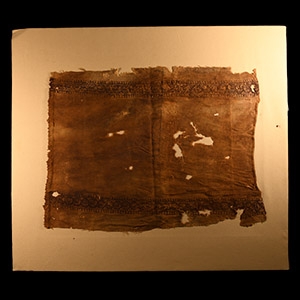
Egyptian Coptic-Fatimid Mounted Textile with Dancers
CIRCA 12TH CENTURY A.D.
23 5/8 x 14 in. (285 grams, 60 x 35.5 cm).
The woven textile fragment of linen and wool with a large horizontal decorative band depicting octagonal rosettes inscribed in rhomboids; the rosettes divided by stylised columns decorated with foliage elements; the band edged by two lateral segments formed of octagonal rosettes enclosing flowers, bordered with scalloped geometries; at the bottom four stylised dancers. [No Reserve]
ProvenanceAcquired 1970s-1996.
Property of a North American collector.
London collection, 2016.
Cf. Rutschowscaya, M.H., Tissus Coptes, Paris, 1990, p.73, for similar.
FootnotesIt is the lower part of a cloak from the Fatimid era. The end of the Coptic period was characterised by a treatment of eight-lobed rosettes, a current motif in Muslim art. The four dancers are made as simple signs.
CONDITIONTimeLine Auctions follows a vetting process to ensure the authenticity and legality of all items, reinforcing our commitment to integrity and responsible trading. Each antiquity, antique, and coin lot undergoes thorough examination by a vetting committee of at least ten external specialists, professional trade association members, scientists, and archaeologists: Our Vetting Process
AUCTIONS:
TimeLine is a leading auction house specialising in antiquities, ancient art, collectables, natural history, coins, medals, and books. Our auctions offer museums, collectors, historians, and enthusiasts the opportunity to acquire unique and historically significant pieces.
-
.jpg)
Large Egyptian Bronze Head of a Cat
Late Period-Ptolemaic Period, 664-30 B.C.Sold for (Inc. bp): £8,450
Modelled sleek and muscular in the round, the ears and eyes alert creating a dignified expression; piercings through the ears; hollow-formed; mounted on a custom-made display base. 629 grams total, 21.5 cm high including stand
Acquired from a French dealer, 1965. Swiss private collection. UK private collection, 1993. This lot has been checked against the Interpol Database of stolen works of art and is accompanied by search certificate number no.11838-206398.
Possibly intended as a container for the mummified remains of a cat, or from a statuette of the goddess Bastet. The feline's pierced ears likely once held earrings or other ornaments. In ancient Egypt, cats were the sacred animal of the goddess Bastet; such objects were often given as donations at her temples. -
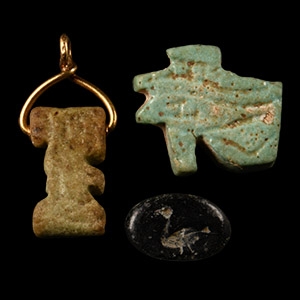
Egyptian Faience Amulet Collection
Mostly Late Period, 664-332 B.C.Sold for (Inc. bp): £91
Comprising: a blue-glazed eye of Horus amulet with bifacial detailing, pierced for suspension; a glazed Shu amulet, suspended on a slender gold bar and pendant hoop; offered with a black stone stamp seal engraved with a bird standing left, pierced for suspension. 5.06 grams total, 13-26 mm
Collected since the 1970s. Ex Everitt collection, acquired by descent 2017. -
Egyptian Large Portion of Coptic Tunic
Circa 5th-7th century A.D.Sold for (Inc. bp): £156
The upper frontal part of a child's garment, decorated on both sides with purple wool and linen stripes (clavi), running vertically on both sides of the tunic, and ornamented with running animals (hares), the edges of each clavus with crenellated border; selvedged on the upper part of the tunic and with a fringed lower border. 750 grams, 70 x 79 cm
Acquired 1970s-1996. Property of a North American collector. London collection, 2016.
Tunic decoration conformed to a specific layout with the back mirroring the front. Matching bands called clavi ran on either side of the neck. They could be full length, like in our specimen, or stop above the waistline.
