
Loading, please wait...
LOT 0438
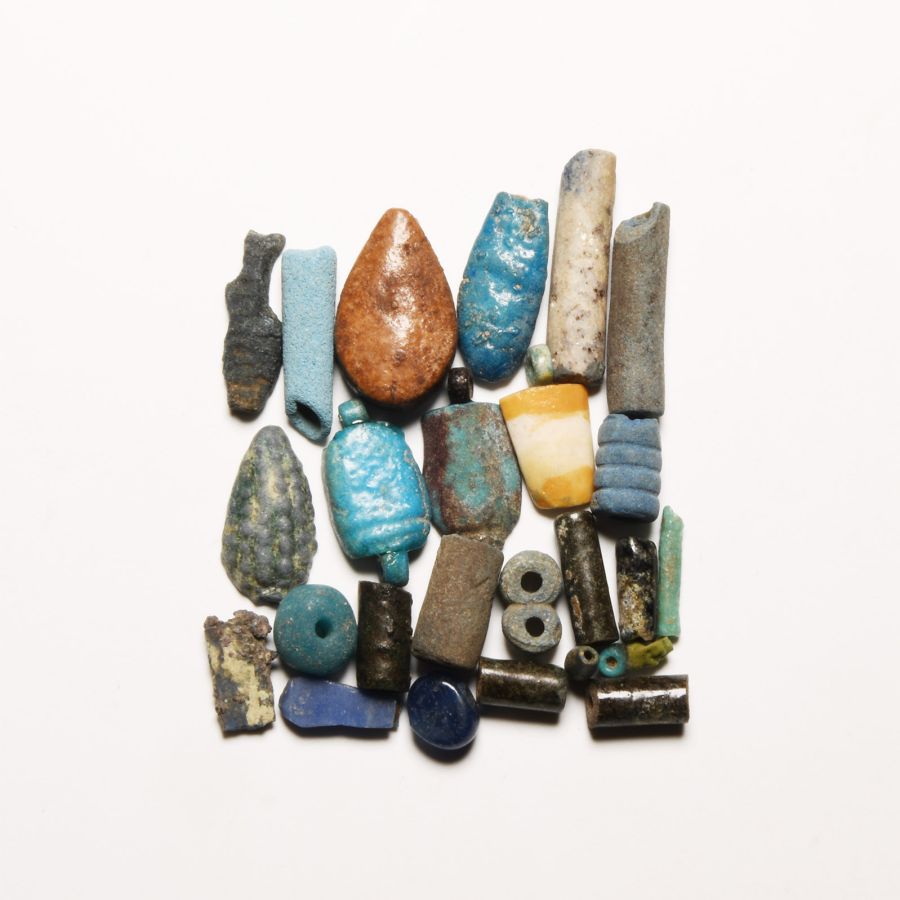
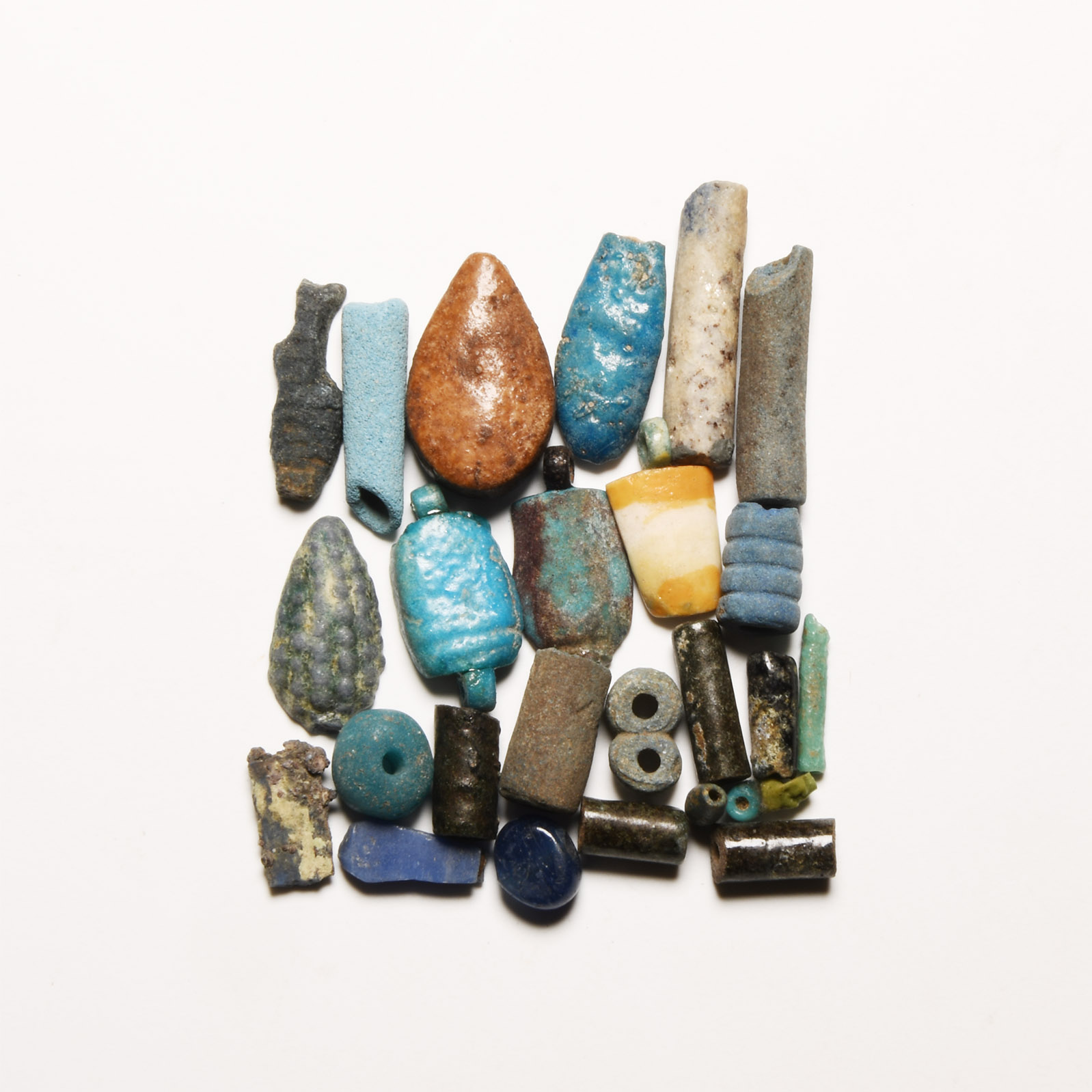
Egyptian Composition Amulet and Bead Collection
LATE PERIOD, 664-332 B.C.
1/4 - 3/4 in. (6.4 grams total, 6-18 mm).
Composed of various types of beads; glazed and pierced for suspension. [25, No Reserve]
ProvenanceEx early 20th century Home Counties, UK, collection.
CONDITIONTimeLine Auctions follows a vetting process to ensure the authenticity and legality of all items, reinforcing our commitment to integrity and responsible trading. Each antiquity, antique, and coin lot undergoes thorough examination by a vetting committee of at least ten external specialists, professional trade association members, scientists, and archaeologists: Our Vetting Process
AUCTIONS:
TimeLine is a leading auction house specialising in antiquities, ancient art, collectables, natural history, coins, medals, and books. Our auctions offer museums, collectors, historians, and enthusiasts the opportunity to acquire unique and historically significant pieces.
-
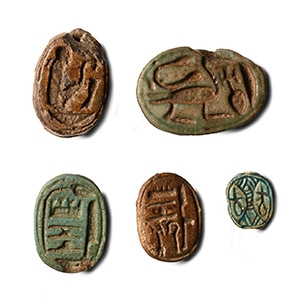
Egyptian Scarab Collection with Hieroglyphs
Late Period, 664-323 B.C.Sold for (Inc. bp): £247
Four with anatomical detailing and hieroglyphs or other motifs to base, including one example displaying a cruciform figure or other motif to the upper face; some chips; all pierced for suspension. 10.7 grams total, 10-23 mm
From an early 20th century collection, Carnavon, North Wales, UK. -
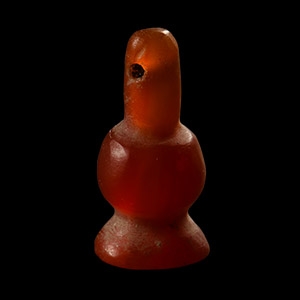
Egyptian Orange Carnelian Poppy Head Amulet
New Kingdom, 18th Dynasty, 1550-1292 B.C.Sold for (Inc. bp): £85
Polished and with an integral pierced suspension loop. 0.59 grams, 13 mm
UK gallery, early 2000s. -
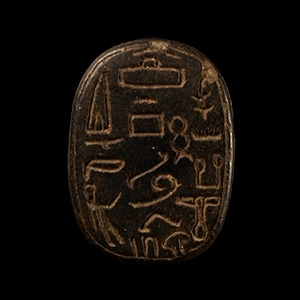
Large Egyptian Hardstone Scarab with Hieroglyphs
Late Period, 664-323 B.C. or laterSold for (Inc. bp): £442
Carved with semi-naturalistic anatomical detailing; shallow engraved hieroglyphs to the base. 8.7 grams, 24 mm
From an early 20th century collection, Carnavon, North Wales, UK.
