
Loading, please wait...
LOT 0029
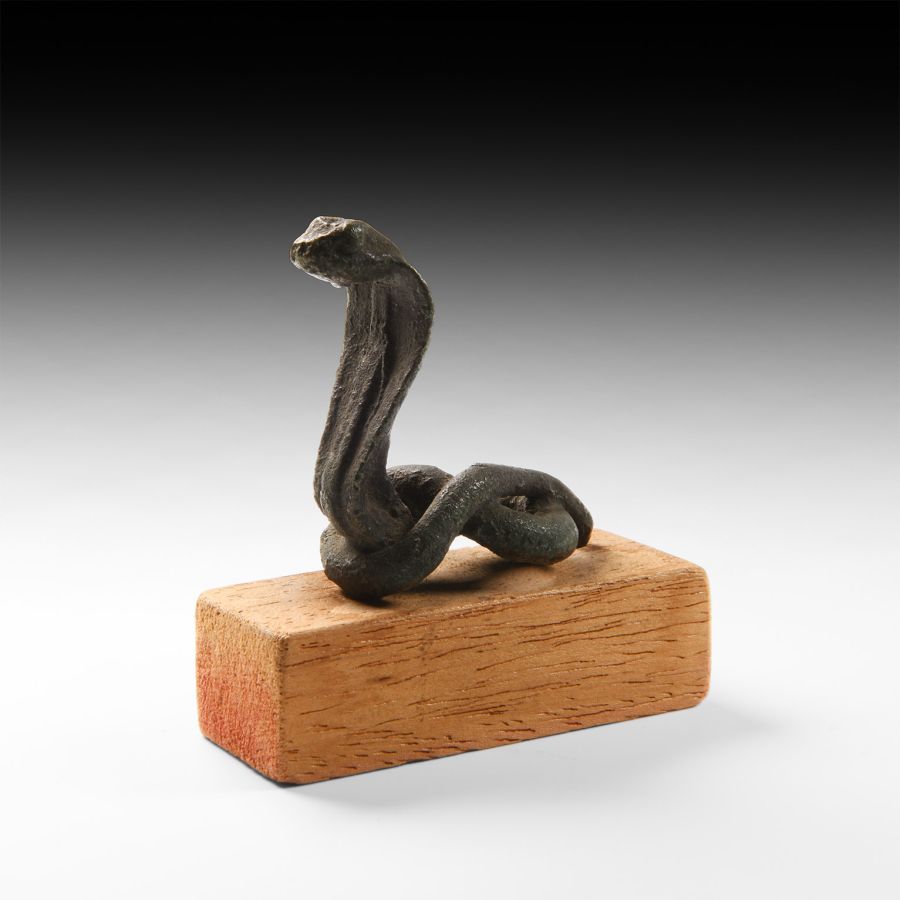
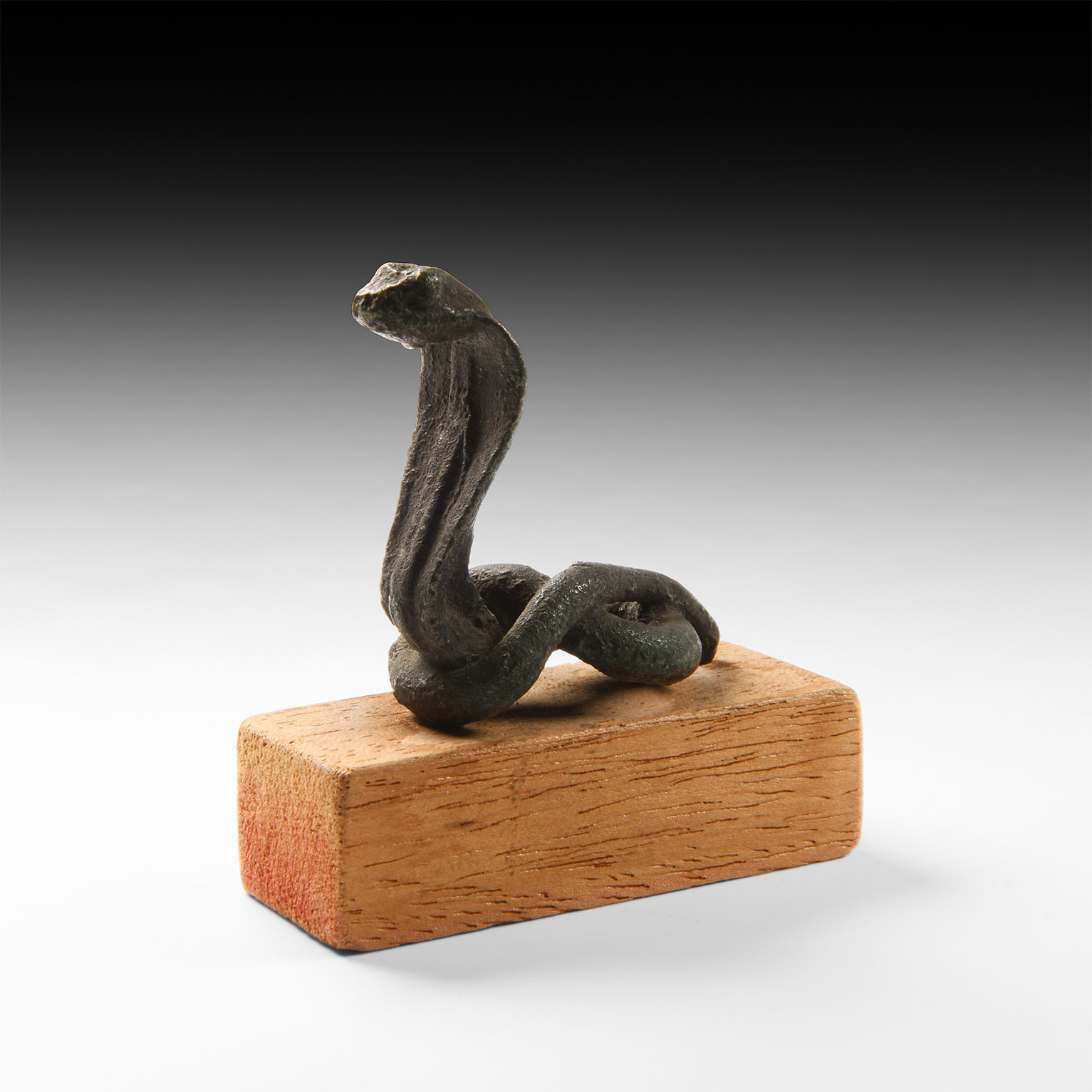
Egyptian Cobra Statuette
3RD-1ST CENTURY B.C.
2 3/8 in. (42.9 grams total, 61 mm).
A lead-alloy figurine of the sacred uraeus with coiled body, head raised and hood expanded ready to strike; mounted on a custom-made display stand.
ProvenanceEx collection of Louis-Gabriel Bellon (1819-1899), France.
LiteratureCf. Andrews, C., Amulets of Ancient Egypt, London, 1994, pp.34-5.
CONDITIONTimeLine Auctions follows a vetting process to ensure the authenticity and legality of all items, reinforcing our commitment to integrity and responsible trading. Each antiquity, antique, and coin lot undergoes thorough examination by a vetting committee of at least ten external specialists, professional trade association members, scientists, and archaeologists: Our Vetting Process
AUCTIONS:
TimeLine is a leading auction house specialising in antiquities, ancient art, collectables, natural history, coins, medals, and books. Our auctions offer museums, collectors, historians, and enthusiasts the opportunity to acquire unique and historically significant pieces.
-
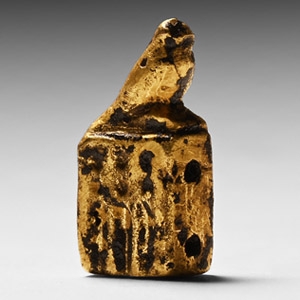
Egyptian Gold Horus Amulet
Late Dynastic Period, 664-343 B.C. or earlierEstimate: £350 - 450 (+bp*)
Opening Bid: £194
A gold amulet depicting the god Horus represented here as a falcon, surmounting the rectangular serekh, in turn considered to represent the façade of a royal palace; a pair of piercings through the base for suspension; remains of bitumen. 1.13 grams, 9 mm
Fine condition.
Early 20th century French collection. -
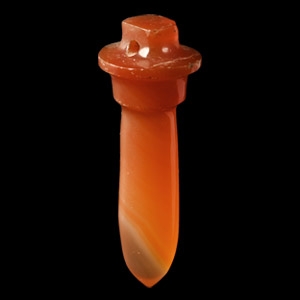
Egyptian Carnelian Papyrus Amulet
New Kingdom, 19th Dynasty, 1296-1186 B.C.Sold for (Inc. bp): £572
A carnelian amuletic papyrus stalk pendant, colour graduated along the stem. 2.4 grams, 29 mm
Private collection, acquired 1999. -
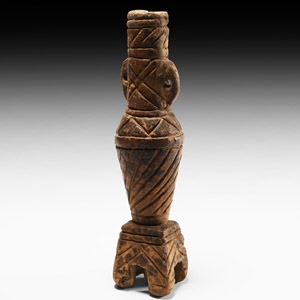
Coptic Kohl Container
6th-7th century A.D.Estimate: £1,200 - 1,700 (+bp*)
Opening Bid: £600
A heavily carved wooden kohl vessel, tubular with pierced lateral flanges and rectangular base with a stub foot to each corner; with old collector's label reading 'Coptic kohol container VI-VIII C. OFRA10P / Q Louvre Cat. des Bois de l'Egypte Copte, Paris 1986 no.39-41'. 129 grams, 19.5 cm
Acquired in the late 1980s-early 1990s. Important North West London collection.
