
Loading, please wait...

LOT 0558
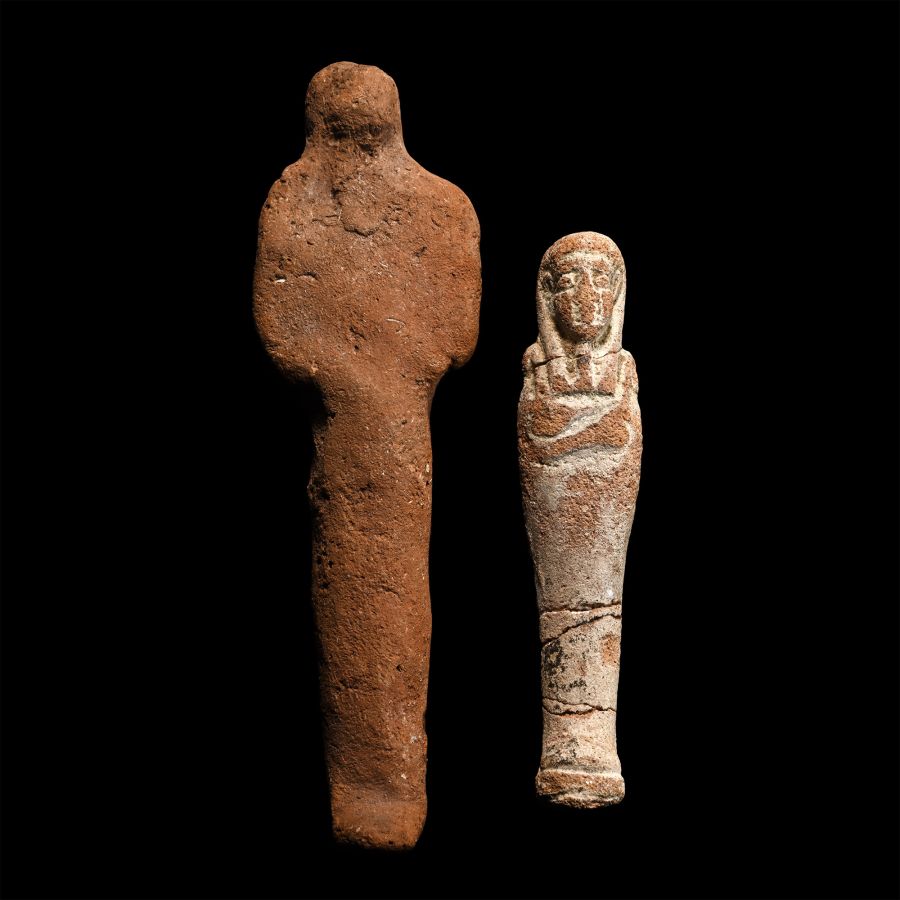
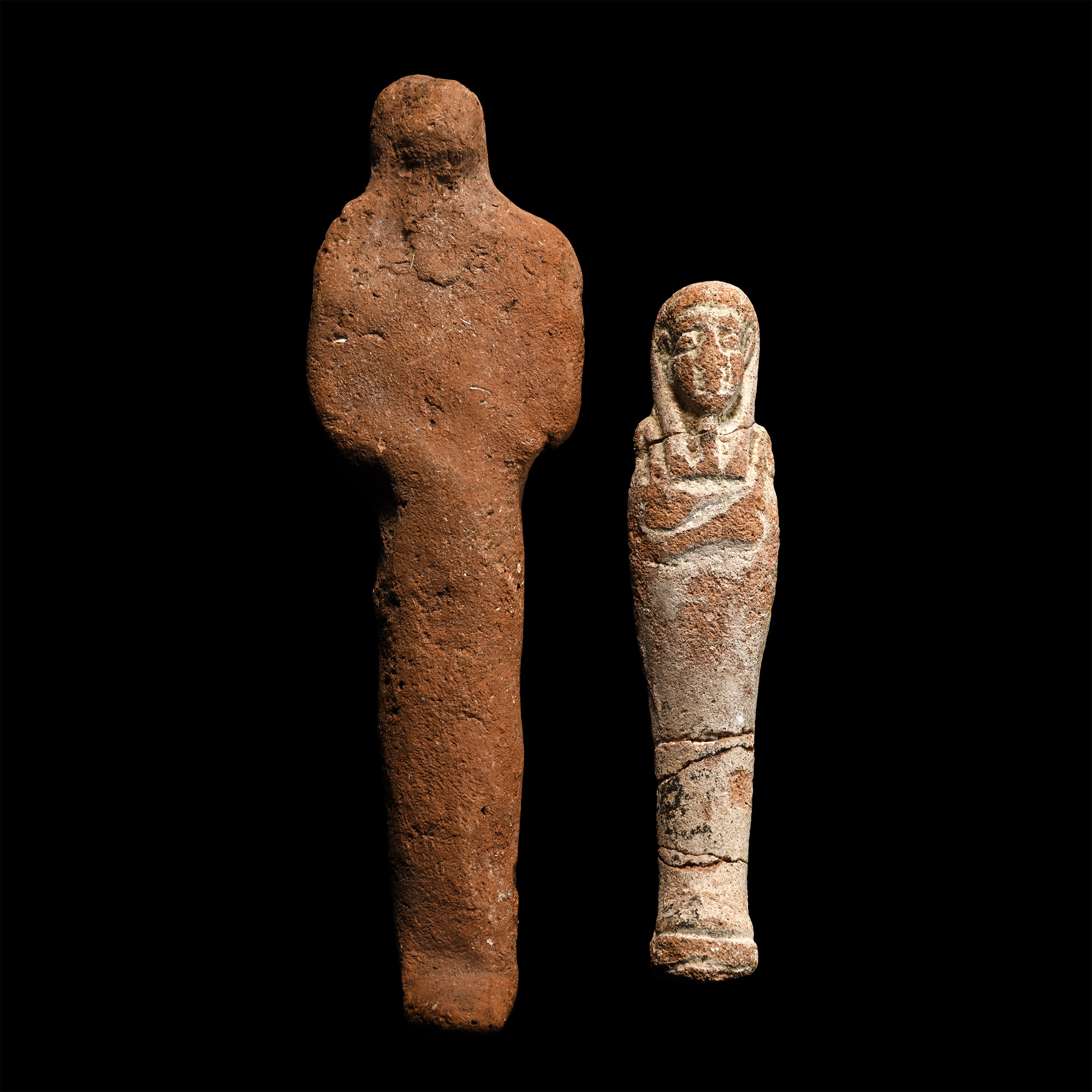
Egyptian Clay Shabti Group
NEW KINGDOM-LATE PERIOD, CIRCA 13TH-4TH CENTURY B.C.
3 5/8 - 5 in. (80 grams total, 9.3-12.7 cm).
Comprising: a crude, red clay mummiform figure with minimal shaping, and a mould-formed figure with a lappet wig and crossed arms holding agricultural implements, with white pigment on the surface. [2, No Reserve]
Provenancewith a privately curated collection, 1980s-early 2000s.
From the private collection and estate of Christine Simons (1943-2025), West Midlands, UK.
TimeLine Auctions follows a vetting process to ensure the authenticity and legality of all items, reinforcing our commitment to integrity and responsible trading. Each antiquity, antique, and coin lot undergoes thorough examination by a vetting committee of at least ten external specialists, professional trade association members, scientists, and archaeologists: Our Vetting Process
AUCTIONS:
TimeLine is a leading auction house specialising in antiquities, ancient art, collectables, natural history, coins, medals, and books. Our auctions offer museums, collectors, historians, and enthusiasts the opportunity to acquire unique and historically significant pieces.
LOT 0558
Egyptian Clay Shabti Group
Estimate £80 - 100€93 - 116 (for guidance only)$108 - 135 (for guidance only)
-
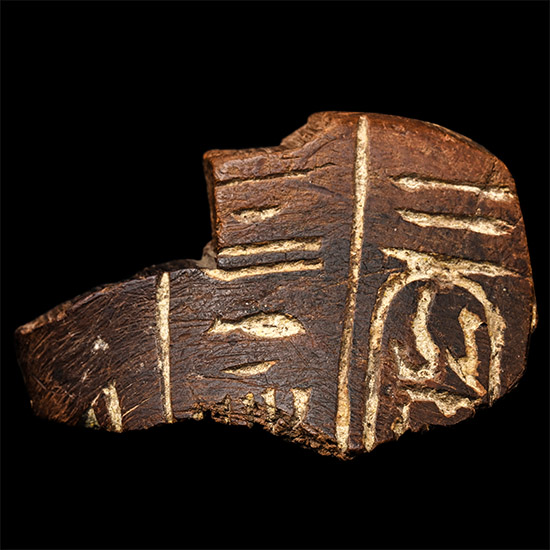
Egyptian Fragment from a Wooden Shabti of Pharaoh Amenhotep III
New Kingdom, 18th Dynasty, 1386-1349 B.C.Estimate: £100 - 140 (+bp*)
Bids: 1 | Current Bid: £5
Fragment of chocolate-coloured wood with incised hieroglyphs inlaid with white paste, preserving the lower part of a cartouche containing Amenhotep III's birth name, with the epithet "Ruler of Thebes" still legible, and two fragmentary columns of hieroglyphs to the right, belonging to a version of the shabti spell. 8.41 grams, 42 mm
From the private collection of Peter Clayton, FCILIP, Dip, Arch, FSA, FRNS, Hemel Hempstead, Hertfordshire, UK; formed since the late 1950s.
Amenhotep III was buried at Thebes in the Valley of the Kings (tomb KV22). His funerary equipment included shabtis in various hardstones and wood. The preserved text, ...ḫnt sḏm.t[n]... ('...forefront; and when you hear...'), belongs to a less common variant of the shabti spell found on other examples of Amenhotep III's shabtis. -
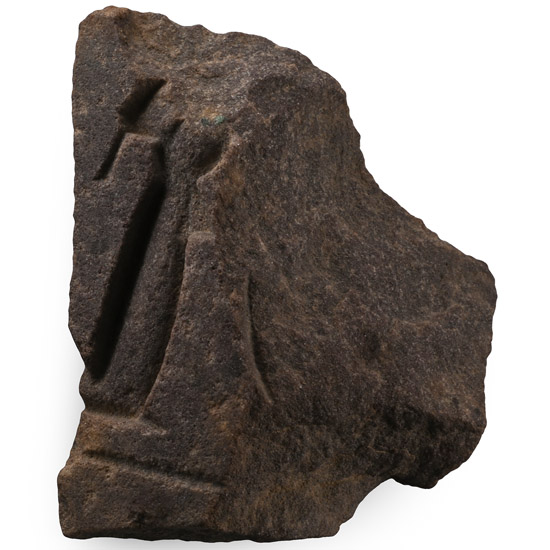
Egyptian Red Quartzite Granite Hieroglyphic Fragment
New Kingdom, 18th Dynasty, Amarna Period, 1353-1336 B.C.Estimate: £40 - 60 (+bp*)
Opening Bid: £5
Fragment featuring a single incised border line with the remains of a seated-figure hieroglyph above. 140 grams, 90 mm
Acquired circa February 1978. From the private collection of Peter Clayton, FCILIP, Dip, Arch, FSA, FRNS, Hemel Hempstead, Hertfordshire, UK; formed since the late 1950s. -
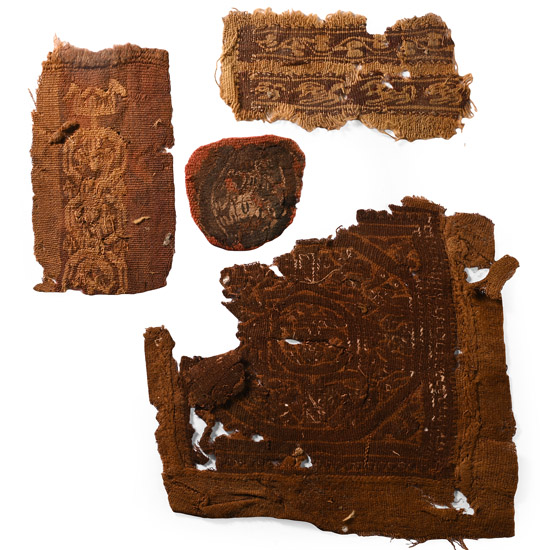
Egyptian Coptic Tunics Textile Fragments of Orbiculus, Segmenta and Tablion with Animals and Geometric Decoration
Circa 6th-7th century A.D.Estimate: £70 - 90 (+bp*)
Bids: 1 | Current Bid: £5
Comprising: a double decorative tunic stripe (clavus) in purple wool over coarse linen, S-twist tapestry, embroidered with stylised plants, from the cuff of a tunic; a large tablion, with floral ornamentation, borders decorated with meanders; a small orbiculus, with a flying putto and a horse; a large part of another clavus, ornamented with a succession of medallions filled with birds. 18 grams total, 6.9-19.5 cm
Acquired 1970s-1996. Property of a North American collector. London collection, 2016.
The fragments are decorative parts of tunics. These are fabrics of great decorative finesse, with some elements displaying an unusual and extremely well-preserved colour palette. The plant designs are related to the so-called Nilotic decorative pattern. The motif of the winged putto is common in Coptic textiles.
