
Loading, please wait...
LOT 0428
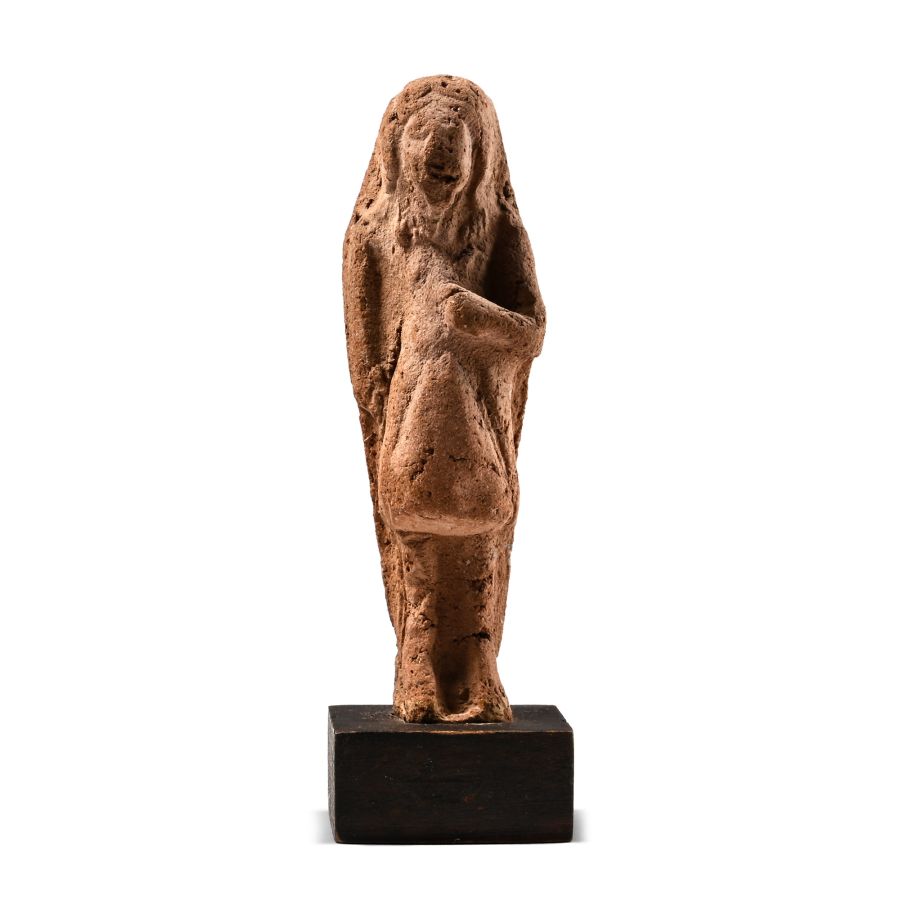
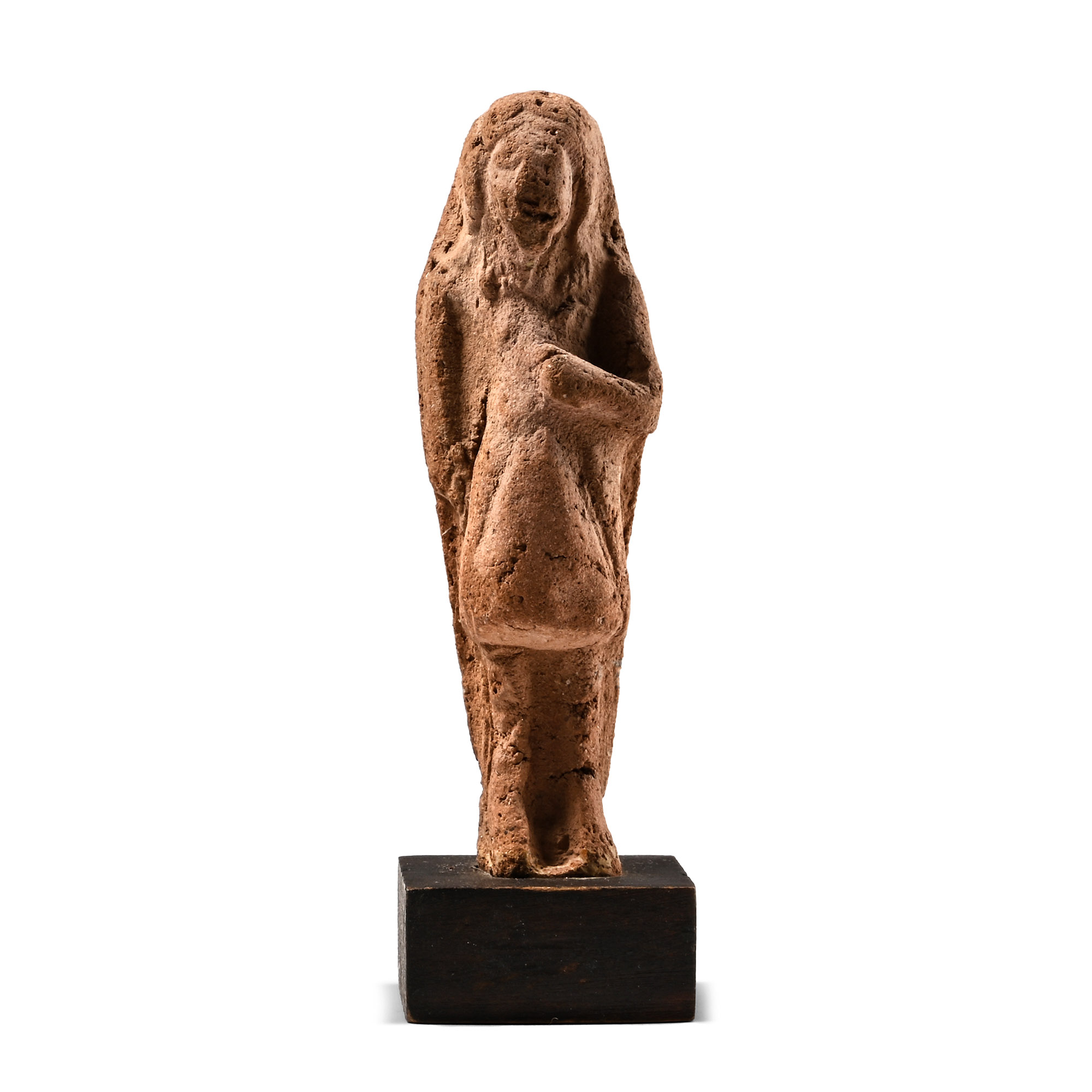
Egyptian Clay Overseer Shabti
LATE RAMESSIDE PERIOD-EARLY THIRD INTERMEDIATE PERIOD, CIRCA 1200-945 B.C.
4 in. (44 grams total, 10 cm including stand).
A mould-made figurine depicting a figure wearing a duplex wig and the projecting apron of an overseer shabti, with defined legs and feet below; the right arm by the side and the left bent across the chest; mounted on a custom-made stand. [No Reserve]
ProvenanceFrom the collection of David Donlan (1947-2025), a dedicated and lifelong collector with a passion for the ancient world and the natural sciences, forming his collection from 1960s onwards, using many reputable dealers across the United Kingdom, including the well-regarded Coincraft and The Parthenon Gallery.
LiteratureCf. Petrie, W.M.F., Gizeh and Rifeh, London, 1907, pl. XXVIIC (bottom left group, top left), for an example of a Ramesside mould-made figure converted to an overseer shabti type with a characteristic bent left arm.
FootnotesShabtis in daily life dress appeared in the late 18th Dynasty. By the late Ramesside Period, the general form had developed into the so-called “reis” or overseer figure, often depicted holding a whip. This form gained popularity during the subsequent 21st and 22nd Dynasties. Although this shabti lacks a whip, the bent arm is characteristic of those holding such a tool, suggesting that it belongs to the “reis” type. Ideally, there was one overseer shabti for every ten, typically mummiform, “worker” shabtis.
CONDITIONTimeLine Auctions follows a vetting process to ensure the authenticity and legality of all items, reinforcing our commitment to integrity and responsible trading. Each antiquity, antique, and coin lot undergoes thorough examination by a vetting committee of at least ten external specialists, professional trade association members, scientists, and archaeologists: Our Vetting Process
AUCTIONS:
TimeLine is a leading auction house specialising in antiquities, ancient art, collectables, natural history, coins, medals, and books. Our auctions offer museums, collectors, historians, and enthusiasts the opportunity to acquire unique and historically significant pieces.
-
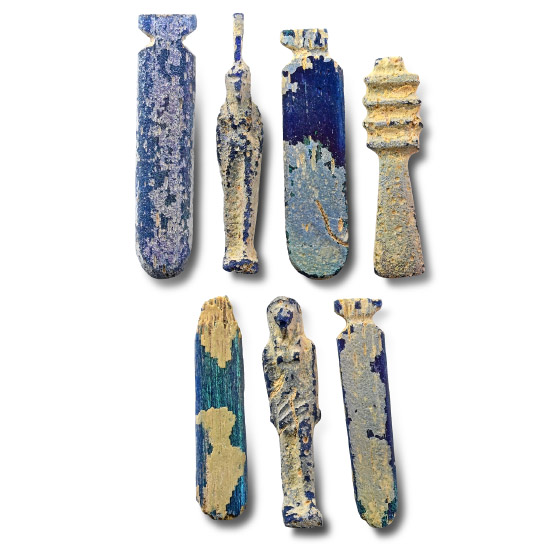
Egyptian Blue Glass Inlay Collection
Late Period-Ptolemaic Period, circa 664-30 B.C.Estimate: £300 - 400 (+bp*)
Current Winning Bid: £200
Comprising: four vessel- or cartouche-shaped inlays, a djed pillar, and two standing figures. 8.98 grma total, 31-37 mm
From a 20th century UK collection. -
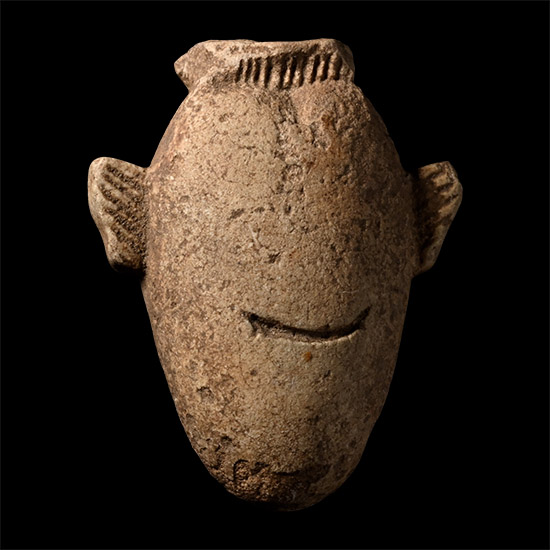
Large Egyptian Faience Heart Amulet
Late Period, 664-332 B.C.Sold for (Inc. bp): £117
Modelled in the round with a piriform body and two lateral projections with striations. 7.66 grams, 30 mm
Ex N. Thomas private collection, UK, 1980s-1990s. Accompanied by a previous dealer's sales ticket. -
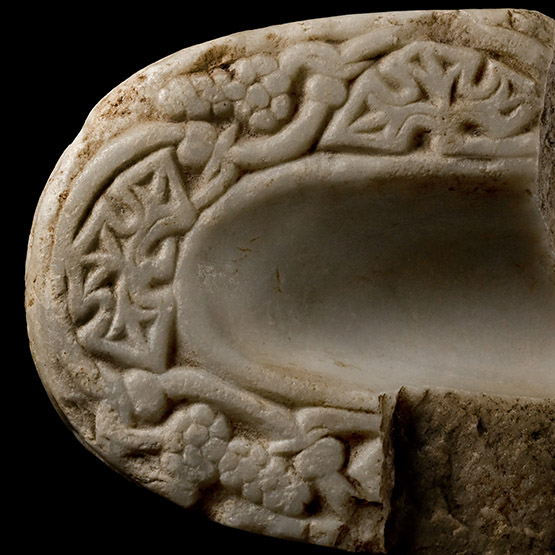
Coptic Marble Liturgical Vessel Fragment with Inscription
6th century A.D.Sold for (Inc. bp): £1,053
Tongue-shaped with low rounded pad on the underside, raised edge with low-relief decoration of grape vines and leaves, the edge with pairs of opposing doves eating grapes; dedicatory Demotic inscription on the underside. 87 grams, 55 mm
Acquired in the mid 1980s-1990s. Private collection, Switzerland, thence by descent. Private collection, since the late 1990s. Accompanied by an academic report by Dr Raffaele D'Amato. This lot has been checked against the Interpol Database of stolen works of art and is accompanied by a search certificate number no.12575-232108.
These vessels were used as liturgical objects for church offerings or ritual, and were extensively employed from late antiquity in ecclesiastical contexts.
