
Loading, please wait...
LOT 0690
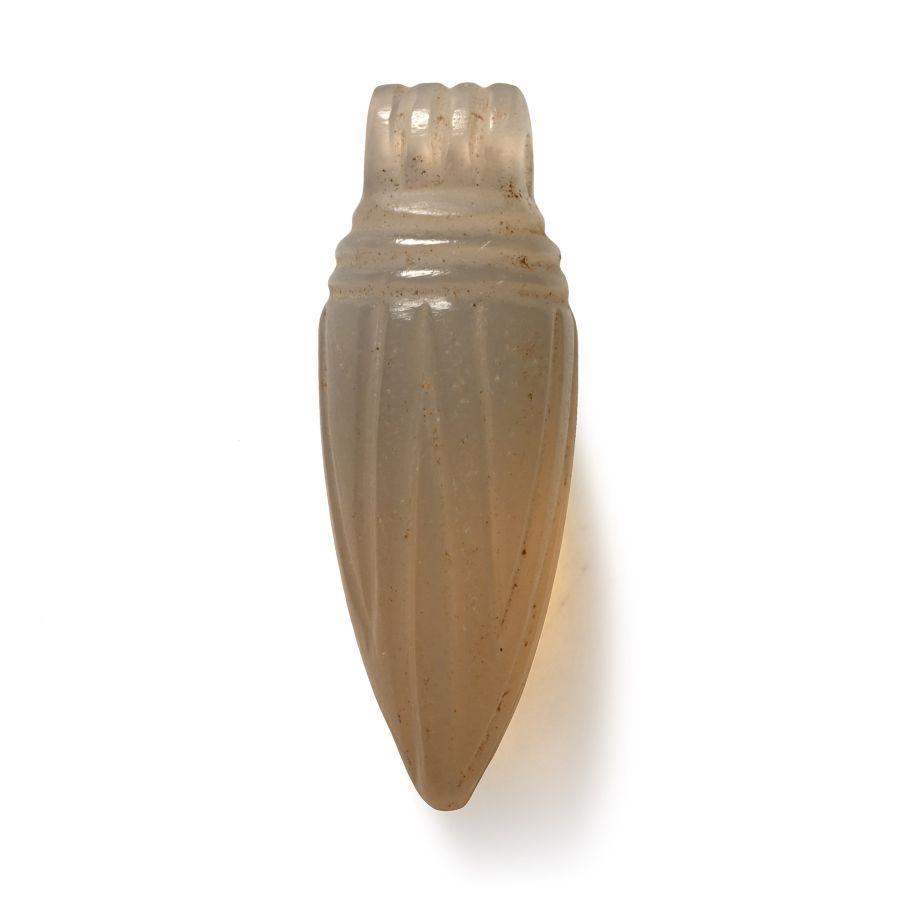
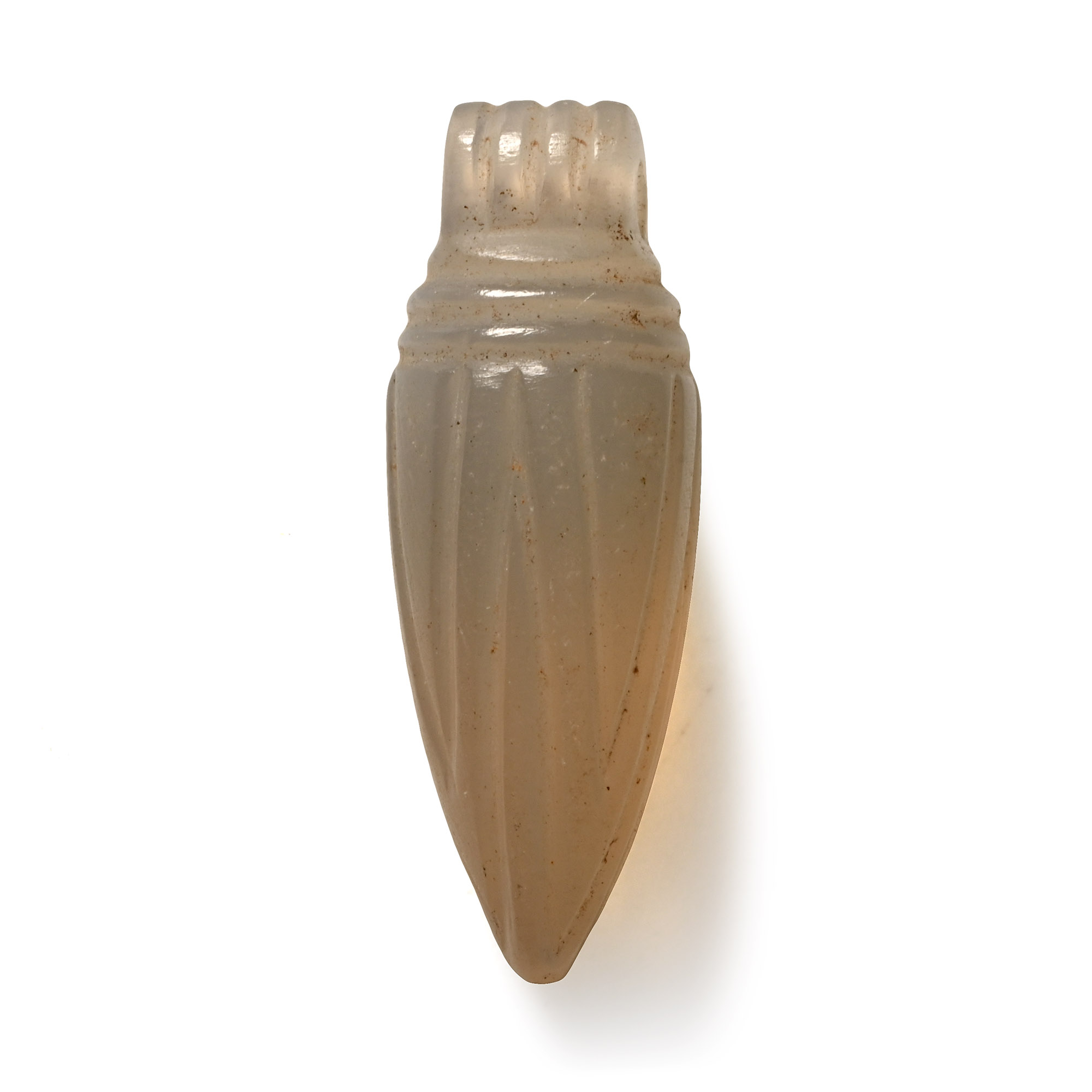
Egyptian Chalcedony Fluted Fruit Amulet
LATE PERIOD-PTOLEMAIC PERIOD, CIRCA. 664-30 B.C.
3/4 in. (1.45 grams, 21 mm).
Columnar in form with basal leaves to the finial, bindings and leaves beneath the ribbed loop.
ProvenanceProperty of a London, UK, gentleman, 1970-2000.
CONDITIONTimeLine Auctions follows a vetting process to ensure the authenticity and legality of all items, reinforcing our commitment to integrity and responsible trading. Each antiquity, antique, and coin lot undergoes thorough examination by a vetting committee of at least ten external specialists, professional trade association members, scientists, and archaeologists: Our Vetting Process
AUCTIONS:
TimeLine is a leading auction house specialising in antiquities, ancient art, collectables, natural history, coins, medals, and books. Our auctions offer museums, collectors, historians, and enthusiasts the opportunity to acquire unique and historically significant pieces.
LOT 0690
Egyptian Chalcedony Fluted Fruit Amulet
Estimate £150 - 200€170 - 230 (for guidance only)$200 - 270 (for guidance only)
Opening Bid
£50 (EUR 58; USD 68) +BP*
-
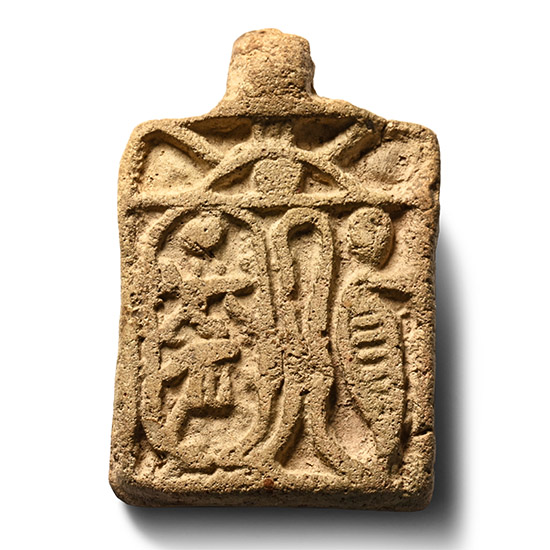
Egyptian Faience Amuletic Plaque with Cartouche of Pharaoh Thutmose III
New Kingdom, circa 1400-1292 B.C.Estimate: £200 - 300 (+bp*)
Opening Bid: £5
Formed as a rectangular plaque with the cartouche of Thutmosis III and a uraeus; attachment loop to the top. 4.68 grams, 33 mm
London, UK, art market, 1980s. Private collection, London, UK. -
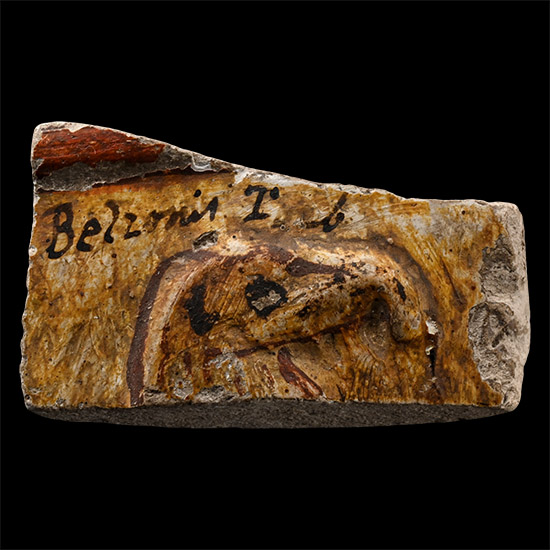
Egyptian Painted Limestone Fragment from the Tomb of Pharaoh Seti I
New Kingdom, 19th Dynasty, 1290-1279 B.C.Estimate: £100 - 140 (+bp*)
Opening Bid: £5
Colourful, almost rectangular section of a wall fragment, with a slightly dished face, low-relief moulding with pigment, and 'Belzonis T[om]b' written at the top; accompanied by an old collector's label suggesting the likely findspot and other details. 15.3 grams, 44 mm
With a late 19th-early 20th century handwritten ticket attached. From the private collection of Peter Clayton, FCILIP, Dip, Arch, FSA, FRNS, Hemel Hempstead, Hertfordshire, UK; formed since the late 1950s.
The Italian explorer and antiquarian Giovanni Battista Belzoni uncovered the tomb of Seti I (KV 17) on October 16, 1817. This monumental tomb, with beautifully decorated walls, extended almost 140 metres underground through a series of descending corridors and chambers. In 1821, Belzoni opened a groundbreaking exhibition at the Egyptian Hall in Piccadilly, London, presenting a full-scale replica of the tomb. The paid public exhibition sparked massive 19th-century "Egyptomania" and introduced European audiences to ancient Egyptian art. Such was the renown of his discovery that it was often referred to as 'Belzoni's Tomb'. -
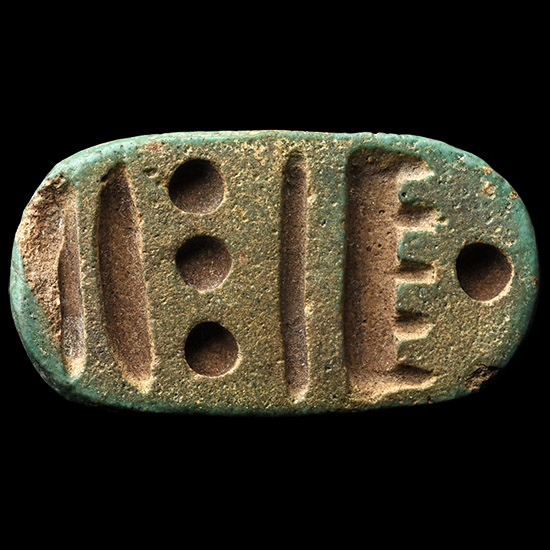
Large Egyptian Amuletic Cartouche-shaped Stamp Naming Amun-Re
Third Intermediate Period-Late Period, circa 1069-332 B.C.Estimate: £300 - 400 (+bp*)
Opening Bid: £150
Large oval stamp with plano-convex profile, plumed motif to the top, pierced for suspension; underside with hieroglyphic legend, possibly a garbled version of (A)mun-Re, lord of the thrones (of the two lands). 13.2 grams, 49 mm
Excavated from Egypt in 1914. From the private collection of Mr David Sams and his wife Elizabeth Kate Sams, gentry and amateur archaeologists who travelled to Egypt in 1914 with their daughter Ethel. Mr Sams and his wife led digging expeditions from which these items come from the family estate of Mr and Mrs Sams, by direct descent to their granddaughter.
