
Loading, please wait...
LOT 0512
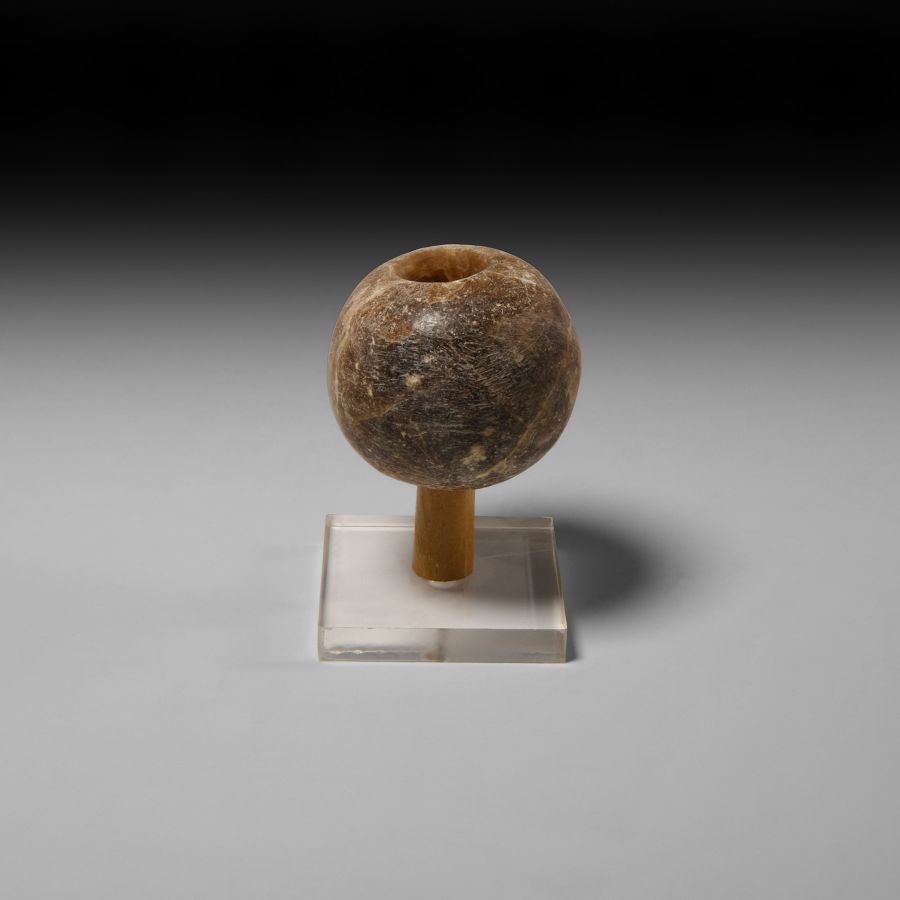
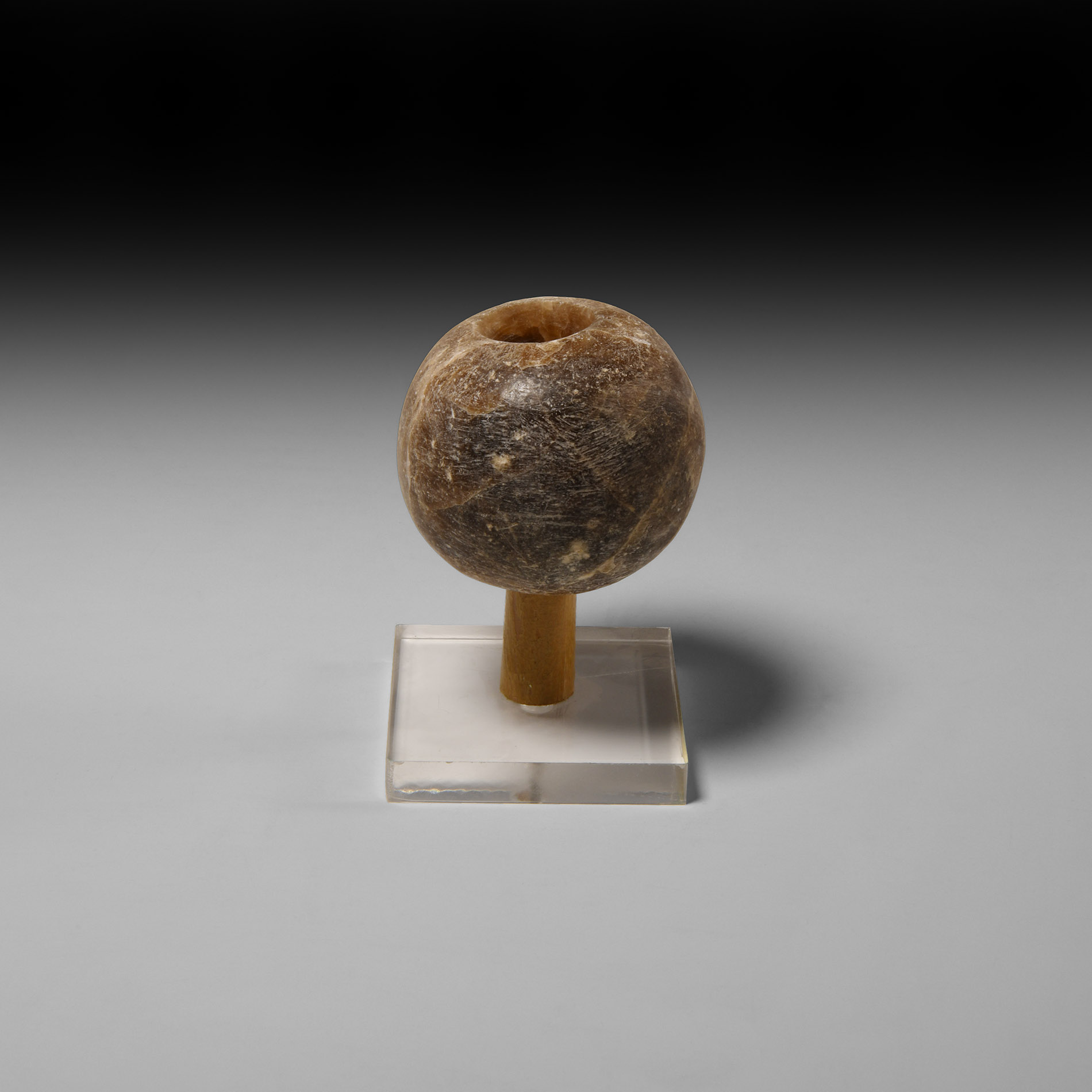
Egyptian Ceremonial Mace Head
PREDYNASTIC PERIOD, 4TH MILLENNIUM B.C.
3 3/8 in. (322 grams total, 87 mm high including stand).
A spherical ceremonial stone mace head; centrally drilled; mounted on a custom-made display stand. [No Reserve]
ProvenanceFrom an old UK collection.
From the private collection of Alf Baxendale (1941-2016) part 2, keen Egyptologist, member of the Egyptology Society, trustee of the Amarna Trust; thence by descent.
Accompanied by an identification display card.
Accompanied by a copy of his obituary published in Horizon, The Amarna Project and Amarna Trust newsletter, Issue 18, 2017, p.21, by Barry John Kemp, CBE, FBA, Professor Emeritus of Egyptology at the University of Cambridge and directing excavations at Amarna in Egypt.
Mace heads were prized to such a degree that they were carried by chieftains as sceptres.
CONDITIONTimeLine Auctions follows a vetting process to ensure the authenticity and legality of all items, reinforcing our commitment to integrity and responsible trading. Each antiquity, antique, and coin lot undergoes thorough examination by a vetting committee of at least ten external specialists, professional trade association members, scientists, and archaeologists: Our Vetting Process
AUCTIONS:
TimeLine is a leading auction house specialising in antiquities, ancient art, collectables, natural history, coins, medals, and books. Our auctions offer museums, collectors, historians, and enthusiasts the opportunity to acquire unique and historically significant pieces.
-
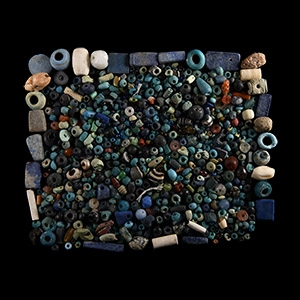
Egyptian and Other Faience and Hardstone Bead Collection
1st millennium B.C. and laterSold for (Inc. bp): £312
A mixed group of mainly composition, glass, shell and stone polychrome beads of various types and dates. 167 grams total, 2-26 mm
Acquired in the 1970s. Important European collection. -
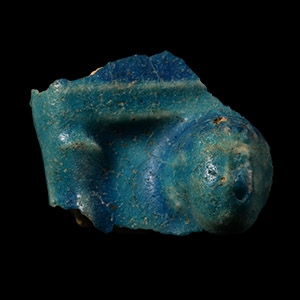
Egyptian Blue Faience Plaque Fragment
Ptolemaic Period, 332-30 B.C.Sold for (Inc. bp): £33
A fragment of a glazed composition frieze with corner-angle frame and head wearing a tripartite wig, possibly from a divine triad group; set within a kiosk with supporting papyrus columns. 4.68 grams, 31 mm
From a UK private collection, 1975-1978. -
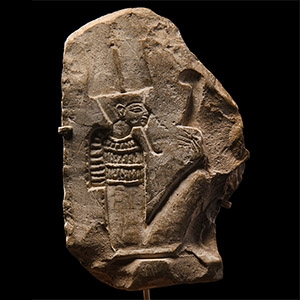
Egyptian Limestone Fragment with Seated God
Ramesside Period, 19th Dynasty, 1295-1186 B.C.Sold for (Inc. bp): £1,235
A carved limestone relief fragment depicting a squatting god Amun-Re, facing right wearing a headdress topped by two ostrich-feather plumes, a segmented mantle to the shoulders, knees drawn up supporting another ostrich plume; inked accession numbers to the reverse: '974.15', '69.10019'; accompanied by a custom-made display stand. 53 grams, 74 mm (84 grams total, 10.5 cm high including stand)
From a deceased American estate, acquired between 1970-1989. with Bonham's, London, Knightsbridge, 28 October 2009, lot 23 [Part]. Accompanied by a copy of the relevant Bonhams catalogue pages.
