
Loading, please wait...


LOT 0673
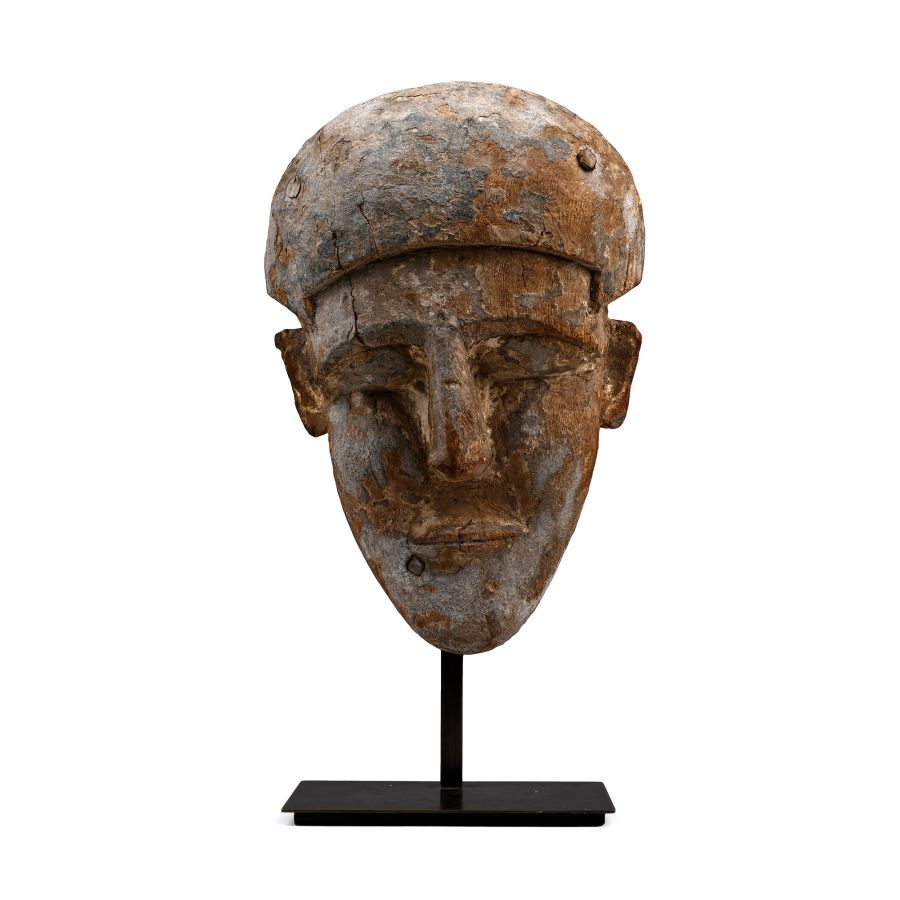
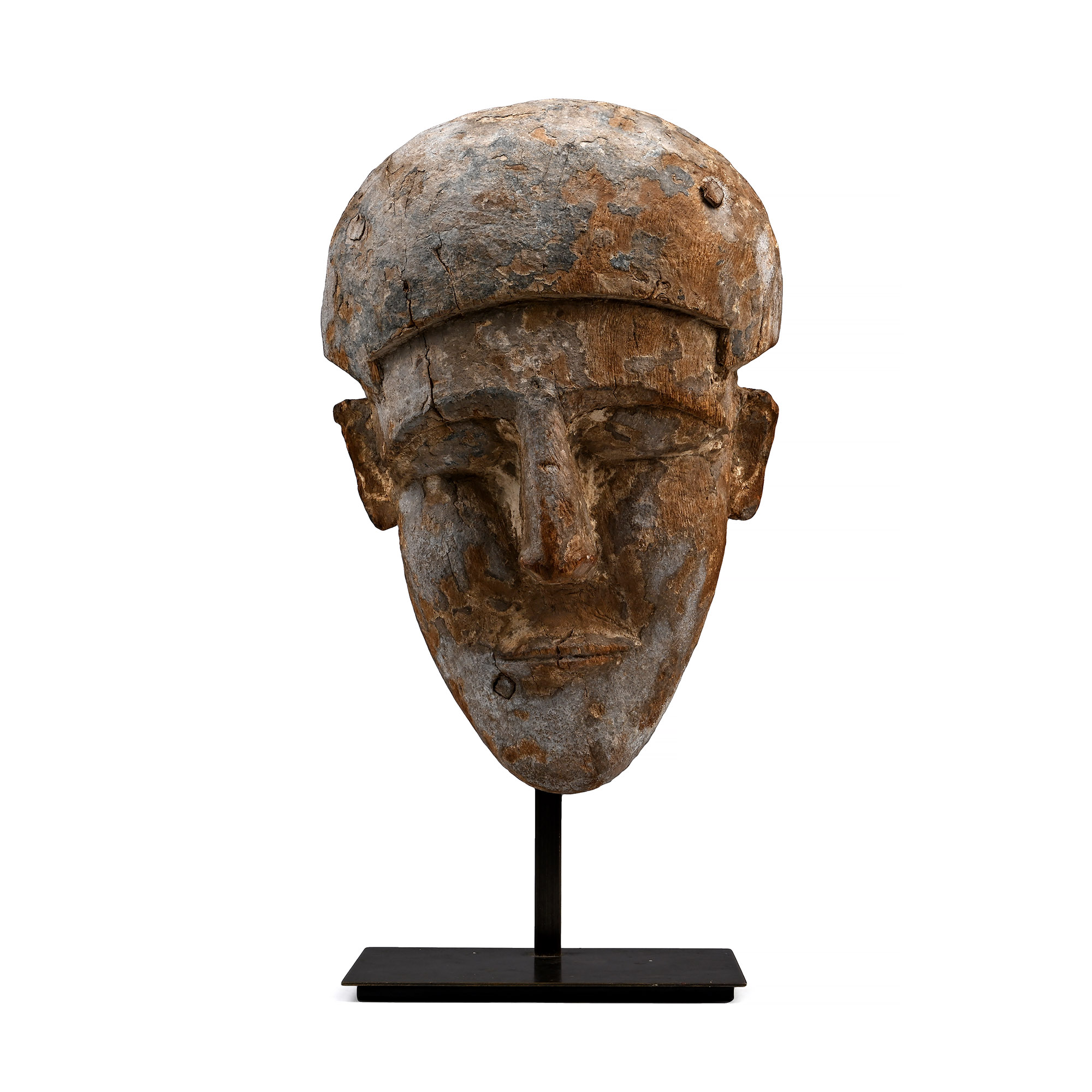
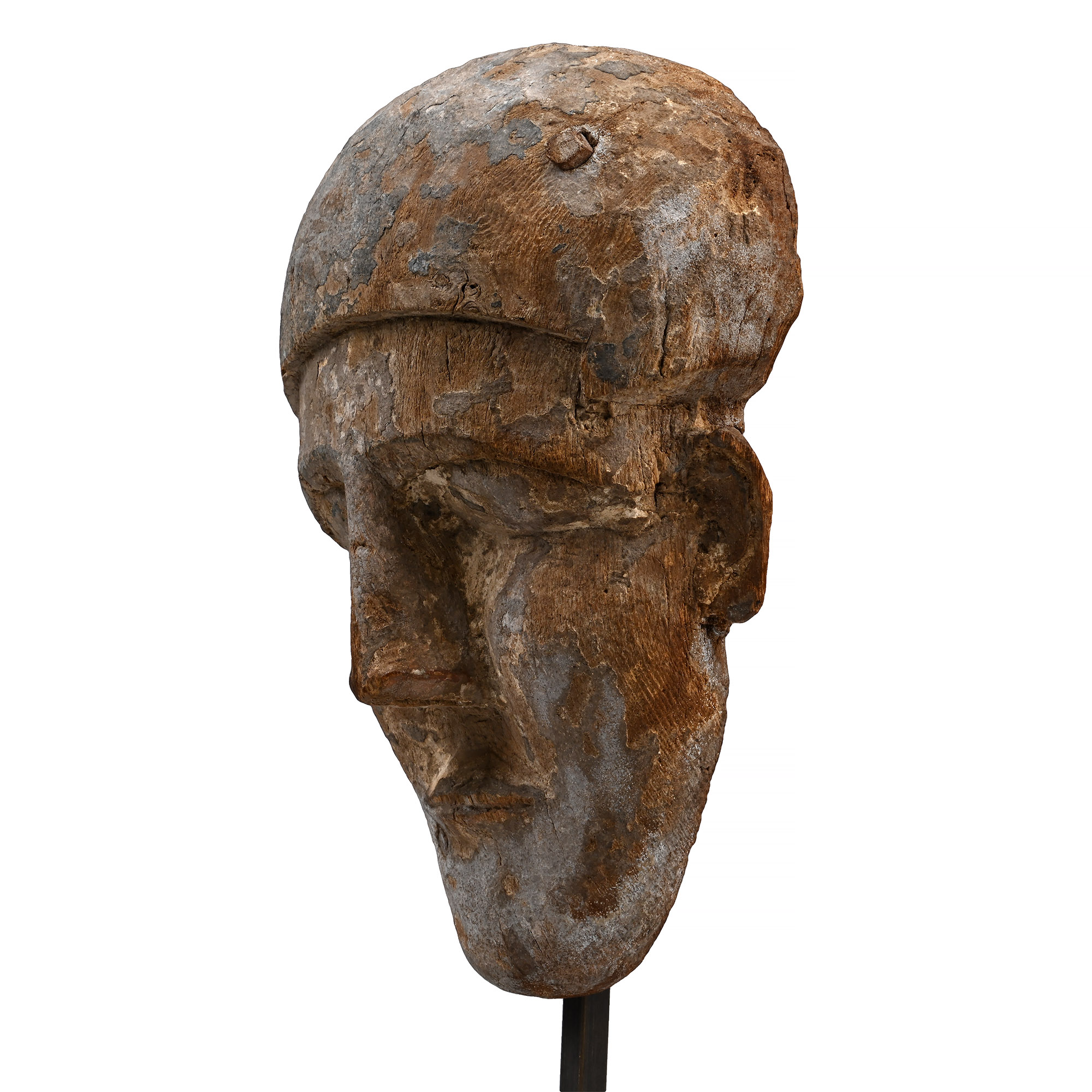
Egyptian Carved Cedar Wood Sarcophagus Mask
PTOLEMAIC-ROMAN PERIOD, 332 B.C.-100 A.D.
12 7/8 in. (1.43 kg total, 32.5 cm including stand).
From the lid of an anthropoid coffin, representing the idealised features of the deceased beneath a broad, rounded wig, the elongated face modelled with large almond-shaped eyes beneath extended brows, a prominent nose, delineated lips and projecting ears, the chin tapering to a rounded point; a curved incision separates the headdress from the forehead, the broadly flattened reverse preserving sockets and wooden plugs from the original pegged attachment to the coffin lid; preparatory gesso and traces of polychrome decoration remaining across the face and headdress; mounted on a modern metal display stand.
ProvenancePrivate collection, Yorkshire, UK, acquired in the mid-20th century.
LiteratureCf. Kóthay, K. A., Kevély, F.J., Capturing Eternity: How Did Ancient Egyptian Artists Fashion Their Works?, Budapest, 2026, pp. 118-119, no. 71, for a comparable mask.
FootnotesWooden coffins were mostly manufactured from multiple elements, often with the face and front portion of the headdress carved separately and attached to the lid using dowels.
CONDITIONTimeLine Auctions follows a vetting process to ensure the authenticity and legality of all items, reinforcing our commitment to integrity and responsible trading. Each antiquity, antique, and coin lot undergoes thorough examination by a vetting committee of at least ten external specialists, professional trade association members, scientists, and archaeologists: Our Vetting Process
AUCTIONS:
TimeLine is a leading auction house specialising in antiquities, ancient art, collectables, natural history, coins, medals, and books. Our auctions offer museums, collectors, historians, and enthusiasts the opportunity to acquire unique and historically significant pieces.
LOT 0673
Egyptian Carved Cedar Wood Sarcophagus Mask
Estimate £1,000 - 1,400€1,160 - 1,620 (for guidance only)$1,350 - 1,890 (for guidance only)
Opening Bid
£500 (EUR 580; USD 675) +BP*
-
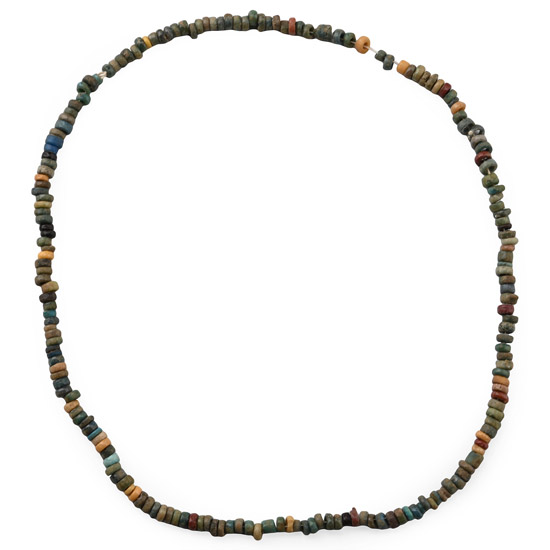
Egyptian Faience Mummy Bead Bracelet
Late Period-Ptolemaic Period, circa 664-30 B.C.Estimate: £40 - 60 (+bp*)
Bids: 1 | Current Bid: £5
Composed of green and blue glazed oblate beads, restrung. 3 grams, 29 cm
Excavated from Egypt in 1914. From the private collection of Mr David Sams and his wife Elizabeth Kate Sams, gentry and amateur archaeologists who travelled to Egypt in 1914 with their daughter Ethel. Mr Sams and his wife led digging expeditions from which these items come, from the family estate of Mr and Mrs Sams, by direct descent to their granddaughter. -
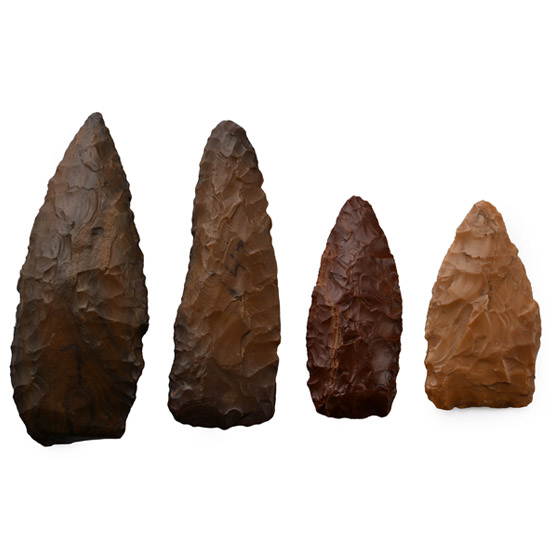
Egyptian Stone Age Knapped Lance Point Group from Luxor
Neolithic Period, 11,000-5,200 B.P.Estimate: £150 - 200 (+bp*)
Bids: 1 | Current Bid: £5
Comprising three leaf-shaped with tapering sharp points, one tongue-shaped with a rounded point; one with an inked note 'Luxor 1912'; with an old handwritten label reading 'Weapon points- possible lance points - Neolithic'. 60.7 grams total, 53-84 mm
Found Luxor. From the collection of A.D. Passmore (1879-1958), his collection of flints from the area of Stonehenge was donated to the Ashmolean Museum in the 1950s. From the private collection of Peter Clayton, FCILIP, Dip, Arch, FSA, FRNS, Hemel Hempstead, Hertfordshire, UK; formed since the late 1950s. Accompanied by a copy of an old handwritten information card by Peter Clayton. -
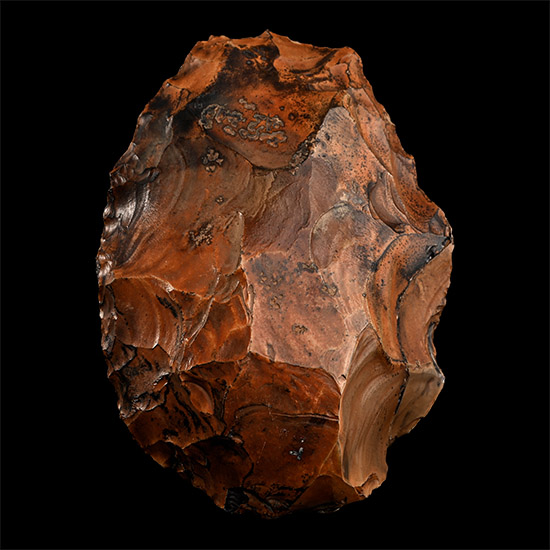
Egyptian Stone Age Knapped Handaxe
Lower Palaeolithic Period, circa 500,000-250,000 B.P.Estimate: £150 - 200 (+bp*)
Bids: 3 | Current Bid: £15
Expertly shaped through percussion flaking, creating zigzagging lateral edges, with a roughly ovate or teardrop form and a heavy, thick butt, tapering down to a distinct working edge. 363 grams, 12.5 cm
From the collection of A.D. Passmore (1879-1958), his collection of flints from the area of Stonehenge was donated to the Ashmolean Museum in the 1950s. From the private collection of Peter Clayton, FCILIP, Dip, Arch, FSA, FRNS, Hemel Hempstead, Hertfordshire, UK; formed since the late 1950s. Accompanied by a copy of an old handwritten information card by Peter Clayton.
The Egyptian flint hand axe, or biface, is a prehistoric stone tool with two faces. This tool holds the record for being the longest-used tool in human history. The technical term 'biface' comes from the archetypal model, generally a bifacial Lithic flake with an almond-shaped morphology. Hand axes typically have a pointed end and a rounded base, giving them their characteristic shape, and both faces have been knapped to remove the natural cortex, at least partially.
