
Loading, please wait...

LOT 0578
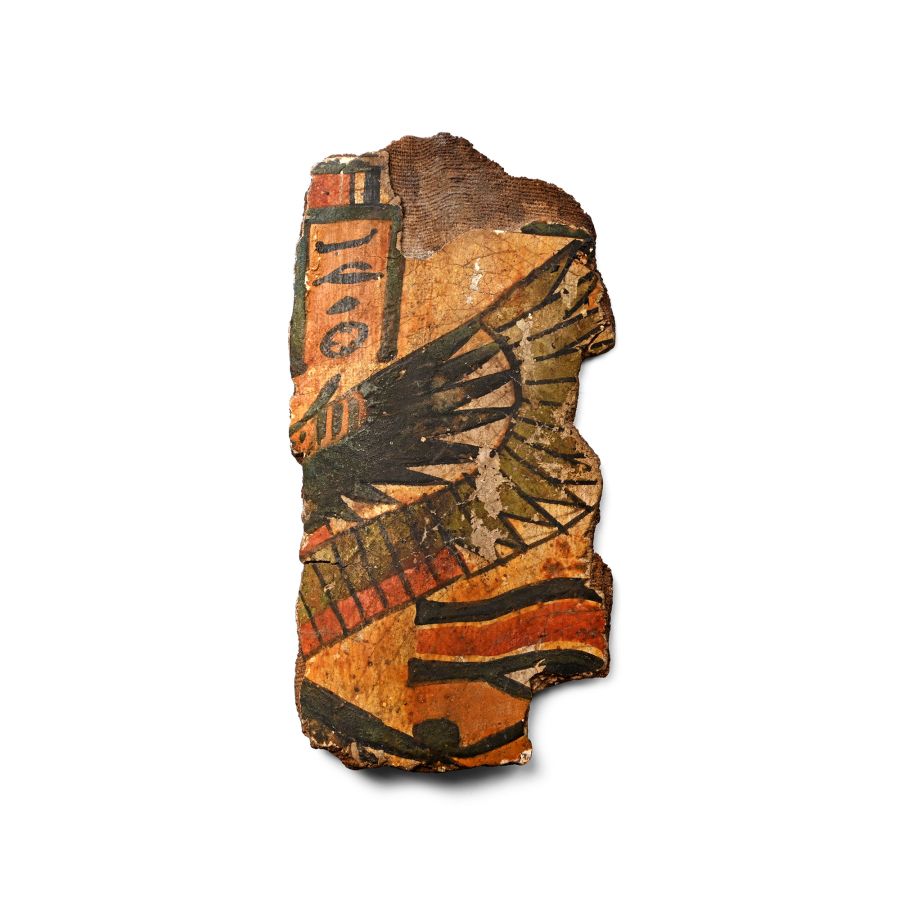
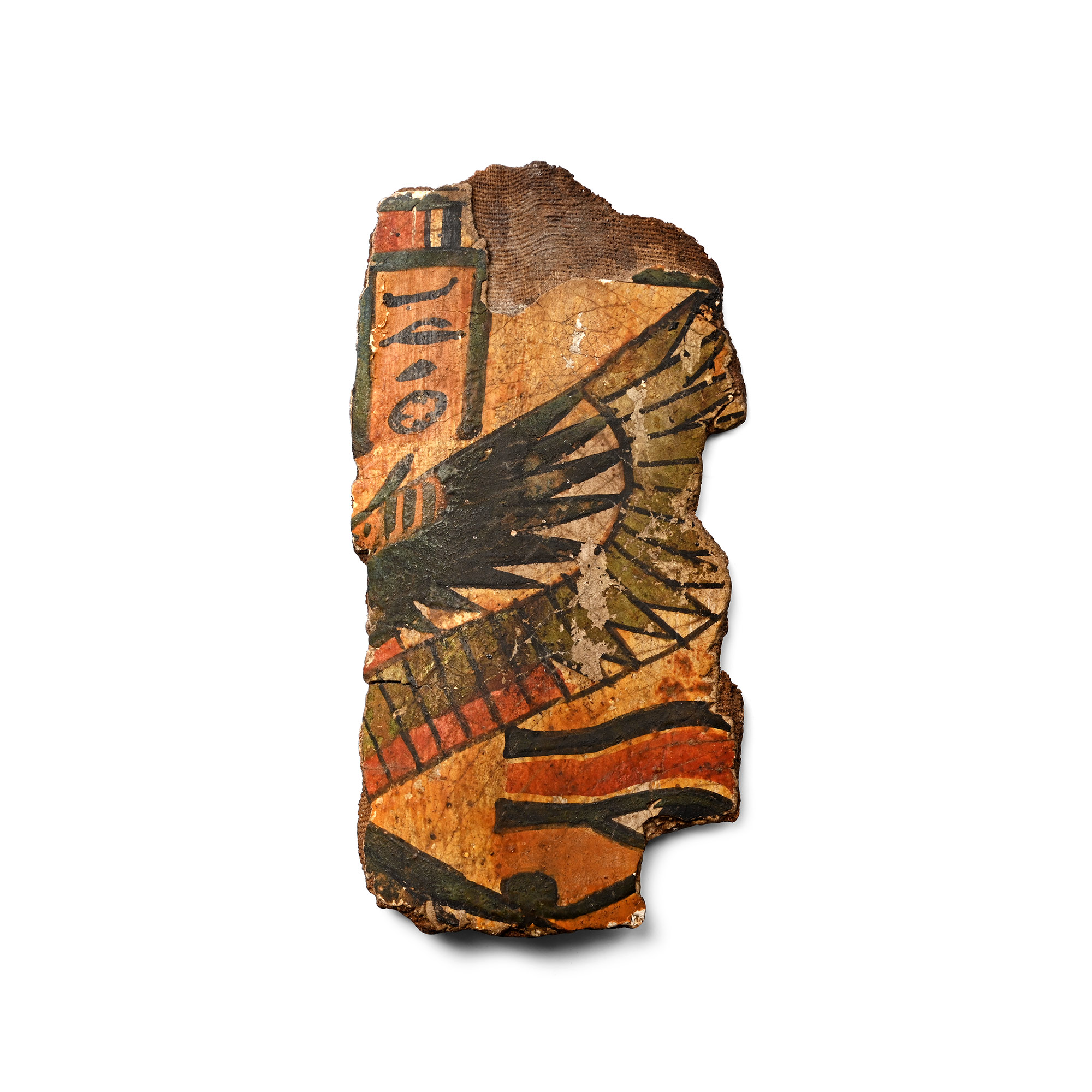
Egyptian Cartonnage Section with Eye and Wing
THIRD INTERMEDIATE PERIOD, CIRCA 1069-860 B.C.
6 3/4 in. (48 grams, 17 cm).
Sub-rectangular in plan with irregular and fragmented edge; prepared plaster surface featuring a line-bordered column with four cursive hieroglyphs naming Behedet (bḥdt); a section of finely painted outstretched wing with feather detailing to lower edge in red and blue; below, a wedjat eye in black with red medial band; fabric back to reverse.
ProvenanceFormerly from an old collection of a Wiltshire, UK, collector, acquired before 1980.
Property of a private collector, West London, UK.
This lot is accompanied by an illustrated lot declaration signed by the Head of the Antiquities Department, Dr Raffaele D'Amato.
Cf. Sousa, R., "Yellow" Coffins from Thebes, BAR 3010, Oxford, 2020, p. 27, for the coffin of Heritubekhet with a similar feather design and colouring.
FootnotesThis fragment most likely originates from the lower chest section of a so-called anthropoid 'yellow coffin' from the Third Intermediate Period. The wing belongs to a protective deity; as Behedet is a name given to several locations (Edfu, Tell el-Balamun, and Lepidotonpolis) associated with Horus, it seems probable that the wing belongs to the falcon form of this god.
CONDITIONTimeLine Auctions follows a vetting process to ensure the authenticity and legality of all items, reinforcing our commitment to integrity and responsible trading. Each antiquity, antique, and coin lot undergoes thorough examination by a vetting committee of at least ten external specialists, professional trade association members, scientists, and archaeologists: Our Vetting Process
AUCTIONS:
TimeLine is a leading auction house specialising in antiquities, ancient art, collectables, natural history, coins, medals, and books. Our auctions offer museums, collectors, historians, and enthusiasts the opportunity to acquire unique and historically significant pieces.
LOT 0578
Egyptian Cartonnage Section with Eye and Wing
Estimate £400 - 600€460 - 700 (for guidance only)$540 - 810 (for guidance only)
Opening Bid
£150 (EUR 174; USD 203) +BP*
-
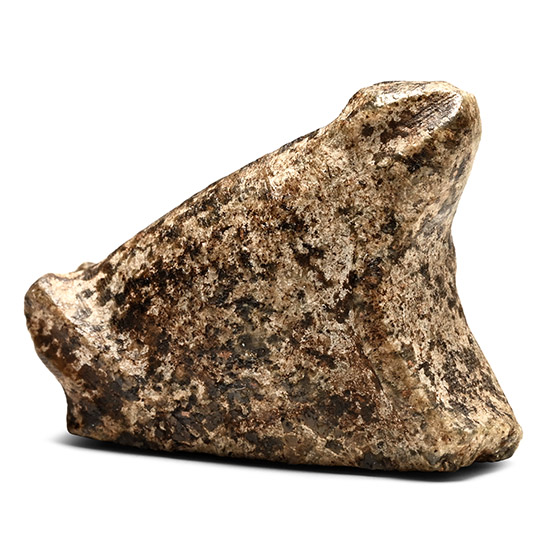
Egyptian Amulet in the Shape of a Squatting Frog
Late Period, 664-332 B.C.Estimate: £500 - 700 (‡+bp*)
Opening Bid: £275
Carved in the round in a squatting pose, with rear legs poised to leap. 9.2 grams, 27 mm
Ex Herbert A. Cahn, Basel, 1970s; thence by descent.
Frog amulets in ancient Egypt symbolised fertility, rebirth, and renewal. Associated with the goddess Heqet, who was linked to childbirth and life-giving forces, they were especially popular for fertility and for protection during pregnancy and labour. Their association with the annual Nile flood, which brought new life to the land, further emphasised their symbolism of revival and abundance. -
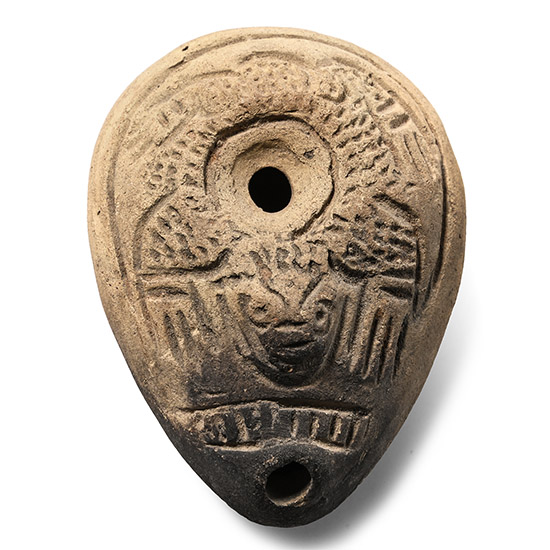
Romano-Egyptian Terracotta Frog Oil Lamp
Roman Period, 3rd-4th century A.D.Estimate: £50 - 70 (+bp*)
Bids: 2 | Current Bid: £20
Ovoid in plan and biconvex in section, low-relief frog image on the discus, starburst on the underside; old collector's note: 'Very light buff coloured frog lamp. Exact type as illustrated in Bailey, [?] Roman pottery lamps. B.17.1963 pl. 14 d. Decorated base. 3-4th century A.D. Found in Alexandria. From Puys-Aubert collection in Alexandria. March 1963.' 71 grams, 81 mm
From the private collection of Peter Clayton, FCILIP, Dip, Arch, FSA, FRNS, Hemel Hempstead, Hertfordshire, UK; formed since the late 1950s. Accompanied by an old handwritten identification card written by Peter Clayton. -
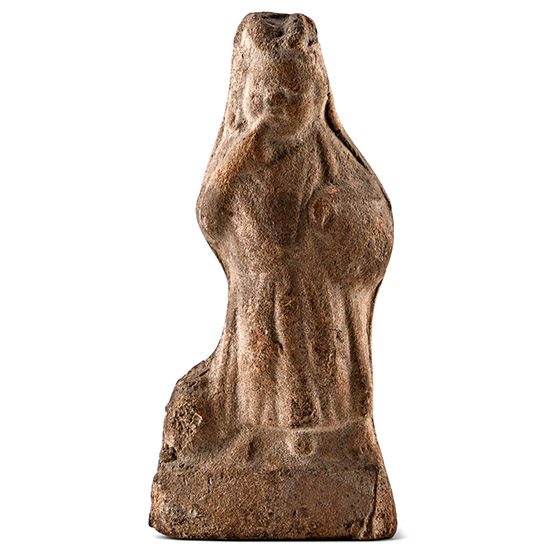
Egyptian Terracotta Statuette of the God Harpocrates
Graeco-Roman Period, 2nd-3rd century A.D.Estimate: £80 - 100 (+bp*)
Bids: 1 | Current Bid: £5
Hollow-formed and moulded in the round, standing figure with index finger of right hand raised to the mouth; hollow to the underside and circular hole to the reverse. 141 grams, 12.1 cm
Acquired circa May 1957, for £1.00. From the private collection of Peter Clayton, FCILIP, Dip, Arch, FSA, FRNS, Hemel Hempstead, Hertfordshire, UK; formed since the late 1950s. Accompanied by an old handwritten information card by Peter Clayton, collection no.12.
