
Loading, please wait...
LOT 0040
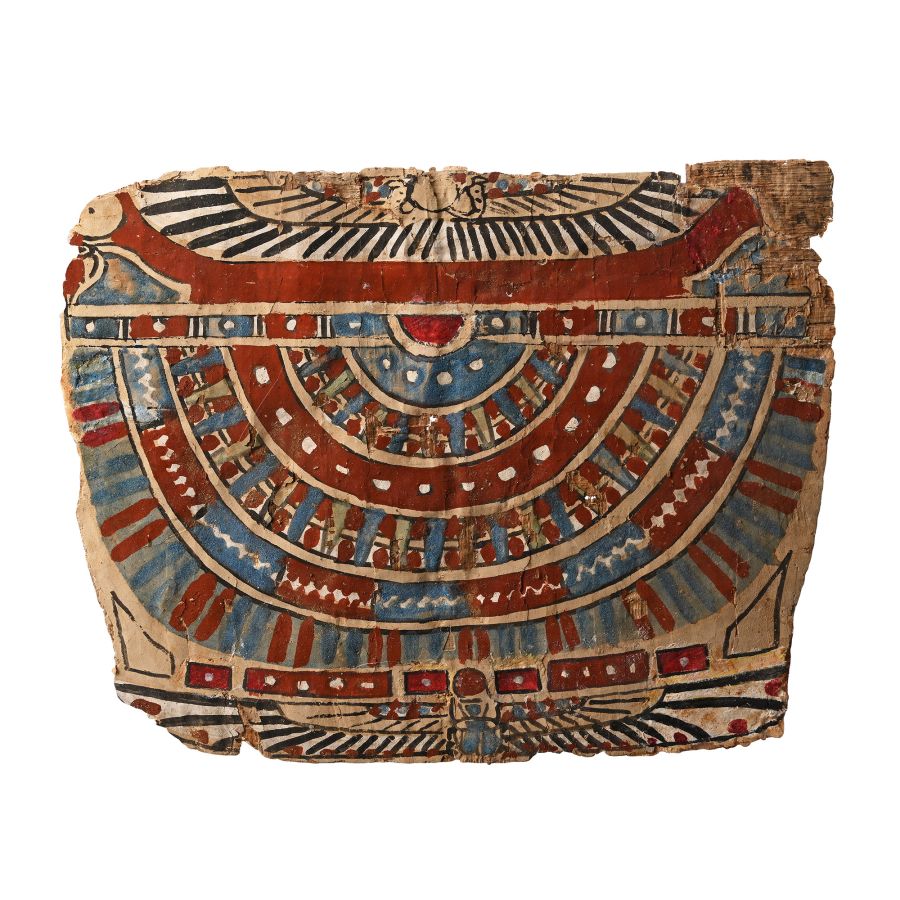
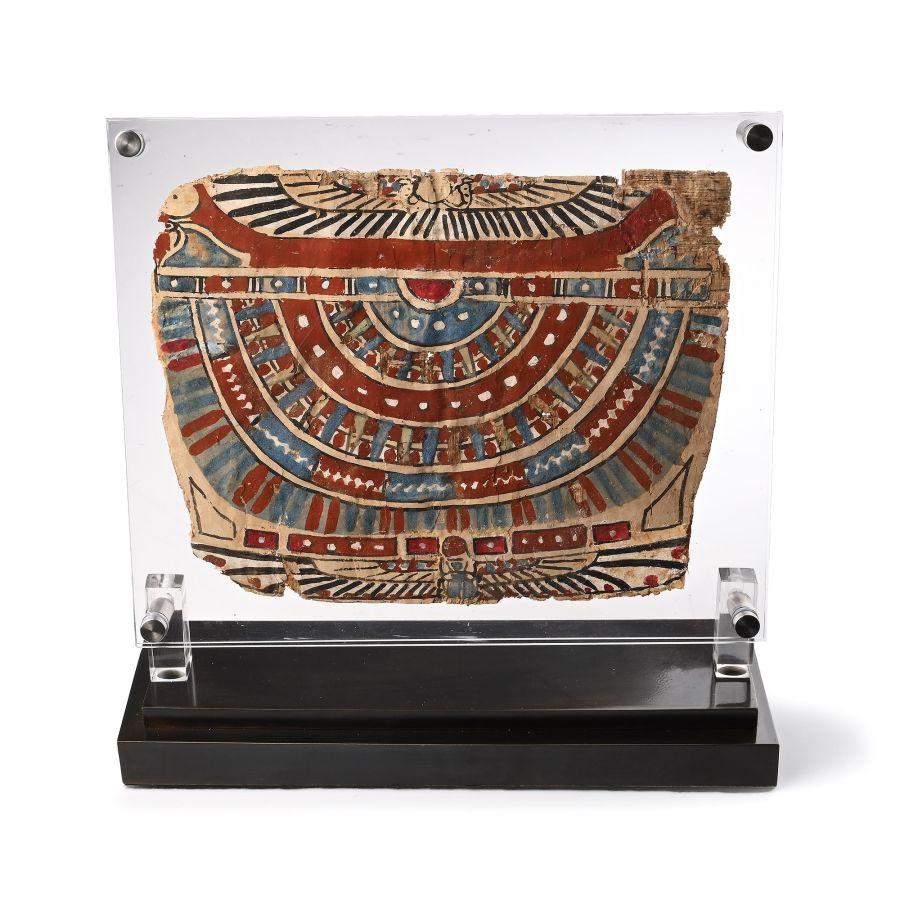
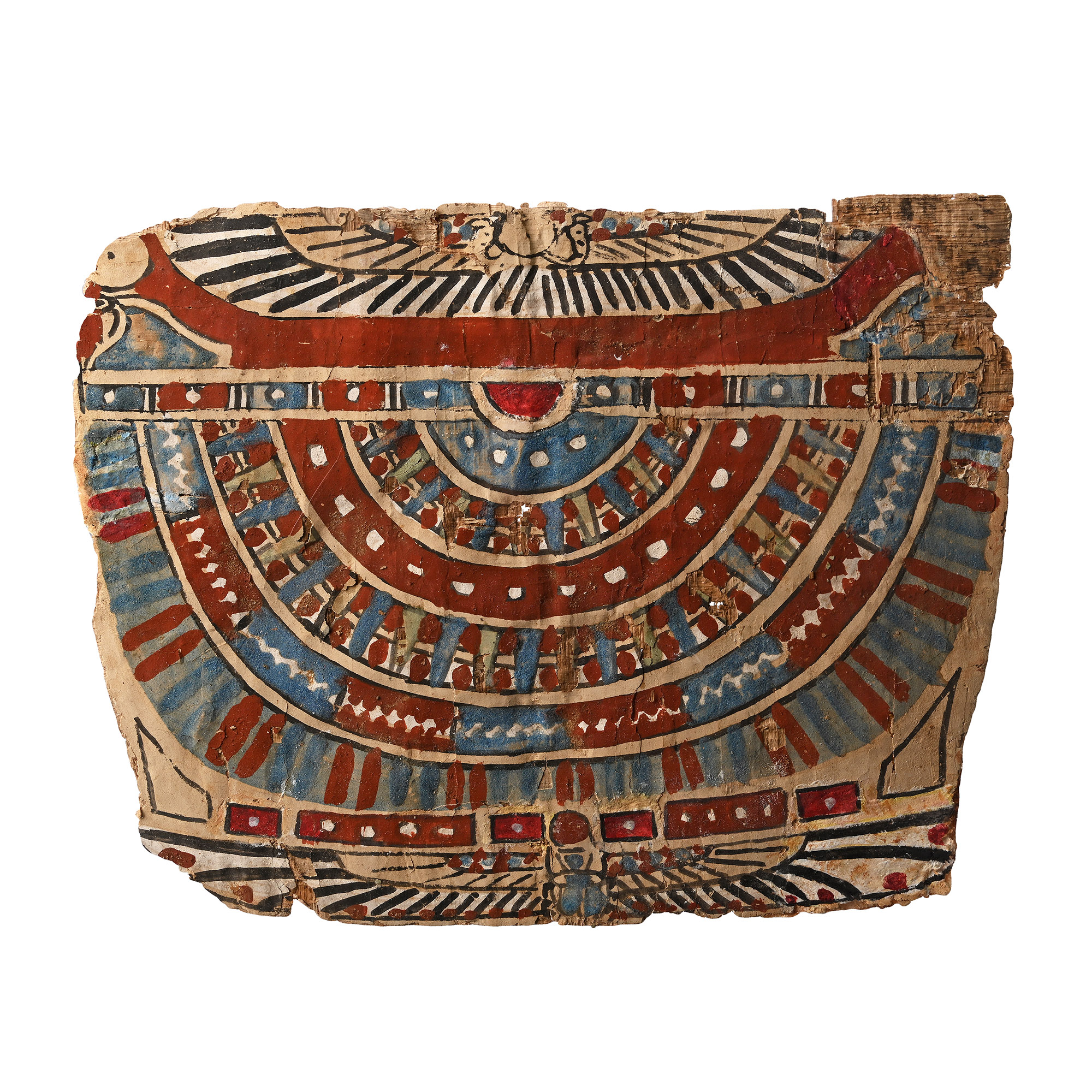
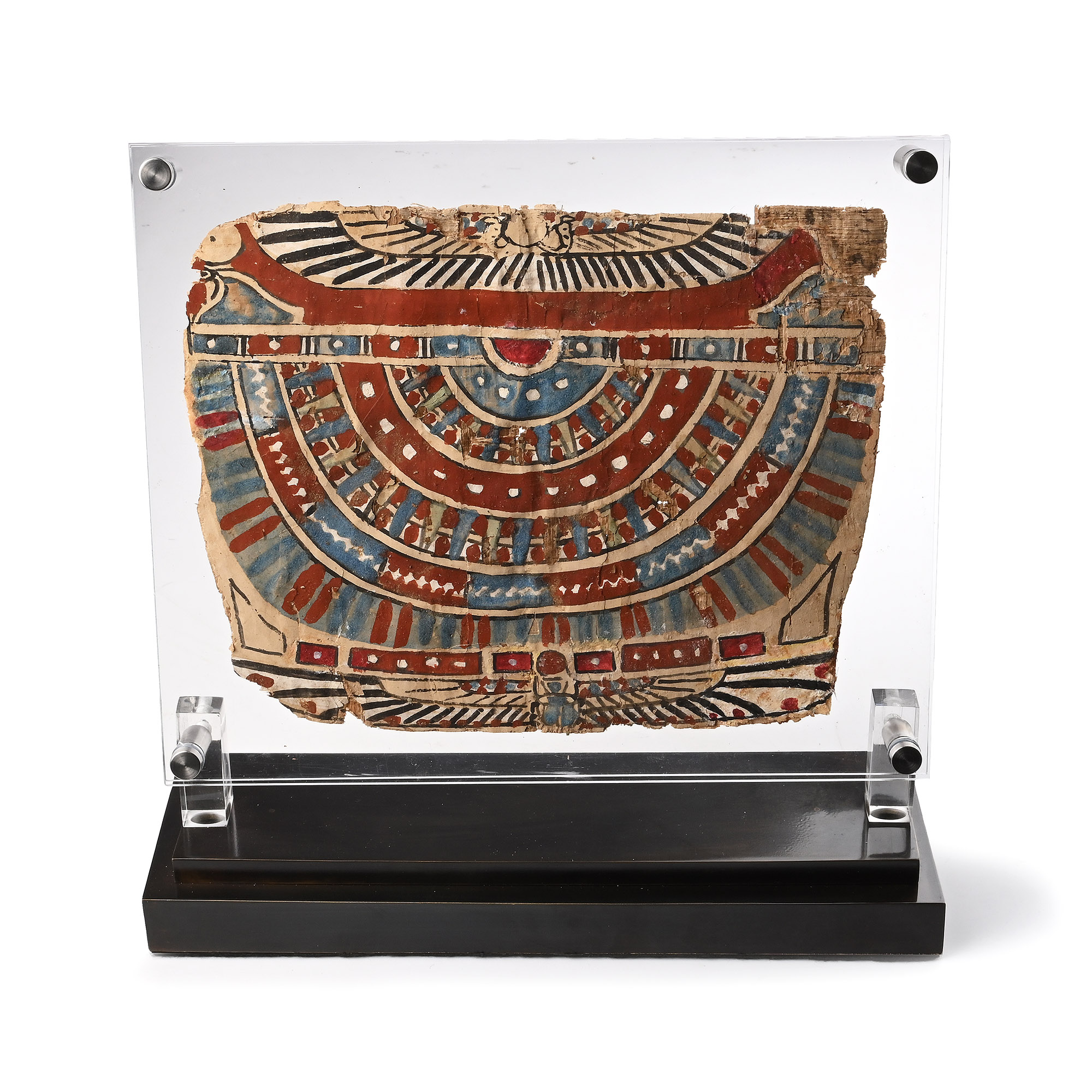
Egyptian Cartonnage Panel with Pectoral
LATE PERIOD-PTOLEMAIC PERIOD, CIRCA 664-30 B.C.
12 3/8 in. (2.06 kg total, 31.4 cm wide including stand).
A rectangular cartonnage panel with bands of triangles, teardrops and other motifs in white, red, blue and pale green; winged scarab to the bottom, lower portion of a winged sun disc flanked by uraei to the top; mounted on a custom-made stand.
ProvenanceEx early 20th century collection, London, UK.
This lot has been checked against the Interpol Database of stolen works of art and is accompanied by search certificate number no.13096-249409
Cf. Manley, B., and Dodson, A., Life Everlasting. National Museum of Scotland Collection of Ancient Egyptian Coffins, Edinburgh, 2010, p. 117, no. 46, for a similar example.
FootnotesThis piece was probably part of a set of cartonnage trappings placed on the mummy.
CONDITIONTimeLine Auctions follows a vetting process to ensure the authenticity and legality of all items, reinforcing our commitment to integrity and responsible trading. Each antiquity, antique, and coin lot undergoes thorough examination by a vetting committee of at least ten external specialists, professional trade association members, scientists, and archaeologists: Our Vetting Process
AUCTIONS:
TimeLine is a leading auction house specialising in antiquities, ancient art, collectables, natural history, coins, medals, and books. Our auctions offer museums, collectors, historians, and enthusiasts the opportunity to acquire unique and historically significant pieces.
LOT 0040
Egyptian Cartonnage Panel with Pectoral
Estimate £1,800 - 2,400€2,090 - 2,780 (for guidance only)$2,430 - 3,240 (for guidance only)
-
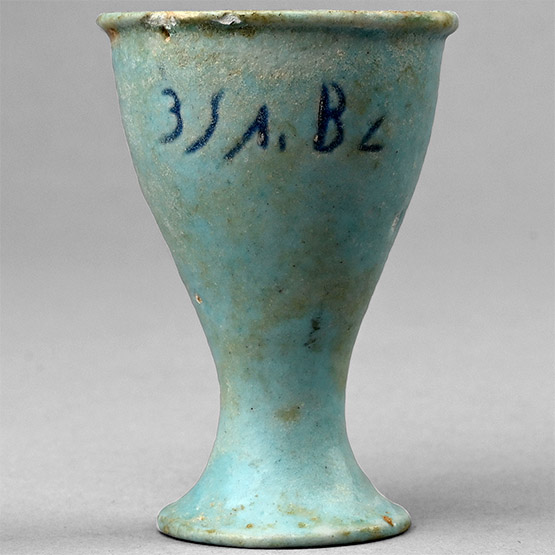
Egyptian Blue Faience Offering Cup with Inscription
Late Period-Ptolemaic Period, 664-30 B.C.Sold for (Inc. bp): £1,170
Conical in profile with a wide base and a shallow interior hollow; inscription in a darker blue glaze, consisting of a single line of demotic-script text. 57 grams, 62 mm
Mariaud de Serres, Drouot, Paris, 1999. with Christie’s, New York, 5-6 December 2001, no.354. Accompanied by copies of the relevant Christie's catalogue pages.
Demotic script was an ancient Egyptian writing system that was used from approximately the 7th century B.C. to the 4th century A.D. It represented a more simplified and cursive form of writing compared to hieroglyphs and hieratic script. Demotic text was employed for a wide range of purposes in ancient Egypt, including administrative, legal, religious, and literary documents. Deciphering Demotic has played a pivotal role in enhancing our understanding of ancient Egyptian culture, history, and everyday life. -
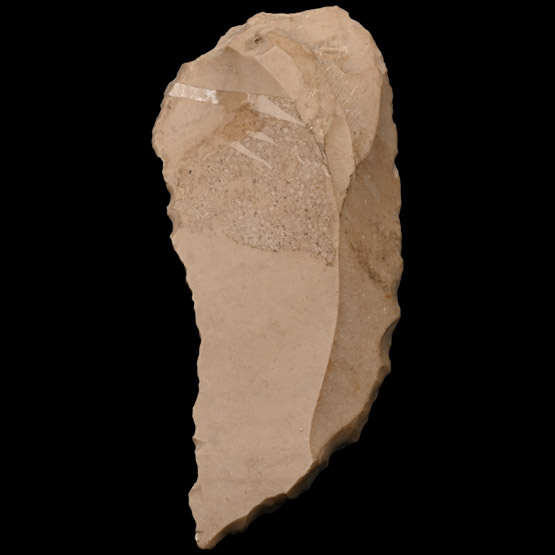
Egyptian Predynastic Flint Pocket Knife
Naqada II Period, 3500-3100 B.C.Sold for (Inc. bp): £195
Slightly curved blade with broad flake forming cutting edge. 19.80 grams, 72 mm
Ex Armand Trampitsch, Monte Carlo, 1990s. Private collection, Europe. -
.jpg)
Egyptian Steatite Fish Amulet with Horse
New Kingdom, 1550-1070 B.C.Sold for (Inc. bp): £130
A bifacial rectangular amulet with incised fish in profile to the obverse, a standing horse to the reverse; drilled for suspension. 3.04 grams, 20 mm
Ex Constable collection, 1990s. Ex P. Morris collection. Accompanied by an old photograph dated 'London 1997'.
This amulet depicts a ‘Tilapia nilotica’ or ‘bolti’, a prevalent fish species found in the Nile. Not only was it esteemed for its delicious taste, but it was also regarded as a symbol of rebirth and resurrection due to its unique ability to carry its eggs in its mouth, symbolising self-creation.
