
Loading, please wait...
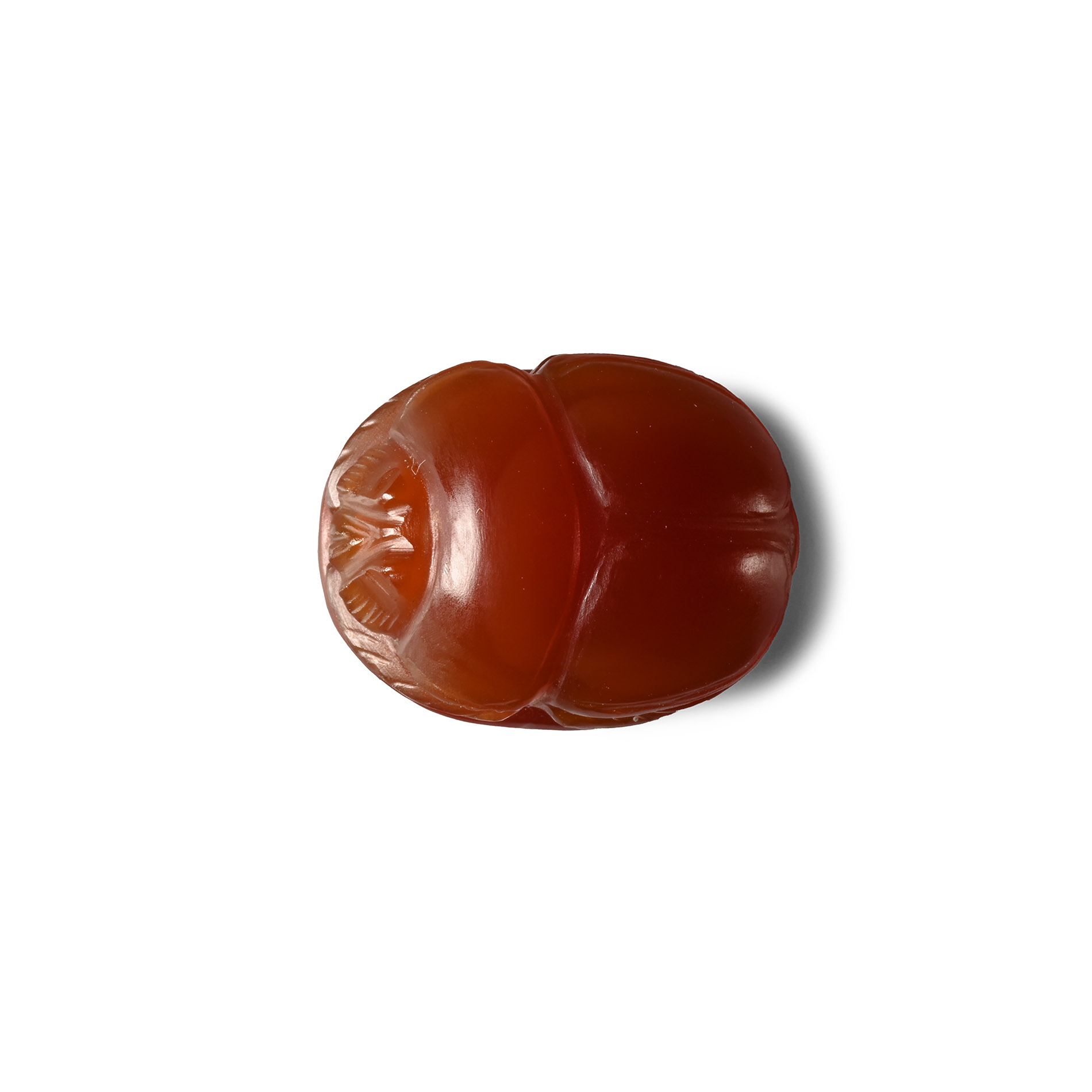
LOT 0038
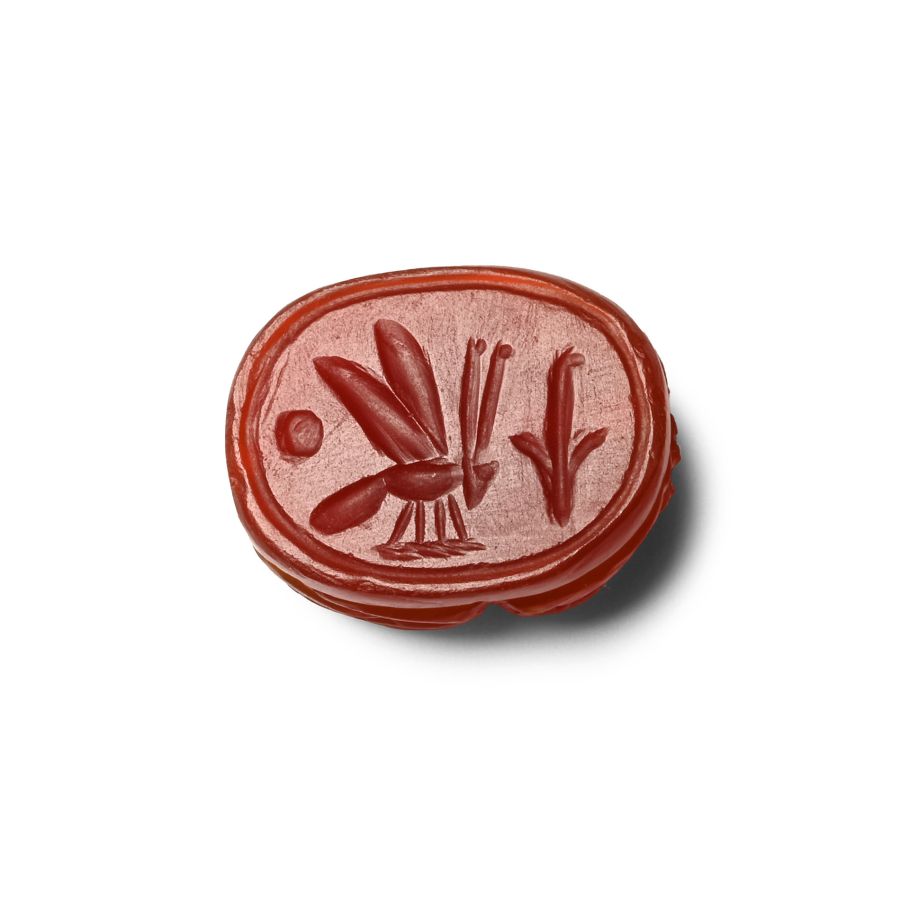
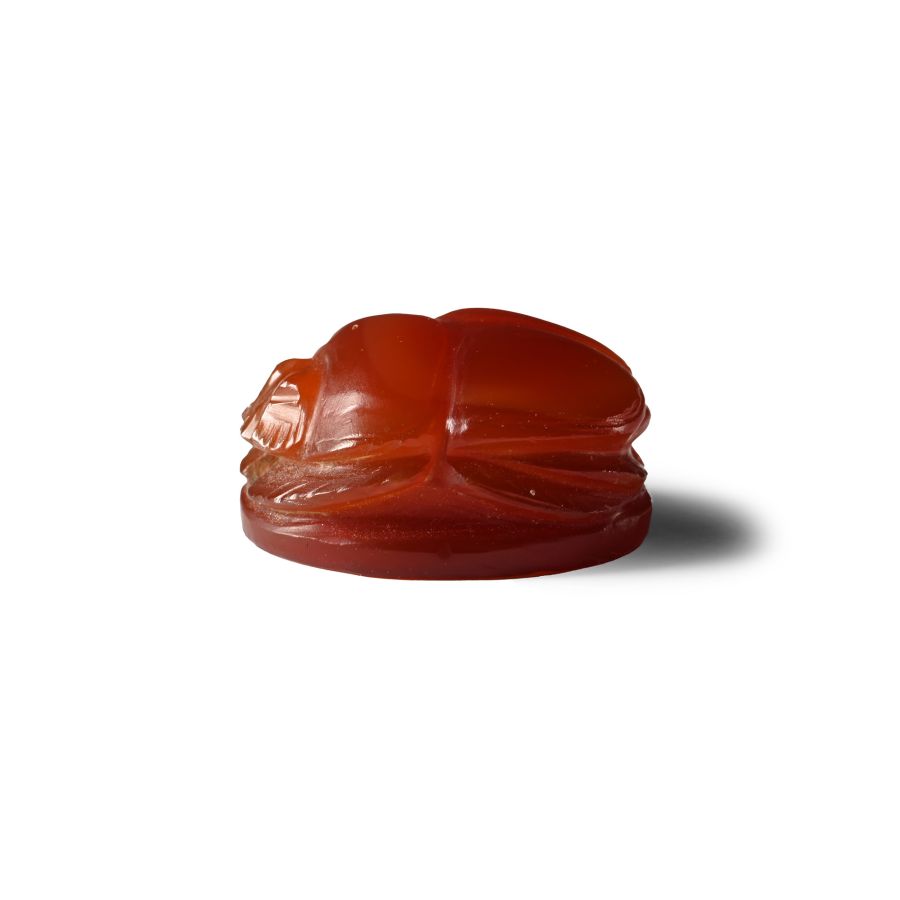
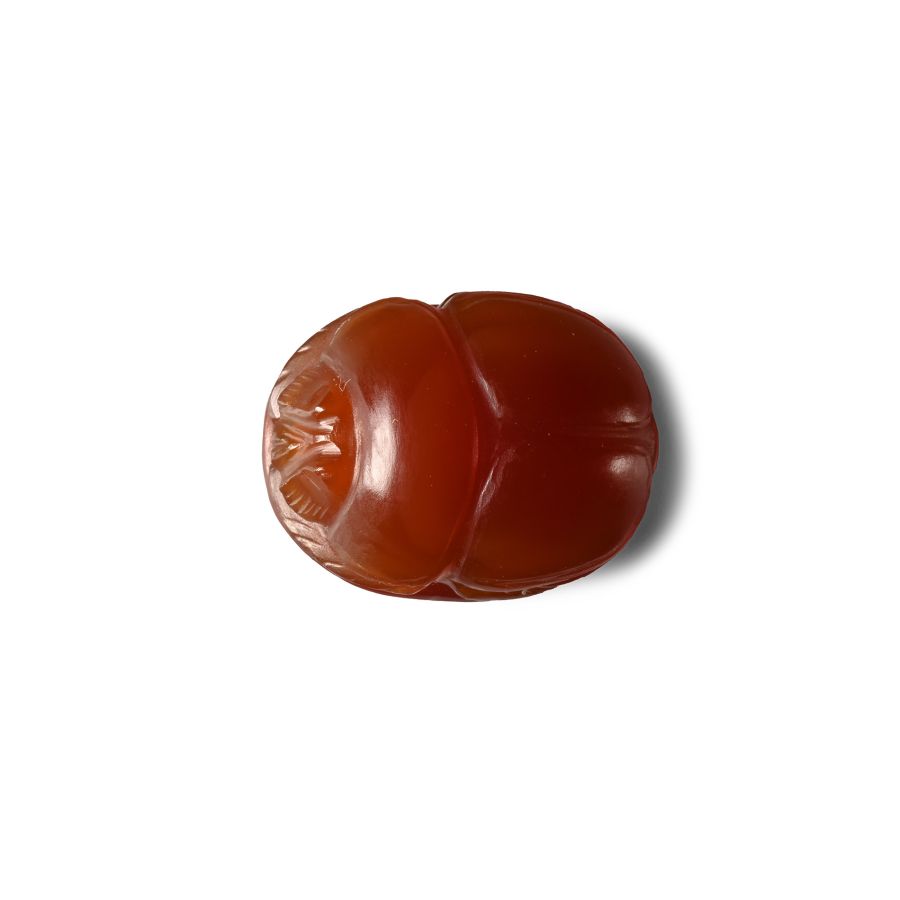
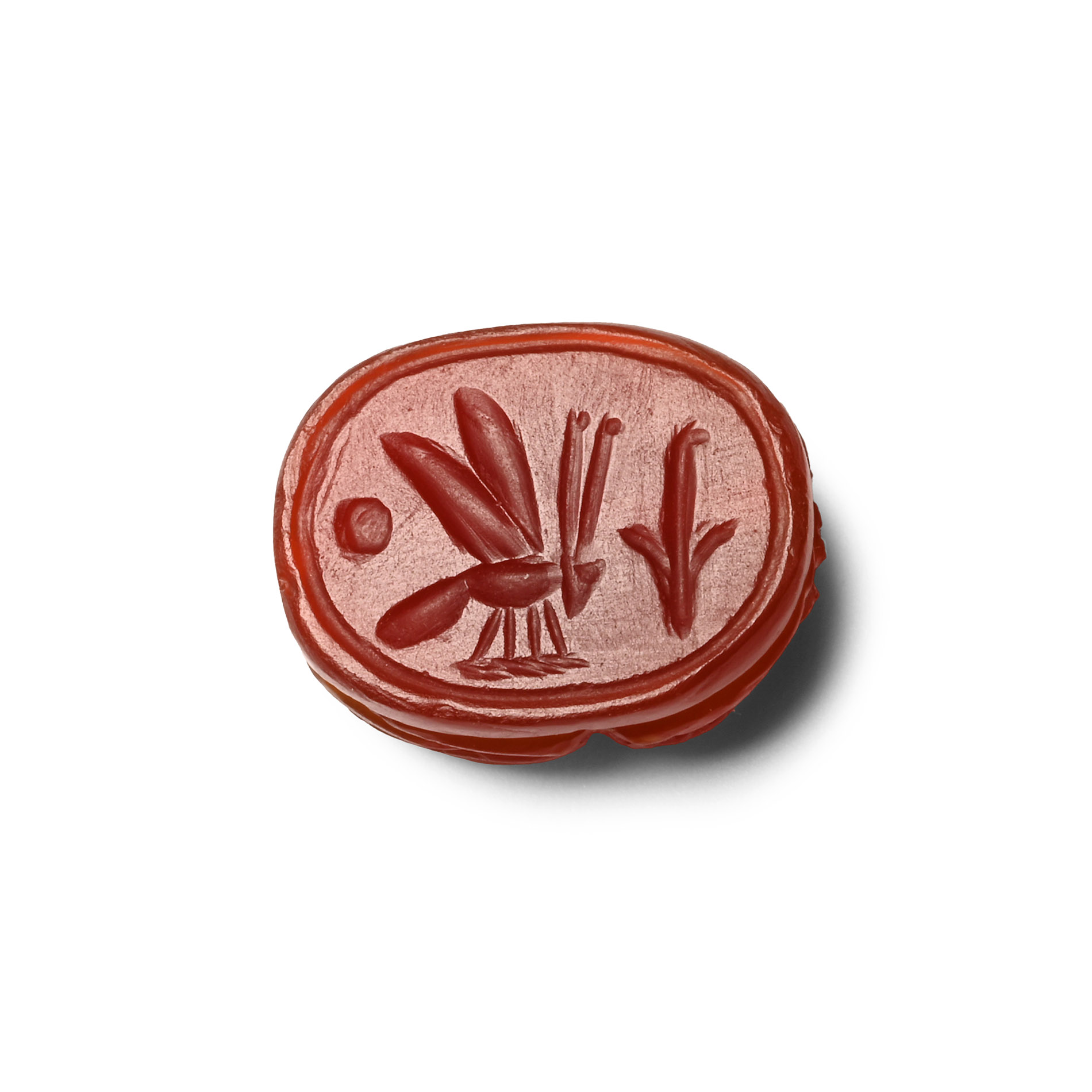
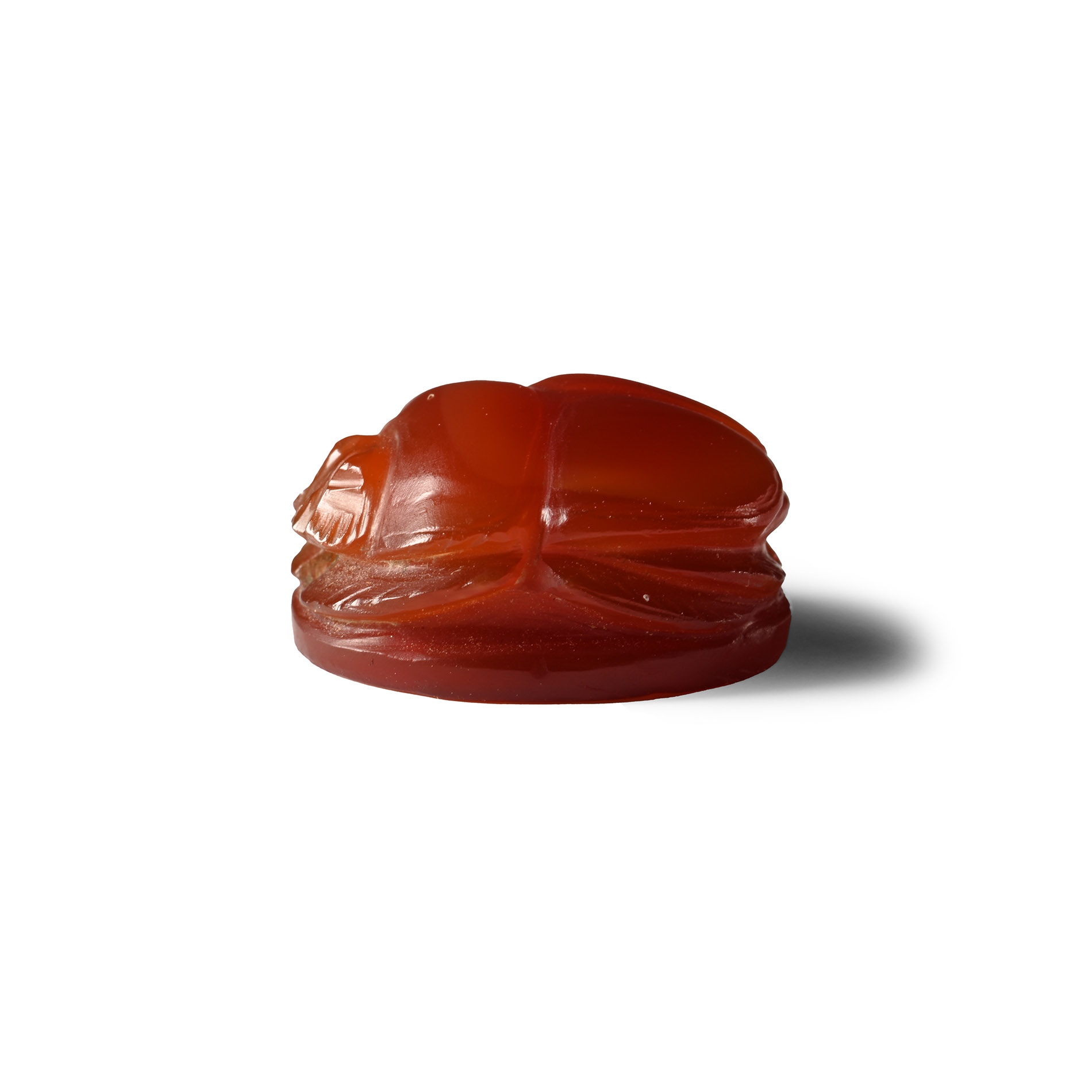
Egyptian Carnelian Scarab with Symbols Representing the Royal Title 'King of Upper and Lower Egypt'
NEW KINGDOM, 1550-1070 B.C.
5/8 in. (3 grams, 16 mm).
With rounded profile and detailing, the underside inscribed with the sedge, bee and sun disk symbols. [No Reserve]
ProvenanceEx North London, UK, gentleman, 1990s.
CONDITIONTimeLine Auctions follows a vetting process to ensure the authenticity and legality of all items, reinforcing our commitment to integrity and responsible trading. Each antiquity, antique, and coin lot undergoes thorough examination by a vetting committee of at least ten external specialists, professional trade association members, scientists, and archaeologists: Our Vetting Process
AUCTIONS:
TimeLine is a leading auction house specialising in antiquities, ancient art, collectables, natural history, coins, medals, and books. Our auctions offer museums, collectors, historians, and enthusiasts the opportunity to acquire unique and historically significant pieces.
LOT 0038
Egyptian Carnelian Scarab with Symbols Representing the Royal Title 'King of Upper and Lower Egypt'
Sold for (Inc. bp): £1,560
-
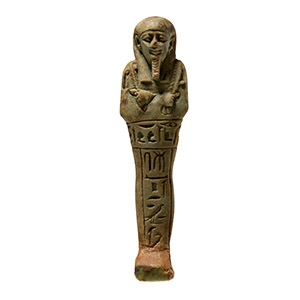
Egyptian Green Faience Shabti with Hieroglyphic Inscription
Late Period, 664-332 B.C.Sold for (Inc. bp): £650
Olive-green glazed composition with detailed facial features, hands, tools, seed bag, dorsal pillar; T-shaped hieroglyphic text: 'sḥḏ wsir nb pḥ.ty ..ns(?) mꜢʾ ḫrw ms n ipt-wrt(?)' ‘The illuminated, the Osiris, Lord of Strength ..ns(?), true of voice’ born to Ipet-weret(?)’; mounted on a custom-made stand. 169 grams total, 15 cm high including stand
Part of an old collection dating back to the 19th century. Ex property of a gentleman, acquired before the 1980s. Private collection of Mr T.H., Norfolk, UK. -
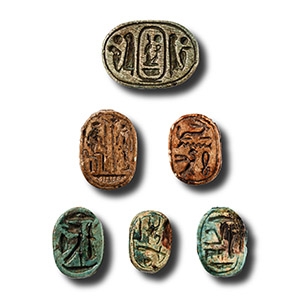
Egyptian Steatite and Other Scarab Collection
Late Period, 664-332 B.C.Sold for (Inc. bp): £715
Group of steatite and glazed composition scarabs each with hieroglyphs to the underside, the largest with a cartouche of Amenophis III. 10.1 grams total, 13-18 mm
Ex North London, UK, gentleman, 1990s. -
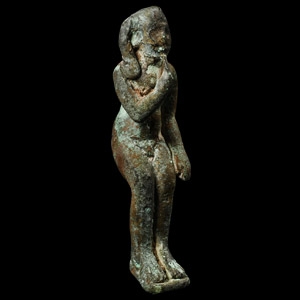
Egyptian Bronze Seated Harpocrates Figure
Late Period, 664-332 B.C.Sold for (Inc. bp): £182
With feet resting on a rectangular base, forefinger on the lips, prominent sidelock of youth. 30.7 grams, 68 mm
Ex Brigantia, York, UK, item no.12040. Private collection of Mr T.H., Norfolk, UK. Accompanied by a previous dealer's certificate of authenticity.
Harpocrates is the Greek rendering of the Egyptian Hor-pa-khered, which translates as 'Horus the Child'. This refers to Horus as the divine infant of Isis and Osiris. Wearing the amulet of Harpocrates could provide the wearer with the same protection that Isis gave to her beloved son.
