
Loading, please wait...

LOT 0688
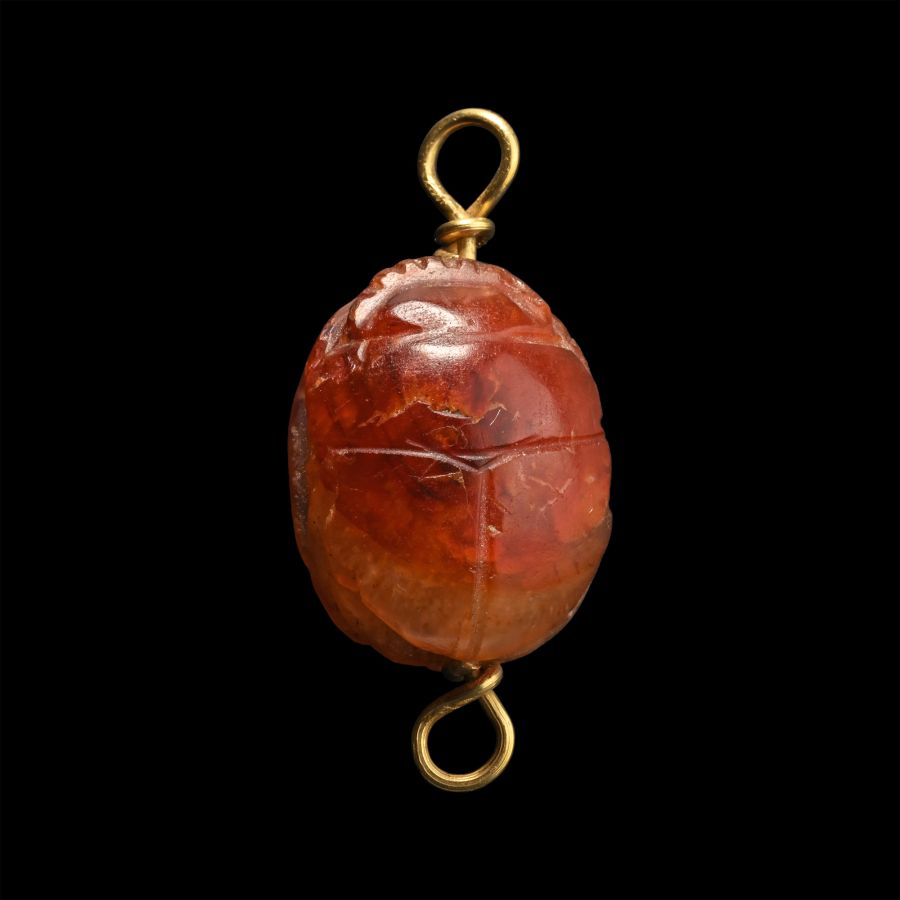
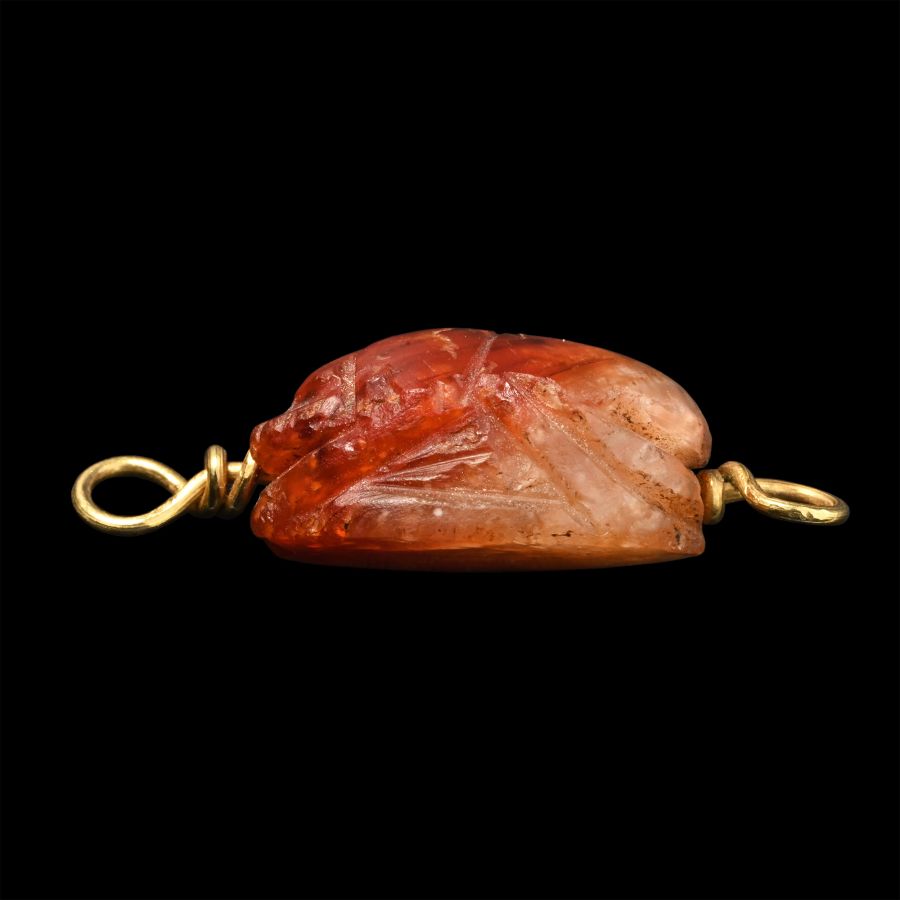
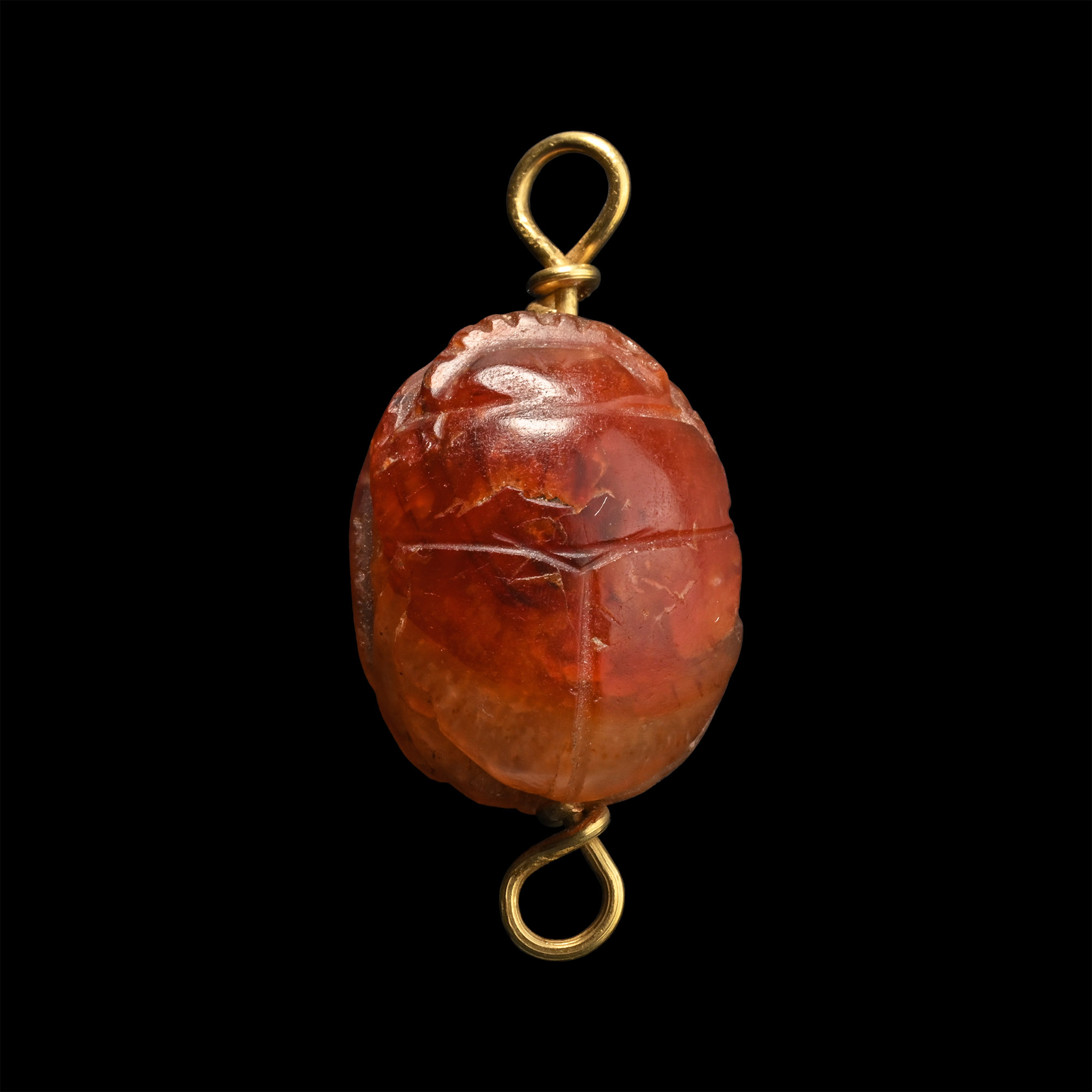
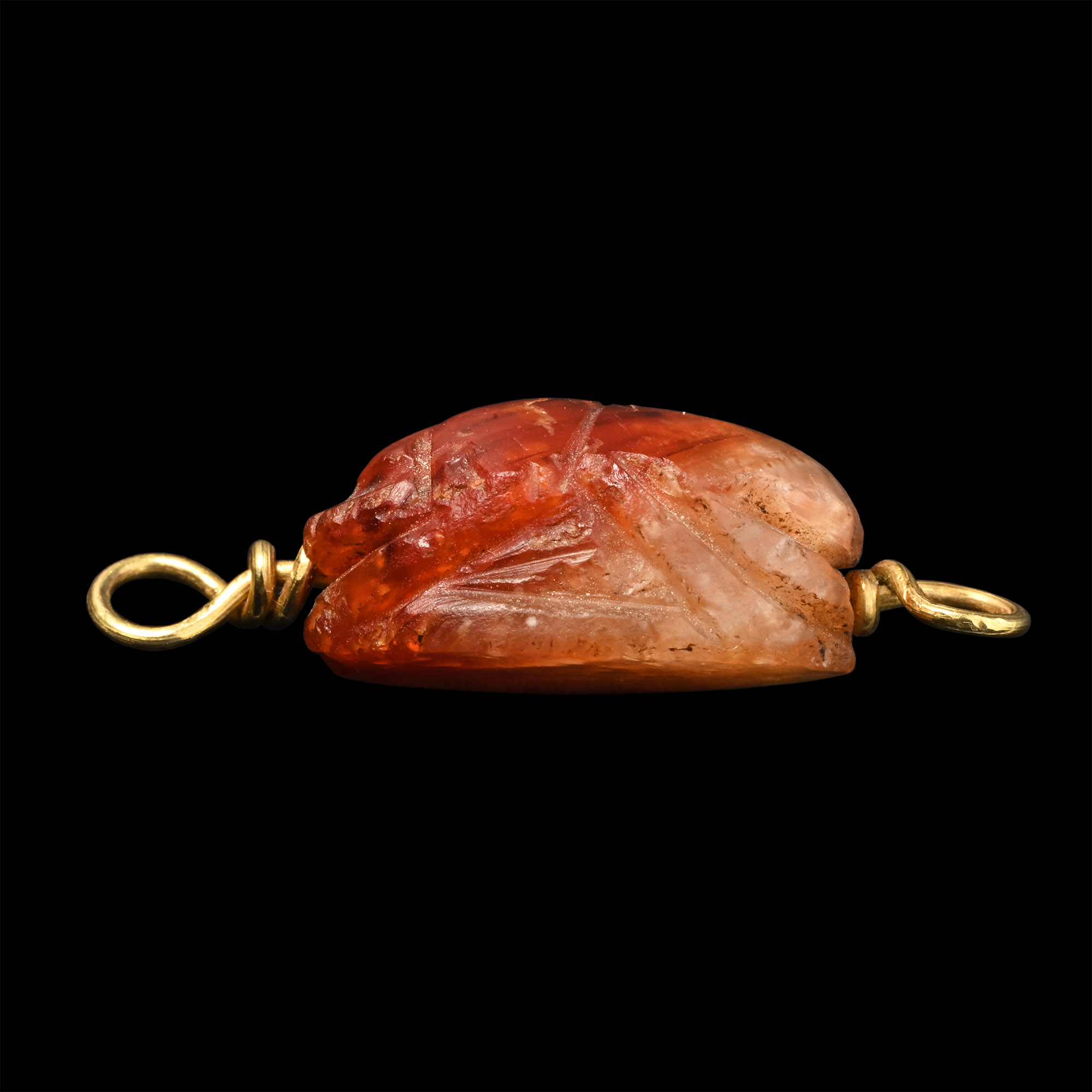
Egyptian Carnelian Scarab Mounted in Gold
LATE PERIOD, CIRCA 664-332 B.C.
1 3/8 in. (6.53 grams, 36 mm).
The scarab with clearly modelled clypeus, head, prothorax, elytra, and legs, with modern gold wire threaded through its longitudinal suspension hole; the underside is plain.
ProvenanceEx Belinda Elliston collection, a member of the Egyptian Exploration Society, 1940s onwards.
CONDITIONTimeLine Auctions follows a vetting process to ensure the authenticity and legality of all items, reinforcing our commitment to integrity and responsible trading. Each antiquity, antique, and coin lot undergoes thorough examination by a vetting committee of at least ten external specialists, professional trade association members, scientists, and archaeologists: Our Vetting Process
AUCTIONS:
TimeLine is a leading auction house specialising in antiquities, ancient art, collectables, natural history, coins, medals, and books. Our auctions offer museums, collectors, historians, and enthusiasts the opportunity to acquire unique and historically significant pieces.
LOT 0688
Egyptian Carnelian Scarab Mounted in Gold
Estimate £600 - 800€700 - 930 (for guidance only)$810 - 1,080 (for guidance only)
Opening Bid
£300 (EUR 348; USD 405) +BP*
-
Egyptian Mounted Coptic Textile Fragment of a Central Clavus
Circa 6th-7th century A.D.Estimate: £40 - 60 (+bp*)
Opening Bid: £5
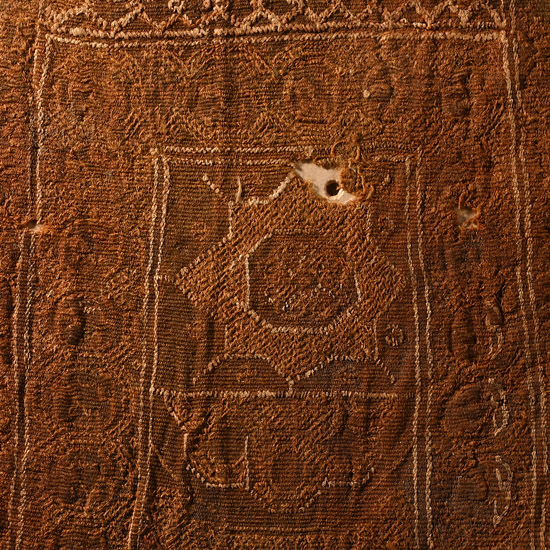
Wide tunic fragment in coarse linen and purple-violet wool with animal figures enclosed within an orbiculi, the central part of the fragment featuring a geometric decoration of stars and lozenges; mounted on cardboard backing. 45 grams total, 22 cm
Acquired 1970s-1996. Property of a North American collector. London collection, 2016.
Among the many fragments from wool tunics, there are several long strips that match to form nearly full-length central pectoral clavi. They are patterned with a profusion of small figures or interlaced abstract designs, birds, plants and animals, with a contrasting border filled with geometric motifs. -
Egyptian Coptic Tunic Textile Fragments of Orbiculi and Segmenta with Vegetation, Animals and Geometric Ornament
Circa 6th-8th century A.D.Estimate: £80 - 100 (+bp*)
Opening Bid: £5
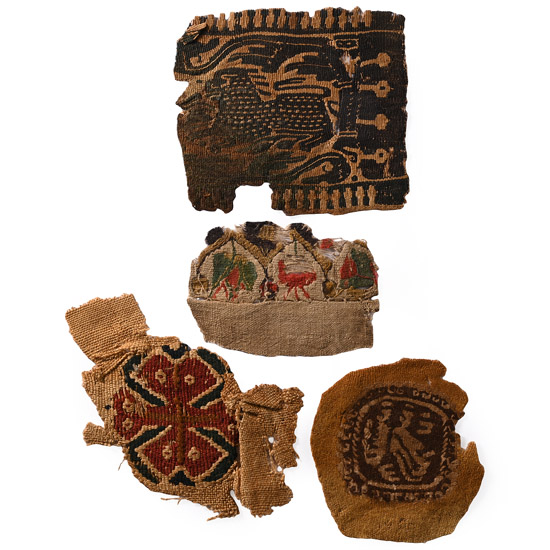
Comprising a squared tablion or fragment of clavus representing a lion with a spotted body, of Sassanid style, the frame featuring geometric patterns; an orbiculus in brown-purple over white linen, S-twist, featuring a bird, frame decorated with meanders; a fragment of textile in red, green, black and yellow wool, representing flowers; and a red and black geometric ornament featuring a type of a flower. 11.69 grams total, 8.3-11.3 cm
Acquired 1970s-1996. Property of a North American collector. London collection, 2016.
A significant feature of this group of textiles is the fragment featuring a lion; it reveals strong Sassanid influences and may date to the brief period of the Sassanid conquest of Roman Egypt, between 618 and 628 AD. -
Very Large Egyptian Expedition Lithograph of Views of Alexandria
Early 19th century A.D.Estimate: £80 - 100 (+bp*)
Opening Bid: £40
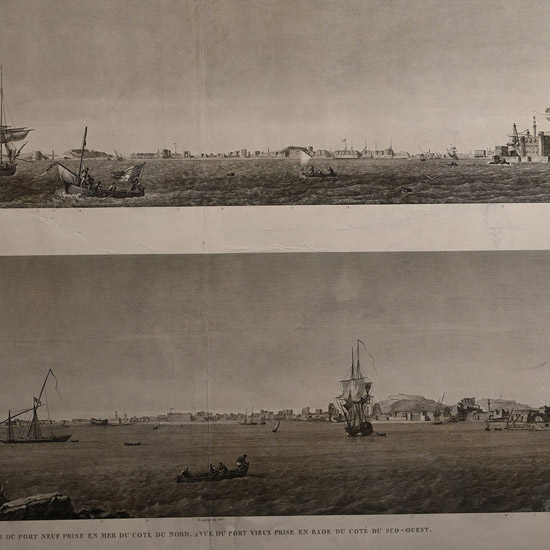
Proof etching on laid paper of plate 88 from Description de l'Égypte : ou, Recueil des observations et des recherches qui ont été faites en Égypte pendant l'expédition de l'armée française. entitled 1. Vue du port neuf en mer du cote du nord. 2. Vue du port vieux prise en rade du cote du sud-ouest. 259 grams, 104.5 x 69 cm
From the collection of a North American priest. Acquired between 1981-1996. Property of a North American collector.
Produced between February 1802 and 1830 on the orders of Napoleon Bonaparte; published between 1809 and 1828. Just 1,000 copies were distributed to various institutions, printed on laid paper with an 'Égypte ancienne et moderne' watermark. The book is subtitled Recueil des observations et des recherches qui ont été faites en Égypte pendant l’expédition de l’Armée française, publié par les ordres de Sa Majesté l’Empereur Napoléon le Grand (Gathering of observations and discoveries which were made in Egypt during the expedition of the French army, published on the orders of His Majesty the Emperor Napoleon the Great). It was the world's first encyclopedia devoted exclusively to the remains of ancient Egypt. The plates of this book are the first to present the archaeological sites of Thebes (Luxor).
