
Loading, please wait...
LOT 0019
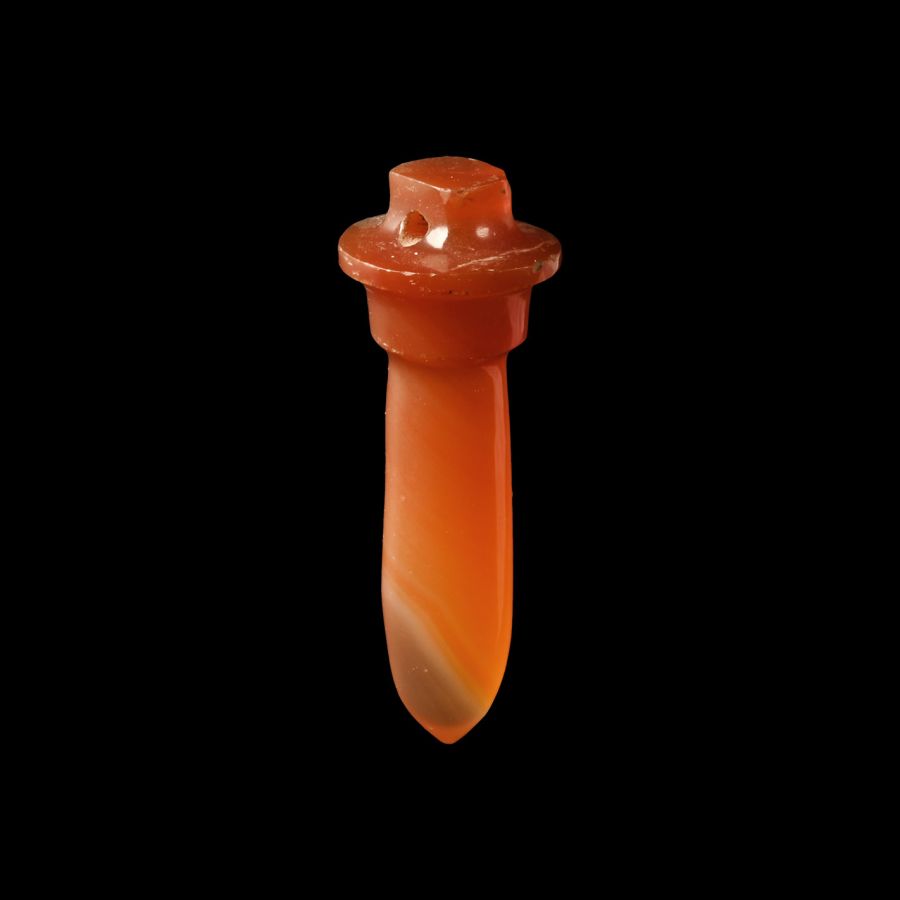
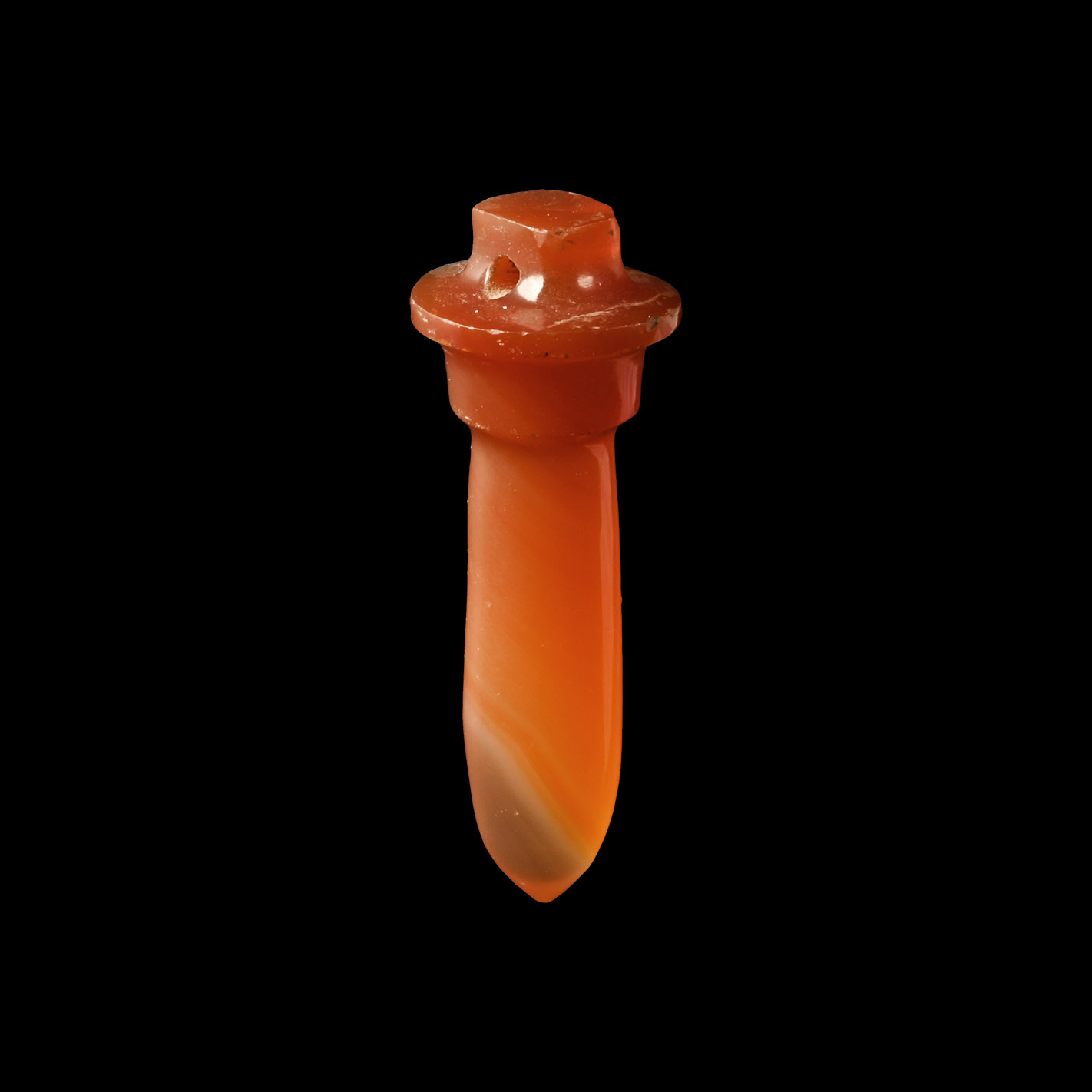
Egyptian Carnelian Papyrus Amulet
NEW KINGDOM, 19TH DYNASTY, 1296-1186 B.C.
1 1/8 in. (2.4 grams, 29 mm).
A carnelian amuletic papyrus stalk pendant, colour graduated along the stem.
ProvenancePrivate collection, acquired 1999.
LiteratureCf. Andrews, C., Amulets of Ancient Egypt, London, 1994, item 83(c), for type.
CONDITIONTimeLine Auctions follows a vetting process to ensure the authenticity and legality of all items, reinforcing our commitment to integrity and responsible trading. Each antiquity, antique, and coin lot undergoes thorough examination by a vetting committee of at least ten external specialists, professional trade association members, scientists, and archaeologists: Our Vetting Process
AUCTIONS:
TimeLine is a leading auction house specialising in antiquities, ancient art, collectables, natural history, coins, medals, and books. Our auctions offer museums, collectors, historians, and enthusiasts the opportunity to acquire unique and historically significant pieces.
-
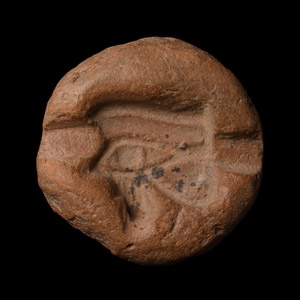
Egyptian Terracotta Eye of Horus Mould
New Kingdom, 1390-1069 B.C.Sold for (Inc. bp): £152
A terracotta amulet mould with incuse sacred wedjat motif, with ducts either side for excess material and possibly to indicate the position of suspension holes added after moulding. 12.9 grams, 34 mm
Fine condition.
Ex UK art market, 1970s. Property of a London gentleman.
A comparable example from Thebes and dated to the 18th Dynasty is in the Metropolitan Museum of Art (accession number 12.180.377). -
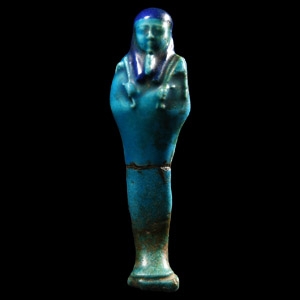
Egyptian Blue Faience Shabti
Early Ptolemaic Period, circa 3rd century B.C.Estimate: £1,000 - 1,400 (‡+bp*)
Opening Bid: £500
A mummiform shabti with a thick and lustrous turquoise glaze, sporting a tripartite wig highlighted in darker blue glaze, and a long beard; holding a pick, hoe and a cord for a seed bag hanging over the left shoulder; raised dorsal pillar and an integral plinth; repaired. 44 grams, 11.5 cm high
Ex collection of Jacques René Fiechter, Switzerland (1920-1950). with Auction Martin, Egyptian Collection André Bircher, 1949. Accompanied by an academic report by Egyptologist Paul Whelan.
The lack of inscription hinders positive identification, but the shabti’s proportions, elegant modelling, and lustrous glaze closely match others considered to have come from an area of the extensive necropolis at Abydos, labelled “Cemetery G” by its excavator Flinders Petrie, where hundreds of blue lustrous-glazed shabtis of varying qualities were recovered. This figure is closest in style to those belonging to Petosiris, son of Djed-hor. Both were buried with similarly blue lustrous-glazed shabtis that were mostly plain although a few were inscribed with an inscription. -
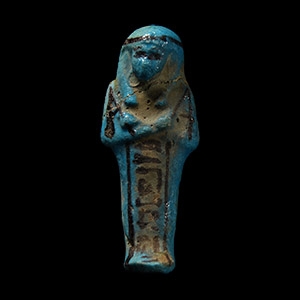
Egyptian Deep Blue Glazed Shabti of Pa-di-Khonsu-iy
Third Intermediate Period, 21st Dynasty, 1081-931 B.C.Sold for (Inc. bp): £780
A bright blue glazed worker shabti modelled on a rectangular base, arms crossed over the chest, detailing in black to the wig and eyes, holding a pair of hoes, a seed bag to the back, the hair tied with a seshed headband; a vertical column of hieroglyphs to the front of the body naming the wab-priest Pa-di-Khonsu-iy; repaired. 76 grams, 98 mm high
From a Worcester deceased estate. Property of a Cambridgeshire gentleman. Accompanied by an academic report by Egyptologist Paul Whelan.
As a wab-priest, Pa-di-Khonsu-iy would have assisted a higher-ranking hem-priest with the general maintenance and ritual activities in a temple, likely located either in Thebes in Upper Egypt or Tanis in the Delta.
