
Loading, please wait...
LOT 0035
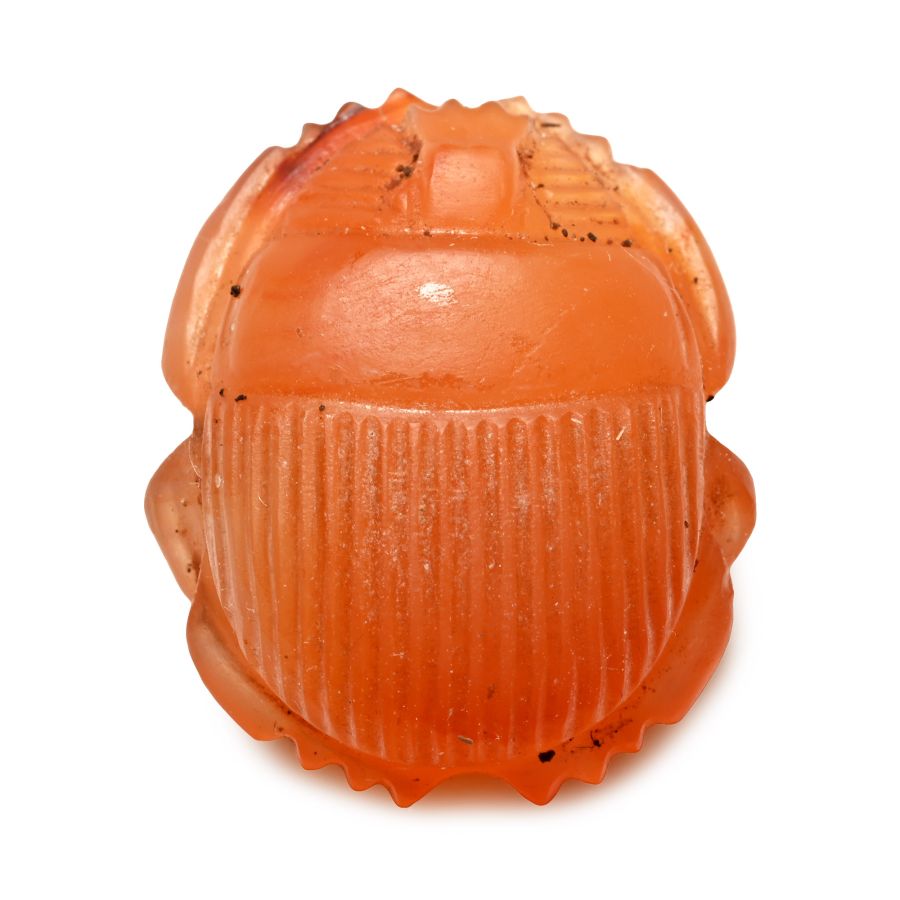
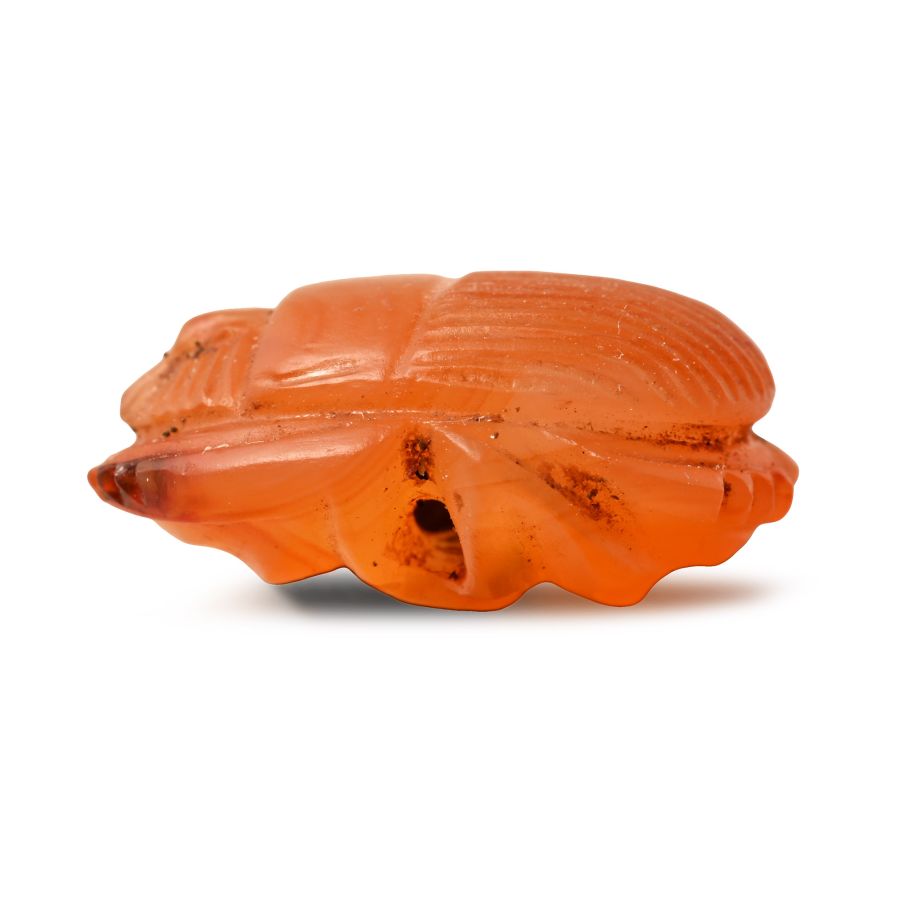
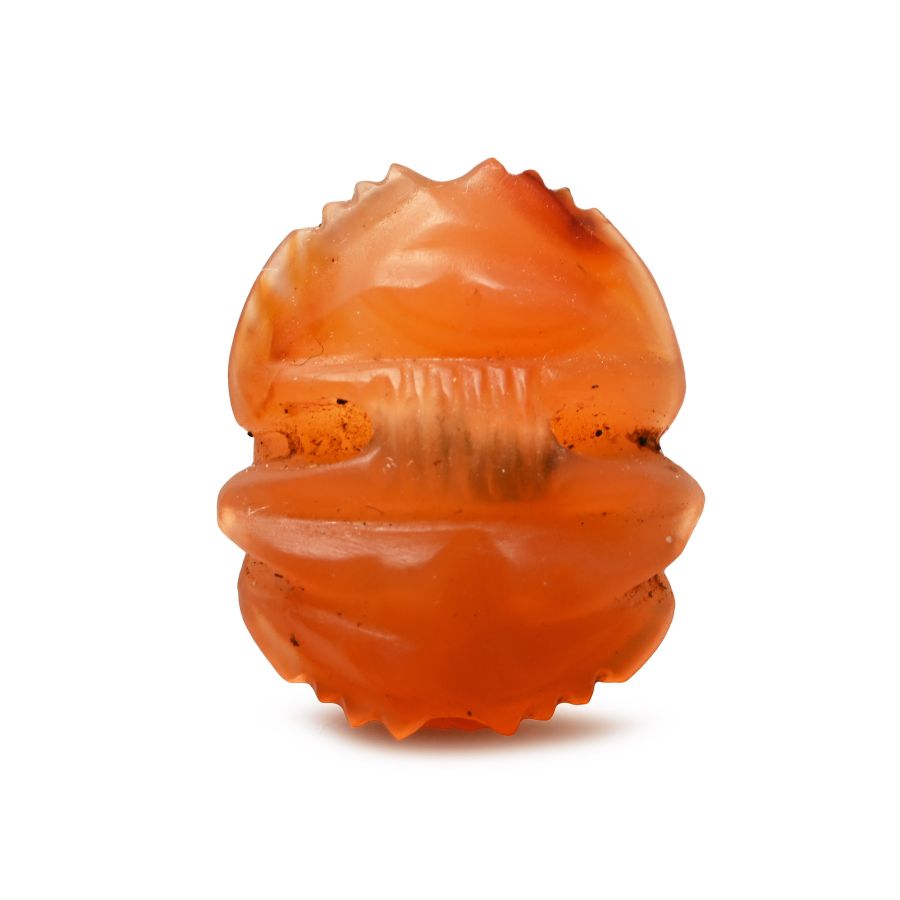
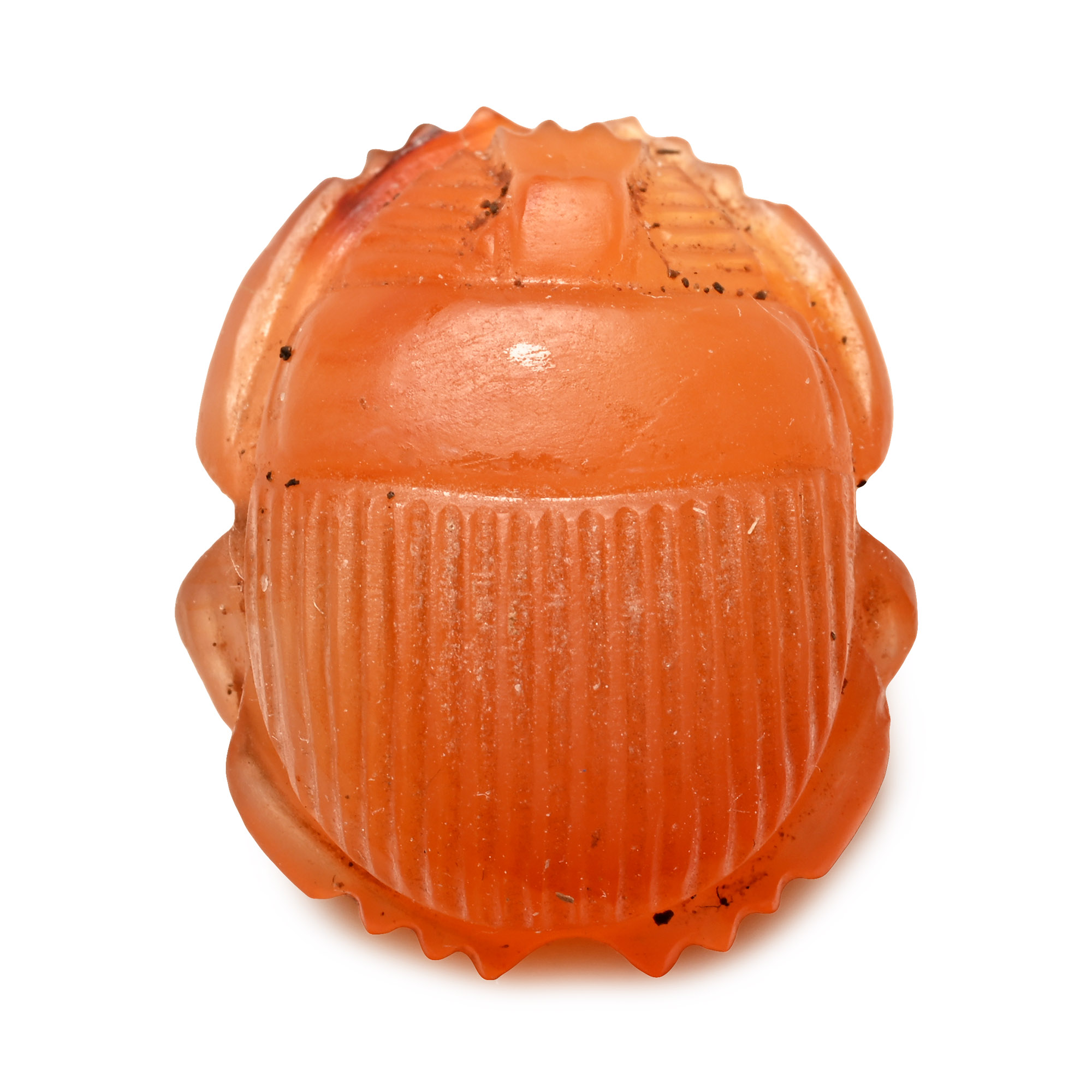
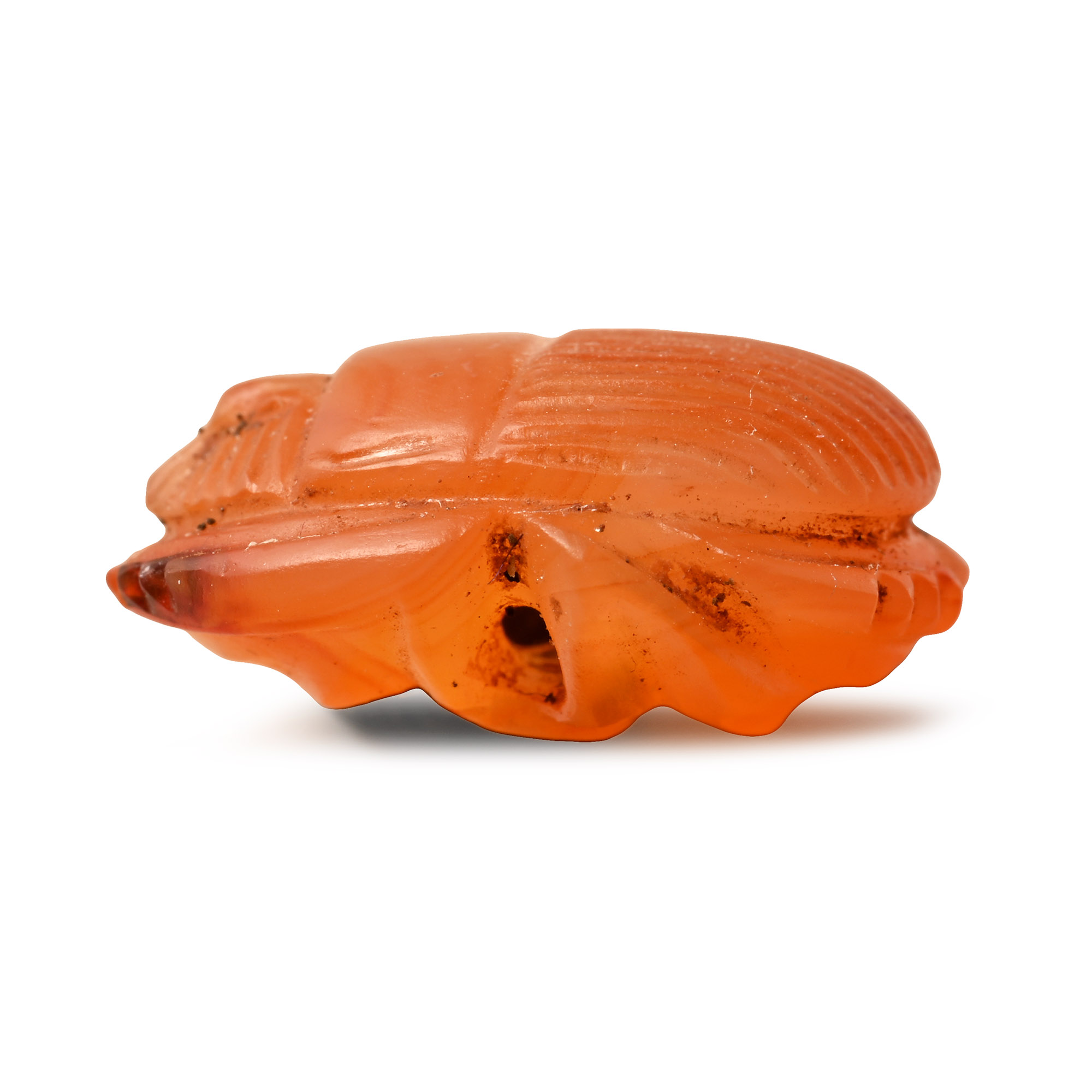
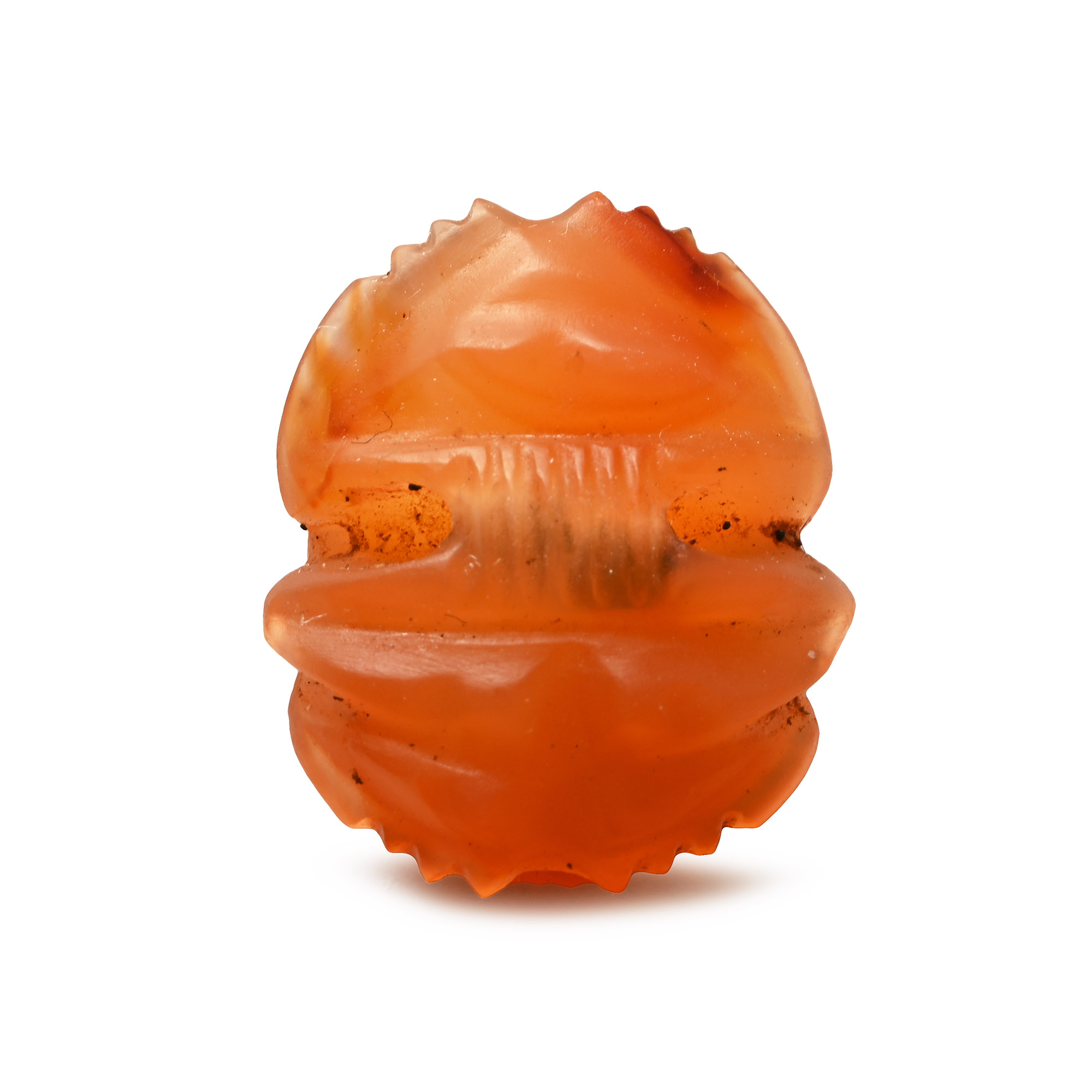
Egyptian Carnelian Heart Scarab
LATE PERIOD, 664-332 B.C.
5/8 in. (2.55 grams, 17 mm).
With fine anatomical detailing on the body and striated wingcase, legs folded beneath the body and flanked by a ribbed suspension loop.
ProvenanceFrom a mid 20th century collection.
LiteratureCf. Ben-Tor, D., The Scarab: A Reflection of Ancient Egypt, Tel Aviv, 1993, p. 77, nos. 11 and 12, for two similar carnelian scarabs.
FootnotesThe scarab amulet was one of ancient Egypt’s most widespread symbols, signifying rebirth, transformation, and protection. Modelled on the dung beetle associated with the sun god Khepri—believed to roll the sun across the sky—it embodied the cycle of life and renewal. Widely used from the early Middle Kingdom onwards, scarabs served as funerary amulets, personal charms, and seals, often inscribed with prayers or names. They reflect both spiritual beliefs and daily life in ancient Egypt. Naturalistic scarabs made of semi-precious stones, such as this example, are a characteristic feature of Late Period burials.
CONDITIONTimeLine Auctions follows a vetting process to ensure the authenticity and legality of all items, reinforcing our commitment to integrity and responsible trading. Each antiquity, antique, and coin lot undergoes thorough examination by a vetting committee of at least ten external specialists, professional trade association members, scientists, and archaeologists: Our Vetting Process
AUCTIONS:
TimeLine is a leading auction house specialising in antiquities, ancient art, collectables, natural history, coins, medals, and books. Our auctions offer museums, collectors, historians, and enthusiasts the opportunity to acquire unique and historically significant pieces.
LOT 0035
Egyptian Carnelian Heart Scarab
Estimate £800 - 1,000€930 - 1,160 (for guidance only)$1,080 - 1,350 (for guidance only)
Opening Bid
£400 (EUR 464; USD 540) +BP*
-
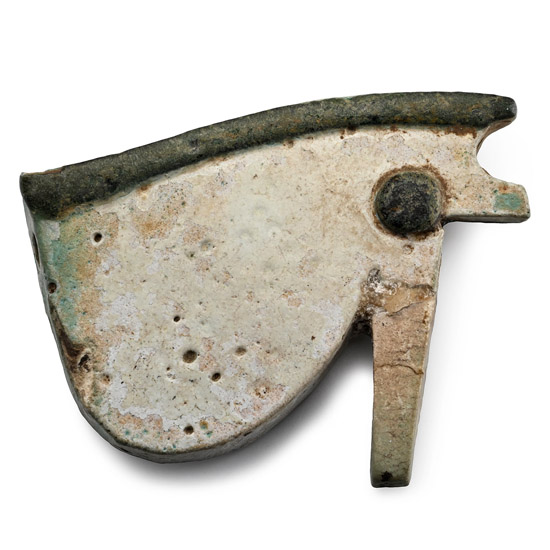
Large Egyptian Faience Eye of Horus Amulet
Third Intermediate Period, circa 1069-664 B.C.Estimate: £200 - 300 (+bp*)
Opening Bid: £100
Sizeable wedjat-eye amulet with applied black detailing to the pupil and brow. 16.5 grams, 50.4 mm
with Archaeologia, Switzerland, before 1983. Ex private North American collection. London private collection, 2016.
The wedjat-eye amulet symbolises the healed eye of the god Horus, representing both human and falcon elements. The name wedjat in ancient Egyptian means ‘the one that is sound.’ According to Egyptian mythology, Horus' eye was wounded or taken by the god Seth and later restored by Thoth. The wedjat-eye amulet was believed to protect its wearer and confer qualities of recovery and regeneration. It was highly popular and was used by both the living and the dead. -
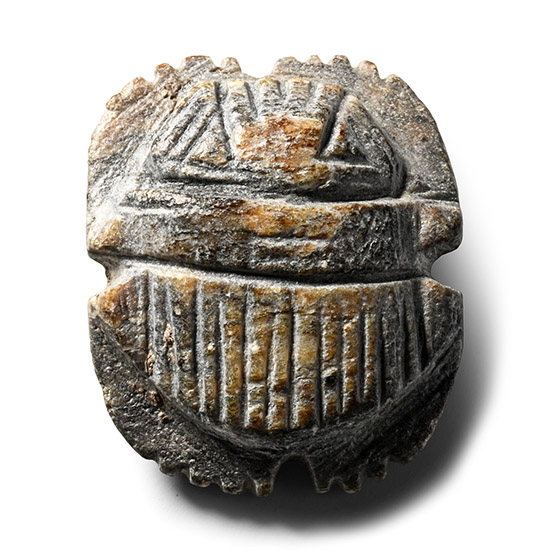
Egyptian Stone Scarab
Late Period, 664-332 B.C.Estimate: £120 - 170 (+bp*)
Bids: 1 | Current Bid: £5
With incised anatomical detailing on the body, the underside ground smooth, with a faint trace of an original horizontal suspension hole. 3.28 grams, 20 mm
London, UK, art market, 1980s. Private collection, London, UK. -
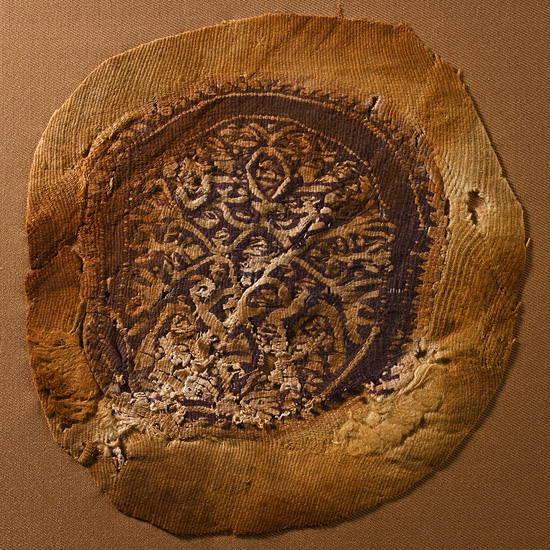
Egyptian Mounted Coptic Orbiculus Textile Fragment
Circa 6th century A.D.Estimate: £40 - 60 (+bp*)
Bids: 1 | Current Bid: £5
Comprising a large circular fragment of an orbiculus in linen and wool, S torsion, scalloped borders, embroidered with vegetal and geometric ornaments, dark purple on linen. 117 grams total, 18.5 cm
Acquired 1970s-1996. Property of a North American collector. London collection, 2016.
Water plant elements are scattered on the orbiculus, which is decorated with vegetal interlaces and possibly fish figures. These abstract decorations show a strong stylisation that gives the marine animals a plant-like appearance.
