
Loading, please wait...
LOT 0478
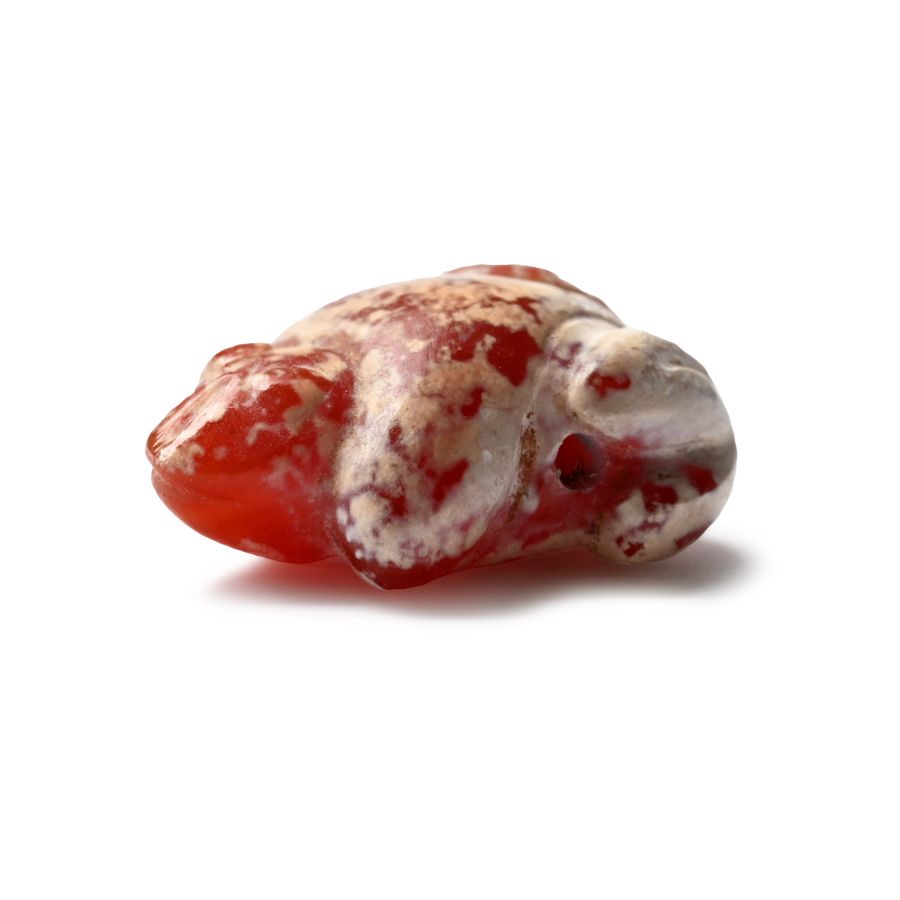
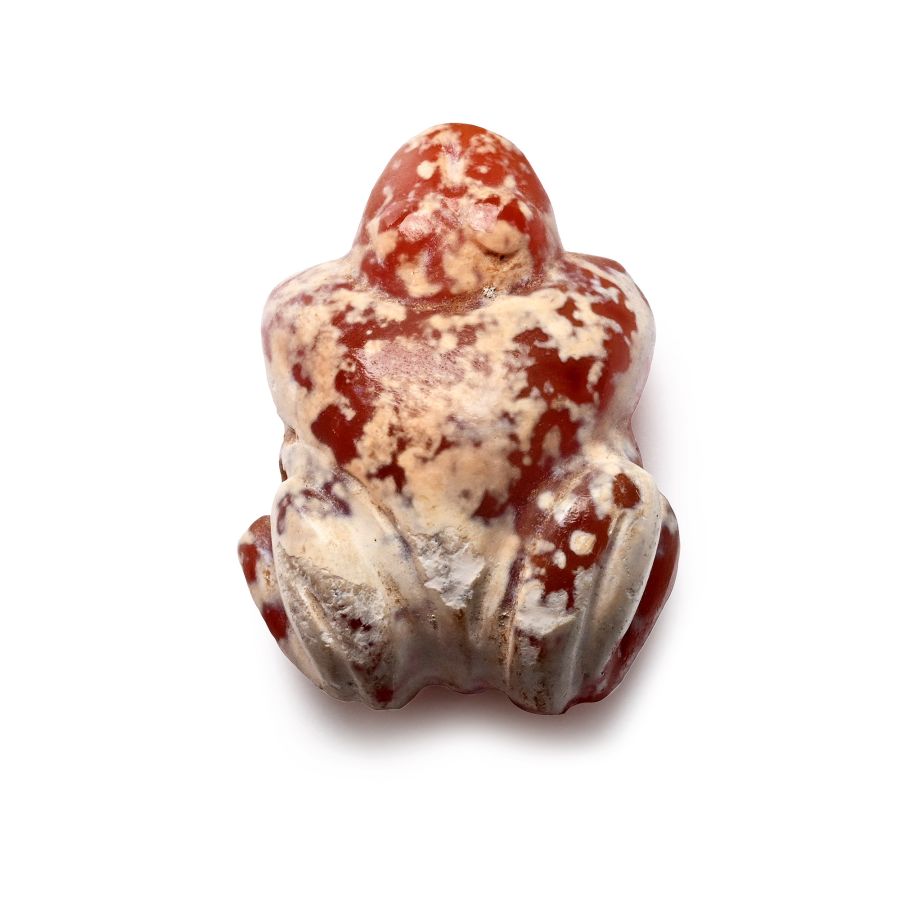
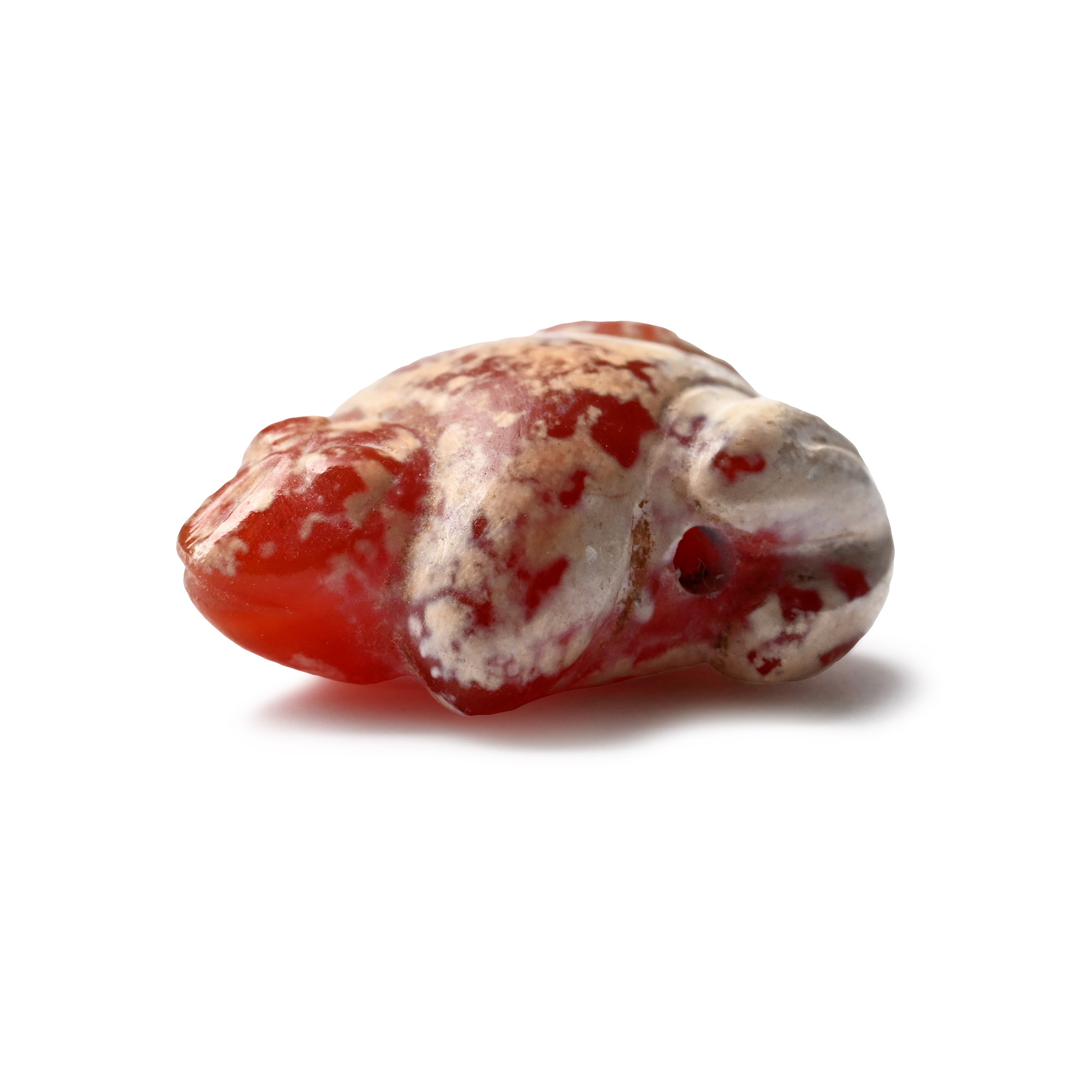
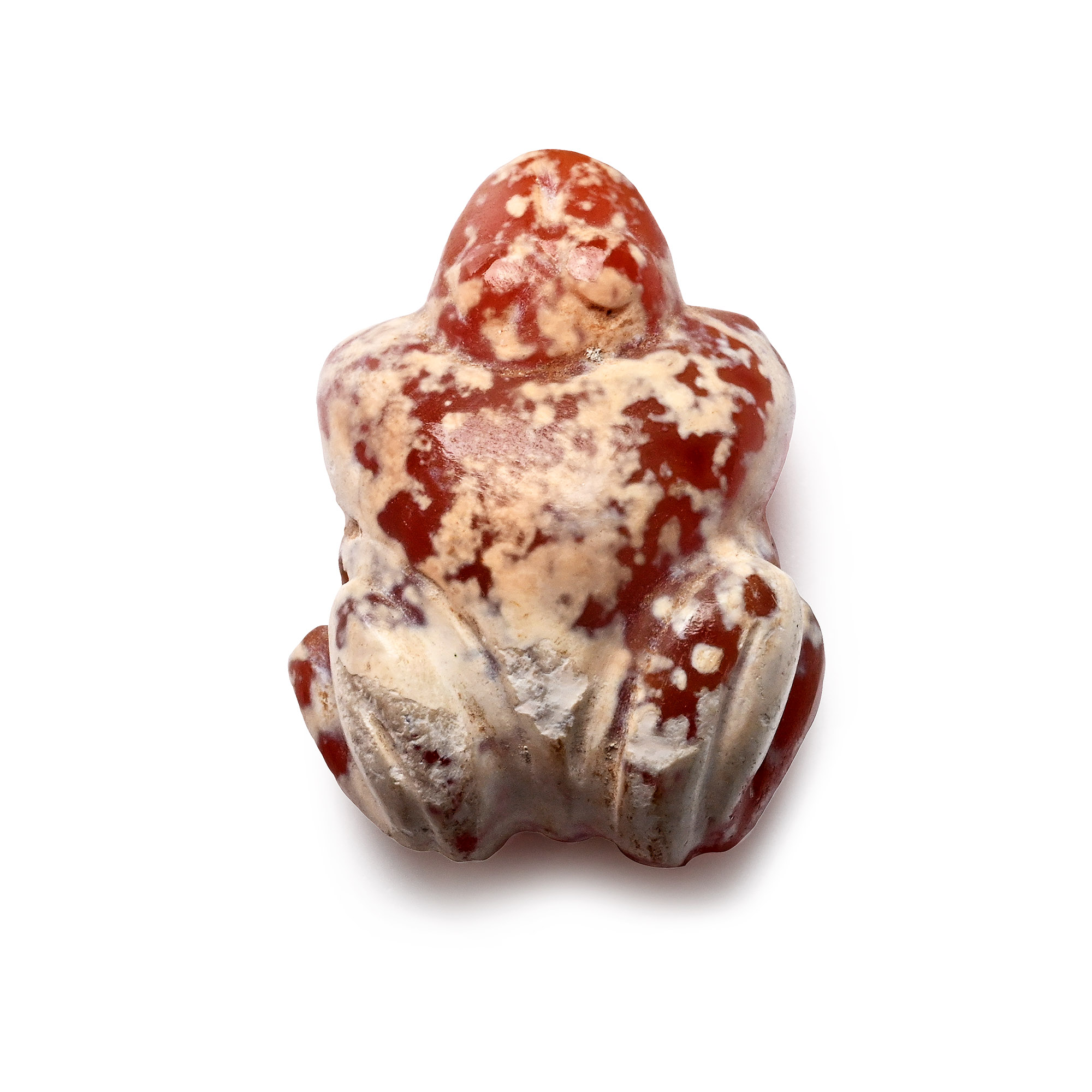
Egyptian Carnelian Frog Amulet
LATE PERIOD, 664-332 B.C.
3/4 in. (298 grams, 19 mm).
Carved in the round, pierced through the body for suspension.
ProvenanceUK private collection before 2000.
Acquired on the UK art market.
Private collection, London, UK.
This lot is accompanied by an illustrated lot declaration signed by the Head of the Antiquities Department, Dr Raffaele D'Amato.
Cf. Andrews, C., Amulets of Ancient Egypt, London, 1994, p.32, fig. 28h, for a similar example in diorite.
FootnotesFrog amulets in ancient Egypt symbolised fertility, rebirth, and regeneration. Associated with the goddess Heqet, linked to childbirth and life-giving forces, these amulets were especially popular in contexts related to fertility and protection during pregnancy and childbirth. Their connection to the annual Nile flood, which brought new life to the land, further reinforced their symbolism of renewal and abundance.
CONDITIONTimeLine Auctions follows a vetting process to ensure the authenticity and legality of all items, reinforcing our commitment to integrity and responsible trading. Each antiquity, antique, and coin lot undergoes thorough examination by a vetting committee of at least ten external specialists, professional trade association members, scientists, and archaeologists: Our Vetting Process
AUCTIONS:
TimeLine is a leading auction house specialising in antiquities, ancient art, collectables, natural history, coins, medals, and books. Our auctions offer museums, collectors, historians, and enthusiasts the opportunity to acquire unique and historically significant pieces.
-
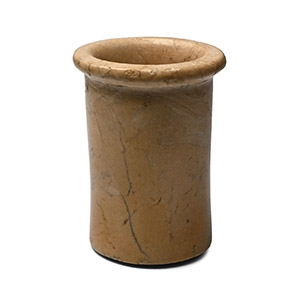
Egyptian Cylindrical Breccia Vase
Early Dynastic Period-Old Kingdom, 3050-2181 B.C.Sold for (Inc. bp): £338
Columnar in form with thick everted rim, slightly domed underside. 534 grams, 10.7 cm
From the private collection of a Canadian gentleman living in Essex, UK, formed since the 1920s-circa 1990. Property of an Essex lady until the late 1990s; thence by descent. From the private collection of an Essex gentleman since the late 1990s. This lot is accompanied by an illustrated lot declaration signed by the Head of the Antiquities Department, Dr Raffaele D'Amato. -
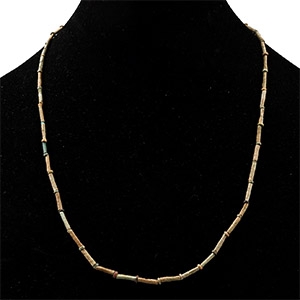
Egyptian Faience Mummy Bead Necklace String
Late Period, 664-332 B.C.Sold for (Inc. bp): £98
Restrung group of tubular beads with cylindrical and small disc-shaped bead spacers. 4.97 grams, 62 cm
From the private collection of a Canadian gentleman living in Essex, UK, formed since the 1920s-circa 1990. Property of an Essex lady until the late 1990s; thence by descent. From the private collection of an Essex gentleman since the late 1990s. This lot is accompanied by an illustrated lot declaration signed by the Head of the Antiquities Department, Dr Raffaele D'Amato. -
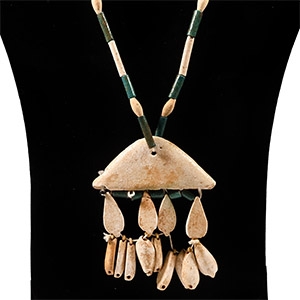
Egyptian Faience Necklace with Pendant
New Kingdom, 1400-1100 B.C.Sold for (Inc. bp): £780
Designer necklace composed of alternating white and turquoise tubular beads with oval spacer bead; a collar terminal as a central pendant with two rows of petal-shaped beads incorporating tubular and ring spacers suspended below. 41 grams, 76 cm long
Acquired in the mid 1980s-1990s. Private collection, Switzerland, thence by descent. Private collection, since the late 1990s. This lot is accompanied by an illustrated lot declaration signed by the Head of the Antiquities Department, Dr Raffaele D’Amato. This lot is accompanied by an illustrated lot declaration signed by the Head of the Antiquities Department, Dr Raffaele D'Amato.
