
Loading, please wait...
LOT 0495
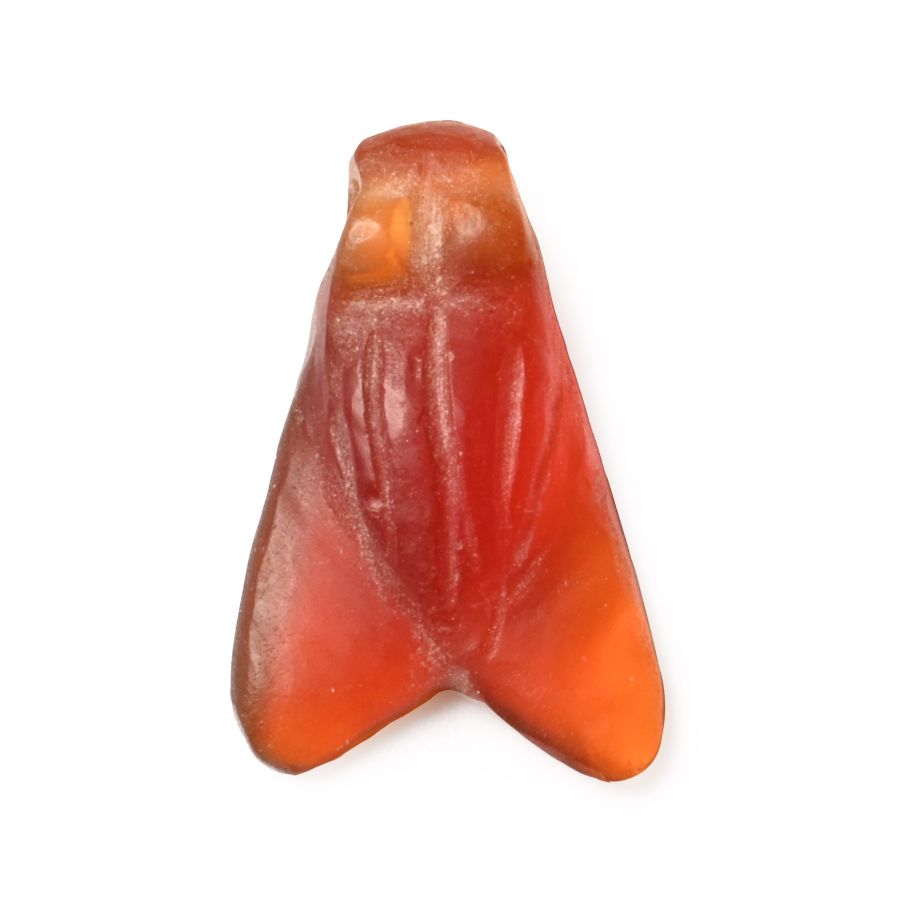
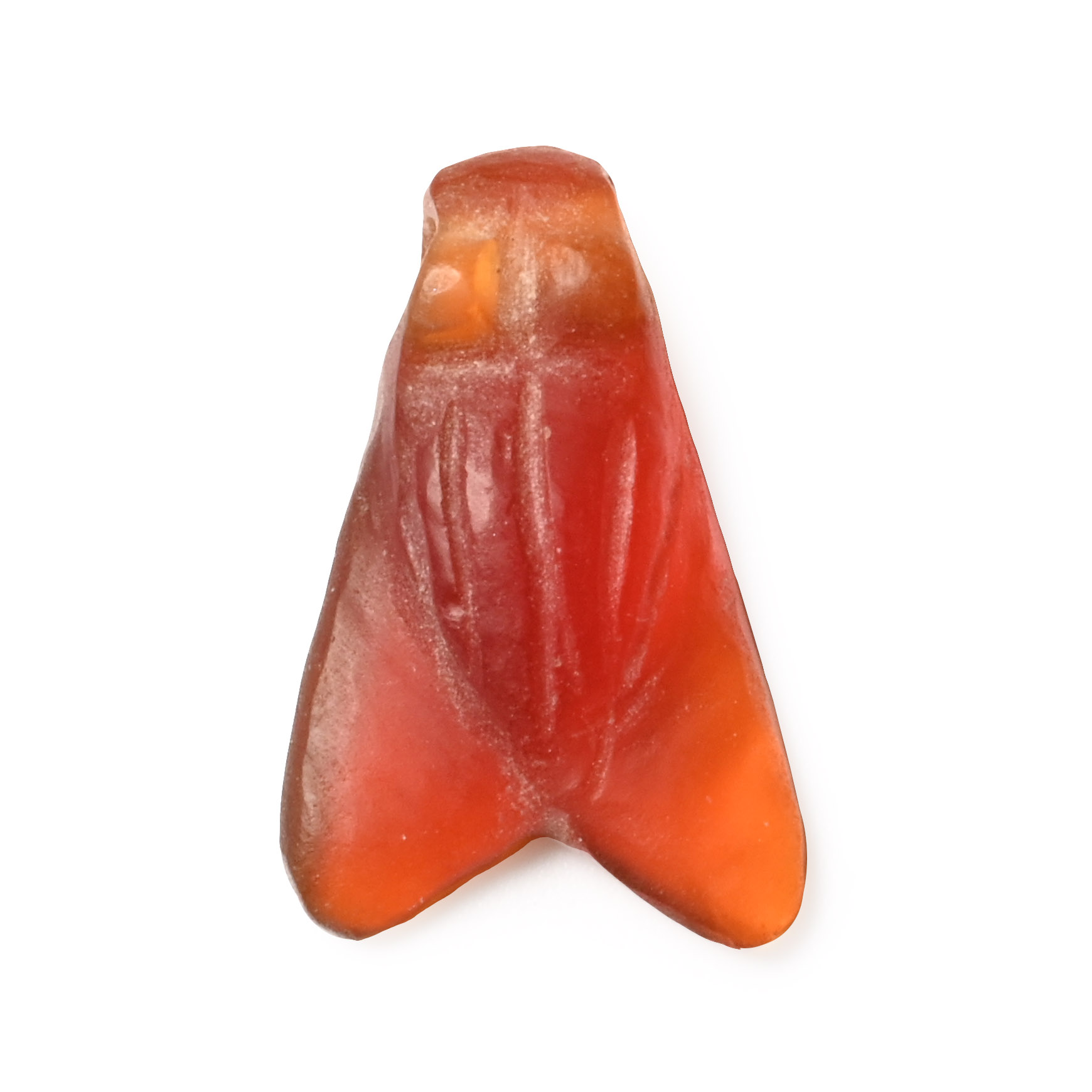
Egyptian Carnelian Fly Amulet
LATE PERIOD, 664-332 B.C.
1/2 in. (0.32 grams, 12 mm).
Carved with simple body and eye detailing and polished; drilled through the eyes for suspension. [No Reserve]
ProvenanceEx North London, UK, gallery, early 2000s.
This lot is accompanied by an illustrated lot declaration signed by the Head of the Antiquities Department, Dr Raffaele D'Amato.
Cf. Andrews, C., Amulets of Ancient Egypt, London, 1994, pp.62-3.
FootnotesEgyptian artists often depicted fly whisks with pharaohs and officials, suggesting flies were just nuisances. In reality, Egyptians valued flies for their speed and persistence. Small fly amulets appeared around 3200 B.C. in Naqada II burials, gaining popularity and varying materials during the New Kingdom, including gold, silver, lapis lazuli, carnelian, amethyst, faience, and gemstones. These amulets were thought to protect against insect bites and troublesome creatures via apotropaic magic and possibly symbolised fecundity. Pharaohs awarded gold fly-shaped pendants to honour soldiers' bravery in battle.
CONDITIONTimeLine Auctions follows a vetting process to ensure the authenticity and legality of all items, reinforcing our commitment to integrity and responsible trading. Each antiquity, antique, and coin lot undergoes thorough examination by a vetting committee of at least ten external specialists, professional trade association members, scientists, and archaeologists: Our Vetting Process
AUCTIONS:
TimeLine is a leading auction house specialising in antiquities, ancient art, collectables, natural history, coins, medals, and books. Our auctions offer museums, collectors, historians, and enthusiasts the opportunity to acquire unique and historically significant pieces.
-
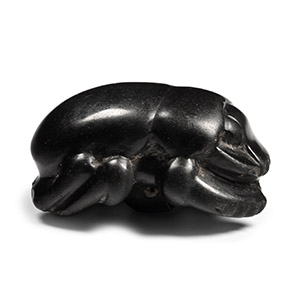
Egyptian Glass Heart Scarab
Late Period, 664-332 B.C. or laterSold for (Inc. bp): £910
Modelled in the round with ribbed loop to the underside, carapace and leg detailing. 6.49 grams, 24.6 mm
Ex London and Home Counties collection, UK, 1920-1940. This lot is accompanied by an illustrated lot declaration signed by the Head of the Antiquities Department, Dr Raffaele D'Amato. -
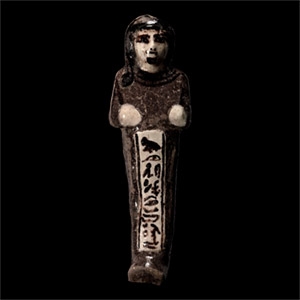
Egyptian Faience Shabti for the Fourth Son of Ramesses II, Prince Khaemwaset
New Kingdom, 19th Dynasty, 1279-1213 B.C.Sold for (Inc. bp): £2,015
The mummiform figure in brownish-black and white faience with black detailing, wearing a round wig featuring a side-lock and a broad collar, the white face displaying eyes, eyebrows, nostrils, and a short beard in black; the arms crossed, and the white-glazed hands holding hoes; a slightly raised white-glazed frontal panel containing a column of hieroglyphic text reads: 'The Osiris, the Sem-Priest, the King's Son, Khaemwaset, True of Voice'. 82.4 grams, 11.8 cm
From the private collection of George Ortiz, Geneva, Switzerland, since before 1981. Received by gift from George Ortiz to the current owner at Mr Ortiz's Geneva home in the summer of 1981. From the private collection of a UK gentleman since the early 1980s. Identified by Professor A.M. Dodson BA, MPhil, PhD, FSA, Department of Anthropology & Archaeology, University of Bristol. This lot has been cleared against the Art Loss Register database, and is accompanied by an illustrated lot declaration signed by the Head of the Antiquities Department, Dr Raffaele D'Amato.
Khaemwaset was the fourth son of Ramesses II, born to Queen Iset-Nofret. In addition to serving as the Sem-priest of Ptah at Memphis from an early age, he held various titles related to the Memphite cult, including High Priest of Ptah. The side-lock featured on all of Khaemwaset's shabtis is associated with his priestly role. Many shabtis of the prince are known, with the largest single group coming from the Serapeum at Saqqara; however, others have been found in numerous other locations. Since Khaemwaset's tomb has yet to be discovered, it appears that most of the known shabtis may have served as votive offerings in the sacred areas of the Memphite necropolis. His faience shabtis come in various colours, including green, blue, white, and black, and range in size from just under 10 cm to 15 cm in height. The distinctive glaze combination of this example, featuring a raised white-glazed panel contrasting with the darker body colour, is also found on some other 19th Dynasty shabtis (Cf. Janes, G., The Shabti Collections 3: Rochdale Arts & Heritage Service, Cheshire, 2011, pp.1-5 for those of Userhat from Sedment). -
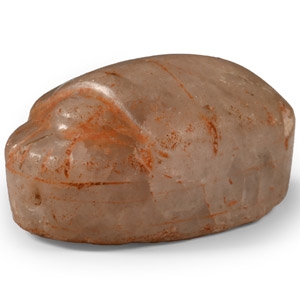
Egyptian Pink Quartz Scarab
Late Period, 664-332 B.C.Sold for (Inc. bp): £338
Carved with deep sides and carapace detailing to the upper face, pierced. 19.82 grams, 33 mm
From the private collection of the late Mrs Belinda Ellison, a long time member of the Egyptian Exploration Society, c.1940-2020. This lot is accompanied by an illustrated lot declaration signed by the Head of the Antiquities Department, Dr Raffaele D’Amato. This lot is accompanied by an illustrated lot declaration signed by the Head of the Antiquities Department, Dr Raffaele D'Amato.
