
Loading, please wait...
LOT 0462
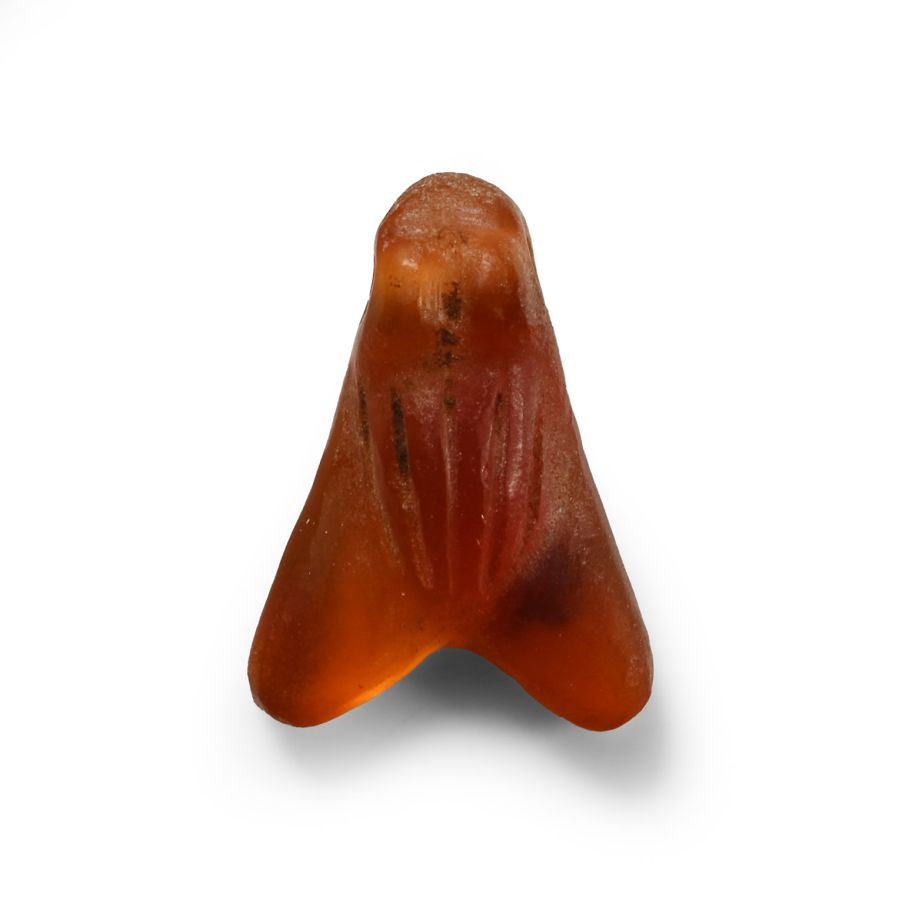
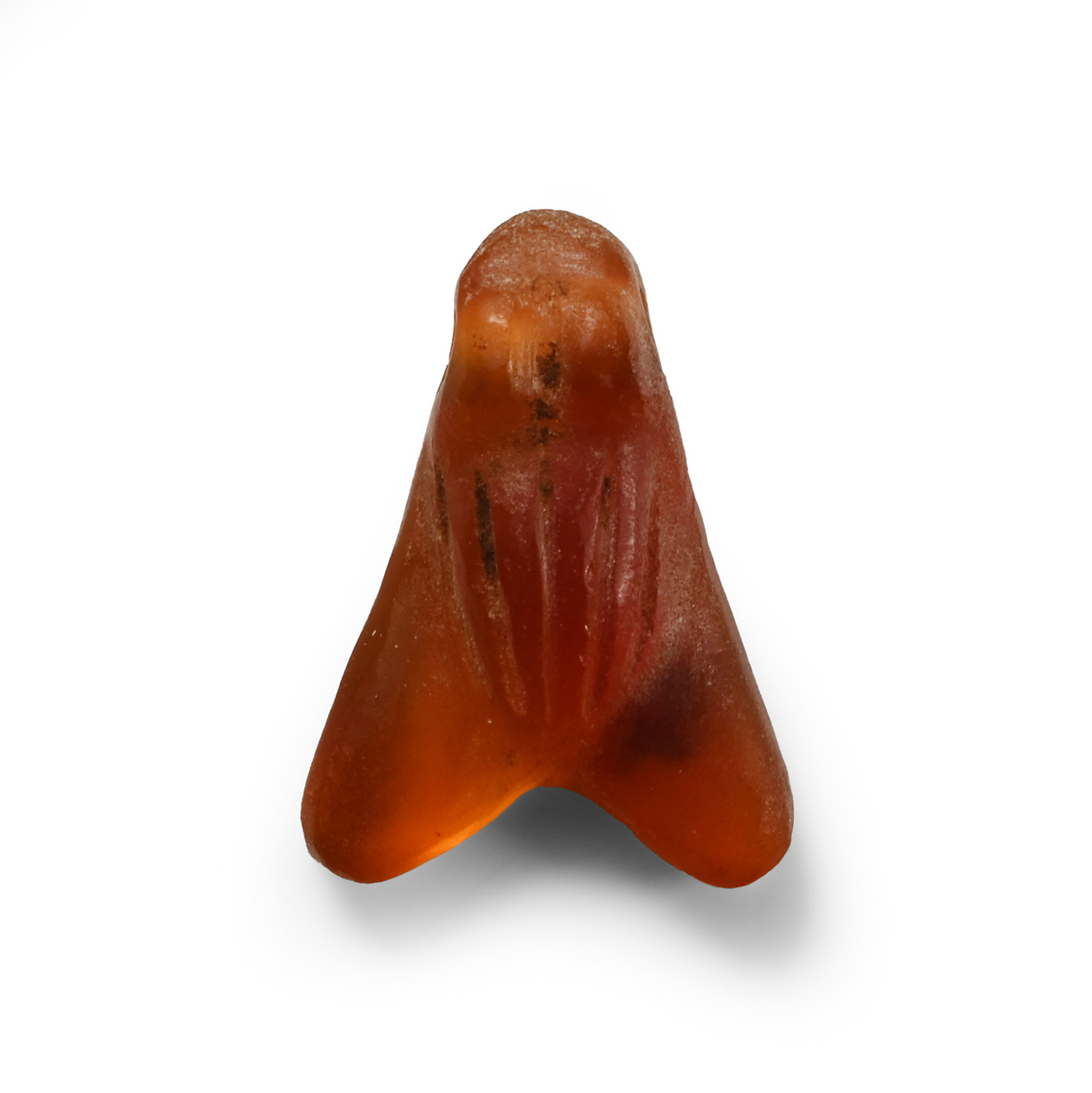
Egyptian Carnelian Fly Amulet
LATE PERIOD, 664-332 B.C.
1/2 in. (0.42 grams, 12 mm).
Formed as a fly with long triangular wings and domed eyes.
ProvenanceFrom an early 20th century collection.
LiteratureCf. Andrews, C., Amulets of Ancient Egypt, London, 1994, pp.62-3.
FootnotesFly amulets first appeared in burials as early as c. 3200 B.C., but their popularity expanded during the New Kingdom. They were made from various materials such as gold, silver, lapis lazuli, carnelian, amethyst, faience, and bone. Fly amulets were thought to protect against insect bites and to ward off troublesome flying creatures through apotropaic magic. They may also have even been intended to symbolise the fly’s fecundity. Pharaohs would bestow gold fly-shaped pendants as military awards to honour the bravery and fly-like persistence of soldiers in battle.
CONDITIONTimeLine Auctions follows a vetting process to ensure the authenticity and legality of all items, reinforcing our commitment to integrity and responsible trading. Each antiquity, antique, and coin lot undergoes thorough examination by a vetting committee of at least ten external specialists, professional trade association members, scientists, and archaeologists: Our Vetting Process
AUCTIONS:
TimeLine is a leading auction house specialising in antiquities, ancient art, collectables, natural history, coins, medals, and books. Our auctions offer museums, collectors, historians, and enthusiasts the opportunity to acquire unique and historically significant pieces.
-
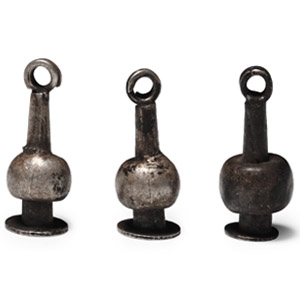
Egyptian Silver Poppy Beads
Late Period, 664-332 B.C.Sold for (Inc. bp): £124
Modelled in the shape of a poppy seed with a flat foot leading to a globular body with a tapering neck attached to a small loop at the top for suspension. 3.29 grams total, 16-17 mm
From an early 20th century collection.
Amulets in the form of poppies were used to heal and alleviate pain and to ward off death. These types of amulets were also linked to Osiris, the Egyptian deity of agriculture, death, and the afterlife. -
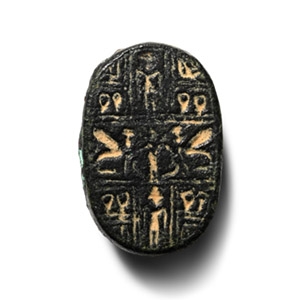
Phoenician Bronze Scarab
Late 1st millennium B.C.Estimate: £350 - 450 (+bp*)
Opening Bid: £180
Scaraboid with incised detailing to the underside, with a central column depicting standing figures top and bottom, each flanked by two ankh symbols, and a central motif of a standing figure grasping a sceptre and winged serpent in each hand. 6.54 grams, 17 mm
From an early 20th century Home Counties, UK, collection. -
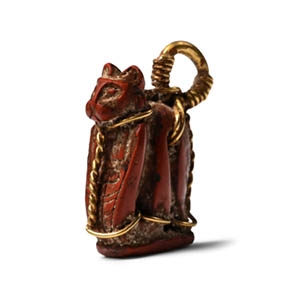
Egyptian Jasper Lion-Headed Cobra Amulet in Gold Frame
6th century B.C.Estimate: £2,000 - 3,000 (‡+bp*)
Opening Bid: £1,000
The S-curved body resting on a tongue-shaped based, detailed hood, and delicate details to the head of a lioness; wrapped in a gold frame with suspension loop. 2 grams, 18 mm
Private collection of Mr K.A. Private collection, Europe, 26 June 2009.
This amulet likely represents a goddess, either Sekhmet or Wadjet. Sekhmet is typically depicted as a lioness or lion-headed woman, while Wadjet appears in the form of a cobra. The lion-headed cobra form can be an allusion to the uraeus, worn on the crowns of royalty and deities for protection.
