
Loading, please wait...
LOT 0644
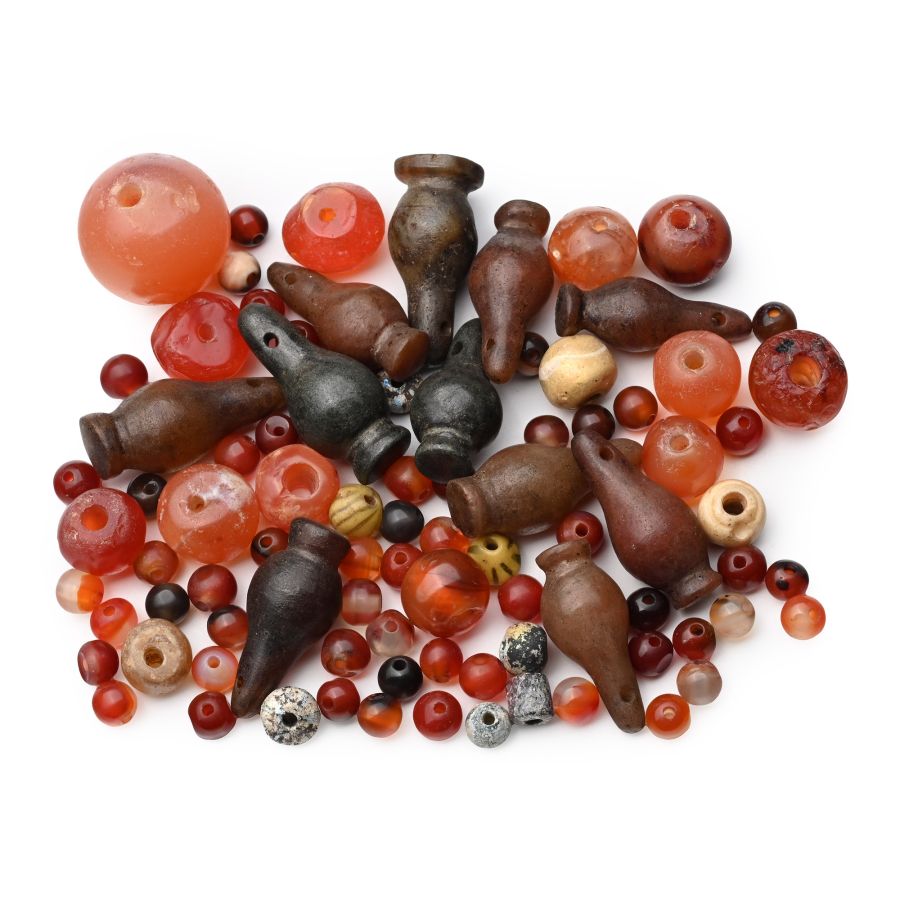
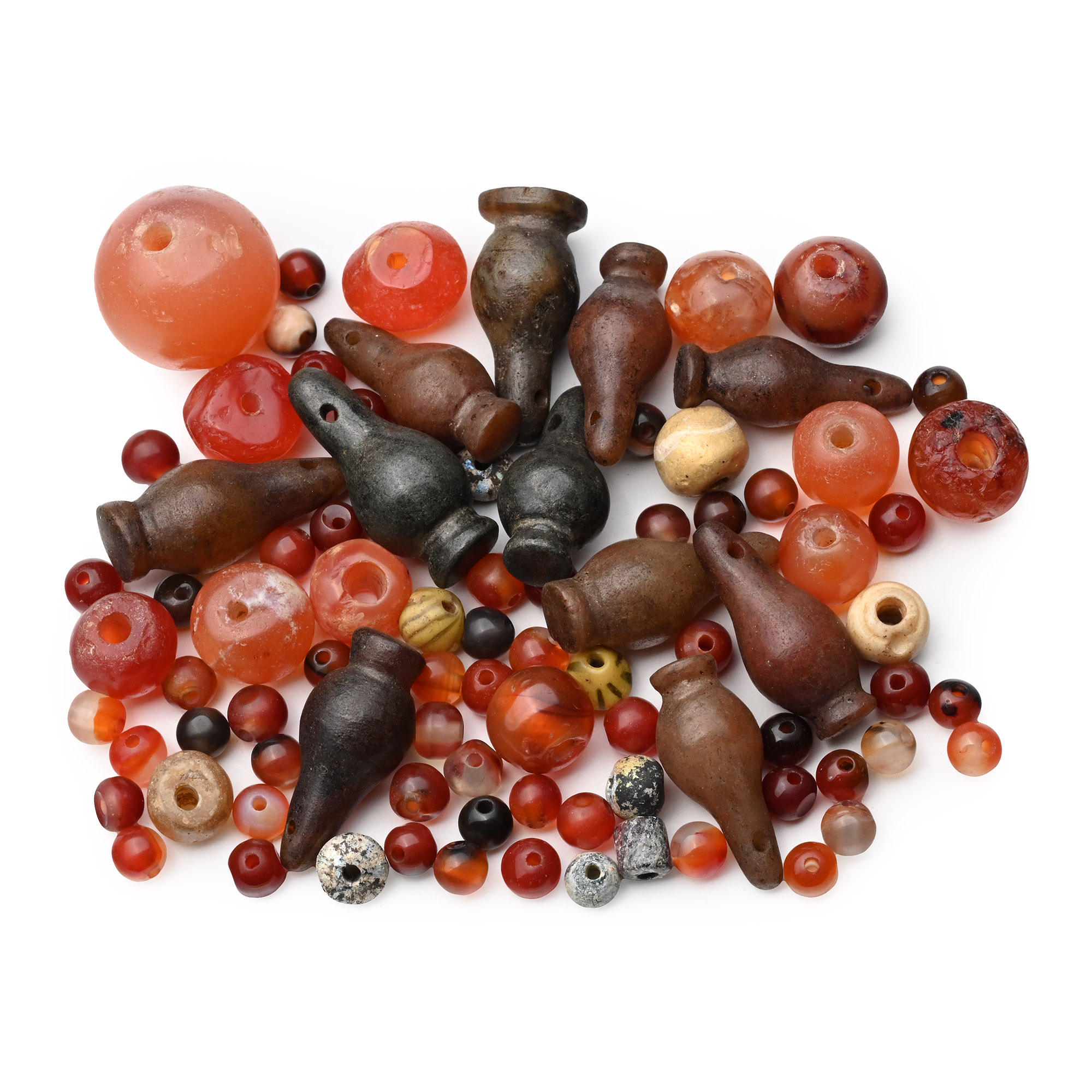
Egyptian Carnelian and Other Beads with Jasper Poppy Bead Amulets
LATE PERIOD, CIRCA 664-332 B.C.
1/4 - 3/4 in. (38 grams total, 4-20 mm).
Including poppy- or cornflower-shaped, spherical, biconvex, and other types. [77]
ProvenanceLondon gentleman's collection, 1970-1990s, by descent.
CONDITIONTimeLine Auctions follows a vetting process to ensure the authenticity and legality of all items, reinforcing our commitment to integrity and responsible trading. Each antiquity, antique, and coin lot undergoes thorough examination by a vetting committee of at least ten external specialists, professional trade association members, scientists, and archaeologists: Our Vetting Process
AUCTIONS:
TimeLine is a leading auction house specialising in antiquities, ancient art, collectables, natural history, coins, medals, and books. Our auctions offer museums, collectors, historians, and enthusiasts the opportunity to acquire unique and historically significant pieces.
LOT 0644
Egyptian Carnelian and Other Beads with Jasper Poppy Bead Amulets
Estimate £400 - 600€460 - 700 (for guidance only)$540 - 810 (for guidance only)
Opening Bid
£200 (EUR 232; USD 270) +BP*
-
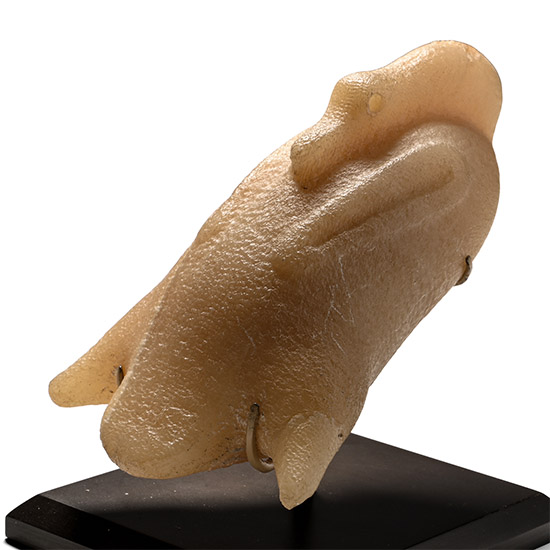
Egyptian Alabaster Trussed Duck
Old Kingdom, 6th Dynasty, circa 2345-2181 B.C.Estimate: £4,000 - 6,000 (+bp*)
Bids: 1 | Current Bid: £2,400
Delicately carved in the round with the head and neck laid backwards along the spine, the eyes recessed for inlays (absent); mounted on a custom-made stand. 891 grams total, duck: 12.2 cm long
Private French collection acquired before 1970. Bonhams Antiquities, 29 April 2009, no.58 (sold for £5,400.00). Bonhams Antiquities, 23 October 2013, no.8 (sold for £7,500.00). Prince collection, UK, 2013-2017. Accompanied by a French passport no.099505. This lot has been checked against the Interpol Database of stolen works of art and is accompanied by search certificate number no.12942-245247.
Small statuettes of ducks, prepared for cooking, were created to provide imperishable offerings for the tomb. These birds appeared in almost every offering list and were depicted being brought to the tomb by offering bearers in wall scenes. -
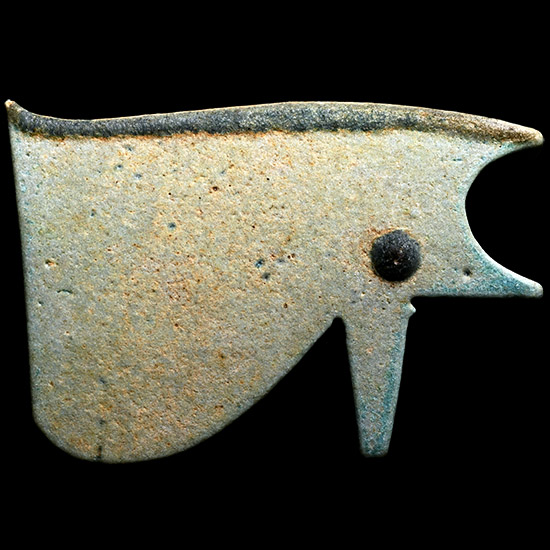
Large Egyptian Faience Eye of Horus Amulet
Third Intermediate Period, circa 1069-664 B.C.Estimate: £300 - 400 (+bp*)
Opening Bid: £150
The outline displays the characteristic wedjat-eye motif: a fusion of a human eye and eyebrow, combined with specific falcon markings: a tear-like drop extending down from the front of the lower lid and a stylised curl trailing from the base; longitudinally pierced for suspension. 7.15 grams, 41 mm
From a mid 20th century collection.
The wedjat-eye amulet depicts Horus’s healed eye, blending human and falconine features. Its ancient Egyptian name means ‘the one that is sound’. Myth holds that Seth wounded or took the eye, and Thoth later restored it. Believed to offer protection, healing, and regeneration, the popular amulet was worn by the living and the dead. -
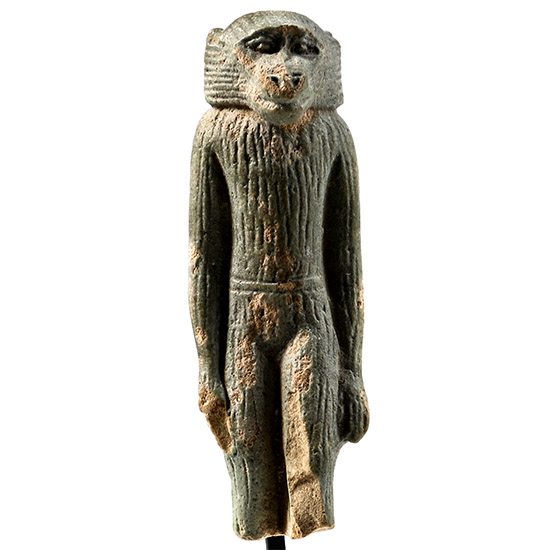
Egyptian Faience Amulet in the Shape of a Striding Monkey
Late Period, 664-332 B.C.Estimate: £1,200 - 1,700 (‡+bp*)
Opening Bid: £675
Formed as a striding African savannah monkey (Chlorocebus aethiops), or grivet, with human proportions but monkey hair texture; long arms hanging close to the body, hands extended downward; an incised belt at the waist; a suspension loop at the reverse (repaired); with a custom-made stand. 68.9 grams total, amulet: 57 mm, 13.5 cm high including stand
Private collection of an English amateur archaeologist (1849-1927), thence by descent. with Bonhams Auction, 5 October 2011, no.360. Thereafter, private collection of Erika (1934-2025) and Jakob (1927-2025) Binkert, Binningen, Switzerland; acquired in 2012 from Jean-David Cahn AG, exhibition Aegyptiaca, Basel. Thence by descent.
In the minds of the ancient Egyptians, male monkeys' behaviour may have linked them to masculinity, suggesting that, when worn as an amulet, they could have served a magical role in the reproductive cycle, facilitating birth in this life and rebirth in the afterlife. Alternatively, the prolonged care that females provide for their offspring may have linked the monkey with maternal protection and fertility. These associations may have been reinforced here by the monkey’s greenish faience, which symbolised renewal.
