
Loading, please wait...
LOT 0483
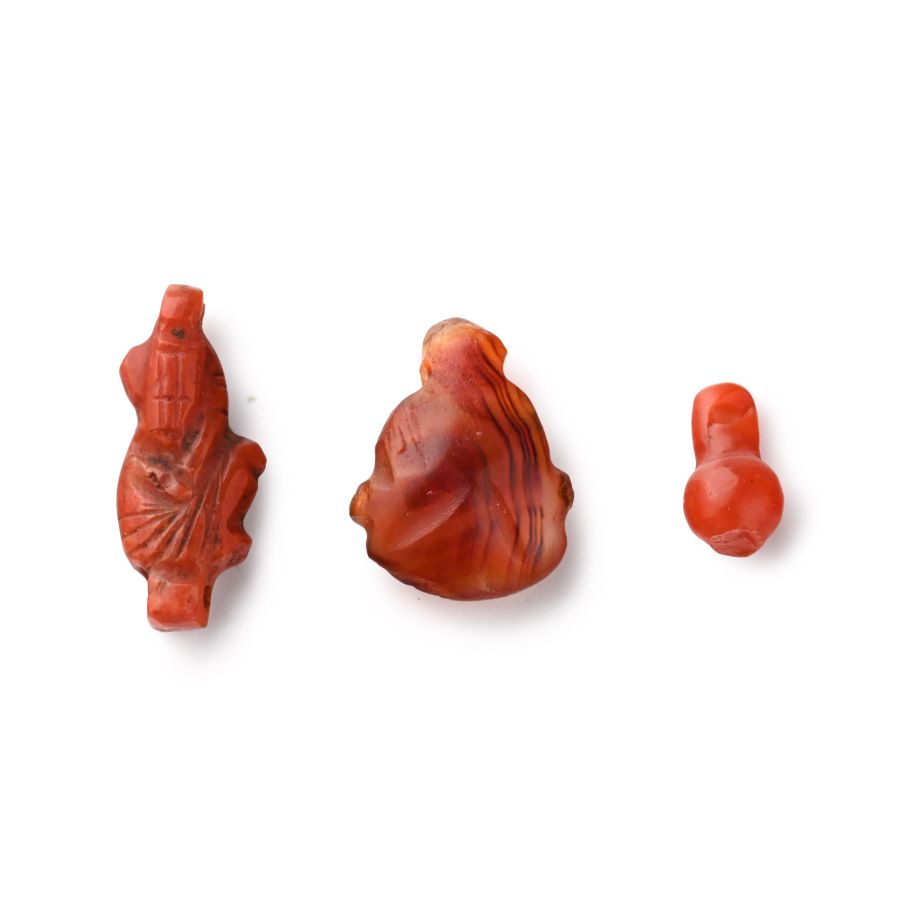
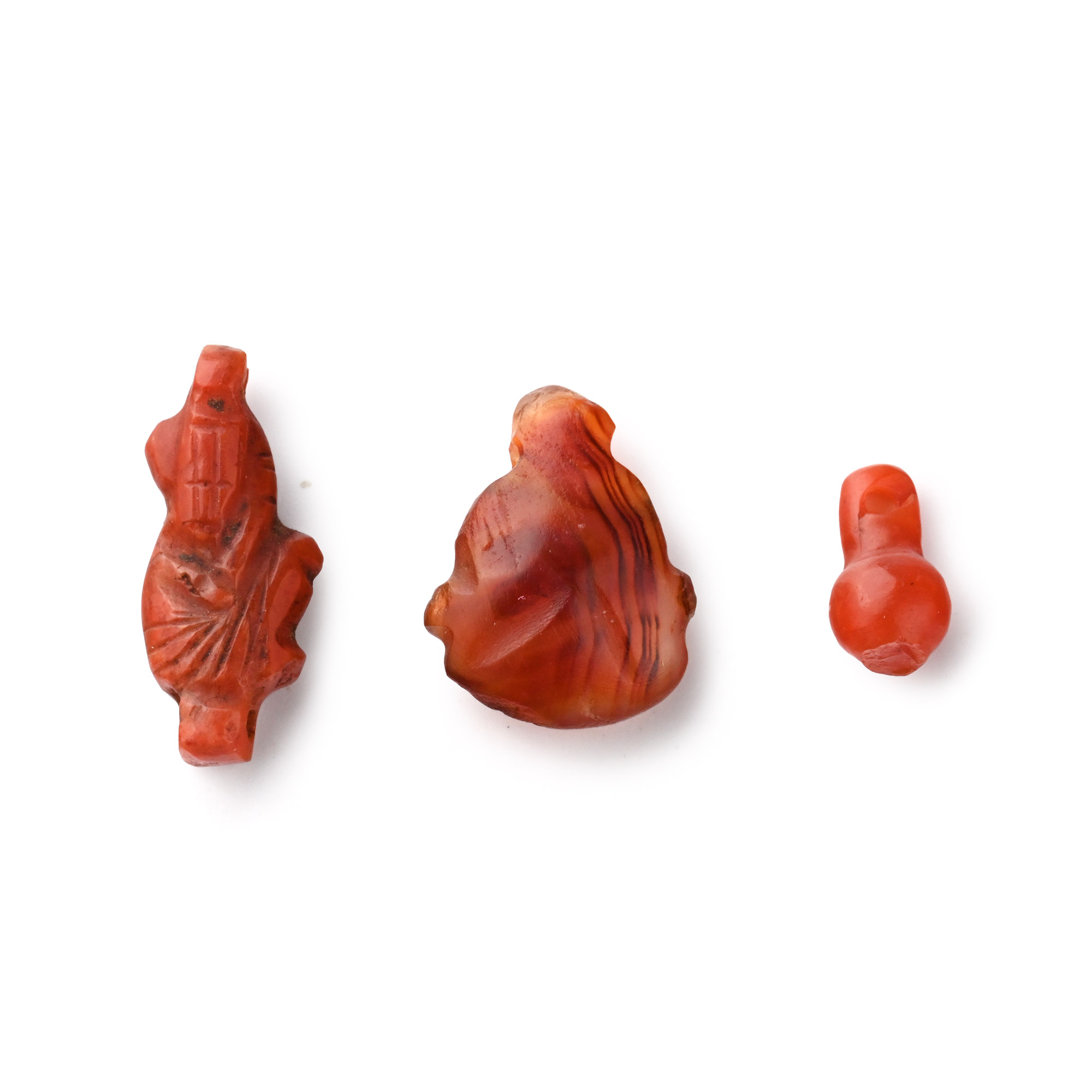
Egyptian Carnelian Amulet Group
LATE PERIOD, 664-332 B.C.
1/4 - 5/8 in. (1.42 grams total, 8-16 mm).
Comprising a poppy head amulet, a stylised head amulet, and a seated figure amulet. [3]
ProvenanceFrom an Israeli collection, 1990s.
This lot is accompanied by an illustrated lot declaration signed by the Head of the Antiquities Department, Dr Raffaele D'Amato.
TimeLine Auctions follows a vetting process to ensure the authenticity and legality of all items, reinforcing our commitment to integrity and responsible trading. Each antiquity, antique, and coin lot undergoes thorough examination by a vetting committee of at least ten external specialists, professional trade association members, scientists, and archaeologists: Our Vetting Process
AUCTIONS:
TimeLine is a leading auction house specialising in antiquities, ancient art, collectables, natural history, coins, medals, and books. Our auctions offer museums, collectors, historians, and enthusiasts the opportunity to acquire unique and historically significant pieces.
-
Large Egyptian Steatite Scarab
Late Period, 664-332 B.C.Sold for (Inc. bp): £520
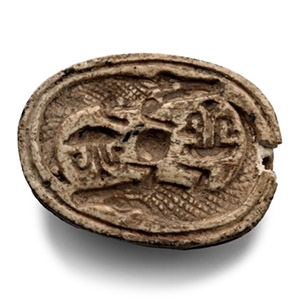
Modelled body of a beetle with detailed carapace and legs; underside with two crocodiles enclosing a central sun disc flanked by two papyrus clumps atop neb signs. 19.8 grams, 38 mm
From the collection of a gentleman, acquired on the London art market in the 1990s. This lot is accompanied by an illustrated lot declaration signed by the Head of the Antiquities Department, Dr Raffaele D'Amato.
The design could be interpreted as ‘Sobek-Ra, lord of the Delta’. Sobek was mainly associated with water, fertility, and the Nile, as well as strength and military prowess. His worship spans much of ancient Egyptian history, from at least the Old Kingdom to the Roman period, and he was honoured not only as a force of nature but also as a god of healing, protection, and royal authority. He was associated with various other deities, most often with the sun god in the form of Sobek-Ra. His primary cult centres were situated in the Faiyum region, especially in the city of Crocodilopolis, and also at Kom Ombo in Upper Egypt. -
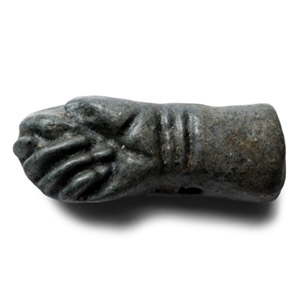
Egyptian Faience Fist Amulet
Ptolemaic-Roman Period, 323 B.C.-323 A.D.Sold for (Inc. bp): £124
Modelled as a right hand in fica protective gesture; pierced at wrist. 1.48 grams, 20 mm
From an early 20th century collection. This lot is accompanied by an illustrated lot declaration signed by the Head of the Antiquities Department, Dr Raffaele D'Amato. -
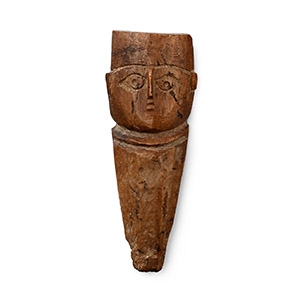
Egyptian Coptic Bone Doll's Head
4th-6th century A.D.Sold for (Inc. bp): £130
A carved face and chest from a figurine or doll, with incised eyes, mouth and brow, reserved ears and nose. 7.47 grams, 55 mm
Very fine condition.
Property of a London gentleman; acquired in the 1970s. From the private collection of John Meredith, acquired since the 1990s; thence by descent. This lot is accompanied by an illustrated lot declaration signed by the Head of the Antiquities Department, Dr Raffaele D'Amato.
