
Loading, please wait...
LOT 0402
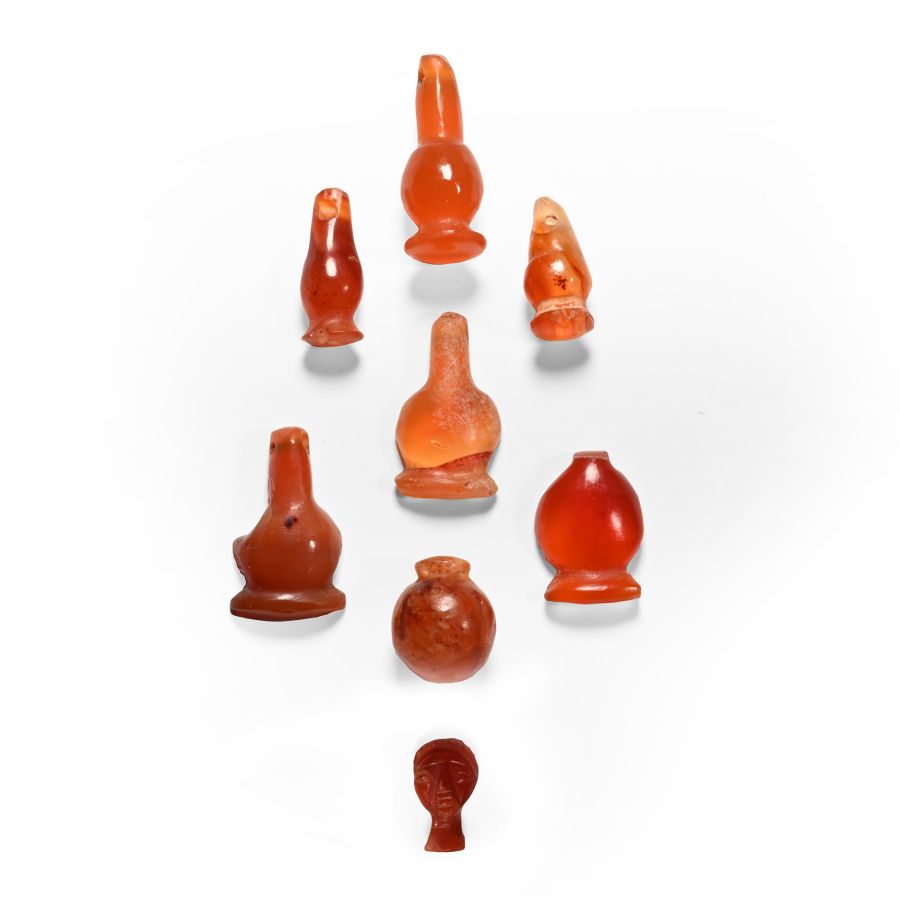
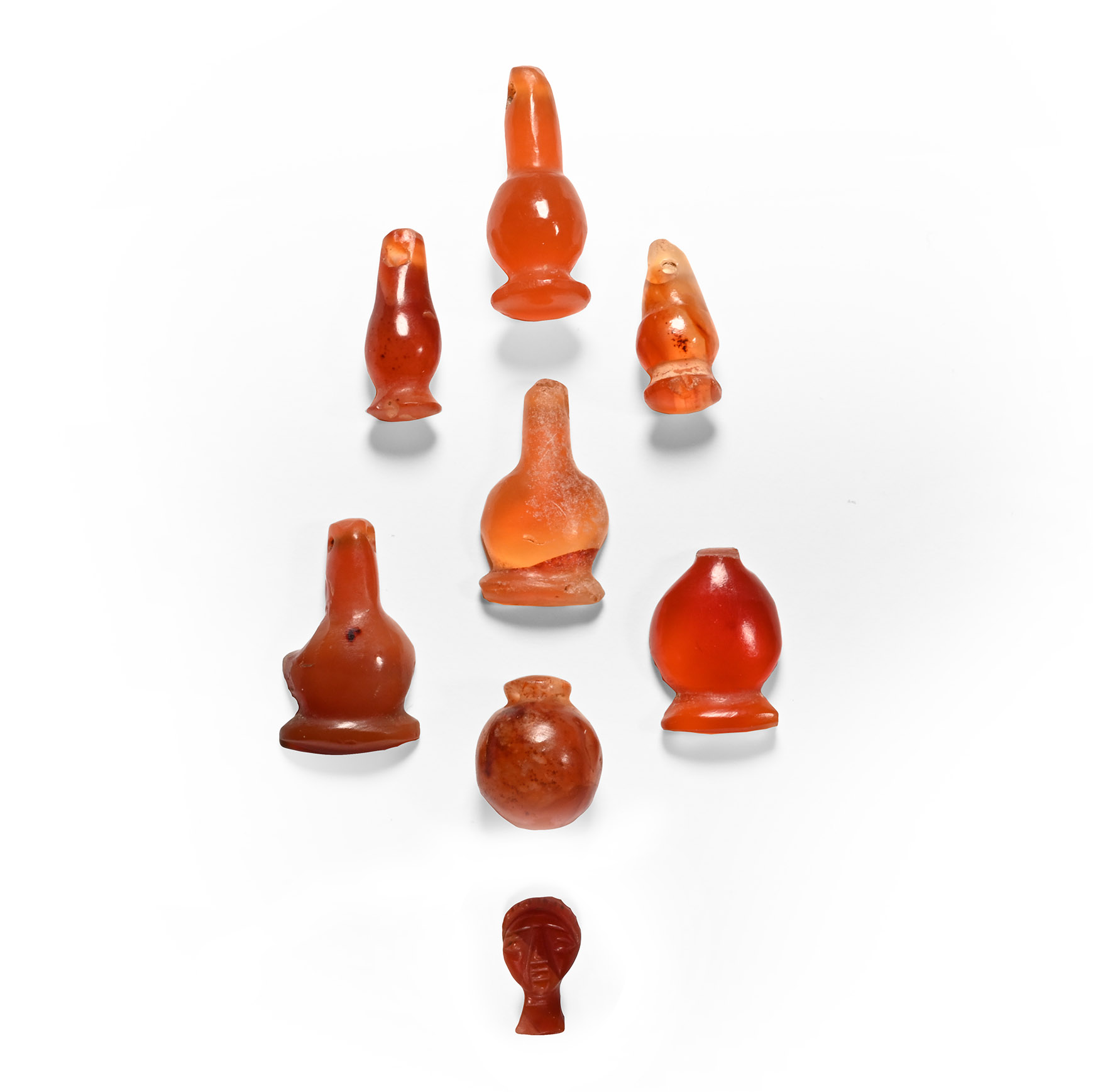
Egyptian Carnelian Amulet Group
LATE NEW KINGDOM-LATE PERIOD, 1550-332 B.C.
3/8 - 3/4 in. (6.84 grams total, 10-19 mm).
Comprising: three poppy seed amulets; three similar modelled in the half-round; and others. [8, No Reserve]
ProvenanceAcquired 1970s-1996.
Property of a North American collector.
London collection, 2016.
See Andrews, C., Amulets of Ancient Egypt, London, 1994, for discussion.
CONDITIONTimeLine Auctions follows a vetting process to ensure the authenticity and legality of all items, reinforcing our commitment to integrity and responsible trading. Each antiquity, antique, and coin lot undergoes thorough examination by a vetting committee of at least ten external specialists, professional trade association members, scientists, and archaeologists: Our Vetting Process
AUCTIONS:
TimeLine is a leading auction house specialising in antiquities, ancient art, collectables, natural history, coins, medals, and books. Our auctions offer museums, collectors, historians, and enthusiasts the opportunity to acquire unique and historically significant pieces.
-
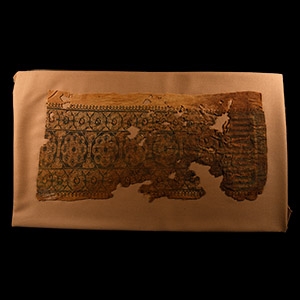
Egyptian Coptic-Fatimid Mounted Textile with Dancers
Circa 12th century A.D.Sold for (Inc. bp): £130
The woven textile fragment of linen and wool with a large horizontal decorative band depicting octagonal rosettes inscribed in rhomboids; the rosettes divided by stylised columns decorated with foliage elements; the band edged by two lateral segments formed of octagonal rosettes enclosing flowers, bordered with scalloped geometries; at the bottom four stylised dancers. 285 grams, 60 x 35.5 cm
Acquired 1970s-1996. Property of a North American collector. London collection, 2016.
It is the lower part of a cloak from the Fatimid era. The end of the Coptic period was characterised by a treatment of eight-lobed rosettes, a current motif in Muslim art. The four dancers are made as simple signs. -
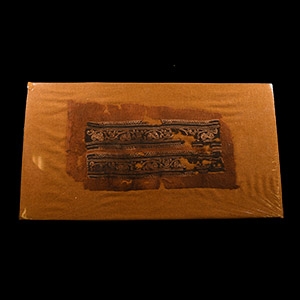
Egyptian Mounted Coptic Textile with Hares
Circa 5th-6th century A.D.Sold for (Inc. bp): £78
Comprising a double band for sleeve (segmenta), decorated with vegetal and animal patterns, forming two narrow bands with a vertical succession of stylised spirals of foliage, alternating figures of hares. 94 grams, 43 x 23 cm
Acquired 1970s-1996. Property of a North American collector. London collection, 2016.
Tapestry technique of wool on linen. It is highly probable that this tapestry was part of a tunic decoration, a double segmentum, applied on the wrists of the garment and decorating the lower part of the sleeves. -
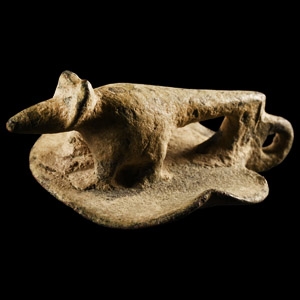
Romano-Egyptian Bronze Shrew Balsamarium Lid
Roman Period, 30 B.C.-323 A.D.Estimate: £200 - 300 (+bp*)
Opening Bid: £111
Modelled in the round with naturalistic detailing, ears upright and tail straight, on a circular lid with hinge loop to the rear, possibly from a balsamarium or other high-status container. 19.4 grams, 43 mm
‘The Ancient Menagerie Collection’ formerly the property of a Cambridgeshire lady, collected since the 1990s and acquired from auctions and dealers throughout Europe and the USA, now ex London collection.
